Elizabeth Bishop Reading Order: Where to Start
Elizabeth Bishop published only about a hundred poems in her lifetime across four thin books, which means a reading order is really a question of which book to hold first and how much of the unfinished work to let in. Start with Geography III, the late collection where everything she spent forty years learning arrives at once, then read the earlier books in sequence to watch the restraint being built, then decide whether you want the collected volume and the drafts she chose not to print. The letters come last and are the part most readers end up loving most.
Start Here: The Late Masterpiece
IntermediateRead the two collections that hold the poems everyone knows, and learn what Bishop's famous reticence actually sounds like.
▸ Study plan for this stage
Pace: 4–5 weeks for about 145 pages, which sounds absurd until you try it. Geography III is nine poems in 50 pages: read one poem a day, aloud, twice, and let the day pass before the next. Questions of Travel is 95 pages and can take three weeks at two or three poems a sitting. Poetry does not accumulate
- Bishop published roughly a hundred poems in a lifetime across four thin books, so the whole path is short in pages and long in hours; the reading rate is the technique
- Geography III is the correct entry point in a way that is unusual for a poet — it is late, short, and the most emotionally direct thing she wrote, so it earns the reticence of the earlier books
- In the Waiting Room, The Moose and One Art are all here, which means the three poems people quote arrive before you have any context to soften them
- One Art is a villanelle, and hearing the form matters: the repeated lines force a claim the poem spends nineteen lines failing to sustain, and the last line's dash and parenthesis are the failure made visible
- Bishop's reticence is a method, not a temperament: description is extended until the withheld feeling becomes the only possible explanation for the amount of attention being paid
- Questions of Travel is the Brazil book, written during the years with Lota de Macedo Soares, and it contains Sestina and the prose piece In the Village
- Its subject is the tourist's eye turning permanently uncertain — where anyone belongs, and what the traveller has the right to describe
- Read the prose piece In the Village inside Questions of Travel rather than skipping it; several poems are its verse counterpart
- What is One Art actually claiming, and at what exact word does the claim break? Say it aloud before answering.
- In the Waiting Room turns on a moment of recognition in a dentist's office. What does the child recognise, and how many lines does Bishop take to prepare it?
- The Moose is one long sentence-like movement across many stanzas. What is the poem doing with its own slowness?
- In Questions of Travel, what does Bishop think the traveller is entitled to see, and where does she catch herself?
- Where in these two books does the description stop being description and become feeling — pick one line and defend it.
- Read One Art aloud three times: once flat, once for the rhyme, once for the sense. The three readings are three different poems.
- Copy out The Fish or The Moose by hand. Bishop's line breaks are doing structural work that the eye slides over in print.
- Keep a notebook with one line per poem recording what you noticed. When you reread in a month, compare.
- Read In the Village, then Sestina, and write down what the poem leaves out that the prose states.
Next up: Having heard what the restraint sounds like when it finally gives way, you can go back and watch it being assembled.
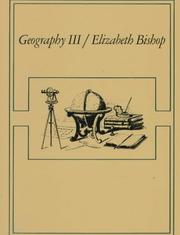
Nine poems, including In the Waiting Room, The Moose and One Art. The correct entry point in a way that is unusual for a poet: it is short, late, and the most emotionally direct book she wrote, so it earns the earlier ones.
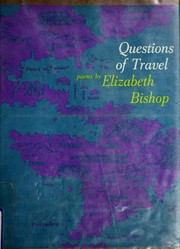
The Brazil book, written during the years with Lota de Macedo Soares, and the one that contains Sestina and In the Village. Read second because it is where the tourist's eye of the early work turns into a permanent question about where anyone belongs.
The Early Books
IntermediateGo back to the first two collections and hear the descriptive machinery being assembled before the feeling is let in.
▸ Study plan for this stage
Pace: 3–4 weeks for a 95-page book, which is the correct rate. Read three or four poems a sitting, aloud, and reread each the following day before moving on. North & South rewards a second pass more than the late work does, because on first reading the surfaces look like coldness and only afterwards resol
- Poems: North & South is her first book and holds The Map, The Fish and The Man-Moth — the poems that established her as a describer before anyone knew what the describing was for
- Read after Geography III, the cool surfaces stop looking like reticence and start looking like a choice made under pressure
- The Map is the whole method announced on page one: a flat printed object looked at until it becomes a set of questions about how anyone knows where anything is
- The Fish is the most anthologised poem she wrote and is a trap for fast readers — the rainbow at the end is earned by forty lines of unglamorous inventory, and skipping to it removes the poem
- The Man-Moth came from a newspaper misprint for mammoth, which tells you something durable about how she worked: an accident treated as an instruction
- Her rate of production is a fact worth internalising here — a handful of poems could take the better part of a decade, and the finish shows it
- One edition note: most in-print volumes of North & South pair it with her second, slimmer collection, so a single purchase usually covers both of the early books
- Marianne Moore's influence is audible in this book — precise animal observation, syllabic control — and Bishop's departure from it is the story of the next twenty years
- What does The Map decide about the relationship between a representation and the thing represented, and does it decide anything at all?
- In The Fish, what work do the forty lines of description do that the final image could not do alone?
- Where in North & South can you hear a poem being deliberately kept cool, and what happens if you imagine it warmer?
- How is the descriptive technique here different from Geography III's, given that the eye is the same?
- Which poem in this book most obviously anticipates the late work, and which one is she never going to write again?
- Read The Fish once quickly and once at half speed, and note what the fast reading lost. This is the argument for how to read the rest of the path.
- Take one poem and mark every concrete noun. The proportion is the technique.
- Read a short Marianne Moore poem alongside The Man-Moth and describe the family resemblance in your own words.
- Reread Geography III's In the Waiting Room after finishing this book. The distance between the two describing eyes is the whole career.
Next up: With the poems in hand, the prose and letters are where the same person talks — quickly, funnily, and at ten times the volume.

Her first book, containing The Map, The Fish and The Man-Moth. Read after the late work and the cool surfaces stop looking like coldness and start looking like a decision.
The Prose and the Letters
IntermediateRead the correspondence and essays, where Bishop is funny, gossipy and far less guarded than the poems.
▸ Study plan for this stage
Pace: 10–12 weeks, and read differently from the poems: this is prose and should be read at prose speed, in long sittings. Words in Air is 928 pages and Poems, Prose, and Letters 977 — after 145 pages of verse, the change of scale is startling. One Art first, over a month; then Words in Air over six weeks
- One Art is fifty years of Bishop's letters selected by Robert Giroux, and it is the single best companion to the poems — she is gossipy, funny and far less guarded than the verse
- Its central pleasure is watching an image spend a decade migrating: a detail reported in a letter from Brazil surfaces years later as a finished stanza
- The letters also give you the biography the poems refuse — the drinking, the asthma, the money, the years with Lota — without a biographer's framing
- Words in Air is the complete correspondence with Robert Lowell across thirty years, and it is the central document of her working life
- The two poets edit each other in it constantly and disagree in public and private, most famously over Lowell's use of a real person's letters in his own poems — Bishop's objection there is her clearest statement of an ethics of writing
- Reading it as a two-voice book matters: Lowell writes fast and revises in public, Bishop slowly and in private, and the contrast explains both bodies of work
- Poems, Prose, and Letters gathers the stories, memoirs and essays including In the Village and Efforts of Affection, her memoir of Marianne Moore
- The prose covers the childhood — her father's death, her mother's committal — that the poems only ever glance at, which is why it is the right place to stop
- Find one image that appears first in a letter and later in a poem. What changed between the two, and what does the change tell you about her revision?
- What does Bishop say to Lowell about using real letters in poetry, and where do you land on the disagreement?
- How does the Bishop of the letters differ from the Bishop of the poems, and is one of them the real one?
- Efforts of Affection is a portrait of a mentor with reservations in it. What is Bishop being honest about, and what is she still protecting?
- Having read the prose account of her childhood, does In the Waiting Room read differently? Say specifically how.
- Which of these three volumes would you keep if you could keep one?
- Read One Art with the poems beside you and note every letter that mentions a poem in progress. That set is a drafting diary.
- In Words in Air, read one exchange straight through — his letter, her reply, his answer — and describe how each is arguing.
- Read In the Village in the prose volume and then Sestina again. Decide which one you would give to a reader who had time for only one.
- Write half a page on what the letters make you think Bishop believed a poem was for. The poems themselves never say it.
Next up: You have now read essentially everything Bishop finished, in the order that makes each part explain the last.

Fifty years of correspondence, selected by Robert Giroux. The single best companion to the poems: you watch individual images spend a decade migrating from a letter into a finished stanza.

The complete correspondence with Robert Lowell, thirty years of it. Read after One Art, because the relationship it documents — two poets editing each other in public and in private — is the central fact of her working life.
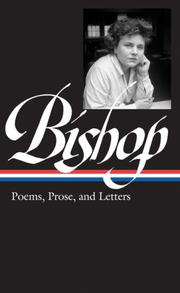
The stories, memoirs and essays, including In the Village and Efforts of Affection. The right place to stop: the prose covers the same childhood the poems only ever glance at.
Discussion
Keep reading
Paths that share books, cover the same subject, or open a related topic.