The Best Books on Educational Leadership
This curriculum builds from the core theories and frameworks of educational leadership into the practical realities of school administration and instructional leadership, culminating in the strategic and transformational thinking expected of high-impact principals. Starting at the intermediate level, each stage assumes some familiarity with education but progressively demands more critical synthesis, self-reflection, and systems-level thinking. Licensure preparation is woven throughout, as the competencies addressed map closely to ISLLC/PSEL standards used in most principal licensure programs.
Foundations of Educational Leadership
IntermediateEstablish a shared vocabulary and theoretical grounding in educational leadership, understanding the principal's role, core standards, and the moral purpose of school administration.
▸ Study plan for this stage
Pace: 6–8 weeks, ~25–30 pages/day. Start with Fullan's "The Principal" (weeks 1–4, ~200 pages), then move to Lunenburg's "Educational Administration" (weeks 5–8, ~250 pages). Allocate 1–2 days per week for reflection and exercise completion.
- The principal as a change agent and moral leader with responsibility for school improvement and student outcomes
- Fullan's framework of leadership capacity, coherence-making, and the principal's role in building collaborative cultures
- Core standards and competencies for educational administrators (instructional leadership, organizational management, ethical decision-making)
- Systems thinking in school administration: understanding how organizational structures, policies, and human dynamics interact
- The moral purpose of education and how principals translate values into actionable school vision and mission
- Distributed leadership and the principal's role in developing leadership in others
- Data-informed decision-making and evidence-based practices in school administration
- Stakeholder engagement: managing relationships with teachers, families, district office, and community
- What is Fullan's definition of the principal's role, and how does he distinguish between management and leadership?
- How do Fullan and Lunenburg each address the moral purpose of school administration, and what does this mean for daily principal practice?
- What are the core competencies and standards for educational administrators according to Lunenburg, and which ones does Fullan emphasize most?
- How do systems thinking and organizational theory help explain school improvement efforts, and what role does the principal play in managing complex systems?
- What does Fullan mean by 'coherence-making,' and how can a principal use this concept to align school initiatives?
- How should principals approach distributed leadership and teacher leadership development based on these texts?
- Create a personal leadership philosophy statement (1–2 pages) that integrates Fullan's moral purpose concept with your own values and vision for a school.
- Map your school's (or a case study school's) current initiatives using Fullan's coherence-making framework—identify what is aligned, what is fragmented, and propose one coherence strategy.
- Conduct a self-assessment against Lunenburg's core administrator competencies; identify 2–3 areas of strength and 2–3 areas for growth, with specific development steps.
- Analyze a real or hypothetical school problem (e.g., low literacy achievement, high teacher turnover) using systems thinking; diagram the interconnected factors and propose a principal-led intervention.
- Interview or shadow a school principal for 2–3 hours; document how they enact leadership capacity, moral purpose, and stakeholder engagement in real time; reflect on connections to Fullan and Lunenburg.
- Design a 90-day school improvement plan for a fictional or real school that demonstrates understanding of distributed leadership, data-informed decision-making, and principal change agency.
Next up: This stage establishes the foundational language, ethical framework, and systems perspective that principals need; the next stage will likely deepen expertise in specific domains (instructional leadership, organizational change, or school culture) and move toward applied, scenario-based problem-solving.

Fullan reframes the principal's role around leading learning rather than managing compliance—an essential mindset shift that anchors everything that follows. Reading this first establishes the 'why' of school leadership before diving into the 'how.'

A comprehensive, standards-aligned textbook covering organizational theory, decision-making, law, finance, and personnel—core knowledge domains tested on most principal licensure exams. It builds the administrative vocabulary needed for all later readings.
Bridges theory and clinical practice by mapping leadership activities directly to PSEL standards, making it an ideal companion for anyone in or preparing for a licensure program's field experience component.
Instructional Leadership & School Improvement
IntermediateUnderstand how effective principals drive teaching quality, use data, and build a culture of continuous improvement focused on student learning outcomes.
▸ Study plan for this stage
Pace: 6–7 weeks, ~40–50 pages/day. Week 1–3: "The Art and Science of Teaching" (approximately 400 pages); Week 4–7: "Data Wise in Action" (approximately 300 pages) with overlap for reflection and integration exercises.
- Marzano's nine high-impact instructional strategies (objectives, feedback, reinforcement, cooperative learning, cues and questions, nonlinguistic representations, summarization, homework, and practice) and how principals evaluate and coach teachers in their implementation
- The distinction between teacher effectiveness and instructional leadership: how principals move beyond compliance to cultivate deliberate practice and continuous refinement of teaching craft
- Data Wise protocol and the five-step cycle (prepare, examine, inquire, act, assess) as a structured approach to collaborative data analysis and instructional decision-making
- Building a culture of psychological safety and collective responsibility where teachers view data as a tool for improvement, not evaluation or punishment
- Using formative assessment and student learning data to identify patterns, set priorities, and design targeted interventions that close achievement gaps
- The principal's role in translating research-based teaching practices into classroom reality through observation, feedback, and professional learning communities
- Balancing standardized metrics with qualitative evidence to understand root causes of student performance and design sustainable improvement initiatives
- What are Marzano's nine high-impact instructional strategies, and how would you coach a teacher who is strong in some but weak in others?
- How does the Data Wise protocol differ from traditional data meetings, and why is the 'inquire' phase critical to moving beyond surface-level interpretation?
- Describe a scenario where a principal uses student learning data to identify an instructional problem, and walk through how you would facilitate a Data Wise cycle to address it.
- What conditions must a principal establish to ensure teachers view data analysis as collaborative problem-solving rather than accountability surveillance?
- How would you balance fidelity to research-based practices (like Marzano's strategies) with the reality of diverse classrooms, student populations, and teacher experience levels?
- What is the relationship between formative assessment, instructional coaching, and sustainable school improvement, and how do these three elements reinforce each other?
- Conduct a classroom observation using Marzano's nine instructional strategies as a lens; document which strategies you see, which are absent, and draft specific, actionable feedback for the teacher that references the research behind each strategy.
- Facilitate a mock Data Wise cycle with a colleague or study group: select a real or hypothetical student achievement dataset, work through all five steps (prepare, examine, inquire, act, assess), and document the decisions and actions that emerge.
- Design a professional learning community (PLC) agenda that uses Data Wise protocols to examine student work samples or assessment results; include specific questions to guide inquiry and a plan for translating findings into classroom practice.
- Create a coaching conversation script: choose a specific instructional challenge (e.g., weak use of formative feedback or low student engagement in cooperative learning), and write out how you would use Marzano's framework and data evidence to guide a teacher toward improvement.
- Map your school's current data sources (formative assessments, summative tests, student work, attendance, behavior) and identify gaps; then design a simple data dashboard or protocol that principals and teachers could use monthly to monitor progress on a priority improvement goal.
- Analyze a case study or video of a teacher implementing one of Marzano's nine strategies; identify strengths and refinement opportunities, then propose a sequence of coaching moves (observation, feedback, modeling, co-teaching) to deepen implementation over a semester.
Next up: This stage equips you with both the instructional knowledge (what effective teaching looks like) and the collaborative tools (how to analyze data and drive change) needed to move into strategic leadership, where you will learn to align these practices across entire schools, manage organizational change, and sustain improvement over time.

Gives the aspiring principal a rigorous, research-based model of effective instruction so they can observe, evaluate, and coach teachers with credibility and precision.
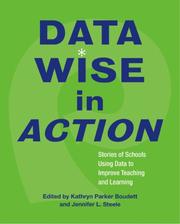
Teaches a collaborative, inquiry-based process for using student achievement data to drive school improvement—a practical skill set central to modern instructional leadership and licensure competencies.
School Culture, Change, and People Leadership
IntermediateMaster the human side of administration: building trust, managing change, developing staff, and cultivating a positive and equitable school culture.
▸ Study plan for this stage
Pace: 8–10 weeks, ~25–30 pages/day. Week 1–4: "Shaping School Culture" (approx. 200 pages); Week 5–10: "The SPEED of Trust" (approx. 300 pages). Allocate 1–2 days per week for reflection and exercise work.
- School culture as a system of shared values, beliefs, rituals, and symbols that shape behavior and identity—and how leaders intentionally shape it
- The four frames of organizational culture: structural, human resources, political, and symbolic—and how to diagnose which frame(s) dominate your school
- Trust as a measurable, learnable competency built through credibility, reliability, care, and integrity—not just personality or likability
- The SPEED model: Sincere intent, Personal involvement, Extend trust proactively, Execute with excellence, and Do right by others—as the five waves of trust-building
- Change leadership through cultural narrative: using stories, symbols, and rituals to help staff and students internalize new values during transitions
- The relationship between psychological safety, trust, and staff willingness to take risks, innovate, and report problems
- Equity in culture-building: how unconscious biases, power dynamics, and exclusionary rituals perpetuate inequitable cultures and how to dismantle them
- Trust diagnostics: identifying trust deficits in your school and their root causes (competence gaps, broken promises, misaligned incentives, or lack of care)
- What are the four organizational frames Deal describes, and how would you diagnose which frame(s) currently dominate your school's culture?
- How does Covey define trust in 'The SPEED of Trust,' and why is it more than just personality or likability?
- Describe the five waves of the SPEED model and give a concrete example of how you would apply each wave to rebuild trust after a broken promise or failed initiative in your school.
- What role do rituals, symbols, and stories play in shaping school culture, and how can a leader intentionally use them to embed new values during a change initiative?
- How are psychological safety and trust connected, and what specific leader behaviors erode or build psychological safety on your staff?
- Identify one cultural norm or ritual in your school that may inadvertently exclude or marginalize certain students or staff. How would you redesign it to be more equitable?
- Culture audit: Map your school's current culture using Deal's four frames. For each frame, list 3–5 artifacts (policies, rituals, symbols, stories) that reflect it. Identify which frame is strongest and which is weakest, and note the implications for change leadership.
- Trust diagnostic: Interview 5–8 staff members (anonymously if possible) using Covey's SPEED framework. Ask: Where do you see sincere intent from leadership? Where is personal involvement lacking? Where do we extend trust, and where do we withhold it? Synthesize findings into a one-page trust gap analysis.
- Ritual redesign project: Select one school ritual or tradition (e.g., staff meetings, parent events, classroom norms) that may be exclusionary or misaligned with your stated values. Redesign it to be more inclusive and symbolic of your desired culture. Write a 2–3 page proposal with rationale.
- Story collection and analysis: Gather 3–4 stories that staff or students tell about 'how things work here.' Analyze what values, beliefs, and norms each story reinforces. Write a brief reflection on whether these stories align with your espoused culture or reveal a hidden culture.
- SPEED application plan: Choose one current trust challenge in your school (e.g., staff skepticism about a new initiative, parent-school disconnect, or teacher-administrator tension). Design a 4–6 week action plan using all five waves of the SPEED model. Include specific behaviors, communication, and milestones.
- Equity and culture reflection: Review your school's cultural artifacts (mission statement, classroom posters, awards, discipline policies, parent communication). Identify 2–3 places where bias, power imbalance, or exclusion may be embedded. Draft a memo proposing changes and the cultural narrative you'd use to introduce them.
Next up: This stage equips you with the human and cultural foundations—trust, psychological safety, and intentional culture—that are essential for the next stage, which will likely deepen your ability to lead specific initiatives (instructional improvement, equity work, or organizational transformation) by anchoring them in the strong relational and cultural infrastructure you've built here.
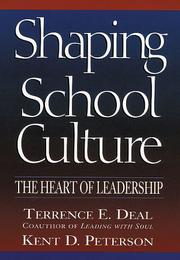
Deal and Peterson's classic work on symbolic leadership and school culture is foundational for any principal who wants to move beyond management into genuine cultural transformation.
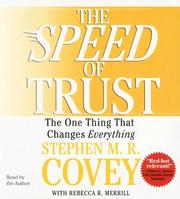
Trust is the currency of school leadership; this book provides a practical framework for building and repairing it with staff, families, and communities—skills directly assessed in PSEL Standard 3 (Equity and Cultural Responsiveness).
Strategic Leadership & Systems Thinking
ExpertThink and act as a systems leader—aligning vision, structures, equity, and community engagement to sustain deep, lasting school improvement at scale.
▸ Study plan for this stage
Pace: 8–10 weeks, ~40–50 pages/day, with 1–2 weeks between books for integration and reflection
- Change leadership as a dynamic process: managing complexity, building collective efficacy, and fostering intrinsic motivation across systems rather than imposing top-down mandates
- The tri-level framework of change: personal mastery, interpersonal relationships, and organizational systems must align for sustainable transformation
- Culturally responsive leadership as non-negotiable: recognizing how race, identity, and power shape school structures, and actively dismantling inequitable systems
- Systems thinking in practice: understanding feedback loops, unintended consequences, and interconnections between curriculum, instruction, culture, and community
- Building and sustaining moral purpose: anchoring leadership decisions in equity, student voice, and community partnership rather than compliance metrics alone
- The role of distributed leadership and teacher agency: shifting from heroic leadership to cultivating leadership capacity across all stakeholders
- Community engagement as co-leadership: positioning families and communities as partners in diagnosis, design, and accountability for school improvement
- How does Fullan's concept of 'change leadership' differ from traditional management, and what are the three core conditions he identifies for managing change in complex systems?
- What does Khalifa mean by 'culturally responsive school leadership,' and how does it require leaders to examine and interrupt their own biases and the structural inequities embedded in school systems?
- How do personal mastery, interpersonal relationships, and organizational systems interact in Fullan's model, and why is alignment across all three levels essential for lasting improvement?
- What is the relationship between moral purpose and systems change in both texts, and how do leaders use this to sustain momentum when facing resistance or setbacks?
- How should a systems leader approach community engagement differently than traditional parent involvement models, and what does Khalifa argue about power-sharing with families?
- What are the unintended consequences and feedback loops that leaders must monitor when implementing school-wide change, and how do you avoid replicating inequitable patterns in new initiatives?
- Map your school or district's current change initiatives using Fullan's framework: identify which are addressing personal mastery, which are building relationships, and which are changing systems. Where are the gaps or misalignments?
- Conduct a 'systems audit' of one major school process (e.g., discipline, curriculum adoption, hiring): trace how decisions flow, who has voice, and where inequities are embedded. Document feedback loops and unintended consequences.
- Interview 5–7 stakeholders (teachers, families, students, community members) about their experience of leadership and change in your school. Analyze responses for patterns of voice, trust, and cultural responsiveness.
- Design a culturally responsive community engagement plan for one school improvement goal: specify how you will share power, build on community assets, and ensure families are co-leaders—not just consulted.
- Reflect in writing on your own cultural identity, biases, and relationship to power and privilege. How do these shape your leadership decisions? Share insights with a peer or coach for accountability.
- Create a 'change story' for a past or current improvement effort: describe the personal, interpersonal, and systemic shifts required. Identify where you succeeded or faltered in attending to all three levels.
Next up: This stage equips you with a coherent mental model for diagnosing and leading systemic change through a lens of equity and community partnership; the next stage will deepen your capacity to operationalize these principles through specific instructional, organizational, and accountability structures.

Fullan's five components of leadership (moral purpose, understanding change, relationship building, knowledge creation, coherence making) synthesize everything covered so far into a unified model for leading complex organizations.

Addresses equity and anti-oppressive practice at the systems level—increasingly required knowledge for licensure and essential for leading diverse 21st-century schools with integrity and effectiveness.
Discussion
Keep reading
Paths that share books, cover the same subject, or open a related topic.