Occupational health and safety exists to keep people from being hurt or made ill by their work, and it draws on medicine, engineering, chemistry, and management all at once. Because it's so multidisciplinary, a reading order helps: get the broad picture and the regulatory baseline first, then the technical science, then the systems that turn knowledge into a safe workplace.
This path moves from foundation to specialty to system. It suits students preparing for certification and professionals building a program from scratch. These books support formal training and credentials rather than replacing them — safety practice is regulated for good reason.
Build the foundation
Start with Introduction to occupational health and safety by Joseph LaDou, the standard survey that maps the whole field. Then OSHA 10-Hour General Industry Study Guide grounds you in the regulatory baseline every U.S. workplace must meet, and Accident Prevention Manual for Business and Industry provides the classic engineering-and-technology reference the profession has relied on for decades.
Learn the science
Now the technical core. Industrial Hygiene Simplified by James Stewart introduces the science of recognizing and controlling workplace hazards — chemical, physical, and biological — in accessible terms. Risk assessment by Lee Ostrom teaches how to systematically identify and rank hazards, the analytical skill underneath every safety decision.
Build the system
Knowledge only prevents harm when it's organized into practice. Safety Management: A Qualitative Systems Approach by James Roughton shows how to build a functioning safety-management system rather than a pile of rules. The Safety Professional's Handbook by Jeffrey Camplin is the broad professional reference that covers the role end to end.
Go deep
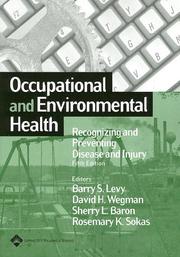
Close with the authoritative deep references. Occupational and environmental health by Barry Levy is the comprehensive medical-and-public-health treatment of how work affects the body. And Patty's industrial hygiene is the field's definitive multi-volume reference — the book you grow into as your career deepens.
Read in this order, safety stops being a checklist and becomes a coherent discipline you can practice and lead. Follow the full path to keep the arc intact.
Follow the full reading path →
Ready to learn something deeply?
Build a reading path — free