Educational leadership is a distinct craft: unlike leading a business, a principal's core product is learning, and the workforce is professionals with deep expertise of their own. The field rewards a reading order that starts with the role itself, moves into the instructional heart of the job, and then widens to culture, trust, and the equity questions that define modern school leadership.
This path is arranged for aspiring and current administrators. It builds from what the role is, to how to improve teaching and use evidence, to how to lead people and change through relationships. These books support certification and mentorship rather than replacing the credentials school leadership requires.
Define the role
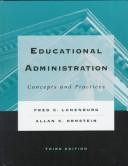
Start with The Principal by Michael Fullan, a concise argument for what school leaders should actually focus on to move learning. Pair it with Educational administration by Frederick Lunenburg, the comprehensive textbook that surveys the entire field, and School Leader Internship for the structured, hands-on preparation many programs use. Together they map the job.
Lead the instruction
The center of the work is teaching and learning. Instructional Leadership: How Principals Make a Difference by Philip Hallinger explains the leader's direct influence on classroom quality. The Art and Science of Teaching by Robert Marzano gives leaders the research-based framework to recognize and support strong instruction. And Data Wise in Action by Kathryn Boudett shows how schools use evidence to improve rather than to punish.
Shape culture and trust
Leadership runs on relationships. Shaping school culture by Terrence Deal is the classic on the invisible norms and rituals that determine whether reform sticks. The SPEED of Trust by Stephen M. R. Covey makes the case that trust is the multiplier behind every other leadership move — foundational for a role built on collaboration.
Lead change, equitably
Close with change and equity. Leading in a Culture of Change, again by Fullan, is the definitive guide to driving improvement amid the messy reality of schools. And Culturally Responsive School Leadership by Muhammad Khalifa ends the path with the essential modern challenge — leading in a way that serves every student equitably. It reframes everything earlier through the lens of who schools are actually for.
Read in order, the principalship comes into focus as a coherent, learnable practice. Follow the full path to keep the sequence.
Follow the full reading path →
Ready to learn something deeply?
Build a reading path — free