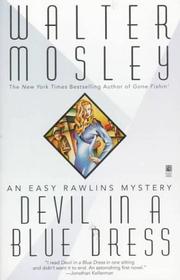
Start with Devil in a Blue Dress, and read the novels in publication order. Easy takes a stranger's money on the first page because a mortgage payment is due, and that single fact — a Black man in 1948 Los Angeles who owns a house and can be squeezed through it — is the engine of the next eleven books. Nothing else introduces the series so economically.
The obvious alternative is to start chronologically with Gone Fishin', which is set in 1939 and is the earliest thing in the sequence. Do not. Walter Mosley wrote it first and could not sell it until he was famous, and he published it sixth for a reason: it explains what happened in Texas between Easy and Mouse, and it lands only after five books have made you need that explanation. Read first, it is a coming-of-age novella about two men you have no reason to care about yet.
The first two: 1948 and 1953
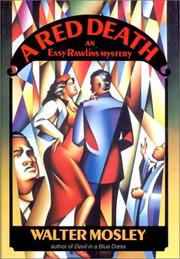
Devil in a Blue Dress and A red death run about 200 and 280 pages, with chapters four to six pages long, so they move faster than the period detail suggests. Give the opening fifty pages room anyway — the voice is carrying more information than the plot is. Easy narrates in careful, schooled English and drops into Texas dialect the moment he needs something from someone; watching when he switches, and what it buys him, is most of the pleasure. A red death maps the Red Scare onto the same leverage, with the IRS, an FBI agent and a Communist organiser as three ways of squeezing a man who owns something.
The 1990s core
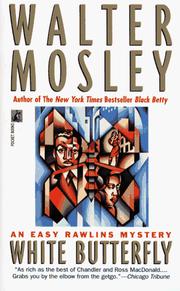
White Butterfly (Easy Rawlins Mysteries), Black Betty, A Little Yellow Dog and then Gone Fishin'. This is where the series states its argument outright: in White Butterfly (Easy Rawlins Mysteries), three Black women are murdered without urgency and the fourth victim, who is white, produces a task force. The domestic material matters here too — Easy's marriage and his improvised family take over long stretches, and skimming them makes the later books feel arbitrary. A Little Yellow Dog ends on the event that reorganises everything after it, so read it in place and avoid plot summaries first.
Watts, and the series at its peak
Bad Boy Brawly Brown picks up after a six-year publishing gap and deals directly with the fallout of A Little Yellow Dog. Then Little Scarlet, set in the days after the August 1965 Watts uprising, with the LAPD asking Easy for help because no white officer can walk those streets — the inversion of the whole series premise, and the book many readers name the best. Spend twenty minutes on a factual account of the uprising first; the novel assumes the outline and spends its pages on the aftermath. Cinnamon Kiss moves to San Francisco and the counterculture.
The ending, and the revival
Blonde Faith closed the original arc on a cliff that stood unresolved from 2007 to 2013. Little green opens seconds after it and is meaningless read out of order, so read the two within a fortnight of each other. Charcoal Joe has Easy running his own agency, which is the fullest version of the professionalisation he spent a decade refusing.
Where to stop
Blonde Faith is a legitimate stopping point and a lot of readers take it — it was the ending for six years and reads like one. If you want the arc resolved rather than suspended, go to Charcoal Joe and stop there.
Two books this path leaves out
Mosley kept writing Easy Rawlins, and two mid-series volumes are not in our catalogue: the story collection Six Easy Pieces, which sits between Bad Boy Brawly Brown and Little Scarlet, and Rose Gold, which sits between Little green and Charcoal Joe. Neither is required, but if you want the complete run, that is where they go. Note also that several records here carry the publisher's series tag in the title and two spell it "Easy Rowlins" — same books, a cataloguing quirk rather than a different edition.
For more ordered routes through a single writer, browse Discover.
Follow the full ordered path here: Easy Rawlins Reading Order: Where to Start.