Doris Kearns Goodwin Reading Order: Where to Start
Doris Kearns Goodwin writes presidential biography as group portrait: her subject is almost never one man alone but a president surrounded by rivals, a wife, or a press corps, and the argument is always about how power is exercised through other people. Start with the book that made her famous and is genuinely her best, then read the two other big ensemble histories, then go back to the early work where the method was formed and forward to the memoirs where she puts herself in the frame. Nothing here is a series, so the order is about starting with the strongest book rather than following a plot.
Start Here
BeginnerMeet Goodwin's central idea — that a president is best understood through the people he chose to keep close — in her two most celebrated books.
▸ Study plan for this stage
Pace: 8–10 weeks. Team of Rivals is 916 pages and No Ordinary Time 764 — nearly 1,700 pages before you leave the first stage. At 30 pages a day that is a month each. Team of Rivals is organised biographically for its first third (four separate lives running in parallel before they converge on 1860), so ex
- Goodwin's governing idea: a president is best understood through the people he chose to keep close, so her real unit of study is a group, not a man
- Team of Rivals braids Lincoln with Seward, Chase and Bates — the men he beat for the nomination and then appointed — and the argument is that appointing them was a deliberate exercise of power, not magnanimity
- Its first third runs the four lives in parallel from childhood, which is why the convention chapter lands: you have watched three men expect to win
- The book's method is comparative — the same event seen through four sets of diaries and letters — and its weakness is that Lincoln's competitors are more legible on the page than Lincoln himself
- No Ordinary Time applies the same lens to a household: Franklin and Eleanor Roosevelt as a working political partnership and a failed marriage simultaneously
- It won the Pulitzer and is her most emotionally exposed book, largely because Eleanor's position — indispensable, unloved, and knowing it — is documented in her own writing
- Both books are wartime books, and both argue that domestic reform and war leadership were the same job rather than competing ones
- What did Lincoln actually gain from appointing his rivals, and what did it cost him? Goodwin is clearer about the first than the second — is that fair?
- Which of Seward, Chase or Bates does the book bring most fully to life, and why might that not be Lincoln?
- In No Ordinary Time, where does the partnership between Franklin and Eleanor work as politics and where does it fail as a marriage — and does Goodwin keep those separate?
- How does she use Eleanor's own writing differently from how she uses Franklin's, and what does that asymmetry produce?
- Both books are about a president managing people who could destroy him. What is Goodwin's implicit theory of political skill?
- Keep a four-column chart for the first third of Team of Rivals, one column per man, noting where each was in 1848, 1854 and 1858. The convention chapter is much sharper with it.
- After the cabinet is formed, list each member's grievance. The rest of the book is the management of those grievances.
- In No Ordinary Time, mark every scene where Eleanor pushes Franklin on civil rights or refugees, and note the outcome each time. The pattern is the book's hardest argument.
- Write a paragraph comparing the White House as a workplace in the two books. It is the same building doing very different work.
Next up: You now know how she braids lives; the long ensembles take the same technique and widen it from a cabinet to a whole political era.

Lincoln builds a cabinet from the men who ran against him. The obvious entry point and the book that defines her method; everything else she wrote reads as a variation on it.
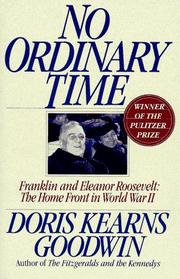
Franklin and Eleanor Roosevelt in the White House during the war, treated as a working partnership and a failing marriage at once. Her Pulitzer winner, and read second because it applies the Team of Rivals lens to a household rather than a cabinet.
The Long Ensembles
IntermediateTake on the two big books that widen the frame from a president to a whole political era.
▸ Study plan for this stage
Pace: 10–12 weeks. The Bully Pulpit is 910 pages and The Fitzgeralds and the Kennedys 932 — over 1,800 pages, and both are slower going than the first stage. The Bully Pulpit has three interleaved strands and is genuinely demanding; 25 pages a day is honest. The Fitzgeralds and the Kennedys is a family sa
- The Bully Pulpit is a three-way structure: Theodore Roosevelt, William Howard Taft, and the McClure's investigative journalists — Tarbell, Steffens, Baker — who supplied the public pressure Roosevelt governed with
- Its argument is that the muckrakers were not adjacent to Progressive reform but a working part of its machinery, and that Taft's failure was partly a failure to use the press the same way
- The friendship between Roosevelt and Taft, and its collapse into the 1912 split that handed the presidency to Wilson, is the emotional spine
- It is her longest and most demanding book, and the three-strand structure only works if Team of Rivals has already taught you how she moves between parallel lives
- The Fitzgeralds and the Kennedys is family history rather than presidential study: three generations from Boston ward politics through Joseph Kennedy's fortune to the White House
- It covers the same decades as No Ordinary Time from outside the administration, which is why it belongs after the Roosevelt books
- Note honestly: this book was at the centre of a 2002 controversy over passages closely resembling another author's work, which Goodwin acknowledged and corrected in later editions. It is worth knowing while reading, and it does not make the research unusable
- What did the McClure's journalists give Roosevelt that he could not generate himself, and what did they cost him?
- Why did the same relationship with the press not work for Taft — is Goodwin's explanation about temperament, or about circumstance?
- The Roosevelt-Taft friendship breaks in public. Where does Goodwin locate the point of no return, and do you agree?
- How does the Kennedy family look from Boston rather than from Washington, and what does that vantage explain about the later presidency?
- Goodwin's sympathies are visible in both books. Where do they help her see something, and where do they soften a judgement?
- Keep a running list in The Bully Pulpit of which McClure's investigation preceded which piece of legislation. That sequence is the entire thesis.
- Draw the Kennedy and Fitzgerald family tree before chapter three. Readers routinely lose track of who is whose grandparent.
- Read one Ida Tarbell chapter on Standard Oil directly, then Goodwin's account of it, and compare what each does.
- Set The Bully Pulpit's 1912 chapters beside the opening of No Ordinary Time. The Progressive era ending and the New Deal beginning are one continuous argument.
Next up: Having read four presidencies at full length, you can finally read the early book where the method was invented and the late one that summarises it.

Theodore Roosevelt, William Howard Taft and the muckraking journalists of McClure's, and the friendship that broke a party in two. Her longest and most demanding book; the three-way structure only makes sense once Team of Rivals has taught you how she braids lives.

Three generations from Boston ward politics to the presidency. A family saga rather than a presidential study, and best read after the Roosevelt books, which cover the same decades from inside the White House.
The Early Work and the Synthesis
IntermediateGo back to the book that started her career, then read the essay-length distillation of everything the biographies argue.
▸ Study plan for this stage
Pace: 5–6 weeks. Lyndon Johnson and the American Dream is 432 pages and Leadership in Turbulent Times 496 — a relief after 3,500 pages of ensemble history. Read the Johnson book slowly, since much of its value is in individual quoted conversations, and read Leadership in Turbulent Times quickly, because y
- Lyndon Johnson and the American Dream was written out of her time as a White House fellow and then as Johnson's confidante at the ranch in his final years
- It is the rawest thing she published: much of it rests on private conversations with a man who was talking to her about his own defeat, and it is openly interpretive about his psychology
- That access-and-intimacy instinct is the origin of everything later — the whole career is an attempt to get as close to a subject as she got to Johnson, using documents instead of a living man
- It is also the book where the method is least protected: there is no archive to check the conversations against, and she says so
- Leadership in Turbulent Times sets Lincoln, both Roosevelts and Johnson side by side and compares them directly on how each handled a crisis
- Placed here deliberately: it is a distillation of four books you have already read, and it is thin if you have not read them
- Read as a summary it is genuinely useful — it makes explicit the theory of leadership the biographies only ever dramatise
- What can a biographer do with a living, talking subject that no archive allows, and what can she no longer do?
- How much of the Johnson book is evidence and how much is interpretation, and does Goodwin mark the difference clearly enough?
- Leadership in Turbulent Times names specific traits. Which of them are actually supported by the long books, and which are asserted?
- Johnson is the only subject Goodwin knew personally. Does that make her account of him better or worse than her account of Lincoln?
- After six books, what does she think leadership is — and is it a theory or a temperament?
- List the traits Leadership in Turbulent Times attributes to each president, then find one scene in the corresponding long book that supports it and one that complicates it.
- Mark the passages in the Johnson book that could not exist without personal access. That subset is the book's real contribution.
- Write a paragraph on what Goodwin's version of Johnson leaves out, and check it against any standard account of the Vietnam escalation.
- Reread the Lincoln chapter of Leadership in Turbulent Times immediately after finishing it, and note what 916 pages gave you that 40 cannot.
Next up: The argument is now fully in view, which is the right moment to read her turning the same attention on her own life.

Written from her time as a White House fellow and Johnson's confidante in his final years. The rawest thing she published, and it explains the access-and-intimacy instinct that shapes all the later work.
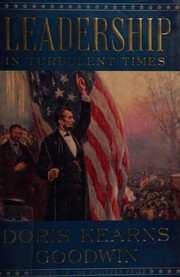
Lincoln, both Roosevelts and Johnson set side by side and compared directly. Deliberately placed near the end: it is a summary of four books you will already have read, and it is thin if you have not.
The Memoirs
IntermediateRead the two personal books, where Goodwin turns the same archival attention on her own life.
▸ Study plan for this stage
Pace: 1 week. Wait Till Next Year is 267 pages and the shortest book in the path by a wide margin — three or four evenings. Read it in as few sittings as possible; it is built as a continuous recollection and loses its warmth when broken up. This stage is a deliberate change of register after roughly 4,50
- Wait Till Next Year is a memoir of a 1950s Long Island childhood organised around the Brooklyn Dodgers, her father, and the ritual of scoring games to retell them at night
- That ritual is the origin story for the whole career: she learned narrative history as a nightly obligation to reconstruct an event accurately and dramatically for one listener
- The book is warm, short and completely unlike the histories, which is exactly why it belongs after them rather than before — it reads as explanation, not as introduction
- It is also a period portrait: suburban Catholic and Jewish neighbourhoods, polio, the 1955 World Series, and the Dodgers leaving for Los Angeles
- Her mother's illness runs underneath the baseball and is handled with the same restraint she gives Eleanor Roosevelt's loneliness
- Read against Team of Rivals it shows the same instinct at domestic scale: a life told through the people around it rather than from inside it
- It is the one book in the path where Goodwin is the subject, and the contrast with her treatment of presidents is the most interesting thing about it
- How does the nightly scorecard ritual explain the way she writes history — what specifically transferred?
- Where in the memoir does she use the same techniques she uses on presidents, and where does she drop them?
- The book is about a neighbourhood as much as a family. What does that suggest about why her histories are always group portraits?
- How does she handle her mother's illness, and how does that compare with her handling of Eleanor Roosevelt?
- Having finished the path, is the memoir a footnote to the histories or their key?
- Read the scorekeeping passages twice and write down what the practice actually taught her: selection, sequence, emphasis.
- Set one childhood scene beside one White House scene from No Ordinary Time and compare the sentence rhythms. They are the same writer at two scales.
- Make a list of what the memoir tells you about the 1950s that the presidential books never had cause to mention.
- Write a short answer to the question the whole path poses: does understanding the biographer change how you read the biographies?
Next up: The path ends here, with the method traced back to the household that produced it and the histories readable as one continuous argument about power exercised through other people.
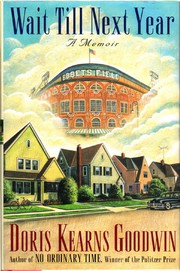
A Brooklyn Dodgers childhood in 1950s Long Island. Short, warm and completely unlike the histories, which is why it belongs after them rather than before.
Goodwin and her husband Richard Goodwin, a Kennedy and Johnson speechwriter, open his three hundred boxes of 1960s papers. Her last book, and the right place to stop: it is the history and the memoir finally becoming the same project.