The Progressive Era: books to read, in order
Between roughly 1890 and 1920 Americans built most of the machinery they still argue about: food and drug regulation, antitrust enforcement, the income tax, direct election of senators, the Federal Reserve, women's suffrage, the beginnings of the administrative state. They also passed Prohibition, wrote immigration restriction into law, and produced the country's most influential eugenics movement — by the same people, through the same reform impulse. That is the problem the historiography has never resolved. Hofstadter said progressivism was a status anxiety among a displaced middle class; Wiebe said it was a search for order by a new professional stratum; McGerr says it was a genuinely radical middle-class attempt to remake the whole society; Lears says it was a crusade for national regeneration with an ugly underside; Leonard says the economists who built the regulatory state were eugenicists and that this was not incidental. Whether progressivism was democratic or managerial, and who it was actually for, is still open. This path is ordered to make you meet the primary sources before the interpretations, so that when the argument arrives you have your own evidence.
Orientation
BeginnerGet the period's chronology and its major legislation before meeting any interpretive framework. By the end you should be able to place the Sherman and Clayton Acts, the Pure Food and Drug Act, the Sixteenth and Seventeenth Amendments, the Federal Reserve Act and the Eighteenth and Nineteenth Amendments in order and say roughly what each did.
▸ Study plan for this stage
Pace: Two books, 539 pages, and the stage is deliberately short. Walter T. K. Nugent's Progressivism is 144 pages, a very short introduction that covers the whole period in a couple of hours and — unusually for the format — says plainly that historians disagree about what progressivism was. Read it in one
- The period's spine, roughly 1890 to 1920, and what was federal versus state and municipal
- The Sherman and Clayton Acts and the difference between them
- The Pure Food and Drug Act and the machinery it created
- The Sixteenth and Seventeenth Amendments — income tax and direct election of senators
- The Federal Reserve Act and the problem it was written to solve
- The Eighteenth and Nineteenth Amendments, and the fact that Prohibition and suffrage passed together
- McGerr's thesis: reform as a middle-class project aimed at other Americans' habits as much as at business
- The administrative state as a novelty, and the constitutional questions it raised at the time
- Put the major federal legislation of the period in order and say in a sentence what each did.
- State McGerr's thesis in one sentence and name the evidence he leans on hardest.
- Why does Nugent say historians disagree about what progressivism was? Give the disagreement, not the fact of it.
- Prohibition and women's suffrage were ratified within a year of one another. What does that coincidence suggest about the movement?
- What was new about the federal government by 1920 that had not existed in 1890?
- Make a single-page chronology of federal legislation and amendments, 1890 to 1920, and keep it beside you for the rest of the path. Every later book will be arguing about entries on it.
- Write McGerr's thesis at the top of a sheet and leave the rest blank. Add evidence for and against it as you go through stages two, three and four.
- From Nugent, list the four or five things historians disagree about, and predict which of them you expect to find hardest to settle.
- Pick one piece of legislation and find out who opposed it and why. The opposition is usually missing from a summary.
Next up: With the chronology and the strongest modern narrative in place, you can read the journalism that created the political demand without mistaking its rhetoric for the record.

A very short introduction that covers the whole period in a couple of hours and, unusually for the format, is honest that historians disagree about what progressivism was. Read it first purely to acquire the map.
The best full narrative history, and the strongest statement of the case that progressivism was a radical middle-class project to remake other Americans — including its coercive side. Read it second; the rest of this path is in dialogue with it.
The Muckrakers, in Their Own Words
BeginnerRead the investigative journalism that created the political demand for reform. You should finish able to describe what each of these books actually alleged, and to distinguish their evidence from their rhetoric — several are more polemical than their reputation suggests.
▸ Study plan for this stage
Pace: Four primary sources, 1,042 pages, all of them advocacy rather than history. Jacob A. Riis's How the other half lives is 251 pages of photographs and text on New York's tenements and comes first, because it made urban poverty visible to people who had never seen it; read it critically, since Riis's
- Muckraking as a commercial magazine genre with editors, deadlines and circulation targets
- What each book actually alleged, stated narrowly enough to be checked
- Riis's photographs as evidence and as composition, and the stereotyping that accompanies them
- Steffens's inversion: corruption as demand-side, driven by business rather than by bosses
- Tarbell's documentary method — corporate records, court testimony, rebate schedules
- The South Improvement Company and the mechanism of the rebate
- Fiction as a source: what The Jungle establishes and what it dramatises
- The gap between what a muckraker wanted and what the legislation delivered
- What, precisely, did Steffens allege about the relationship between business and municipal government?
- How did Tarbell establish her case against Standard Oil? Name the kinds of document she used.
- Where in Riis does the sympathy end and the stereotype begin? Quote a passage where both are present.
- Sinclair wanted socialism and got meat inspection. Why did the book land where it did?
- For each of these four, separate one claim you would accept as established from one you would call rhetoric.
- Take Tarbell's account of the South Improvement Company and reconstruct the rebate mechanism on paper until you could explain it to someone else. That mechanism is the whole antitrust argument in miniature.
- Choose three Riis photographs and write down what each is evidence of and what it is arranged to make you feel.
- Read one Steffens city chapter and one modern account of the same city's politics, and mark what he could not have known.
- For each of the four books, write the legislation it is usually credited with and check the date against your stage-one chronology. Some of the credit is retrospective.
Next up: The journalists described the conditions from outside; the next stage puts you with the people who lived and worked inside them.
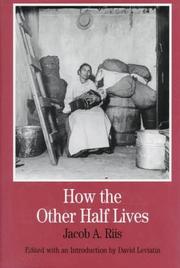
Riis's 1890 photographs and text on New York's tenements, the book that made urban poverty visible to people who had never seen it. Read it first and read it critically: Riis's sympathy for the poor coexists with flat ethnic stereotyping that is on nearly every page.
Steffens's McClure's series on municipal corruption in St Louis, Philadelphia and elsewhere, and the origin of the whole muckraking genre. Short, and the clearest statement of the argument that the businessman bribing the boss was the real problem.
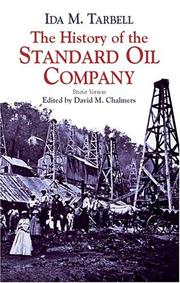
The most rigorous piece of investigative journalism of the era, and arguably ever: nineteen instalments of documented corporate history that led to the breakup of Standard Oil. Long. Read the opening chapters and the section on the South Improvement Company if you read nothing else.
The novel that produced the Pure Food and Drug Act, though Sinclair intended it as socialist argument and complained that he had aimed at the public's heart and hit its stomach. Our catalogue carries a nonsense publication year for it; the book is 1906.
The Reformers Themselves
IntermediateMeet the reformers as people with programmes rather than as a movement. You should be able to describe what a settlement house actually did, and to explain how a single industrial disaster converted a labour argument into legislation.
▸ Study plan for this stage
Pace: Two books, 629 pages, very unevenly split. Jane Addams's Twenty Years At Hull-House is 180 pages and is a participant's memoir — Addams on founding and running the Chicago settlement house, written by the person with the most invested in how it is remembered, and the most sympathetic account availab
- What a settlement house actually did — the services, the residents, and the theory behind living among the poor
- Addams as advocate for her own institution, and what a memoir can and cannot establish
- The 1909 shirtwaist strike and the organisation that preceded the fire
- The fire itself: the locked doors, the fire escape, and the inquest findings
- From disaster to statute: the Factory Investigating Commission and the laws that followed
- Immigrant women workers as agents rather than as objects of reform
- The difference between charity, settlement work and legislation as strategies
- Why a single event converted a long-standing labour argument into enacted law
- Describe a week at Hull-House. What did it provide, to whom, and on what terms?
- What did the shirtwaist strikers demand in 1909, and what did they win?
- What specifically failed at the Triangle factory, and what did the inquest conclude?
- Which laws followed the fire, and how quickly? Add them to your stage-one chronology.
- Addams is writing about her own institution. Where would you want independent evidence, and for what claims?
- Why did this disaster produce legislation when earlier industrial deaths had not?
- List Hull-House's activities from Addams's own account and mark which were later taken over by government. The list is a preview of the administrative state.
- Trace the Triangle sequence — strike, fire, inquest, commission, statutes — as a five-step chain, with the date of each step from von Drehle.
- Set von Drehle's account of the workers against Riis's account of tenement immigrants and note the difference in who is allowed to act.
- Write a paragraph testing McGerr's thesis against this stage: is settlement work reform aimed at other Americans' habits, or something else?
Next up: Local reform and a state commission are one scale; the next stage follows the same impulse into presidential politics, where it acquires a very different character.

Addams on founding and running the Chicago settlement house, and the most sympathetic account available of what progressive reform looked like at street level. Read it directly after the muckrakers to see the same conditions from inside rather than from a reporter's notebook.
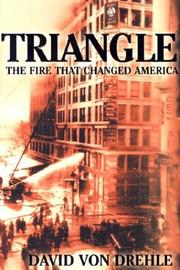
The 1911 Triangle Shirtwaist fire, the strike that preceded it, and the New York factory legislation that followed. The best single case study of how progressive reform actually got made, and it puts immigrant women workers at the centre rather than the reformers who spoke for them.
Politics and the State
IntermediateFollow progressivism into national politics. You should be able to explain the split between Roosevelt's New Nationalism and Wilson's New Freedom, what the 1912 four-way election was actually about, and how much of the modern federal state dates from these years.
▸ Study plan for this stage
Pace: Two books, 1,322 pages, and one of them is enormous. Doris Kearns Goodwin's The Bully Pulpit is 910 pages — Roosevelt, Taft, their friendship and its collapse, told alongside the McClure's journalists, which makes it the book that ties stage two to national politics. It is popular history in the goo
- New Nationalism against New Freedom: regulate the trusts or break them
- The 1912 four-way election and what each of the four candidates represented
- The Roosevelt-Taft friendship and its collapse as a substantive political split, not only a personal one
- The press and the presidency as a working relationship, which is Goodwin's real subject
- Labour, radicalism and the strikes that ran alongside the reform legislation
- Disfranchisement and lynching in the same years as the reform amendments
- Socialism as a live American electoral force in this period
- How much of the modern federal state was actually built between 1901 and 1920
- Explain the difference between New Nationalism and New Freedom in policy terms, not in slogans.
- What was the 1912 election actually about, and what did the result settle?
- Where does Painter's account of the period contradict Goodwin's rather than merely supplement it?
- What was happening to Black Americans politically during the reform years, and how do the presidential narratives handle it?
- How large was the socialist vote, and what happened to it?
- Which parts of the modern federal state date from these years, and which were later attributed to them?
- Write the 1912 platforms of all four candidates in four short columns from Goodwin, then mark which planks were enacted and by whom.
- Take one year — 1912 or 1913 — and build a two-row timeline: presidential politics on top, strikes and racial violence below, both from your two books.
- Find three events Painter treats at length that Goodwin does not mention, and ask what a history containing both would look like.
- Return to your McGerr sheet and add evidence from this stage. Note whether the national politics strengthens or weakens his case.
Next up: You now have the period from above and from below and a substantial body of primary evidence, which is the equipment needed to enter the argument about what progressivism was.

Roosevelt, Taft, their friendship and its collapse, told alongside the McClure's journalists — which makes it the book that connects stage two to national politics. Long and popular in the good sense; the best narrative of 1901 to 1912.
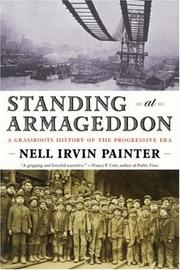
The same period written from labour, from below, and much less impressed by the reformers. Painter keeps strikes, lynchings and radicals on the page where the presidential narratives keep cabinet meetings. Read it immediately after Goodwin; the contrast is the point.
The Argument About What It Was
IntermediateEnter the historiographical dispute with your own evidence in hand. You should be able to state Hofstadter's, Wiebe's, Lears's and Leonard's theses, say what each explains that the others do not, and take a position on whether progressivism's exclusions — eugenics, disfranchisement, immigration restriction, Prohibition — were a betrayal of the movement or an expression of it.
▸ Study plan for this stage
Pace: Four books, 1,364 pages, and this is the stage the whole path was arranged to make possible. Richard Hofstadter's The age of reform is 328 pages and goes first because it set the terms for everything after: progressivism as the status anxiety of a displaced Protestant middle class, and populism befo
- Hofstadter's status-anxiety thesis, and what it explains that a policy history does not
- Wiebe's search for order: professionalisation, bureaucracy and the island community
- Lears's regeneration thesis, and the link he draws between domestic reform and empire
- Leonard's claim that eugenics was constitutive of progressive economics rather than incidental to it
- Prohibition, immigration restriction and disfranchisement as progressive measures, not exceptions to progressivism
- The difference between a movement's stated aims and the class position of its members
- What kind of evidence each thesis requires, and therefore what would refute each
- The open question: whether progressivism was democratic or managerial, and who it was for
- State Hofstadter's, Wiebe's, Lears's and Leonard's theses in one sentence each.
- What does each explain that the others do not? Name a specific fact for each.
- Were the movement's exclusions — eugenics, immigration restriction, Prohibition, disfranchisement — a betrayal of progressivism or an expression of it? Take a position and defend it from your own evidence.
- What evidence would refute Hofstadter? What would refute Leonard?
- Which of the four best accounts for what you read in the muckraking and reform stages?
- After all five stages, is progressivism a useful category at all, or a label covering incompatible movements?
- Build a four-column table, one per historian, with rows for the muckrakers, Hull-House, Triangle, the 1912 election, Prohibition and eugenics. Fill each cell with what that thesis says about that item. The empty cells are the most informative.
- Take Leonard's central claim and test it against one specific piece of legislation on your stage-one chronology, using his own evidence.
- Write two pages arguing the exclusions were an expression of progressivism, then two pages arguing they were a betrayal. Keep both and decide afterwards.
- Return to the McGerr sheet you started in stage one and write the final verdict, citing where each supporting item came from.
- Pick the historian you find least convincing and construct the strongest possible version of their case before dismissing it.
Next up: This closes the path: you can state four incompatible accounts of the same thirty years, say what each was built to explain, and defend a position on the question none of them has settled.

The 1955 book that set the terms for everything after: progressivism as the status anxiety of a displaced Protestant middle class, and populism before it as something rather less admirable than its defenders claimed. Much argued with, never displaced. Read it first in this stage.
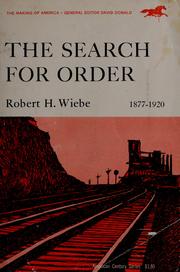
The major rival account: progressivism as the new urban professional class imposing bureaucratic order on a society of island communities. Catalogued with its date range as The search for order, 1877-1920. Read it directly against Hofstadter.

The period as a crusade for regeneration — martial, racial, spiritual — running from the end of Reconstruction to the First World War. Lears connects the reform impulse to the imperial one, which neither Hofstadter nor Wiebe does.

The hardest book here: the progressive economists who built the regulatory state were, in large numbers, eugenicists and race scientists, and Leonard argues their minimum wage and immigration policies were designed partly to exclude the people they considered unfit. Read it last, and read it as a strong thesis rather than a settled verdict.
Discussion
Keep reading
Paths that share books, cover the same subject, or open a related topic.