Doris Lessing Reading Order: Where to Start
This curriculum traces Doris Lessing's major creative arcs — from her realist African fiction, through her landmark modernist masterpiece, and into her visionary science fiction — building the thematic and stylistic fluency needed to appreciate each stage. Starting at an intermediate level, the path moves from accessible narrative realism to formally complex polyphony to speculative cosmology, so each stage genuinely prepares you for the next.
Entry Point: The African Stories
IntermediateEstablish Lessing's core preoccupations — colonialism, gender, social constraint, and the inner life — through her most accessible and celebrated early fiction, giving you the thematic vocabulary for everything that follows.
▸ Study plan for this stage
Pace: 6–8 weeks total: Weeks 1–3 for The Grass is Singing (~25–30 pages/day, including re-reading key scenes); Weeks 4–7 for Martha Quest (~30–35 pages/day); Week 8 reserved for reflection, review, and completing exercises. Read actively with a notebook nearby — Lessing rewards annotation.
- Colonial psychology and the 'settler mentality': how white Rhodesian society in The Grass is Singing enforces conformity and punishes those who deviate from its racial and gender codes
- Racial violence and the gaze: the charged, taboo dynamic between Mary Turner and Moses, and how Lessing uses their relationship to expose the psychic cost of apartheid-era racial hierarchy
- Female entrapment and social script: Mary Turner in The Grass is Singing and Martha Quest are both women whose inner lives are systematically crushed by the roles their societies demand of them — wife, daughter, respectable white woman
- The 'free woman' problem: Lessing's early articulation of the tension between a woman's desire for autonomy and self-definition versus the relentless pressure of family, class, and colonial community
- Landscape as psychological mirror: the African veld in both books is not mere backdrop but an active force — oppressive heat, vast indifference, and beauty that intensifies characters' inner states
- Social conformity as slow violence: the way gossip, community surveillance, and unspoken rules operate in both novels as instruments of control more insidious than overt law
- The interior monologue and free indirect discourse: Lessing's narrative technique of moving fluidly into characters' minds, making the reader complicit in their self-deceptions and awakenings
- Colonialism's damage to the colonizer: Lessing's unflinching argument that the system of racial domination in Southern Rhodesia destroys the humanity of white settlers as surely as it oppresses Black Africans
- In The Grass is Singing, how does Mary Turner's psychological deterioration function as both a personal tragedy and a structural critique of colonial Rhodesian society — and what does the novel suggest about the relationship between racial ideology and mental breakdown?
- Moses is rendered almost entirely through Mary's distorted perception. What does Lessing achieve — and what risks does she take — by withholding his interiority? How does this narrative choice itself comment on the colonial gaze?
- Martha Quest is saturated with Martha's contradictory desires: she craves freedom yet repeatedly submits to social pressure. Identify two or three specific scenes where this contradiction plays out, and explain what Lessing seems to be arguing about the formation of female identity under patriarchy and colonialism.
- Both Mary Turner and Martha Quest are outsiders within their own communities. Compare the nature of their outsider status — what does each woman want, what does each fear, and how does the social world of each novel punish non-conformity?
- How does Lessing use the physical landscape of Southern Rhodesia — the farm, the veld, the small town — differently in each book, and what does landscape reveal about each protagonist's psychological state?
- By the end of Martha Quest, Martha has made a series of choices (social, romantic, political) that seem to contradict her stated values. What does Lessing suggest about the gap between self-knowledge and self-determination for women in this historical moment?
- Close-reading journal: Select one scene from each novel in which the protagonist's inner voice is most at odds with her outward behavior (e.g., Mary's interactions with Moses; Martha's capitulation to the Sports Club crowd). Write 300–400 words analyzing how Lessing's free indirect discourse creates ironic distance — what does the reader see that the character cannot?
- Thematic mapping: Draw a simple diagram for each novel showing the social forces pressing in on the protagonist (family, racial community, gender expectations, colonial ideology, economic dependency). Annotate each force with a specific scene or line of dialogue. Compare the two diagrams — what overlaps, what differs?
- Comparative character essay (500–700 words): Argue whether Mary Turner and Martha Quest are variations on the same Lessing archetype or fundamentally different kinds of women. Use at least three textual examples from each novel to support your position.
- Landscape annotation exercise: Go back through The Grass is Singing and flag every significant description of the farm or veld. Do the same for the outdoor scenes in Martha Quest. Write a one-paragraph synthesis: how does Lessing's use of African landscape evolve between the two books, and what does that evolution signal thematically?
- Perspective experiment: Choose the scene in The Grass is Singing where Mary gives Moses an order and he silently complies (or any charged exchange between them). Rewrite the scene — just one paragraph — from Moses's point of view. Then write a short reflection: what does the exercise reveal about Lessing's narrative choices and their political implications?
- Reading-group discussion prep: Draft five discussion questions of your own for Martha Quest, focusing specifically on the tension between Martha's political awakening (her attraction to left-wing ideas) and her personal choices. This prepares you to engage with the ideological dimensions that will intensify in the later Children of Violence volumes.
Next up: Mastering the thematic vocabulary of colonialism, female constraint, and interior self-division in these two foundational novels equips you to follow Martha Quest's evolution across the full Children of Violence sequence and to engage with Lessing's increasingly experimental and explicitly political fiction with both emotional and intellectual grounding.

Lessing's debut novel is the ideal entry point: compact, psychologically intense, and immediately showcasing her central themes of race, gender, and colonial Africa. Reading it first grounds you in her realist voice before the formal experiments ahead.
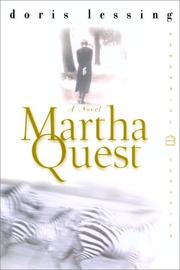
The first volume of the Children of Violence series introduces Martha, Lessing's semi-autobiographical alter ego, and establishes the bildungsroman arc that runs through her career. It deepens your sense of her political and feminist concerns in a sustained narrative form.
The Masterpiece: The Golden Notebook
IntermediateFully engage with Lessing's most celebrated and formally radical work, understanding its fractured structure, its feminist argument, and its portrait of a writer on the edge of breakdown — the summit of her realist-modernist achievement.
▸ Study plan for this stage
Pace: 6–8 weeks total. Week 1–2: Read A Proper Marriage (~30 pages/day, finishing in ~14 days). Weeks 3–8: Read The Golden Notebook (~25–30 pages/day across ~5 weeks, with one built-in pause week mid-way — after the second notebook cycle — for reflection, re-reading, and journaling).
- Fragmentation as form: The Golden Notebook's nested structure (the 'Free Women' frame novel + four colour-coded notebooks + the golden notebook itself) as a deliberate enactment of psychological and political disintegration
- The writer's block as subject matter: Anna Wulf's inability to write is not a backdrop but the central argument — Lessing uses creative paralysis to interrogate authenticity, self-censorship, and the cost of consciousness
- Feminist interiority and the 'free woman' paradox: both Martha Quest (carried over from A Proper Marriage) and Anna Wulf pursue freedom from domestic and sexual convention, yet find themselves trapped by new, subtler forms of dependency and self-division
- A Proper Marriage as structural prelude: Martha's entrapment in colonial Zambesia — through marriage, pregnancy, and wartime social performance — establishes the realist baseline of female constraint that The Golden Notebook then explodes into modernist fragments
- Political disillusionment and the Communist conscience: the Black and Red notebooks trace Anna's simultaneous disenchantment with the British Communist Party (post-Stalin revelations) and with Africa's colonial order, showing how ideological collapse mirrors personal breakdown
- The double or 'shadow self': the recurring motif of the alter ego (Anna/Ella, Anna/Saul Green) as a technique for splitting consciousness and dramatising the impossibility of a unified female identity under mid-20th-century conditions
- Metafiction and self-referentiality: Lessing's embedding of a novel-within-a-novel (Ella's manuscript, Anna's own drafts) forces the reader to question what counts as 'real' narrative and what counts as therapeutic fiction
- Breakdown as breakthrough: the 'crack-up' sequence in the golden notebook itself — where time, identity, and genre collapse — as Lessing's argument that madness is a sane response to an insane world, anticipating R. D. Laing's anti-psychiatry
- How does A Proper Marriage dramatise the specific mechanisms — social pressure, bodily experience of pregnancy, colonial community conformity — by which Martha Quest's autonomy is eroded, and how does this set up the reader's understanding of Anna Wulf's more radical resistance in The Golden Notebook?
- What is the structural and thematic function of the 'Free Women' frame narrative in The Golden Notebook? Why might Lessing have chosen to enclose the notebooks within a conventionally written, third-person novella?
- Trace Anna's political disillusionment across the Red Notebook: what specific events (Party meetings, relationships with comrades, the Stalin revelations) mark the stages of her break with Communism, and what emotional and creative consequences does each stage carry?
- In what ways does the character of Ella in the Yellow Notebook function as Anna's double, and what does the gap between Anna's lived experience and Ella's fictional life reveal about the distortions involved in transforming autobiography into art?
- How does Lessing represent the relationship between mental breakdown and creative liberation in the golden notebook section? Is Anna's 'crack-up' presented as failure, as necessary destruction, or as both simultaneously?
- Taken together, what argument do A Proper Marriage and The Golden Notebook make about the relationship between female freedom, political commitment, and the act of writing?
- Notebook mapping exercise: Draw a visual diagram of The Golden Notebook's full structure — label each section of 'Free Women,' each colour-coded notebook, and the golden notebook itself, then annotate each with its dominant theme, time period, and narrative voice. Return to this map whenever you feel lost in the text.
- Parallel journal: As you read, keep a two-column reading journal — left column for A Proper Marriage (Martha's constraints), right column for The Golden Notebook (Anna's responses). At the end of each reading session, write one sentence connecting an observation from each column, building toward a comparative thesis.
- Close-reading passage drill: Select one entry from each of the four notebooks (Blue, Red, Yellow, Black) and write a 200-word analysis of how Lessing's prose style, tense, and point of view shift between them. What does the style of each notebook 'do' that the others cannot?
- The 'Free Women' rewrite: After finishing The Golden Notebook, re-read only the five 'Free Women' sections in sequence as a standalone novella. Write a one-page response: what is lost, what is gained, and what feels deliberately flattened or ironic when the notebooks are removed?
- Feminist context annotation: Identify three moments in A Proper Marriage and three in The Golden Notebook where a female character internalises patriarchal or colonial judgement as her own thought. Annotate each with a note on how Lessing signals — through irony, free indirect discourse, or narrative distance — that this is ideological rather than natural.
- Breakdown timeline: Chart Anna Wulf's psychological deterioration across The Golden Notebook by listing, in order, every moment she describes dissociation, writer's block, or a fracture in her sense of self. Then write a short paragraph arguing whether this arc is one of decline, cyclical crisis, or eventual (partial) resolution.
Next up: By mastering The Golden Notebook's formal radicalism and its portrait of consciousness under pressure, the reader is now equipped to follow Lessing into her next major leap — the Canopus in Argos space-fiction series — where she abandons realism entirely and scales the same questions of freedom, ideology, and human limitation to a cosmic, speculative canvas.
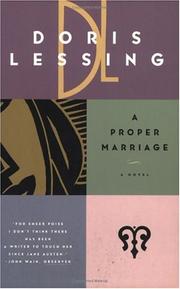
The second Children of Violence novel follows Martha through marriage and disillusionment, directly prefiguring the themes of The Golden Notebook. Reading it immediately before the Notebook makes Anna Wulf's predicament feel earned and inevitable.

Lessing's towering achievement and one of the most important novels of the twentieth century. Its interlocking notebooks — political, personal, creative, psychological — demand the thematic grounding built in the previous stages, and reward it with extraordinary depth.
Transition: Inner Space
IntermediateFollow Lessing as she pivots from social realism toward inner experience and mysticism, reading the work that bridges her realist fiction and her later science fiction and showing how her spiritual and psychological interests evolved.
▸ Study plan for this stage
Pace: 6–7 weeks total: Weeks 1–3 for "Briefing for a Descent into Hell" (~25–30 pages/day, including slower re-reading of the mythic/cosmic sequences); Weeks 4–6 for "The Summer Before the Dark" (~20–25 pages/day with journaling pauses); Week 7 reserved for comparative reflection, essay drafting, and exer
- The permeable self: how both novels dissolve the boundary between a stable 'I' and a fluid, collective or cosmic consciousness
- Inner space as literary territory: Lessing's deliberate shift from mapping society outward to mapping the psyche inward
- Altered states as epistemology: madness, dream, and dissociation not as pathology but as alternative ways of knowing in both Charles Watkins's amnesia and Kate Brown's breakdown
- Mythic and archetypal layering: the use of classical myth, Sufi mysticism, and Jungian archetypes to give psychological experience a universal frame in 'Briefing for a Descent into Hell'
- The politics of gender and identity: how Kate Brown's mid-life crisis in 'The Summer Before the Dark' is simultaneously personal, feminist, and existential
- Institutional critique: the psychiatric hospital in 'Briefing' and the domestic/professional world in 'The Summer Before the Dark' as systems that enforce conformity and suppress inner truth
- The dream-within-narrative structure: how Lessing embeds visionary or dream sequences (the seal dream in 'The Summer Before the Dark'; the cosmic voyage in 'Briefing') as structurally load-bearing, not merely decorative
- Transition and threshold: both protagonists occupy liminal states — between sanity and madness, youth and age, self and role — positioning these novels as Lessing's own threshold between realism and speculative fiction
- In 'Briefing for a Descent into Hell,' how does Lessing use Charles Watkins's amnesia and his visionary ocean voyage to argue that ordinary rational consciousness may be the impoverished state, not the enlightened one?
- How does the psychiatric institution in 'Briefing for a Descent into Hell' function as a symbol of society's relationship to non-conformist inner experience, and what is Lessing saying about the cost of 'cure'?
- In 'The Summer Before the Dark,' what does Kate Brown's recurring dream of carrying the seal signify, and how does its evolution across the novel track her psychological transformation?
- Both novels feature protagonists who lose or shed their social identities — how does Lessing treat this loss differently for Charles (a man in crisis) versus Kate (a woman in midlife), and what does that difference reveal about gender?
- How do Sufi and mystical frameworks (drawn on most explicitly in 'Briefing for a Descent into Hell') shape Lessing's narrative form as well as her thematic content — i.e., how does mysticism affect the way the story is told, not just what it is about?
- Taken together, how do these two novels serve as a bridge: what realist techniques and social concerns from Lessing's earlier work survive into them, and what new speculative or inner-space elements anticipate her later science fiction?
- Dream cartography: Keep a dedicated notebook while reading 'The Summer Before the Dark.' Each time Kate's seal dream recurs, write a one-paragraph description of what changes — setting, Kate's emotional response, the seal's condition — then draw a simple timeline mapping the dream's evolution against Kate's external life events. At the end, write a 300-word analysis of what the dream's arc argues
- Parallel passage analysis: Select one extended visionary or altered-state passage from 'Briefing for a Descent into Hell' (e.g., the crystal city sequence or the beach scene) and one from 'The Summer Before the Dark' (e.g., a dream passage or Kate's feverish period in the rented room). Write a 500-word close comparison: What narrative techniques does Lessing use in each? How does prose style shift
- Institutional role-play debate: Write two short monologues (150–200 words each) — one from the perspective of the psychiatrist who wants to 'restore' Charles Watkins in 'Briefing for a Descent into Hell,' and one from Charles's own perspective during his visionary state. Then write a 200-word reflection: whose voice does Lessing's narrative ultimately privilege, and how?
- Identity-stripping inventory for Kate Brown: Make a structured list of every role, label, and social expectation that Kate sheds or questions over the course of 'The Summer Before the Dark' (wife, mother, competent professional, attractive woman, etc.). For each, note the chapter/moment it is challenged and what replaces it (or whether anything does). Use this inventory as the evidence base for a
- Mysticism source-spotting: Research one of the traditions Lessing draws on in 'Briefing for a Descent into Hell' — Sufi thought (particularly Idries Shah, whom Lessing acknowledged as an influence) or Jungian collective unconscious — and write a one-page annotated reading note identifying three specific moments in the novel where that tradition's ideas are directly at work in character, image, or
- Bridge essay: After finishing both books, write a 600–800 word essay titled 'From Society to Inner Space: How Lessing Crosses the Threshold.' Use specific textual evidence from both 'Briefing for a Descent into Hell' and 'The Summer Before the Dark' to argue how these novels simultaneously conclude her realist phase and inaugurate her speculative one.
Next up: Mastering how Lessing uses inner experience, altered consciousness, and mystical frameworks as serious narrative tools in these two novels equips the reader to follow her as she projects those same concerns outward onto a galactic scale in her Canopus in Argos science-fiction series, where the "inner space" of the psyche becomes literally outer space.
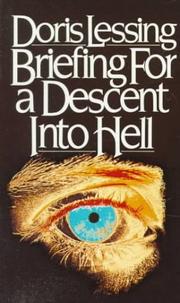
This hallucinatory novel about a man's breakdown and visionary inner journey is Lessing's clearest bridge between her realist and speculative modes. It introduces the cosmic, mythic register that defines the Canopus series without yet leaving Earth behind.
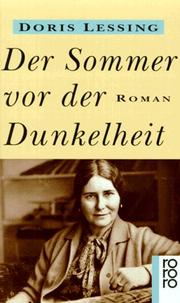
A middle-aged woman's unraveling identity is rendered with both realist precision and dreamlike allegory, consolidating the psychological and feminist threads of the earlier work while pushing toward the visionary. It is the last major 'realist' novel before the science fiction turn.
The Science Fiction: Canopus in Argos
ExpertRead Lessing's ambitious space-fiction series, in which she reframes all her lifelong themes — power, evolution, colonialism, gender, and consciousness — on a galactic scale, applying the full interpretive toolkit built across the curriculum.
▸ Study plan for this stage
Pace: 10–12 weeks total: Shikasta (~4 weeks, ~25–30 pages/day — dense cosmological prose warrants slow reading); The Marriages Between Zones Three, Four, and Five (~3 weeks, ~20–25 pages/day — more allegorical and fluid, but rich in symbolic layering); The Sirian Experiments (~3–4 weeks, ~25 pages/day — b
- Canopean cosmology as political allegory: the three empires (Canopus, Sirius, Shammat) map onto competing models of power, stewardship, and exploitation, reframing Lessing's lifelong colonial critique onto a galactic scale
- SOWF (Substance-Of-We-Feeling): the mystical binding force in Shikasta whose depletion diagnoses the spiritual and social collapse of human civilization, connecting Sufi thought to Lessing's earlier communal idealism
- Archival and documentary narration: Shikasta's use of reports, memoranda, and testimonies — and The Sirian Experiments' bureaucratic case files — as ironic frames that expose the limits and biases of institutional knowledge
- Allegorical geography and zone theory: in The Marriages Between Zones Three, Four, and Five, the numbered zones function as psychic and social states rather than physical places, dramatizing the tension between stasis and transformation, masculine and feminine orders
- Evolution as spiritual and political project: across all three novels, Lessing presents human (and alien) development not as Darwinian biology but as a guided, contested, morally freighted process overseen by competing cosmic agencies
- The unreliable institutional narrator: Ambien II in The Sirian Experiments undergoes a slow ideological conversion, making her a case study in how consciousness changes under the pressure of evidence — echoing Martha Quest's arc but on a civilizational scale
- Gender, power, and negotiated sovereignty: The Marriages dramatizes how rigid gender roles and zone-identities must be dissolved and renegotiated for growth, extending Lessing's feminist thinking into mythic register
- Colonialism and benevolent imperialism: Canopus's 'good' empire is deliberately made uncomfortable — its paternalism toward Shikasta/Earth forces the reader to interrogate whether enlightened domination is still domination
- How does Lessing use the three-empire structure (Canopus, Sirius, Shammat) in Shikasta to restate her critiques of colonialism and ideological power, and in what ways does Canopus's 'benevolent' oversight complicate a simple anti-colonial reading?
- What is SOWF, how is its loss dramatized in Shikasta's retelling of human history, and how does this concept connect to the communal and spiritual preoccupations visible in Lessing's earlier realist fiction?
- In The Marriages Between Zones Three, Four, and Five, what do the zones represent as psychological and social states, and how does the forced marriage between Al·Ith and Ben Ata function as an allegory for the collision and mutual transformation of different orders of consciousness?
- How does Ambien II's narrative position in The Sirian Experiments create dramatic irony, and what specific moments mark the stages of her conversion from Sirian imperial confidence to doubt — and what does this arc say about the nature of ideological change?
- Across all three novels, how does Lessing represent 'evolution' — who controls it, who resists it, and what moral weight does she assign to guided versus organic development?
- How do the archival and bureaucratic narrative forms used in Shikasta and The Sirian Experiments shape the reader's relationship to truth and authority, and how does this formal choice extend Lessing's earlier experiments with documentary realism in The Golden Notebook?
- Cosmological mapping: after finishing Shikasta, draw a diagram of the three empires, their relationships, their zones of influence over Earth, and their ideological profiles. Annotate each with a parallel from 20th-century geopolitics or from Lessing's earlier fiction (e.g., the Colony in The Grass is Singing, the Party in The Golden Notebook) to make the allegory explicit.
- Narrator audit for The Sirian Experiments: keep a running log of at least 10 moments where Ambien II's narration is demonstrably unreliable, self-serving, or later contradicted by her own revised understanding. Write a one-paragraph 'reliability verdict' on her as a narrator and compare her to Anna Wulf in The Golden Notebook.
- Zone translation exercise for The Marriages: write a 400–600 word interpretive essay arguing what Zones Three, Four, and Five each represent (psychologically, politically, or spiritually). Use at least three specific scenes from the novel as evidence, and consider whether the zone hierarchy is endorsed or critiqued by the text.
- Comparative close reading: select one passage from Shikasta's 'reports' section and one from The Sirian Experiments' case-file narration. Write a 500-word comparison of how each uses bureaucratic language to simultaneously convey and undercut institutional authority.
- Thematic thread essay: write a 700–900 word essay tracing how one of Lessing's core themes from her earlier work — choose from: colonialism, female consciousness, communal idealism, or the individual vs. the collective — is transformed by the science-fiction frame across all three novels in this stage. Cite at least one earlier Lessing work for contrast.
- Reading group debate: stage a structured discussion (or written dialogue) arguing both sides of the question: 'Is Canopus a utopian ideal or a colonial fantasy?' Use textual evidence from Shikasta and The Sirian Experiments to support each position, then write a synthesis paragraph reflecting your own conclusion.
Next up: By reading the Canopus series, the reader has now encountered Lessing operating at maximum formal and philosophical ambition, which provides the ideal vantage point for a retrospective and critical synthesis stage — examining her complete arc, her critical reception, and her contested legacy across realism, feminism, and speculative fiction.

The first and most essential volume of the Canopus in Argos series, retelling Earth's history as a cosmic colonial experiment. The themes of empire and human potential directly echo The Grass Is Singing and The Golden Notebook, now rendered as myth.

The most approachable and beloved volume of the series, a fable about gender, power, and transformation told as an ancient legend. Its allegorical clarity makes it the ideal second Canopus book, deepening the series' feminist and spiritual dimensions.

Narrated by a female administrator of a rival galactic empire, this volume revisits Shikasta's events from a new perspective and is Lessing's most direct science-fictional meditation on colonialism and institutional power — a fitting culmination of the whole curriculum's concerns.
Discussion
Keep reading
Paths that share books, cover the same subject, or open a related topic.