Dividend investing: the best books to build income that compounds
This curriculum takes a beginner from the core "why" of dividend investing all the way through advanced portfolio construction and income optimization. Each stage builds on the last: first establishing the mindset and vocabulary, then mastering dividend-growth strategy, then stress-testing for yield safety and reinvestment mechanics, and finally synthesizing everything into a professionally managed, income-generating portfolio.
Foundations: The Investor's Mindset
BeginnerUnderstand why dividends matter, how the stock market works, and develop the long-term, ownership-oriented mindset that dividend investing demands.
▸ Study plan for this stage
Pace: 4–5 weeks, ~40–50 pages/day. Start with "The Little Book of Common Sense Investing" (2–3 weeks), then move to "The Single Best Investment" (2 weeks). Allow time for reflection and exercises between books.
- Index investing as the foundation: why low-cost, diversified index funds outperform active management over the long term
- The power of compound returns: how time in the market beats timing the market, and why starting early matters
- Cost matters: the drag of fees, expenses, and taxes on investment returns, and why minimizing them is critical
- Dividend-paying stocks as a wealth-building engine: how dividends provide both income and reinvestment opportunities
- The ownership mindset: viewing stocks as fractional ownership in real businesses, not trading vehicles or casino chips
- Dividend growth and inflation protection: how rising dividends from quality companies protect purchasing power over decades
- The psychological discipline required: staying calm during market volatility and resisting the urge to trade or panic sell
- Building a simple, repeatable system: the importance of a clear investment plan and sticking to it through market cycles
- Why does John Bogle argue that most active investors underperform index funds, and what role do costs play in this underperformance?
- How does the concept of compound returns support a long-term, buy-and-hold approach to dividend investing?
- What is the difference between viewing stocks as trading vehicles versus viewing them as fractional ownership in businesses, and why does this mindset matter for dividend investors?
- According to 'The Single Best Investment,' what characteristics define a high-quality dividend-paying stock, and why are these characteristics important for long-term wealth building?
- How do dividends and dividend growth help investors combat inflation and build real wealth over 20–30+ year periods?
- What psychological and behavioral mistakes do most investors make, and how can a disciplined, system-based approach help you avoid them?
- Calculate your own 'cost drag': find 3 actively managed mutual funds and compare their expense ratios to a low-cost S&P 500 index fund. Project the difference in returns over 20, 30, and 40 years using a compound interest calculator.
- Create a personal investment timeline: write down your financial goals (retirement, home purchase, education funding) and map out which ones align with a 20+ year dividend-growth strategy.
- Research and document 5 dividend-paying companies you recognize (e.g., Coca-Cola, Procter & Gamble, Johnson & Johnson). For each, find their current dividend yield, dividend history over the past 5–10 years, and dividend growth rate. Reflect on why these are 'ownership' stakes, not trading positions.
- Build a simple investment policy statement (1–2 pages): define your asset allocation, rebalancing rules, and commitment to staying invested through market downturns. Reference specific principles from both books.
- Simulate a market downturn: imagine the stock market drops 30%. Write down your emotional reaction, then write a response based on the long-term, ownership-oriented principles from Bogle and Miller. Compare the two.
- Analyze your current financial situation: calculate your savings rate, identify any high-fee investments you currently hold, and draft a plan to shift toward low-cost, dividend-focused investing aligned with the stage's principles.
Next up: This stage establishes the *why* and *how* of dividend investing—the mindset and foundational knowledge—preparing you to move into the next stage, where you'll learn the specific criteria for selecting individual dividend stocks and building a diversified dividend portfolio.
Establishes the foundational truth that owning businesses and collecting their earnings (including dividends) is the engine of long-term wealth — essential context before diving into dividend strategy.
A direct, beginner-friendly case for dividend-growth investing specifically, introducing the core idea that a rising dividend stream is the most reliable path to wealth — the perfect bridge into the subject.
The Dividend-Growth Framework
BeginnerLearn the dividend-growth investing philosophy in depth, understand how to identify quality dividend-growth companies, and grasp the power of compounding reinvested dividends over time.
▸ Study plan for this stage
Pace: 6–7 weeks, ~25–30 pages/day (approximately 2–3 weeks per book with review time)
- The dividend-growth investing philosophy: why dividend-paying stocks provide both income and capital appreciation over long periods
- Quality metrics for dividend stocks: payout ratios, dividend growth rates, earnings quality, and balance sheet strength (core themes in Wright's framework)
- The power of dividend reinvestment and compounding: how reinvested dividends accelerate wealth accumulation over decades
- How to identify sustainable dividend growers: analyzing dividend history, earnings stability, and competitive moats
- The relationship between dividend yield, growth rate, and total return: understanding the dividend-growth sweet spot
- Common dividend traps and red flags: unsustainable payouts, deteriorating fundamentals, and cyclical businesses masquerading as stable dividend payers
- Building a dividend-growth portfolio: diversification, sector allocation, and position sizing for long-term wealth building
- The psychological and behavioral advantages of dividend investing: how regular income reduces panic selling and reinforces long-term discipline
- What is the core philosophy of dividend-growth investing, and how does it differ from other equity strategies?
- How do you evaluate whether a company's dividend is sustainable, and what are the key metrics to examine?
- Explain the mathematical power of dividend reinvestment over 20+ years. How does compounding amplify returns?
- What are the most common dividend traps, and how can you identify red flags before investing in a dividend stock?
- How should you balance dividend yield and dividend growth rate when selecting stocks for a long-term portfolio?
- What role does competitive advantage (moat) play in identifying quality dividend-growth companies?
- Analyze 3 dividend-paying stocks using Wright's quality framework: calculate payout ratios, review 10-year dividend history, and assess earnings stability. Document your findings in a spreadsheet.
- Build a simple dividend reinvestment calculator: project the growth of a $10,000 investment over 25 years with 4% yield and 8% annual dividend growth. Compare results with and without reinvestment.
- Create a 'dividend trap' case study: research a company that cut its dividend in the past 5 years. Identify the warning signs that should have been visible beforehand.
- Screen 10 dividend stocks using Peters' playbook criteria (yield, growth rate, payout ratio, earnings quality). Rank them by quality and explain your top 3 picks.
- Build a hypothetical 10-stock dividend-growth portfolio with $50,000: allocate positions, justify sector diversification, and project 10-year returns assuming 6% yield and 7% dividend growth.
- Compare two similar companies in the same sector (e.g., two utilities or two consumer staples): explain why one is a better dividend-growth candidate than the other using both books' frameworks.
Next up: This stage establishes the foundational philosophy and stock-selection criteria for dividend investing, preparing you to move into portfolio construction, risk management, and advanced strategies like dividend-growth timing and tax optimization in subsequent stages.

Teaches the classic value-based approach to dividend investing using dividend yield as a valuation signal — builds essential vocabulary around yield, payout history, and buying at value.
A comprehensive, practical guide to dividend-growth investing from a Morningstar analyst, covering how to evaluate dividend safety, growth potential, and portfolio construction in a very accessible way.
Yield, Safety, and the Quality Filter
IntermediateDevelop a rigorous framework for distinguishing safe, growing dividends from yield traps, and learn to analyze payout ratios, cash flows, and business quality before committing capital.
▸ Study plan for this stage
Pace: 4–5 weeks, ~25–30 pages/day, with 2–3 days per week dedicated to analysis exercises and portfolio reviews
- Risk management and position sizing as the foundation of dividend safety
- The relationship between yield, payout ratio, and dividend sustainability
- How to distinguish between genuine dividend growth and unsustainable yield traps
- Cash flow analysis: why earnings per share alone is insufficient for safety assessment
- Business quality metrics and competitive moats that support long-term dividend growth
- The role of financial stability (debt levels, liquidity, earnings stability) in dividend safety
- Constructing a personal risk/reward framework aligned with your financial goals and time horizon
- What is the relationship between position sizing, risk management, and dividend portfolio safety, and how do you apply it to your own capital allocation?
- How do you identify a yield trap, and what specific red flags in payout ratios, cash flow, and earnings quality should trigger caution?
- What is the difference between sustainable dividend growth and a high yield that masks deteriorating fundamentals?
- How do you assess whether a company's cash flow supports its dividend, and why is free cash flow more reliable than reported earnings?
- What business quality characteristics (competitive advantage, market position, management track record) should you verify before buying a dividend stock?
- How do you construct a personal dividend investment framework that balances yield, safety, and growth within your risk tolerance?
- Analyze 5 dividend stocks: calculate payout ratios, free cash flow yield, debt-to-equity ratios, and 5-year dividend growth rates; classify each as 'safe,' 'moderate risk,' or 'yield trap' with written justification
- Create a personal risk/reward matrix for dividend investing: define your acceptable yield range, maximum payout ratio, minimum cash flow coverage, and debt limits based on Tharp's framework
- Conduct a deep-dive case study on one 'fallen dividend aristocrat' (a company that cut or suspended its dividend); identify the warning signs that were visible 12–24 months before the cut
- Build a simple dividend safety scorecard for 3 stocks using quantitative metrics (payout ratio, FCF coverage, debt ratios) and qualitative factors (competitive moat, management quality); compare your scores to actual dividend performance
- Track a hypothetical portfolio of 5–8 dividend stocks over 4 weeks, updating payout ratios and cash flow metrics weekly; note which stocks show improving vs. deteriorating safety signals
- Write a 2–3 page personal dividend investment policy statement that documents your yield targets, safety thresholds, position sizing rules, and the specific business quality criteria you require
Next up: This stage equips you with the analytical rigor and risk discipline to identify safe, sustainable dividends; the next stage will teach you how to construct a diversified dividend portfolio that compounds wealth over decades while protecting against market cycles and economic downturns.
Provides a clear, step-by-step screening process for evaluating dividend safety and sustainability — ideal for building the analytical habits needed before tackling deeper valuation work.
Broadens the lens to income strategy and financial independence, reinforcing why dividend safety and cash-flow thinking must anchor every investment decision.
Reinvestment, Compounding, and Income Mechanics
IntermediateMaster the mechanics of dividend reinvestment (DRIPs), understand how compounding accelerates wealth, and learn to model a portfolio's future income stream.
▸ Study plan for this stage
Pace: 4–5 weeks, ~40–50 pages/day (with note-taking and reflection on Lynch's case studies)
- How dividend reinvestment (DRIPs) mechanically compounds wealth over time through automatic share accumulation
- The power of compounding: understanding exponential growth curves and the time value of reinvested dividends
- Lynch's framework for identifying dividend-paying stocks with sustainable growth (quality, valuation, earnings growth)
- Modeling a portfolio's future income stream by projecting dividend growth rates and reinvestment scenarios
- The relationship between dividend yield, payout ratio, and earnings growth—and why all three matter for long-term compounding
- How to distinguish between value traps (high yield, unsustainable) and genuine compounders (moderate yield, rising dividends)
- Tax-efficient dividend reinvestment strategies and the impact of dividend timing on portfolio mechanics
- How does automatic dividend reinvestment accelerate wealth accumulation compared to taking dividends as cash, and what mathematical principle explains this?
- Using Lynch's stock-picking criteria, how would you evaluate whether a high-dividend-yield stock is a genuine compounder or a value trap?
- Walk through a specific example from 'Beating the Street': identify a company Lynch discussed, estimate its dividend growth trajectory, and project its income contribution over 10 years with reinvestment
- What is the relationship between a company's payout ratio, earnings growth rate, and dividend sustainability? Why does Lynch emphasize this balance?
- How would you model a diversified portfolio's future annual income stream using dividend growth assumptions for 3–5 holdings?
- What are the tax implications of dividend reinvestment in taxable accounts, and how might this affect your compounding calculations?
- Build a simple spreadsheet model: pick 3 dividend-paying stocks Lynch mentions (or similar quality stocks), input current dividend yield and your estimate of 5-year dividend growth rate, and project total income and share count after 10 years of reinvestment
- Analyze a case study from 'Beating the Street': select one company Lynch profiled, research its actual dividend history (past 5–10 years), calculate the CAGR of its dividend, and assess whether Lynch's thesis held up
- Create a 'dividend sustainability scorecard' for 2–3 stocks: evaluate payout ratio, earnings growth, free cash flow, and competitive moat using Lynch's framework; determine if the dividend is safe and likely to grow
- Model a portfolio income scenario: assume you invest $50,000 across 4–5 dividend stocks with yields of 2–4% and growth rates of 5–8%; project annual income and total reinvested shares over 15 years
- Compare reinvestment vs. cash dividend scenarios: calculate the wealth difference between reinvesting dividends and taking them as cash for the same stock over 20 years (use realistic dividend growth assumptions)
- Write a one-page investment thesis for a dividend compounder: identify the company, justify why its dividend is sustainable, estimate its dividend growth rate, and explain how it fits into a long-term compounding strategy
Next up: This stage equips you with the mechanical and analytical tools to build a dividend-focused portfolio and project its income growth; the next stage will teach you how to construct a diversified portfolio that balances dividend income with capital appreciation and manage it through market cycles.
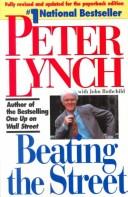
Lynch's stock-picking wisdom — especially on finding durable, cash-generating businesses — directly informs which dividend stocks are worth reinvesting into for the long haul.
Focuses specifically on the mechanics of dividend reinvestment, yield calculations, and building a compounding income machine — a practical complement to Lynch's qualitative approach.
Advanced Portfolio Construction
ExpertSynthesize everything into a professionally structured, diversified dividend portfolio — balancing sector exposure, income growth, total return, and the transition from accumulation to living off dividends.
▸ Study plan for this stage
Pace: 8–10 weeks, ~40–50 pages/day (accounting for dense financial frameworks and portfolio construction examples)
- Dividend growth strategy: selecting stocks with consistent dividend growth history and reinvestment mechanics to compound wealth over decades
- Sector diversification and correlation analysis: balancing exposure across utilities, REITs, consumer staples, healthcare, and industrials to reduce concentration risk while maintaining yield
- Income floor and safety margin: designing a portfolio that generates sufficient sustainable income with a buffer against market downturns and dividend cuts
- Transition from accumulation to distribution: structuring a portfolio to shift from reinvesting dividends to living off them while preserving capital and managing sequence-of-returns risk
- Tax-efficient dividend harvesting: understanding qualified vs. non-qualified dividends, tax-loss harvesting, and account placement (taxable vs. tax-deferred) to maximize after-tax returns
- Total return vs. yield chasing: balancing high-yield temptation against capital appreciation and avoiding value traps that offer unsustainable dividend yields
- Rebalancing and income growth discipline: systematic portfolio maintenance to lock in gains, maintain target allocations, and reinvest excess income to fund future distributions
- How do you identify dividend growth stocks with sustainable payout ratios, and what metrics from 'Get Rich with Dividends' distinguish quality dividend growers from yield traps?
- What is the relationship between sector diversification and portfolio stability, and how should you allocate across different dividend-paying sectors to balance income and risk?
- How do you calculate your income floor (the minimum annual income your portfolio must generate), and what safety margin should you build into your withdrawal rate?
- What are the key differences between living off dividends in retirement versus reinvesting them during accumulation, and how does 'Retirement Income Redesigned' address the psychological and financial transition?
- How should you structure dividend income across taxable and tax-advantaged accounts to minimize tax drag, and what is the difference between qualified and non-qualified dividend treatment?
- How do you distinguish between a high-yield opportunity and a value trap, and what warning signs suggest a dividend is at risk of being cut?
- Analyze 8–10 dividend growth stocks from different sectors using Lichtenfeld's criteria (dividend history, payout ratio, earnings growth, competitive moat); document why each qualifies as a quality dividend grower
- Build a sample diversified dividend portfolio of 20–25 stocks with target sector allocations (utilities 15%, REITs 10%, consumer staples 20%, healthcare 15%, industrials 15%, other 25%); calculate weighted average yield and dividend growth rate
- Calculate your personal income floor: determine annual expenses in retirement, subtract Social Security/pension income, and work backward to the portfolio size needed at your target yield (e.g., 3–4%)
- Perform a tax-efficiency audit: categorize a sample portfolio's holdings by dividend type (qualified vs. non-qualified) and account type (taxable vs. IRA/401k); identify tax-loss harvesting opportunities
- Model a transition scenario: start with a $500k portfolio in accumulation (reinvesting all dividends), project forward 10 years with 8% annual returns, then switch to 4% annual withdrawals; track whether income grows faster than withdrawals
- Stress-test a sample portfolio: model a 30% market decline, a 20% dividend cut across holdings, and a 2% yield environment; assess whether your income floor remains intact
Next up: This stage equips you to construct and defend a professionally balanced dividend portfolio; the next stage will likely focus on implementation, monitoring, and real-world execution—including behavioral discipline, rebalancing rules, and adapting your portfolio as life circumstances and market conditions evolve.

Presents a complete, rules-based system for building a 10-11% yielding portfolio through dividend-growth compounding — ties together all prior concepts into an actionable long-term plan.
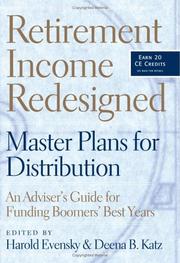
Addresses the advanced challenge of converting a dividend portfolio into a reliable retirement income stream, covering withdrawal strategy, sequence-of-returns risk, and sustainable income planning.
Discussion
Keep reading
Paths that share books, cover the same subject, or open a related topic.