Jean Piaget: The Best Books to Read, in Order
Piaget invented developmental psychology as an experimental subject and then supplied it with a stage theory that schools still teach and that research has substantially dismantled. This path reads him in his own words, in roughly the order the work develops: a summary and a way in, the early clinical interviews, the infancy observations that are the most durable part of the corpus, the work on logic and number, and finally the later research that overturned the timetable. The aim is to be able to say precisely which of his claims survived and which did not, rather than to keep or discard him whole.
The summary, and a way in
BeginnerGet the architecture before the evidence: assimilation and accommodation, schemes, equilibration, and the four stages. Learn also what Piaget thought he was doing — he called himself a genetic epistemologist studying how knowledge is possible, using children as the method, which is not the same project as child psychology.
▸ Study plan for this stage
Pace: Two to three weeks for 347 pages — the shortest stage on the path, and the only one you can read quickly. The Psychology of the child (173pp) is Piaget and Inhelder's own compressed synthesis of forty years of work: a week at 25 pages a session, but expect the density of a summary rather than the ea
- Assimilation and accommodation as the two halves of one adaptive process, not two kinds of learning
- Schemes as organised patterns of action, and how they generalise and differentiate
- Equilibration as the engine of change, and the sense in which it is a biological argument
- The four stages and their claimed invariant order, which is a stronger claim than their claimed ages
- Genetic epistemology: Piaget's own description of the project as an account of how knowledge is possible, with children as the method
- Constructivism — knowledge built through the child's own activity rather than received or unfolded
- How do assimilation and accommodation differ, and why does Piaget insist they are aspects of one process?
- State the four stages with what defines each. Which definition is structural and which is a list of achievements?
- What is equilibration supposed to explain that a maturation account would not?
- What did Piaget say he was studying, and how is that different from child psychology?
- Where does Boden say the constructivist argument is weakest, and does the summary volume address it?
- Draw the architecture on one page: schemes, the two processes, equilibration, the four stages. Keep it and annotate it at every later stage with the evidence you find.
- Take three claims from The Psychology of the child and write down which later book on this path is supposed to supply the evidence for each.
- Write Boden's central criticism in your own words in 200 words, then find the passage in Piaget's summary it is aimed at.
- List every place the summary volume states an age. You will check each one against stage five.
Next up: The architecture is now clear and entirely unevidenced in your hands, so the next stage goes to the method that produced it.
Piaget and Inhelder's own short synthesis of forty years of work, and by far the most efficient statement of the whole theory in his own words. Start here; everything else in the path is either the evidence behind this book or an argument with it.
A cognitive scientist and philosopher's compact critical introduction, exceptionally good on what Piaget's constructivism actually claims and where the argument is weakest. Secondary, and the right companion because Boden takes the epistemology seriously rather than reducing him to the stages. The catalogue record carries translators in the author field.
The early clinical studies
IntermediateSee the clinical method that made his reputation — open-ended interviews following the child's reasoning rather than scoring right answers — and judge it honestly. It is enormously productive at generating phenomena and weak at establishing frequencies, and most of the later criticism starts here.
▸ Study plan for this stage
Pace: Seven to eight weeks for 1,144 pages, and all three are primary texts that read slowly because they are transcripts and commentary rather than argument. Language and Thought of the Child (312pp) first, two weeks — his debut, drawn from observations at the Maison des Petits in Geneva, and the origin
- The clinical method: following the child's reasoning with open questions rather than scoring correct answers
- Egocentric speech and childhood egocentrism as Piaget defined them, which is narrower than the everyday word
- Animism, artificialism and realism as developmental phenomena rather than errors
- Unilateral respect and the shift to cooperation in the marble-game material
- Heteronomous and autonomous morality, and the role of peer relations in the shift
- The method's honest trade-off: enormously productive at generating phenomena, weak at establishing how common they are
- Why nearly every later criticism of Piaget starts with these interviews
- What exactly does Piaget mean by egocentrism, and what does the word not mean here?
- What can a clinical interview establish that a standardised task cannot, and what can it not establish at all?
- Describe the marble-game studies and the transition Piaget claims they show.
- How does Piaget move from what a child says to a claim about how the child thinks? Find the weakest instance.
- What would a frequency claim require that these studies do not supply?
- Transcribe one of Piaget's interviews and mark every question that leads, every one that follows, and every inference he draws beyond the child's words.
- Take one animism example and design a task that would test the same idea while removing the interview's leading structure.
- Read Piaget's account of egocentric speech and write the strongest version of the objection that it is speech for the self rather than a failure of perspective-taking.
- For the marble studies, list the ages Piaget attaches to each stage of rule-following, and note how many children each rests on.
Next up: The clinical interview is a method for children who can talk; the infancy work uses a different method entirely and is the part of the corpus that has held up best.
His 1923 debut and the origin of egocentric speech and childhood egocentrism, drawn from observations at the Maison des Petits in Geneva. Read it first for the method; Vygotsky's Thought and Language is the famous contemporaneous rebuttal on exactly this point.

Children interviewed on dreams, names, life and the movement of clouds — the source of animism and realism as developmental phenomena. The clearest demonstration of what the clinical interview can find that a standardised test cannot.

The marble-game studies and the shift from unilateral respect to cooperation, which became the foundation of Kohlberg's whole research programme and, by reaction, of Carol Gilligan's critique of it. The most consequential book here for fields outside psychology.
Infancy: the most durable part of the work
BeginnerRead the observational studies of his own three children, which are the closest Piaget came to a complete empirical case and the part of the corpus that has held up best. Understand the six sensorimotor substages and object permanence in enough detail to evaluate the later infant research that revised the timetable rather than the concept.
▸ Study plan for this stage
Pace: Seven to eight weeks for 1,101 pages, and this trilogy shares one dataset — the day-by-day observation of Piaget's own three children, Jacqueline, Lucienne and Laurent — so it should be read as one continuous unit rather than three books. The origin of intelligence in the child (419pp) first, three
- The six sensorimotor substages, and what specifically changes at each boundary
- Circular reactions — primary, secondary and tertiary — as the mechanism of early learning
- Object permanence as a construction rather than a given, and the observations that support it
- The A-not-B error, what Piaget concluded from it, and what else could produce it
- Means-end behaviour and the first appearance of intentionality in the record
- The symbolic function: deferred imitation and pretend play as evidence of representation
- Observation of three children as an evidence base — its unmatched depth and its obvious limit
- Name the six substages and give the observation Piaget uses to mark each transition.
- What is the A-not-B error, and what does Piaget infer from it about the infant's concept of an object?
- Which of his infancy conclusions depend on the infant reaching, and which do not?
- How does Play, dreams, and imitation establish representation, and would you accept the evidence?
- What would you conclude differently if you had these observations for three different children?
- Where in the trilogy does the observational record most obviously underdetermine the conclusion?
- Pick ten numbered observations from Origin of Intelligence and write, for each, what Piaget concluded and what else the behaviour is consistent with.
- Reconstruct the A-not-B task exactly as described and list every non-conceptual explanation for the error you can generate.
- Trace a single one of the three children through both volumes and write their development as one continuous case.
- Mark every conclusion in these three books that requires a motor response from the infant. This list is what stage five is about.
Next up: With the sensorimotor foundation in place, the theory reaches for its most ambitious claim — that thought develops towards a formal logic.
The day-by-day observations of Jacqueline, Lucienne and Laurent that build the sensorimotor stages from reflexes to means-end behaviour. Slow, repetitive and worth it: this is the primary evidence everyone cites second-hand.
The companion volume on how the infant comes to have objects, space, causality and time — object permanence and the A-not-B error are here in their original form. Read straight after Origin of Intelligence, which shares its data.
The third volume of the infancy trilogy, on symbolic function — deferred imitation, pretend play, the beginnings of representation. It completes the argument for how the sensorimotor child becomes a symbol-using one, which the stage summary in book one asserts without demonstrating.
Logic, number and formal operations
BeginnerFollow the theory to its most ambitious claim: that thought develops toward a formal logical structure, and that adolescence brings hypothetico-deductive reasoning. This is also where Piaget is most exposed, since cross-cultural work later found formal-operational performance far from universal and highly task-dependent.
▸ Study plan for this stage
Pace: Six weeks. Two of the three lengths are recorded — Inhelder's The growth of logical thinking from childhood to adolescence at 356pp and Genetic epistemology at 84pp, 440 pages between them — while our catalogue holds no length for The Child"s Conception of Numbers, which it also files under a mangle
- Conservation of number, quantity and volume, and the exact form of the question that produces failure
- Concrete operations: reversibility, classification and seriation as coordinated structures
- Formal operations and hypothetico-deductive reasoning — reasoning about possibilities rather than about things
- The isolation-of-variables strategy, which the pendulum and balance-beam tasks are designed to elicit
- The logical formalism Piaget imposes on the data, and whether the data needs it
- Piaget's own statement of the project: a biological and historical account of how knowledge grows
- Why formal-operational performance turned out to be far from universal and heavily task-dependent
- Describe a conservation task precisely, including the wording, and say which features of it the child is responding to.
- What defines formal operations, and how do the pendulum and balance-beam tasks test for it?
- What does the logical formalism add to the empirical findings? Could the findings be stated without it?
- What does Piaget say in the lectures that the empirical volumes leave implicit?
- Cross-cultural work found formal-operational performance uneven. Does that damage the stage order, the ages, or both?
- Run a conservation task as written with a child if you can, then run it with the question asked once instead of twice, and record the difference.
- Work the balance-beam task yourself and write out the isolation-of-variables strategy as a procedure. Then find where Inhelder's protocol scores for it.
- Take one of Piaget's logical formalisms and restate the same finding in ordinary language. Say what is lost.
- Read the four lectures and write half a page connecting the project stated there to the infancy observations in stage three.
Next up: You now hold the theory whole and in his own words, which is the only position from which to judge what fifty years of subsequent research did to it.
The conservation experiments — the two rows of counters, the tall and short glasses — that are the single most replicated and most re-examined finding in developmental psychology. The catalogue holds it under a mangled display title with a stray quotation mark and a pluralised Numbers; the work is Piaget's 1941 study.
Inhelder and Piaget's pendulum, balance-beam and chemical-combination tasks, and the fullest statement of formal operations. Inhelder designed most of these experiments, which is worth noting given how routinely the work is attributed to Piaget alone.

Four short lectures in which he states plainly what the whole enterprise was for — a biological and historical account of how knowledge grows. The shortest book on the path and the best statement of his own view of it; read it last of the primary texts.
What later research overturned
BeginnerThis stage is not optional, and the stage theory must not be taught as current. Later work using looking-time and simplified tasks found infants showing object permanence and numerical sensitivity far earlier than Piaget's reaching tasks implied; conservation failures turned out to depend heavily on how the question is asked; and domain-general stages have largely given way to domain-specific accounts and to overlapping-waves models of change. What survived is the constructivist core — that chil
▸ Study plan for this stage
Pace: Six weeks for 983 pages, and this stage is not optional — the stage theory must not be read as current. Sugarman's Piaget's Construction of the Child's Reality (262pp) first, two weeks: a close philosophical and empirical audit asking whether Piaget's own infancy observations support his conclusions
- Looking-time and violation-of-expectation methods, and why they find competence Piaget's reaching tasks missed
- Task demands versus competence — the general form of the revision to almost every Piagetian age claim
- Conservation failure as sensitive to question wording, repetition and pragmatic context
- Domain-specific development replacing domain-general stages
- Overlapping waves and strategy choice as models of change without discrete stages
- What survived: constructivism, the phenomena themselves, and the questions
- How to state a partial refutation precisely rather than keeping or discarding a theory wholesale
- What do looking-time studies measure, and what is the standard objection to inferring knowledge from them?
- For each of the four stages, say what the current evidence retains and what it rejects.
- Does Sugarman find Piaget's infancy conclusions supported by his own observations? Where not?
- What is an overlapping-waves model, and what does it explain that a stage model cannot?
- Which of Piaget's phenomena remain robust regardless of the theory built on them?
- State in three sentences what a teacher should and should not take from Piaget today.
- Take the list of ages you compiled in stage one and mark each as revised, unchanged, or abandoned, citing Siegler and Alibali for each verdict.
- Pick three of Sugarman's audits of specific observations from stage three and reread the original passages against her reading.
- Design a version of one Piagetian task with the task demands reduced, and predict from the current literature what would change.
- Write 1,000 words separating the constructivist core from the stage timetable, using at least three primary Piaget texts and two secondary sources.
- Find a current teacher-training description of Piaget's stages and mark every claim the research in this stage has overturned.
Next up: You can now read Piaget in the original and cite him accurately — for the questions and phenomena he established, and never for a developmental timetable the evidence no longer supports.
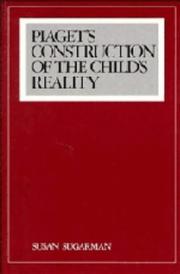
A close philosophical and empirical audit of the infancy volumes, asking whether Piaget's own observations support his conclusions. The most rigorous single critique on the path, and it takes him seriously enough to be worth the effort. Secondary.
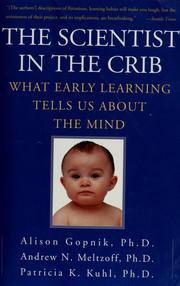
Gopnik, Meltzoff and Kuhl's accessible account of the infant-cognition research that revised the timetable, arguing that babies know and learn far more than the sensorimotor stage allows. Popular science and openly enthusiastic about its own programme; read it as the case for the prosecution. Secondary.
The standard developmental textbook, which is the fairest place to see how the field actually settled: Piaget's questions retained, his stages replaced by overlapping-waves and strategy-choice accounts. Ends the path on the current consensus rather than on a polemic. Secondary.
Discussion
Keep reading
Paths that share books, cover the same subject, or open a related topic.