The Best Developmental Biology Books, in Order
This curriculum builds a rigorous, research-level understanding of developmental biology across four progressive stages. Starting from a solid intermediate foundation, the path moves from core principles and embryology, through molecular and cellular mechanisms, into the cutting-edge topics of morphogenesis, pattern formation, and evolutionary developmental biology — equipping the learner to read primary literature with confidence.
Core Foundations
IntermediateEstablish a comprehensive conceptual framework: the key stages of animal development, the vocabulary of developmental biology, and the major model organisms used in the field.
▸ Study plan for this stage
Pace: 8–10 weeks, ~40–50 pages/day (Gilbert first 3–4 weeks, Slack 4–5 weeks, 1–2 weeks for review and integration)
- The major stages of animal development: gametogenesis, fertilization, cleavage, gastrulation, organogenesis, and histogenesis
- Axis formation and body plan specification (anterior-posterior, dorsal-ventral, left-right axes)
- Cell fate determination, differentiation, and the role of induction and signaling
- Developmental model organisms (Xenopus, Drosophila, C. elegans, zebrafish, chick, mouse) and why they are used
- Gene regulation and transcriptional control during development
- Morphogen gradients and positional information as mechanisms for pattern formation
- Cell migration, epithelial-mesenchymal transitions (EMT), and tissue remodeling
- Conservation of developmental mechanisms across animal phyla (evolutionary developmental biology)
- What are the major stages of animal development from gamete formation to organogenesis, and what key events define each stage?
- How do morphogen gradients establish positional information and pattern formation in developing embryos?
- What are the defining characteristics of the major model organisms (Xenopus, Drosophila, C. elegans, zebrafish, chick, mouse) and why is each valuable for developmental research?
- How do inductive interactions between tissues direct cell fate determination and differentiation?
- What is the evidence that developmental mechanisms are conserved across animal phyla, and what does this reveal about evolutionary relationships?
- How do transcriptional regulatory networks control the temporal and spatial expression of developmental genes?
- Create a detailed timeline poster or digital diagram showing the major developmental stages (gametogenesis through organogenesis) for at least two model organisms, labeling key events and timescales
- Draw and annotate the three primary axes (anterior-posterior, dorsal-ventral, left-right) in a developing embryo, explaining how each is established and maintained
- Construct a concept map linking induction, signaling molecules, transcription factors, and cell fate decisions for a specific tissue (e.g., neural induction in Xenopus)
- Compare and contrast two model organisms (e.g., Drosophila vs. Xenopus) by creating a table of their developmental advantages, experimental accessibility, and key discoveries made using each
- Work through a case study of morphogen gradient formation (e.g., Bicoid in Drosophila or Nodal in zebrafish): sketch the gradient, explain the molecular mechanisms, and predict phenotypes from gradient perturbations
- Summarize one major developmental mechanism (e.g., gastrulation, neural crest migration, or limb bud outgrowth) in a 1–2 page synthesis that integrates molecular, cellular, and tissue-level perspectives
Next up: This stage equips you with the conceptual vocabulary, developmental timeline, and mechanistic understanding of core processes needed to dive into specialized topics—such as specific signaling pathways, organ system development, or experimental techniques—in the next stage.
The definitive entry point for intermediate learners — richly illustrated and encyclopedic, it covers fertilization, embryogenesis, organogenesis, and cell differentiation across multiple model organisms. Read this first to build the full vocabulary and conceptual map of the field.
A concise, well-organized companion that distills core principles without overwhelming detail. Reading it after Gilbert reinforces and consolidates the fundamentals, filling gaps and offering a cleaner mechanistic narrative.
Molecular & Cellular Mechanisms
IntermediateUnderstand the molecular machinery driving development — signaling pathways, gene regulatory networks, transcription factors, and how cells acquire and interpret positional identity.
▸ Study plan for this stage
Pace: 8–10 weeks, ~40–50 pages/day. Start with Alberts' molecular foundations (3–4 weeks), then transition to Wolpert's developmental systems (4–5 weeks), with 1–2 weeks for integration and review.
- Signal transduction cascades: how extracellular signals (growth factors, morphogens) activate intracellular pathways (Ras/MAPK, Wnt, Notch, BMP) and trigger transcriptional responses
- Transcription factors and gene regulatory networks: how DNA-binding proteins recognize cis-regulatory elements and coordinate expression of developmental genes
- Chromatin structure and epigenetic regulation: how histone modifications and DNA methylation control gene accessibility during development
- Positional information and morphogen gradients: how concentration-dependent signals specify cell fate and pattern formation (Wolpert's French flag model and gradient interpretation)
- Cell-cell communication: gap junctions, juxtacrine signaling, and paracrine interactions that coordinate developmental decisions
- Post-transcriptional and post-translational regulation: mRNA localization, microRNAs, and protein stability in developmental contexts
- Integration of signaling pathways: cross-talk between major developmental pathways and feedback loops that stabilize cell states
- How do extracellular signaling molecules (e.g., growth factors) activate intracellular signaling cascades, and what are the key steps in the Ras/MAPK and phosphatidylinositol pathways described in Alberts?
- What is a transcription factor, how do they recognize DNA sequences, and how do combinations of transcription factors create specific gene expression patterns in development?
- Explain Wolpert's concept of positional information and morphogen gradients: how does a cell interpret its position, and what evidence supports gradient-based patterning?
- How do Wnt, Notch, BMP, and Hedgehog signaling pathways differ in their mechanisms, and what developmental processes does each regulate?
- What role do epigenetic modifications (histone acetylation, DNA methylation) play in maintaining cell identity and enabling developmental transitions?
- How do developmental signaling pathways cross-talk and create robust, self-correcting gene regulatory networks that ensure reliable pattern formation?
- Map a complete signaling pathway (e.g., Wnt or BMP) from ligand binding to transcriptional output: identify receptors, kinases, second messengers, and target transcription factors using Alberts' pathway diagrams as reference.
- Analyze a developmental gene regulatory network (e.g., gap genes in Drosophila): sketch how transcription factors regulate each other and predict expression patterns given perturbations (knockouts, ectopic expression).
- Work through a morphogen gradient problem: given a source of morphogen and diffusion/degradation rates, calculate expected concentration profiles and predict cell fates at different positions (quantitative approach from Wolpert).
- Compare signaling mechanisms across pathways: create a table contrasting Wnt, Notch, BMP, and Hedgehog in terms of ligand type, receptor class, intracellular mediators, and developmental roles.
- Interpret experimental data: examine published figures showing loss-of-function or gain-of-function mutations in developmental genes (e.g., Notch mutants, Wnt pathway inhibition) and explain phenotypes using pathway knowledge.
- Design a thought experiment: propose how you would test whether a morphogen gradient is interpreted by absolute concentration vs. relative concentration changes, referencing Wolpert's experimental logic.
Next up: Mastery of molecular signaling and gene regulation provides the mechanistic foundation for understanding how these pathways are deployed across different tissues and organisms—preparing you to study tissue-specific development, organogenesis, and evolutionary conservation of developmental programs.
Provides the deep cell and molecular biology background — signal transduction, cytoskeletal dynamics, and cell adhesion — that underpins every developmental mechanism. Selective reading of the relevant chapters prepares you for the molecular depth ahead.

Wolpert's framework of positional information, induction, and pattern formation is central to the field. This book bridges cell biology and developmental logic, making it the ideal next step after establishing molecular foundations.
Morphogenesis & Pattern Formation
ExpertMaster the physical and genetic mechanisms by which tissues acquire shape, polarity, and pattern — including reaction-diffusion systems, morphogen gradients, and tissue mechanics.
▸ Study plan for this stage
Pace: 8–10 weeks, ~40–50 pages/day, with 1–2 days per week for review and exercises
- Morphogen gradients and positional information: how concentration fields of signaling molecules (e.g., Bicoid, Dorsal) establish spatial coordinates and cell fates
- Reaction-diffusion systems and Turing patterns: mathematical and molecular mechanisms for spontaneous pattern formation without pre-existing templates
- Transcriptional regulation and cis-regulatory elements: how enhancers and promoters integrate morphogen signals to drive tissue-specific gene expression
- Cell-cell signaling pathways (Wnt, Notch, Hedgehog, BMP): molecular cascades that translate positional information into developmental decisions
- Tissue mechanics and biomechanical feedback: how physical forces (tension, compression, cell adhesion) shape tissues and reinforce genetic patterning
- Evolutionary conservation and divergence of developmental programs: how comparative analysis of model organisms reveals both universal principles and lineage-specific innovations
- Segmentation and body plan formation: genetic control of anterior-posterior, dorsal-ventral, and left-right axes in model systems (Drosophila, Xenopus, zebrafish)
- Epigenetic regulation in development: how chromatin remodeling and histone modifications maintain cell identity during morphogenesis
- How do morphogen gradients establish positional information, and what experimental evidence (e.g., transplantation, gradient manipulation) demonstrates their sufficiency and necessity?
- Explain the Turing mechanism for pattern formation: what are the minimal requirements (diffusion coefficients, reaction kinetics) for spontaneous pattern emergence, and what biological examples fit this model?
- How do cis-regulatory elements integrate multiple morphogen signals to achieve precise spatial and temporal gene expression during development?
- Describe the molecular logic of a major developmental signaling pathway (Wnt, Notch, Hedgehog, or BMP): how does the pathway transduce extracellular signals into transcriptional changes?
- What is the relationship between tissue mechanics (cell adhesion, ECM properties, mechanical forces) and genetic patterning? How do they reinforce each other?
- Compare the developmental programs of two model organisms (e.g., Drosophila vs. Xenopus): what principles are conserved, and where do they diverge? What do these differences reveal about evolutionary flexibility?
- Work through Watson's molecular biology chapters on developmental gene regulation: map out the cis-regulatory architecture of a classic developmental gene (e.g., hunchback, gap genes) and predict how mutations in enhancers alter expression patterns.
- Construct a simple reaction-diffusion model (using Matlab, Python, or even a spreadsheet): set up Turing equations with realistic diffusion coefficients and reaction rates, run simulations, and observe pattern formation; vary parameters to understand sensitivity.
- Read and annotate Raff's chapters on morphogen gradients and positional information: create a concept map linking morphogen concentration, receptor activation, transcriptional response, and cell fate outcome.
- Design a thought experiment: propose how you would test whether a suspected morphogen (e.g., a newly discovered signaling molecule) is both necessary and sufficient for a specific developmental pattern. What experiments would you do?
- Analyze a primary research paper on tissue mechanics in development (e.g., on convergent extension, epithelial folding, or mechanotransduction): summarize the key findings and explain how physical forces integrate with genetic signals.
- Create a comparative table of developmental signaling pathways (Wnt, Notch, Hedgehog, BMP): for each, list the ligand, receptor, intracellular effectors, transcriptional targets, and developmental roles; identify conserved and divergent features across organisms.
Next up: This stage equips you with a mechanistic understanding of how tissues acquire shape and pattern through integrated genetic and physical processes; the next stage will likely deepen this into organogenesis, cell differentiation, and regeneration, where these patterning principles drive the formation of complex, functional structures.

Deepens understanding of gene regulation and expression control, which is essential before tackling the gene regulatory network logic that drives morphogenesis and patterning.
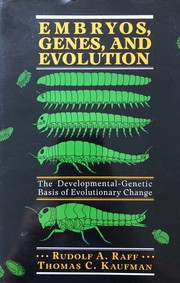
Introduces the evolutionary dimension of developmental mechanisms, explaining how changes in developmental programs produce morphological diversity — a crucial bridge to evo-devo thinking.
Evolutionary Developmental Biology & Frontiers
ExpertSynthesize developmental biology with evolution and genomics, understand how developmental constraints and innovations shape biodiversity, and engage with the current frontiers of the field.
▸ Study plan for this stage
Pace: 8–10 weeks, ~25–30 pages/day (approximately 200–250 pages/week)
- Evo-devo synthesis: how developmental mechanisms constrain and enable evolutionary change
- Toolkit genes (Hox genes and other conserved regulatory genes) and their role in generating morphological diversity across animal phyla
- Developmental constraints and innovations as drivers of biodiversity patterns
- Gene regulation and cis-regulatory elements as primary targets of evolutionary change
- Body plan evolution: how small changes in gene regulation produce large-scale morphological differences
- The concept of 'deep homology'—shared genetic mechanisms underlying superficially different structures
- Evolutionary developmental biology as a bridge between molecular genetics, developmental biology, and paleontology
- How do Hox genes and the developmental toolkit explain the diversity of animal body plans despite their genetic similarity?
- What is the relationship between developmental constraints and evolutionary innovation, and how does this explain why certain morphologies are common while others are rare?
- How have changes in gene regulation (rather than protein-coding sequences) driven major evolutionary transitions?
- What is 'deep homology' and how does it reveal evolutionary relationships between structures that appear unrelated?
- How does evo-devo explain the fossil record patterns observed in paleontology, and what does this tell us about the pace and mode of evolution?
- What are the current frontiers in evolutionary developmental biology, and how might they reshape our understanding of biodiversity?
- Create a comparative anatomy chart mapping Hox gene expression patterns across three different animal phyla (e.g., fruit flies, mice, zebrafish) and explain how similar gene sets produce different body plans
- Analyze a case study from the book (e.g., limb evolution, eye development, or arthropod segmentation) and write a 2–3 page synthesis explaining the developmental and evolutionary mechanisms at work
- Design a hypothetical evolutionary scenario: given a specific developmental toolkit, predict what morphological variations could and could not evolve, and justify your predictions
- Review a primary research paper on evo-devo (e.g., on Hox gene function or cis-regulatory evolution) and summarize how it exemplifies the principles from Carroll's book
- Create visual diagrams (phylogenetic trees with developmental annotations) showing how developmental innovations (e.g., the evolution of limbs, wings, or novel body segments) map onto evolutionary history
- Conduct a 'constraint analysis': identify a morphological feature that is rare or absent in nature and hypothesize what developmental or genetic constraints might prevent its evolution
Next up: This stage establishes the foundational synthesis of development and evolution through the lens of molecular genetics and regulatory biology; the next stage would deepen engagement with either genomic tools for studying evo-devo (comparative genomics, CRISPR-based experimental validation), systems-level approaches to understanding developmental networks, or specialized applications to specific cla

Carroll's accessible yet scientifically rigorous account of evo-devo reveals how a shared toolkit of developmental genes generates the diversity of animal life — essential reading for understanding the evolutionary significance of developmental mechanisms.
Kirschner and Gerhart's theory of facilitated variation provides a sophisticated, modern framework for how developmental systems evolve — a fitting capstone that connects molecular mechanisms to macroevolutionary patterns.
Discussion
Keep reading
Paths that share books, cover the same subject, or open a related topic.