The Best Biomechanics Books to Learn Human Movement
This curriculum builds a rigorous, deep understanding of biomechanics across four progressive stages, starting from solid mechanical and anatomical foundations and advancing into research-level analysis of human movement, muscle mechanics, and joint kinetics/kinematics. Because the learner starts at an intermediate level, early books consolidate core vocabulary and physical intuition before later books demand mathematical fluency and critical engagement with the scientific literature.
Foundations of Human Movement
BeginnerEstablish a shared language of mechanics (forces, torques, vectors, Newton's laws) applied to the human body, and build intuition for how anatomy and physics interact in movement.
▸ Study plan for this stage
Pace: 4–5 weeks, ~40–50 pages/day. Start with Winter's foundational chapters (1–4) over 2 weeks, then Hall's systematic coverage (chapters 1–6) over 2–3 weeks, with overlap for reinforcement.
- Newton's three laws of motion and their application to human movement (inertia, F=ma, action-reaction)
- Vectors, scalars, and vector addition/resolution for representing forces and displacements in 3D space
- Torque (moment), lever systems, and rotational equilibrium in joints and body segments
- Center of mass/gravity and its role in balance, stability, and movement efficiency
- Anatomical planes of motion (sagittal, frontal, transverse) and degrees of freedom in joints
- Free body diagrams as a tool for analyzing forces acting on body segments
- Basic kinematics (position, velocity, acceleration) vs. kinetics (forces causing motion)
- How skeletal anatomy (bones, joints, muscle attachments) constrains and enables mechanical function
- How do Newton's three laws explain why a person stumbles forward when they suddenly stop running?
- Draw and label a free body diagram for a standing person's leg, identifying all major forces (weight, ground reaction force, muscle tension, joint reaction forces).
- Explain the mechanical advantage of a third-class lever (like the biceps) and why it sacrifices force for speed and range of motion.
- What is the relationship between center of mass location and the base of support in determining stability? How does this change during a squat?
- Distinguish between a vector quantity (e.g., force) and a scalar quantity (e.g., mass), and show how to resolve a force vector into components.
- How do the anatomical planes of motion relate to the degrees of freedom available at a ball-and-socket joint versus a hinge joint?
- Draw free body diagrams for three different postures (standing upright, leaning forward, single-leg stance) and identify how forces and torques change.
- Measure your own body segments (arm, leg, torso) and estimate their center of mass using anatomical tables; calculate whole-body CoM in different positions.
- Perform a simple experiment: stand on one leg and observe your balance; then repeat while blindfolded or with eyes closed. Relate your observations to center of mass and base of support concepts.
- Solve 5–8 quantitative problems from Winter and Hall involving force resolution, torque calculation, and lever mechanical advantage using real anatomical data.
- Video-record yourself performing a simple movement (e.g., a squat, reach, or step-up); annotate the video with vectors showing estimated forces, velocity, and acceleration at key frames.
- Create a comparison table of joint types (hinge, ball-and-socket, pivot, ellipsoid) with their degrees of freedom, anatomical examples, and mechanical constraints.
Next up: This stage equips you with the mechanical vocabulary and conceptual tools needed to analyze specific movement tasks (gait, posture, athletic performance) and to understand how muscle forces, joint geometry, and external loads interact—preparing you to move into applied biomechanics and movement analysis in the next stage.
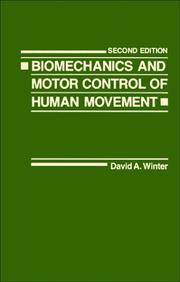
The single most cited introductory-to-intermediate biomechanics text; it systematically introduces kinematics, kinetics, and EMG in a unified framework that every subsequent book assumes you know.
Complements Winter by grounding abstract mechanics in clear anatomical context and worked examples, solidifying the vocabulary of forces, levers, and segment motion before moving to harder material.
Kinematics and Kinetics In Depth
IntermediateDevelop quantitative skill in describing and measuring human motion — joint angles, segment velocities, ground reaction forces, and inverse dynamics — and understand how these tools are applied in gait and sport.
▸ Study plan for this stage
Pace: 8–10 weeks, ~40–50 pages/day (mix of reading and worked examples). Knudson: 3–4 weeks; McGinnis: 4–5 weeks, with 1–2 weeks for integration and problem-solving.
- Qualitative analysis framework: systematic observation, critical features, and mechanical principles applied to human movement patterns
- Quantitative kinematics: joint angles (goniometry, video analysis), segment velocities, and acceleration measurement from 2D/3D motion capture
- Ground reaction forces (GRF): force plate measurement, vertical and horizontal components, and their role in propulsion and stability
- Inverse dynamics: calculating joint torques and muscle forces from kinematic and kinetic data to understand internal forces during movement
- Gait analysis: temporal–spatial parameters, phase analysis, and how kinematics and kinetics change across the gait cycle
- Sport-specific applications: jumping, throwing, and running mechanics; how quantitative tools reveal performance limiters and injury risk
- Integration of qualitative and quantitative approaches: when to use observation, when to measure, and how to interpret both together
- What are the critical features of a movement pattern, and how do you identify them through qualitative analysis?
- How do you measure joint angles and segment velocities from video or motion capture data, and what are the sources of error?
- What information do ground reaction forces provide about movement, and how do you interpret vertical and horizontal GRF components during walking or running?
- Explain the inverse dynamics approach: what data do you need, and what do joint torques tell you about muscle function?
- How do temporal–spatial parameters and phase-based analysis structure gait assessment, and what do changes in these parameters indicate?
- How would you use kinematics and kinetics together to diagnose a movement dysfunction in sport or rehabilitation?
- Perform qualitative analysis on a video of walking or running: identify critical features, describe mechanical principles at work, and note what you would measure quantitatively to confirm your observations.
- Measure joint angles (knee, hip, ankle) from a video using frame-by-frame analysis or simple goniometry on a partner; calculate the range of motion and compare to reference values.
- Collect ground reaction force data using a force plate (or simulate with a bathroom scale under different conditions); plot vertical and horizontal components and interpret what they reveal about propulsion and stability.
- Work through a complete inverse dynamics calculation for a single joint (e.g., knee) during a simple movement (e.g., sit-to-stand); identify the torques and discuss what muscles are active.
- Conduct a gait analysis on a partner or yourself: measure stride length, cadence, stance/swing phase duration, and relate these to observed kinematics and GRF data.
- Compare kinematics and kinetics between two movement conditions (e.g., normal vs. fatigued running, or two different throwing techniques); identify which quantitative measures best distinguish the conditions and why.
Next up: This stage equips you with the quantitative toolkit and analytical framework to measure and interpret human motion; the next stage will likely apply these methods to specific populations (injury, aging, rehabilitation) or deepen your understanding of how neural and muscular systems control and adapt movement patterns.
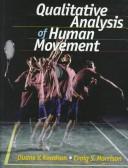
Bridges observation and measurement by teaching systematic movement analysis; reading this before the more mathematical texts sharpens the ability to ask the right quantitative questions.
Provides a thorough, example-rich treatment of linear and angular kinetics and kinematics in sport contexts, reinforcing inverse-dynamics thinking with practical problems.
Muscle Mechanics and Joint Biomechanics
IntermediateUnderstand the mechanical behavior of muscle (force-length, force-velocity, elastic energy), tendon, cartilage, and bone, and see how these tissue-level properties govern joint function and injury.
▸ Study plan for this stage
Pace: 8–10 weeks, ~40–50 pages/day. Start with MacIntosh (weeks 1–5, ~250 pages on muscle mechanics and structure), then transition to Whiting (weeks 6–10, ~300 pages on tissue injury mechanics and joint function). Allocate 1 week for integration and review.
- Force-length relationship in muscle: how sarcomere length and overlap of thick/thin filaments determine active tension and passive elastic properties
- Force-velocity relationship: the inverse relationship between contraction speed and force production, and its mechanical basis in cross-bridge cycling
- Elastic energy storage and recovery in muscle and tendon: the role of series and parallel elastic components in movement efficiency
- Mechanical properties of connective tissues: how bone, cartilage, and tendon respond to loading (stress-strain curves, viscoelasticity, anisotropy)
- Joint biomechanics: how muscle force, moment arms, and tissue properties interact to produce movement and stability
- Injury mechanisms: how tissue failure occurs when mechanical demands exceed material properties (overload, fatigue, shear)
- Scaling of muscle architecture to function: how fiber length, pennation angle, and cross-sectional area determine force vs. velocity trade-offs
- Viscoelastic behavior and loading rate dependence: how strain rate affects tissue stiffness, energy absorption, and failure modes
- Explain the force-length relationship in a sarcomere and predict how changes in fiber length affect the maximum force a muscle can produce.
- Describe the mechanical basis of the force-velocity relationship and explain why muscles produce less force at higher contraction speeds.
- How do series elastic components (tendon) and parallel elastic components (muscle fascia) contribute differently to energy storage and movement efficiency?
- Compare the stress-strain behavior of bone, cartilage, and tendon, and explain how their different mechanical properties suit their functional roles in joints.
- Given a joint anatomy (e.g., knee or shoulder), predict how changes in muscle moment arm or tissue stiffness would alter joint stability and injury risk.
- Analyze a specific injury scenario (e.g., ACL tear, muscle strain) and explain the mechanical overload or fatigue mechanism that caused failure.
- Plot and interpret force-length curves from MacIntosh: sketch the active and passive components, identify optimal length, and predict force output at different sarcomere lengths.
- Create a force-velocity diagram: plot contraction velocity vs. force for different muscle types and explain how fiber architecture (length vs. cross-section) shifts this curve.
- Measure or estimate moment arms on a skeleton model or from anatomical images; calculate the mechanical advantage of different muscles at different joint angles.
- Perform a tissue property comparison table: list stress-strain characteristics, failure modes, and recovery times for bone, cartilage, tendon, and muscle from Whiting's injury chapters.
- Case study analysis: select 2–3 injury examples from Whiting (e.g., hamstring strain, rotator cuff tear, stress fracture) and map the mechanical failure to tissue properties and loading conditions.
- Design a loading protocol: propose how you would progressively load a tissue (e.g., tendon) to improve its mechanical properties without causing injury, using principles from both books.
Next up: This stage establishes the mechanical foundation of individual tissues and joints; the next stage will likely apply these principles to whole-body movement patterns, athletic performance, or clinical rehabilitation, where understanding how muscles, tendons, and joints work together becomes essential for optimizing function and preventing injury.

Provides the physiological and mechanical underpinnings of muscle — motor units, cross-bridge kinetics, fatigue — that are prerequisite for understanding muscle modeling in later advanced texts.
Connects tissue mechanics (bone, cartilage, ligament, muscle) to injury mechanisms, giving the learner a concrete, clinically relevant reason to care about material properties and load tolerances.
Advanced Analysis and Modeling
ExpertMaster computational and mathematical approaches to biomechanics — rigid-body dynamics, musculoskeletal modeling, optimization, and simulation — enabling independent research and advanced applied work.
▸ Study plan for this stage
Pace: 8–10 weeks, ~40–50 pages/day with 2–3 dedicated modeling/simulation sessions per week
- Neural control of movement: motor units, recruitment patterns, and force modulation across different muscle fiber types
- Mechanical properties of muscle and tendon: force-length-velocity relationships, passive elasticity, and active contractile dynamics
- Rigid-body dynamics applied to human movement: joint torques, inverse dynamics, and multi-segment kinetic analysis
- Musculoskeletal modeling principles: anatomical scaling, moment arms, muscle redundancy, and force distribution across synergistic muscles
- Motor learning and adaptation: neural plasticity, skill acquisition, and how the nervous system optimizes movement patterns
- Computational simulation of movement: forward dynamics, inverse kinematics, and validation against experimental data
- Optimization principles in motor control: cost functions, energy efficiency, and how the nervous system selects among redundant solutions
- How do motor unit recruitment patterns and firing rates determine the force output and speed of muscle contraction?
- What are the mechanical consequences of the force-length-velocity relationship, and how does the nervous system account for these constraints during movement planning?
- How do you calculate joint torques from motion capture and force plate data using inverse dynamics, and what assumptions underlie this analysis?
- What is muscle redundancy, and how can optimization approaches help predict which muscles are recruited to produce a desired movement?
- How do passive elastic properties of muscle and tendon contribute to movement efficiency, and how can these be incorporated into biomechanical models?
- What are the key steps in building a musculoskeletal model, and how do anatomical parameters (muscle paths, moment arms) affect simulation predictions?
- How does the nervous system learn and adapt movement patterns, and what role does feedback play in motor learning?
- Conduct an inverse dynamics analysis on a simple movement (e.g., walking or reaching): extract kinematic data, apply Newton's laws to calculate joint torques, and interpret the results in terms of muscle function
- Build a simple 2–3 segment musculoskeletal model (e.g., arm or leg) using spreadsheet or MATLAB: define segment inertias, muscle attachment points, moment arms, and simulate force production
- Analyze motor unit recruitment in a provided EMG dataset: identify recruitment thresholds, estimate firing rates, and relate these to force output using the Henneman size principle
- Perform a force-length-velocity analysis: plot muscle force as a function of length and contraction velocity, and predict how these constraints affect movement speed and range
- Implement a simple optimization algorithm to solve the muscle redundancy problem: given a desired joint torque, predict muscle activations that minimize metabolic cost or joint compression
- Compare forward and inverse dynamics approaches on the same movement: simulate muscle activations forward to predict kinematics, then use inverse dynamics to back-calculate required torques, and discuss discrepancies
- Design and conduct a small motor learning experiment: practice a novel movement task, collect kinematic/EMG data at multiple time points, and analyze how neural and mechanical strategies change with practice
Next up: This stage equips you with the computational and mathematical tools to model and predict human movement from first principles; the next stage will likely focus on applying these models to specific clinical, sports, or rehabilitation contexts, or extending them to address emerging challenges in human-machine interaction and personalized biomechanics.
Extends gait analysis into full 3-D rigid-body dynamics and introduces musculoskeletal modeling concepts, serving as a bridge from applied measurement to computational simulation.

Integrates neural control with mechanical analysis at an advanced level, covering motor unit recruitment, reflexes, fatigue, and movement coordination — essential for understanding the full biomechanical system.
Discussion
Keep reading
Paths that share books, cover the same subject, or open a related topic.