Operations research is the mathematics of making better decisions: how to allocate, schedule, route, and plan under constraints and uncertainty. It is a coherent subject only if you learn it in the right order, because nearly everything generalizes the humble linear program. Start with that core and the rest of the field reveals itself as a series of principled extensions.
The reading path below moves from linear optimization outward, first to structured and integer problems, then to the general convex and nonlinear theory, and finally into the stochastic models that handle real-world randomness. Skip the linear foundation and the later material floats untethered.
The linear core
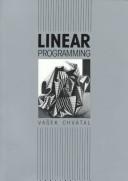
Begin with linear programming, the workhorse of the field. Solutions manual for linear programming by Chvatal accompanies his classic exposition of the simplex method and duality, and Introduction to Linear Optimization by Bertsimas and Tsitsiklis is the modern standard, rigorous and clear. Together they give you duality and polyhedral thinking, the concepts that echo through everything that follows.
Structure and integers
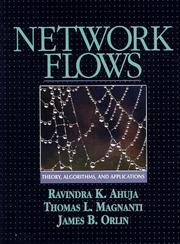
Many real problems have combinatorial structure. Network flows by Ahuja, Magnanti, and Orlin is the definitive treatment of shortest-path, max-flow, and assignment problems, which underlie routing and logistics. Integer programming by Wolsey is the standard on discrete optimization, where variables must be whole numbers and the problems get genuinely hard. These teach you the special structures that make otherwise intractable models solvable.
Nonlinear and stochastic worlds
Now generalize. Convex Optimization by Boyd and Vandenberghe is the field-defining text on the class of problems we can reliably solve, and Nonlinear Programming by Bertsekas covers the broader, harder terrain. Then confront uncertainty: Stochastic modeling and the theory of queues and Fundamentals of queueing theory teach how to model waiting lines and random arrivals, the mathematics behind call centers and networks. Dynamic Programming and Optimal Control by Bertsekas develops sequential decision-making under uncertainty, and Introduction to stochastic programming closes the path by folding randomness directly into the optimization itself.
Read this way, operations research becomes a single connected discipline built outward from linear programming. Follow the full path from the linear core to the stochastic frontier.
Follow the full reading path →
Ready to learn something deeply?
Build a reading path — free