Molecular and cell biology reading path: from DNA to the living cell
This curriculum takes a beginner from the basic language of biology through the molecular logic of the cell, then into the detailed mechanics of gene expression and protein function, and finally into advanced topics like cell division, signaling, and modern molecular techniques. Each stage builds the vocabulary and conceptual framework needed to tackle the next, ensuring deep rather than superficial understanding.
Foundations: The Language of Life
BeginnerUnderstand what cells are, what DNA is, and how the central dogma (DNA → RNA → protein) works at an intuitive level — no prior biology required.
▸ Study plan for this stage
Pace: 8–10 weeks, ~25–35 pages/day (mix of reading and reflection)
- What defines a cell: the basic unit of life with a membrane, cytoplasm, and genetic material
- DNA structure: the double helix, base pairing (A-T, G-C), and how information is encoded in sequence
- The central dogma: DNA is transcribed to RNA, which is translated to protein; the flow of biological information
- Genes as functional units: a gene is a stretch of DNA that codes for a protein or RNA product
- How proteins fold and function: the relationship between amino acid sequence and 3D structure determines what a protein does
- The role of RNA as intermediary: mRNA carries instructions; rRNA and tRNA execute them
- Evolution of cells and life: how cells arose and diversified; why the central dogma is universal
- Scale and visualization: understanding molecular machines at atomic and nanometer scales
- What are the three main components of a cell, and why is the cell membrane crucial to life?
- Explain the structure of DNA and how base pairing ensures accurate copying of genetic information.
- Describe the central dogma: how does information flow from DNA to RNA to protein, and what is the role of each?
- What is a gene, and how does the DNA sequence of a gene relate to the protein it produces?
- How does a protein's amino acid sequence determine its 3D shape and function?
- Why is RNA considered the 'bridge' between DNA and proteins, and what different roles do different types of RNA play?
- Draw and label a cell diagram (prokaryotic and eukaryotic) from memory, identifying the nucleus, mitochondria, ribosomes, and cell membrane.
- Build a physical DNA model using craft materials (beads, string, or pipe cleaners) showing the double helix, base pairs, and major/minor grooves.
- Transcribe a short DNA sequence (5–10 bases) to mRNA by hand, then translate the mRNA to amino acids using the genetic code table.
- Create a visual flowchart of the central dogma with specific examples: pick a real gene (e.g., hemoglobin or insulin) and trace DNA → RNA → protein.
- Use online tools (e.g., Protein Data Bank or Jmol) to explore a real protein structure (e.g., hemoglobin); identify its secondary structures (alpha helices, beta sheets) and relate them to function.
- Write a one-page 'biography' of a single gene: its DNA sequence, the mRNA it produces, the protein it codes for, and what that protein does in the cell.
Next up: This stage builds the conceptual vocabulary and mental models needed to understand how cells regulate genes, respond to signals, and divide—topics that form the foundation for the next stage on cellular processes and control.

A concise, accessible primer that orients the complete beginner to what cells are and why they matter, building essential vocabulary before anything more demanding.
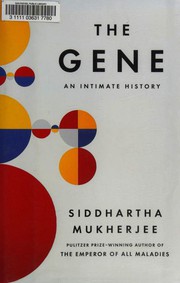
Tells the story of genetics and DNA in compelling narrative form, giving the beginner historical context and conceptual intuition for genes and heredity before tackling textbooks.
Beautifully illustrated tour of the molecular machines inside cells; builds vivid mental models of proteins, DNA, and cellular structures that make later technical reading far more concrete.
Core Concepts: Molecular Biology Essentials
BeginnerGain a solid working knowledge of DNA replication, transcription, translation, and basic protein structure — the core toolkit of molecular and cell biology.
▸ Study plan for this stage
Pace: 8–10 weeks, ~40–50 pages/day (mix of reading and review). Start with Watson's "Molecular Biology of the Gene" (weeks 1–5, ~25 pages/day) to build foundational understanding, then transition to Lodish's "Molecular Cell Biology" (weeks 6–10, ~40 pages/day) for deeper mechanistic detail and cellular co
- DNA structure and the double helix: base pairing rules, antiparallel strands, and why this architecture enables replication
- DNA replication: semi-conservative mechanism, role of DNA polymerase, primase, ligase, and the leading/lagging strand asymmetry
- Transcription: how RNA polymerase reads DNA template, promoter recognition, initiation/elongation/termination, and the central dogma
- Translation: the genetic code, tRNA-mRNA codon-anticodon pairing, ribosomal mechanics (initiation, elongation, termination), and how amino acids are linked
- Protein structure: primary (amino acid sequence), secondary (α-helices, β-sheets), tertiary (3D folding), and quaternary (multi-subunit) organization
- Gene expression regulation: how cells control when and how much protein is made (transcriptional and translational control)
- The molecular basis of mutation: how errors in replication or transcription alter DNA/protein and affect phenotype
- Integration of molecular processes: how replication, transcription, and translation work together as an interconnected system in living cells
- Explain the semi-conservative model of DNA replication and describe the roles of at least three key enzymes (DNA polymerase, primase, ligase) in this process.
- What is the central dogma, and how do transcription and translation each contribute to converting genetic information into functional proteins?
- How does the genetic code work, and why is the codon-anticodon interaction between mRNA and tRNA essential for accurate translation?
- Describe the four levels of protein structure and explain how amino acid sequence (primary structure) determines the final 3D shape and function of a protein.
- What is a promoter, and how do transcription factors and RNA polymerase recognize and initiate transcription at the correct location?
- How do mutations in DNA (e.g., point mutations, insertions, deletions) lead to changes in protein sequence and potentially alter cellular function?
- Draw and label a detailed diagram of the DNA double helix showing base pairs, the sugar-phosphate backbone, and antiparallel orientation; then sketch the replication fork with leading and lagging strands, Okazaki fragments, and key enzymes.
- Create a step-by-step flowchart of transcription (promoter binding → initiation → elongation → termination) and translation (ribosome assembly → codon recognition → peptide bond formation → release), labeling all major molecules and factors involved.
- Solve 10–15 genetic code problems: given an mRNA sequence, translate it to amino acids; given a DNA template strand, transcribe and translate it to predict the protein product.
- Build or sketch a protein structure model showing primary, secondary, tertiary, and quaternary levels; annotate hydrogen bonds, disulfide bridges, hydrophobic/hydrophilic interactions, and explain how these stabilize the 3D shape.
- Work through a replication problem set from Watson's chapters: identify which strand is leading/lagging, calculate the number of Okazaki fragments for a given DNA length, and explain why DNA polymerase requires a primer.
- Analyze a real or hypothetical mutation scenario (point mutation, frameshift, nonsense mutation) and predict its effect on the protein product and organism phenotype using the genetic code and protein structure principles.
Next up: This stage equips you with the molecular machinery of life—replication, transcription, translation, and protein structure—which are the prerequisites for understanding how cells regulate these processes, respond to signals, and coordinate development; the next stage will explore gene regulation, cell signaling, and cellular organization at a systems level.
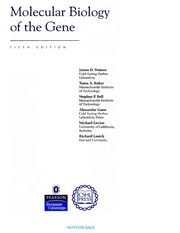
The classic introductory textbook co-authored by Watson himself; systematically covers DNA structure, replication, and gene expression with clarity and historical authority, ideal as a first real textbook.
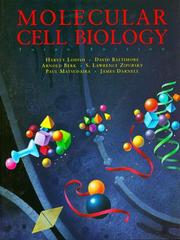
A comprehensive, well-organized textbook that bridges molecular biology and cell biology, reinforcing and expanding on Watson with detailed coverage of proteins, membranes, and the endomembrane system.
Going Deeper: The Cell as a Machine
IntermediateUnderstand how cells are organized, how proteins fold and do work, how gene expression is regulated, and how the cytoskeleton and organelles coordinate cellular life.
The definitive intermediate-to-advanced cell biology textbook; its strength is explaining how molecular parts work together as integrated cellular systems, building directly on the Lodish foundation.

Focuses specifically on protein structure, folding, and function — a topic central to everything in cell biology — filling in mechanistic depth that broad textbooks can only sketch.
Advanced Mechanisms: Gene Regulation & Cell Division
ExpertMaster the sophisticated regulatory networks controlling gene expression, understand the cell cycle and mitosis/meiosis at a mechanistic level, and appreciate how signaling pathways integrate cellular decisions.
▸ Study plan for this stage
Pace: 8–10 weeks, ~40–50 pages/day (alternating between Cox's chapters on transcriptional regulation, chromatin structure, and post-transcriptional control, then Morgan's cell cycle chapters in parallel weeks 5–10)
- Transcriptional regulation: promoters, enhancers, silencers, and the role of transcription factors in controlling gene expression
- Chromatin structure and epigenetic modifications (histone acetylation, DNA methylation) as heritable regulatory mechanisms
- Post-transcriptional control: RNA processing, alternative splicing, mRNA stability, and translational regulation
- Signal transduction pathways: how extracellular signals (hormones, growth factors) are transduced through kinase cascades to alter gene expression
- Cell cycle phases (G1, S, G2, M) and the checkpoint mechanisms that ensure fidelity
- Cyclins and CDKs: molecular drivers of cell cycle progression and their regulation by inhibitors (CDKIs)
- Mitosis and meiosis: mechanistic details of chromosome segregation, spindle assembly, and cytokinesis
- Integration of cell cycle with growth signals and DNA damage responses via p53 and checkpoint pathways
- How do transcription factors recognize and bind specific DNA sequences, and what role do chromatin remodeling complexes play in making DNA accessible?
- Explain the difference between constitutive and inducible gene expression, and describe at least two regulatory mechanisms that control each.
- What are the molecular mechanisms by which histone modifications and DNA methylation influence gene expression, and how are these marks maintained through cell division?
- Describe the role of cyclins and CDKs in driving the G1/S and G2/M transitions, and explain how CDK inhibitors (e.g., p21, p27) enforce checkpoint control.
- How do DNA damage checkpoints (particularly the p53 pathway) integrate with the cell cycle machinery to prevent the replication or segregation of damaged DNA?
- Compare and contrast the mechanisms of mitosis and meiosis, particularly with respect to chromosome condensation, spindle dynamics, and the outcomes for daughter cells.
- Map a eukaryotic gene (e.g., a mammalian housekeeping gene) identifying promoter, enhancer, silencer, and coding regions; predict how mutations in each region would affect expression.
- Analyze a published ChIP-seq or ATAC-seq dataset to identify transcription factor binding sites and open chromatin regions; correlate with gene expression data.
- Construct a detailed diagram of a signal transduction pathway (e.g., MAPK/ERK or Wnt signaling) showing how an extracellular signal cascades to alter chromatin and transcription factor activity.
- Create a timeline of the cell cycle phases with molecular markers (cyclin levels, CDK activity, checkpoint proteins); annotate key transitions and control points.
- Simulate or model CDK-cyclin dynamics using simple kinetic equations or a computational tool; predict how overexpression of cyclins or loss of CDKIs would alter cell cycle timing.
- Design an experiment to test whether a candidate gene is regulated at the transcriptional, post-transcriptional, or translational level; justify your approach with reference to Cox's methods.
Next up: This stage equips you with the mechanistic foundation to understand how dysregulation of gene expression and cell cycle control drives cancer, and prepares you to explore tumor suppressors, oncogenes, and therapeutic strategies in the next stage.

Covers advanced topics in gene regulation, epigenetics, and genomics with exceptional mechanistic rigor, serving as a capstone molecular biology text after Alberts.
The authoritative dedicated text on cell cycle regulation, CDKs, checkpoints, and mitosis — essential for understanding how cells divide and how errors lead to cancer.
Discussion
Keep reading
Paths that share books, cover the same subject, or open a related topic.