Best Books on Dark Matter and Dark Energy, in Order
Roughly ninety-five percent of the universe is made of two things nobody has ever detected directly, and the case for both rests on evidence that is indirect but genuinely overwhelming. This path starts with short overviews, then separates the dark matter evidence from the dark energy evidence because they are different discoveries made by different people for different reasons, gives a stage to the sceptics and the outliers, and ends with the cosmology textbooks that let you check the claims yourself.
The problem stated
BeginnerState clearly what dark matter and dark energy each explain, and why they are two separate problems rather than one
▸ Study plan for this stage
Pace: 3-4 weeks, all popular science with no mathematics. Clegg's Dark Matter and Dark Energy is a 176-page Hot Science paperback and takes two evenings. Panek's The 4-Percent Universe is 297 pages of narrative and reads at trade pace over a week. Freeman and McNamara's In Search of Dark Matter is 164 pag
- Dark matter and dark energy as two separate problems with different evidence, discovered by different communities decades apart
- The mass discrepancy: galaxies and clusters behaving as if they contain far more mass than their light accounts for
- The accelerating expansion measured in 1998 from Type Ia supernovae, and why it demanded something beyond matter
- The rough energy budget - about 5 percent ordinary matter, 27 percent dark matter, 68 percent dark energy - and where those numbers come from
- Flat rotation curves as the original and still cleanest galactic-scale evidence
- Zwicky's 1930s cluster measurement and Rubin and Ford's 1970s rotation curves as the two independent starting points
- Why two rival supernova teams and a race make Panek's narrative useful evidence about how the result was established
- State in one sentence each what dark matter explains and what dark energy explains, and say why one does not solve the other's problem.
- What is a galaxy rotation curve, what shape was expected, and what shape is observed?
- How did the 1998 supernova measurement actually work, and what had to be assumed about Type Ia supernovae?
- Where do the 5, 27 and 68 percent figures come from - which observations constrain which component?
- Why were two competing teams a strength rather than a weakness in establishing acceleration?
- Download a published rotation curve for a spiral galaxy such as NGC 3198 and, using the enclosed luminous mass, compute the rotation speed Newtonian gravity predicts at several radii; plot it against the observed curve.
- Sketch the energy budget of the universe as a pie chart from memory, then annotate each slice with the observation that constrains it.
- Build a timeline from Zwicky in 1933 to the 1998 supernova results with at least eight dated entries, using Panek and Freeman together.
- Write 500 words explaining to a non-scientist why dark matter and dark energy are two problems rather than one, without using the word mysterious.
Next up: With the two problems clearly separated, the next stage can follow the dark matter evidence chain in detail without dark energy contaminating the argument.

A short Hot Science paperback that sets up both problems in a couple of hours without assuming any physics. The fastest way to get the vocabulary before committing to a longer book.
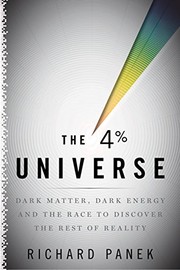
The narrative of how both discoveries actually happened, told through the rival teams that made them, ending with the 1998 supernova result. Read it second: Clegg tells you what the answers are, Panek shows you the fight.
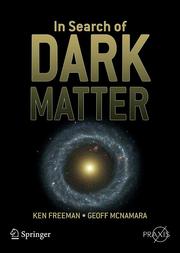
A short book by one of the astronomers whose rotation-curve work established the dark matter problem, and unusually clear on the observational history. It closes the introductory stage with the primary evidence.
Dark matter: the evidence
IntermediateFollow the independent lines of evidence from rotation curves to lensing to the cosmic microwave background, and understand how direct-detection experiments work
▸ Study plan for this stage
Pace: 6-8 weeks. Freese's The Cosmic Cocktail is 250 pages by a working theorist and is the core book - two weeks, and it is popular but not simple. Hooper's Dark Cosmos is 256 pages from the particle-physics side and takes a week. Gates's Einstein's Telescope is 305 pages on lensing and takes ten days. S
- The independent evidence chain: rotation curves, cluster velocity dispersions, gravitational lensing, the cosmic microwave background, big bang nucleosynthesis and structure formation
- Why the evidence is strong because the lines are independent, not because any one of them is decisive
- Gravitational lensing as a mass-mapping tool - strong, weak and micro
- The Bullet Cluster, where the lensing mass and the X-ray gas are spatially separated, and why it is the hardest single observation for modified gravity to accommodate
- The CMB acoustic peaks and how the ratio of odd to even peak heights constrains the baryon and dark matter densities separately
- The candidate particles: WIMPs, axions, sterile neutrinos, and the supersymmetric motivation Hooper describes
- Direct detection, indirect detection and collider production as three distinct search strategies, and the long record of null results Schilling reports
- List six independent lines of evidence for dark matter and say what each one alone would and would not establish.
- How does a direct-detection experiment work, what background does it fight, and why must it be underground?
- Why does the Bullet Cluster cause trouble for modified gravity specifically, rather than for any theory?
- How do the CMB acoustic peaks distinguish baryonic from non-baryonic matter?
- What motivated the WIMP as a candidate, and how much of that motivation survives the null results Schilling describes?
- After Schilling, what would you now say the field's honest confidence level is?
- Find published Bullet Cluster images with the X-ray and lensing maps overlaid, and write a paragraph explaining the inference step by step, marking where an assumption enters.
- Take a cluster with a published velocity dispersion and estimate its mass with the virial theorem, then compare with the published lensing mass and account for the difference.
- Plot a published CMB power spectrum and mark the first three acoustic peaks, then write down what each peak's height and position constrains.
- Build a table of the major direct-detection experiments Freese and Schilling name, with target material, location and current exclusion limit, from the published results.
- Keep a log of every candidate particle mentioned across the four books, with its mass range and the experiment that would find it.
Next up: Having established the dark matter case thoroughly, you can meet dark energy as a genuinely separate discovery rather than as a second helping of the same argument.

Catalogued as The Cosmic Cocktail: Three Parts Dark Matter. Freese is a working theorist and this is the best single account of the particle candidates and the detection experiments hunting them. The core book of this stage.
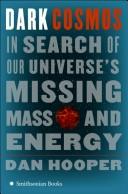
Hooper writes from the particle-physics side, connecting dark matter to supersymmetry and collider searches. Read it after Freese as the complementary view from the other discipline trying to solve the same problem.
Gravitational lensing as a mapping tool, including the Bullet Cluster, which is the observation that makes dark matter hardest to explain away. It gives you the single most persuasive image in the field.

Catalogued as Elephant in the Universe. The most current popular survey, written after decades of null results from direct detection, and honest about how uncomfortable that is. Read it last here because it presumes the earlier evidence.
Dark energy and the accelerating universe
IntermediateUnderstand the supernova cosmology that revealed acceleration, the cosmological constant problem, and what quintessence would mean if it were real
▸ Study plan for this stage
Pace: 4-5 weeks. Kirshner's The Extravagant Universe is 308 pages and is the insider account by one of the supernova team leaders - about ten days, and it is more observational in detail than the previous stage. Krauss's Quintessence is 384 pages and takes two weeks; it was written right at the moment the
- Type Ia supernovae as standardisable candles, and the light-curve shape corrections that make them usable
- The distance modulus and the Hubble diagram, and how a departure from the expected curve becomes evidence for acceleration
- The cosmological constant, its history from Einstein's 1917 introduction to the 1998 revival, and what it means as vacuum energy
- The cosmological constant problem: the enormous discrepancy between the observed value and naive quantum field theory estimates
- The equation of state parameter w, and why measuring whether it equals exactly -1 is the central observational programme
- Quintessence as a dynamical alternative to a constant, and what would distinguish it observationally
- Systematic errors in supernova cosmology - dust, evolution, selection - and how the two teams argued about them
- How is a Type Ia supernova standardised, and what physical assumption does the standardisation rest on?
- Draw the Hubble diagram schematically and show where the 1998 data departed from a decelerating universe.
- State the cosmological constant problem quantitatively - what is the size of the discrepancy?
- What is w, what does w equal -1 mean physically, and what would w not equal -1 imply?
- What were the strongest systematic-error objections to the supernova result, and how were they addressed?
- Take a published supernova Hubble diagram, read off the magnitude offset at redshift 0.5, and confirm for yourself that it corresponds to supernovae being fainter and therefore more distant than a decelerating model predicts.
- Work through the light-curve stretch correction on published data for two Type Ia supernovae and show how the correction reduces the scatter.
- Compute the vacuum energy density implied by the observed cosmological constant in GeV per cubic centimetre and compare it with a naive Planck-scale estimate; write the ratio down.
- Write 500 words on what evidence would be needed to establish quintessence over a cosmological constant, and say which current or planned survey could supply it.
Next up: Both discoveries now stand on their own evidence, which is the only honest position from which to give the sceptics and the outliers a fair hearing.
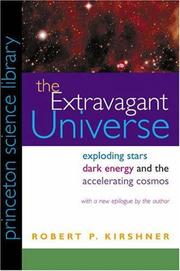
Written by the leader of one of the two supernova teams, this is the insider account of the 1998 measurement that forced dark energy into cosmology. Start the dark energy stage with the people who took the data.
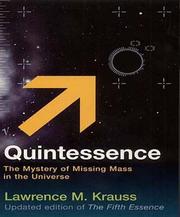
Krauss on the missing-mass problem and the cosmological constant, written right at the moment the picture changed. Read it after Kirshner for the theoretical stakes of the observation.
The contested edges
IntermediateTake the alternatives seriously: evaluate modified gravity against particle dark matter, and learn to tell a speculative proposal from an established result
▸ Study plan for this stage
Pace: 4-5 weeks. Randall's Dark Matter and the Dinosaurs is 422 pages of trade science and reads quickly, about ten days - read it explicitly as a case study in how a serious theorist presents a speculative idea. Sanders's The Dark Matter Problem is 205 pages of historical and critical survey and is the m
- MOND: modified Newtonian dynamics, the acceleration scale a0, and the empirical regularities it predicts successfully
- The baryonic Tully-Fisher relation and the radial acceleration relation as the strongest empirical points in MOND's favour
- Where MOND fails: clusters of galaxies, the Bullet Cluster, and the CMB power spectrum
- Relativistic extensions of MOND and the cost of building them
- Sanders's historical framing - how a research community converges, and what the convergence makes hard to question
- Randall's dark-disk proposal and periodic comet showers, presented explicitly as a speculative hypothesis
- The practical skill of distinguishing an established result, a well-motivated model and a speculative proposal in the same author's prose
- State MOND's core postulate and name the observations it predicts better than particle dark matter does.
- Where does MOND fail decisively, and is the failure fatal or repairable?
- How does Randall flag the speculative status of her own hypothesis, and does the framing hold up throughout the book?
- What would it take to falsify particle dark matter, and has anything approaching that test been performed?
- Is Sanders's critique of the field sociological, empirical or both - and does the distinction matter for how much weight it deserves?
- Take three published galaxy rotation curves and fit both a dark-matter halo and a MOND prediction to each; write down which fits better and with how many free parameters.
- Plot the baryonic Tully-Fisher relation from published data and write a paragraph on why its tightness is an argument Sanders can use.
- Make a two-column ledger of every observation Sanders discusses, marked for whether it favours MOND, particle dark matter or neither, and total the columns honestly.
- Go through Dark Matter and the Dinosaurs marking every sentence that states a result and every sentence that states a possibility, and write 500 words on whether a general reader could tell them apart.
Next up: Having heard the strongest case against the standard picture, you have the motivation to check the standard picture yourself, which requires the technical books in the final stage.

Randall's proposal that a dark-matter disk periodically disturbed the Oort cloud and sent a comet at the Earth. Read it as a case study in how a serious theorist builds and flags a speculative hypothesis, not as an established result.
A historical and critical survey by a leading advocate of modified Newtonian dynamics, and the fairest presentation of the case against particle dark matter you will find. Essential precisely because everything else in this path assumes the standard answer.
Doing the cosmology yourself
IntermediateDerive the Friedmann equations, work with the CMB power spectrum, and read the technical dark-matter literature without translation
▸ Study plan for this stage
Pace: 8-12 months, and the jump in level here is real. Ryden's Introduction to Cosmology is 288 pages of the clearest undergraduate text there is - two to three months at a chapter a week with the problems, assuming multivariable calculus and undergraduate mechanics. Dodelson's Modern Cosmology is 476 pag
- The FRW metric and the Friedmann equations derived rather than quoted, and the density parameters that come out of them
- The expansion history: radiation, matter and dark energy domination, and how each scales with redshift
- Distance measures in cosmology - comoving, luminosity, angular diameter - and why the supernova result depends on getting them right
- Big bang nucleosynthesis as an independent determination of the baryon density
- Linear perturbation theory, the transfer function, and the growth of structure
- The CMB anisotropy power spectrum computed rather than described - acoustic peaks, Silk damping, and the parameter degeneracies
- Dark matter candidates at research level: relic abundance calculations, freeze-out, and the astrophysical and collider constraints assembled in Bertone
- Derive the Friedmann equations from the FRW metric and identify each density parameter.
- Show how the scale factor evolves in a radiation-dominated, matter-dominated and Lambda-dominated universe.
- Compute the relic abundance of a thermally produced WIMP and explain why the answer comes out near the observed dark matter density.
- What sets the position of the first acoustic peak, and what parameter degeneracy does it leave?
- How does big bang nucleosynthesis constrain the baryon density independently of the CMB, and do the two agree?
- Having done the calculations, which of the popular claims from stage one would you now state more carefully?
- Do the problems in Ryden; the derivations are the point and the book is short because of them.
- Numerically integrate the Friedmann equation for the currently measured density parameters and produce your own plot of scale factor against time, then read off the age of the universe.
- Reproduce the supernova constraint yourself: take a published compilation of Type Ia distance moduli, fit the matter and dark energy densities, and compare your contours with the published ones.
- Use a public Boltzmann code to compute a CMB power spectrum, vary the dark matter density by 20 percent, and write a paragraph on exactly which features move and why.
- Work Dodelson's derivation of the growth of matter perturbations in the matter-dominated era from first principles, then use Bertone to find the current experimental limit on one candidate particle and write a page on how that limit was set.
Next up: You finish able to derive the results the popular books assert, check the numbers behind any dark matter claim, and read the research literature without translation.
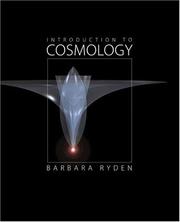
The clearest undergraduate cosmology textbook, and the right first technical book: it derives the expansion history and the density parameters that the popular books have been naming. Everything after this assumes it.
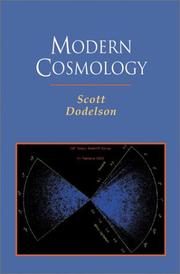
The graduate standard, and specifically the book that teaches perturbation theory and the CMB anisotropies from which the dark matter and dark energy densities are actually measured. Read it after Ryden.

An edited technical volume covering the candidates, the astrophysical constraints and the detection strategies at research level. It is the natural summit: a reference to consult chapter by chapter rather than read straight through.
Discussion
Keep reading
Paths that share books, cover the same subject, or open a related topic.