Best Books on Fusion Energy and the Race to Build a Star
Fusion has been thirty years away for seventy years, and the reasons are physical rather than merely institutional: confining a plasma hotter than the Sun's core turns out to be one of the hardest engineering problems ever attempted. This path starts with short current accounts including the 2022 ignition result, then reads the history sceptically, then builds the plasma physics properly, and ends with the graduate texts on magnetic and inertial confinement so that you can judge the field's claims yourself.
What fusion is and where it stands
BeginnerExplain the D-T reaction, the Lawson criterion and the difference between magnetic and inertial confinement, and know what ignition at NIF did and did not prove
▸ Study plan for this stage
Pace: 4-5 weeks of popular science, no mathematics beyond arithmetic. Holgate's Nuclear Fusion is a short current primer and takes two evenings. Turrell's The Star Builders is 272 pages by a plasma physicist and reads at trade pace over a week, with the best feel for what the machines physically do. Clery
- The D-T reaction, its 17.6 MeV output, the neutron and alpha split, and why deuterium-tritium is the easiest reaction rather than the best one
- Coulomb barrier, tunnelling, and the reaction cross-section peak that sets the required temperature
- The Lawson criterion and the triple product of density, temperature and confinement time
- Magnetic versus inertial confinement as two completely different bets on the same physics
- The tokamak configuration in outline: toroidal and poloidal fields, plasma current, divertor
- What NIF's 2022 ignition result actually demonstrated - target gain against laser energy delivered, not against wall-plug energy
- Tritium breeding and the neutron-materials problem, which is where fusion becomes an engineering rather than a physics question
- The private fusion companies and the range of confinement schemes they are pursuing
- Write down the D-T reaction and account for where the 17.6 MeV goes.
- State the Lawson criterion and explain why raising any one of the three factors can compensate for another.
- What exactly did NIF achieve in December 2022, and what does it not establish about a power plant?
- How does inertial confinement reach the same triple product by a completely different route from a tokamak?
- Where does the tritium come from, and why is breeding it a problem rather than a detail?
- Compute the temperature in kelvin corresponding to 10 keV and compare it with the Sun's core temperature; write both numbers down.
- Estimate the energy released per kilogram of D-T fuel and compare it with coal, petrol and uranium fission on the same basis.
- Take the published NIF shot numbers - laser energy on target and fusion yield - and compute the target gain yourself; then find the facility's total electrical input and compute the wall-plug gain.
- Build a one-page table of the major current devices and companies from Holgate and Turrell, with the confinement scheme and stated timeline for each, and keep it for the last stage.
Next up: With the physics vocabulary and the current state in hand, you can weigh the field's case and its critics against actual numbers rather than impressions.

A short, current primer covering both confinement approaches and the private fusion companies, written for a general reader. It is the fastest way to acquire the vocabulary the rest of this path uses.
Turrell is a plasma physicist and this is the most up-to-date popular account, written around the laser-fusion work that led to ignition. Read it second for a proper feel for what the machines actually do.

A science journalist's history of the whole field, and the best explanation of why ITER is designed and governed the way it is. It supplies the institutional context Turrell mostly assumes.
The case for and against
IntermediateAssess fusion's energy case on its merits, and be able to separate genuine physical progress from repeated over-promising
▸ Study plan for this stage
Pace: 6-8 weeks, and the level rises. McCracken and Stott's Fusion sits between popular and textbook, 236 pages with real numbers on confinement and breakeven - two weeks, read with a pencil. Seife's Sun in a Bottle is 292 pages of sceptical history and reads quickly, a week. Chen's An Indispensable Truth
- Q, breakeven and ignition as three distinct thresholds, and the difference between scientific and engineering breakeven
- JET's actual results and what they established, from the people who ran the programme
- Fusion's energy case on its merits: fuel supply, waste profile, proliferation, capital cost, and the comparison with fission and renewables
- The field's record of over-promising, from Project Sherwood through cold fusion to the announcements around NIF
- Cold fusion in 1989 as a case study in how a claim fails, and what the episode did to the field's credibility
- Chen's technical case for fusion as a necessary answer to the energy problem, and where the argument is physics and where it is advocacy
- How to separate genuine physical progress from institutional milestone-setting
- Define Q, scientific breakeven, engineering breakeven and ignition, and say which have been achieved and by what machine.
- What were JET's best confinement results, and what did they establish about scaling to a reactor?
- What is Seife's strongest specific criticism, and does it survive McCracken and Stott's numbers?
- What went wrong in the cold fusion episode, procedurally rather than just factually?
- Where does Chen's argument depend on physics and where on assumptions about energy policy?
- On the evidence of this stage, what is the honest confidence interval on a fusion power plant date?
- Build a timeline of announced fusion milestones from 1950 onward with the claim made and the claim's subsequent status, using Seife and Clery.
- Take JET's published D-T shot parameters and compute the triple product and Q for yourself, then place them on a plot against the Lawson criterion.
- Write a 1,000-word assessment of fusion's energy case with the strongest available argument on each side, and cite specific numbers from McCracken and Stott.
- Read the original 1989 cold fusion claims and one of the failed replication reports, and write a paragraph on what the replication attempts actually did.
- Go through Chen and mark every page where a technical claim is doing the work and every page where a policy assumption is; write down the ratio.
Next up: Understanding both the claims and the scepticism raises the question the history stage answers: how did the programme come to be organised this way at all?
Catalogued simply as Fusion. McCracken and Stott write from inside the JET programme, at a level between popular and textbook, with real numbers on confinement and breakeven. The most useful single book in this stage.

The sceptical history, running from Project Sherwood through cold fusion to NIF, and unsparing about the field's record of announcements. Read it directly after McCracken so the criticism lands against actual physics.

A leading plasma physicist arguing that fusion is the necessary answer to the energy problem, with substantial technical content on plasma behaviour. It is the considered case for the defence, and the bridge into the physics stages.
How the field got here
IntermediateUnderstand the institutional history: classified beginnings, the Soviet tokamak result, and how an international megaproject came to dominate the programme
▸ Study plan for this stage
Pace: 4-5 weeks. Bishop's Project Sherwood is a 216-page 1958 primary source and takes a week; read it as a document of what was known and believed at declassification, not as a current account. Bromberg's Fusion is a 344-page scholarly institutional history of the US programme and is the more demanding o
- The classified beginnings: Project Sherwood, the British and Soviet programmes, and the 1958 Atoms for Peace declassification
- The early confinement concepts - pinches, stellarators, magnetic mirrors - and why most were abandoned
- The 1968 Soviet T-3 tokamak result and the British measurement that confirmed it, which redirected the entire world programme
- How funding cycles, secrecy and national prestige determined which machines were built
- The consolidation into a small number of large devices, and the trade-off between one big machine and many small ones
- The path from that consolidation to ITER as an international megaproject with its own governance problems
- The value and the limits of a primary source written before the difficulty of the problem was understood
- What did the American programme believe in 1958 about how soon fusion would arrive, and on what basis?
- Which early confinement concepts failed, and what physical instability killed each?
- Why did the T-3 result change the world programme so completely, and what made the confirming measurement credible?
- How did funding structures shape which machines got built, on Bromberg's account?
- What does reading Bishop in 1958's voice teach you about the reliability of current timelines?
- List every confinement concept named in Project Sherwood, and for each write down its current status and the reason it was abandoned or retained.
- Plot US fusion funding against time from Bromberg's data in constant dollars, and mark the political events that correspond to each inflection.
- Compare Bishop's 1958 predictions with what actually happened over the next twenty years and write 500 words on which specific assumption was most wrong.
- Write a one-page account of the decision to pursue tokamaks worldwide, distinguishing the physics reason from the institutional reason.
Next up: Knowing why the field bet on magnetic confinement is the motivation for actually learning the plasma physics that decides whether the bet works.

The 1958 account of the American controlled-fusion programme published the year it was declassified. A genuine primary source on how the problem looked before anyone knew how hard it was.
Catalogued simply as Fusion, and a different book from McCracken's. Bromberg's institutional history of the US programme is the scholarly account of how funding, secrecy and politics shaped which machines got built.
The plasma physics
IntermediateHandle single-particle motion, magnetohydrodynamics, waves and instabilities well enough to follow a confinement paper
▸ Study plan for this stage
Pace: 8-12 months, and the level jumps hard here. Chen's Introduction to Plasma Physics and Controlled Fusion is 421 pages and is the standard first course - a chapter every one to two weeks with the problems, over about four months. It assumes electromagnetism at intermediate undergraduate level, vector
- Single-particle motion: gyromotion, E cross B drift, grad-B and curvature drifts, magnetic mirrors and the adiabatic invariants
- Debye shielding, the plasma parameter, and the conditions under which a collection of charges is a plasma at all
- The two-fluid and MHD descriptions, and what each throws away
- Ideal MHD equilibrium: the Grad-Shafranov equation, beta, and the safety factor q
- Waves in plasmas - Alfven, magnetosonic, Langmuir, ion acoustic - and the dispersion relations that classify them
- Instabilities: interchange, kink, ballooning, tearing, and which of them limit a tokamak in practice
- Kinetic theory, the Vlasov equation and Landau damping as the collisionless mechanism no fluid model contains
- Collisions, resistivity, and classical against anomalous transport
- Derive the E cross B drift and explain why it is independent of charge and mass.
- Compute the Debye length and plasma parameter for a tokamak plasma and for the solar wind, and say what the numbers mean.
- Derive the ideal MHD force balance and explain what beta measures physically.
- What is the safety factor q, and why does the Kruskal-Shafranov limit constrain the plasma current?
- Explain Landau damping physically and say why no fluid model can reproduce it.
- Which instability sets the operational limit for a tokamak, and what is done about it?
- Work through Chen's problems chapter by chapter; the book has been the standard for fifty years because of them.
- Derive all four standard guiding-centre drifts from scratch, without notes, until you can do it in one sitting.
- Compute the gyroradius, plasma frequency, Debye length and collision frequency for realistic JET parameters and tabulate them.
- Derive the Alfven wave dispersion relation from ideal MHD and confirm it reduces correctly in the appropriate limits.
- Use Choudhuri's development to work through the interchange instability criterion and explain in your own words why good curvature stabilises.
- Take a published tokamak disruption study and identify which instabilities the authors invoke, then check each against the criteria you derived.
Next up: With the plasma physics established, the confinement literature becomes readable and the final stage can go straight to reactor-relevant equilibrium, transport and target physics.
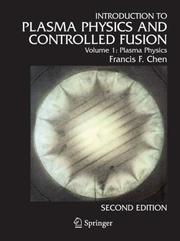
The standard first plasma course for fifty years: drifts, Debye shielding, waves and diffusion, developed carefully from electromagnetism. Everything technical after this depends on it.
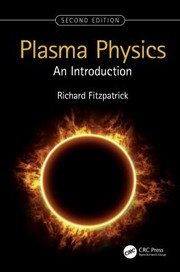
Catalogued as Plasma Physics. A more mathematically compact modern course covering the same ground with a stronger treatment of kinetic theory and MHD. Read it as the second pass over Chen's material.
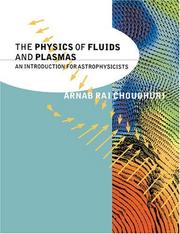
Develops plasma physics out of fluid dynamics, which is the right way to understand MHD instabilities properly. It fills the gap between the two plasma courses and the confinement literature.
Confinement, in earnest
IntermediateWork with tokamak equilibrium and stability, transport scaling and inertial-confinement target physics at graduate level
▸ Study plan for this stage
Pace: 9-12 months. Freidberg's Plasma Physics and Fusion Energy is 690 pages and is the standard graduate fusion text - power balance, MHD equilibrium and stability, transport and reactor engineering constraints; a chapter every week or two over five months, with the problems. Wesson's Tokamaks is 495 pag
- Power balance in a reactor: alpha heating, bremsstrahlung and transport losses, and the ignition condition derived rather than quoted
- Tokamak equilibrium and stability at working level: Grad-Shafranov solutions, the Troyon beta limit, the Greenwald density limit, and disruptions
- Transport scaling: the empirical confinement scaling laws, H-mode and the edge pedestal, ELMs, and why anomalous transport dominates
- Divertor physics, heat flux to the wall, and the plasma-materials interaction problem
- Tritium breeding blankets, neutron damage and activation, and the engineering constraints they place on any design
- Inertial confinement target physics: implosion hydrodynamics, ablation, Rayleigh-Taylor instability, hot-spot ignition and the ignition threshold
- Laser-plasma interaction, direct against indirect drive, and hohlraum physics
- How to read a confinement or an ignition paper critically, with the scaling laws and the loss channels in mind
- Derive the ignition condition from a power balance including alpha heating, bremsstrahlung and an energy confinement time.
- What sets the Troyon and Greenwald limits, and what happens to a tokamak that exceeds either?
- What is H-mode, what changes at the edge, and why are ELMs both necessary and dangerous?
- Why does the divertor heat flux problem scale so badly with machine size and power, and what does that imply for the first wall?
- Explain hot-spot ignition, state the areal density condition that must be met, and say why Rayleigh-Taylor instability is the central obstacle to meeting it.
- Having read all three, what would you now say is the binding constraint on a fusion power plant - physics, materials or economics?
- Work Freidberg's problems on power balance and MHD stability; they are the point of the book.
- Compute the ignition triple product requirement yourself and place JET, JT-60U, NIF and the ITER design point on the same plot.
- Take a published confinement scaling law and use it to predict ITER's energy confinement time from its design parameters, then compare with the design value.
- Use Wesson to look up the measured disruption behaviour of a specific machine and write a page reconciling it with the stability limits you derived from Freidberg.
- Work Atzeni's derivation of the hot-spot ignition condition and then apply it to the published NIF shot parameters to check whether the areal density condition was met.
- Write a 2,000-word technical assessment of one private fusion company's stated concept from the table you built in stage one, using the physics of this stage and naming the specific criterion its design must satisfy.
Next up: You finish able to read the confinement and ignition literature directly and to judge any fusion claim - public, private or governmental - against the physics rather than the press release.

The standard graduate text specifically on fusion: power balance, MHD equilibrium and stability, transport, and the engineering constraints on a reactor. The central book of this stage.

The reference on the machine the field has actually bet on, edited by the JET theory group and comprehensive on diagnostics, disruptions and operating limits. Use it alongside Freidberg rather than after him.
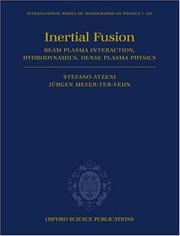
The other half of the field: implosion hydrodynamics, hydrodynamic instabilities, hot-spot ignition and beam-plasma interaction. It is the book to read to understand what NIF achieved, and the right place to finish.
Discussion
Keep reading
Paths that share books, cover the same subject, or open a related topic.