There is a hard line running through this list, and it is not a difficulty gradient — it is a mathematics prerequisite. The practical handbooks at the top need algebra, trigonometry and a Smith chart. The theory texts in the middle need vector calculus, partial differential equations and complex analysis, because they start from Maxwell's equations in differential form and solve boundary-value problems. Nothing bridges that gap gently, so the honest advice is to work the practical side until you know what an antenna is for, then acquire the maths, then come back.
The second thing worth knowing is that "RF engineering" here covers two distinct trades. Antennas and propagation is a field-theory subject. RF circuit design — amplifiers, matching networks, mixers, noise — is a circuits subject that uses S-parameters and mostly avoids solving Maxwell directly. Several books on this list belong squarely to one and not the other.
Practical, minimal mathematics
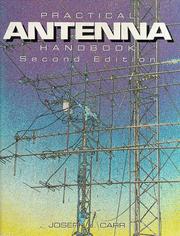
The ARRL Antenna Book is the amateur radio standard: designs, dimensions, feedlines, baluns, measured patterns, and enough theory to justify the numbers. It assumes algebra and trigonometry and nothing else, and it is the most useful single book on the list for anyone who wants to build something this month. Joseph Carr's Practical antenna handbook covers similar ground in a more conversational register with more measurement and troubleshooting.
David Rutledge's The electronics of radio is the bridge. It is an undergraduate course built around actually constructing a working transceiver, and it assumes circuit analysis and complex arithmetic — one year of an engineering degree, not three.
The electromagnetics core
These three are the classical theory texts and they all assume vector calculus, differential equations and comfort with phasors. Electromagnetic waves and radiating systems by Edward Jordan and Keith Balmain is the older classic, strong on radiation and transmission lines. Fields and waves in communication electronics by Simon Ramo, John Whinnery and Theodore Van Duzer is the broader standard undergraduate electromagnetics text and the usual assigned course book. Roger Harrington's Time-harmonic electromagnetic fields is graduate-level: separation of variables, Green's functions, equivalence principles and integral formulations, with the field problems solved properly rather than summarised.
Antenna theory proper
John Kraus's Antennas is the classic treatment, readable and physically motivated, and generations learned the subject from it. Antenna theory and design by Warren Stutzman and Gary Thiele is the modern course text that many programmes now use, with more on design practice and numerical methods.
Balanis is the other standard, and one catalogue note is worth flagging: the record we hold, Antenna theory : analysis and design, is a foreign-language edition listing, so check you are buying the English edition you expect. The content is the field's most comprehensive undergraduate-to-graduate antenna text, heavy on derivation and array theory. His Balanis' Advanced Engineering Electromagnetics is the graduate companion and assumes the earlier book.
RF and microwave circuits
David Pozar's Microwave engineering is the standard text for the circuits side — transmission lines, S-parameters, matching, resonators, filters, active devices — and it is where a wireless or RF engineer spends most of their time. It assumes the electromagnetics above, but lightly. Christopher Bowick's RF Circuit Design is the practical opposite: short, design-oriented, minimal derivation, excellent for someone who needs a matching network to work on Tuesday. Guillermo Gonzalez's Microwave transistor amplifiers goes deep on one topic — gain, stability, noise figure and low-noise amplifier design — and is the reference when a design is misbehaving.
Introduction to RF Propagation by John Seybold closes the list and answers the question the antenna books do not: what happens to the signal between the two antennas. Link budgets, path loss models, fading, terrain and atmospheric effects, all at a level a systems engineer can use.
Follow the full path in order and skip sideways rather than upwards when a book is assuming maths you have not met yet — the practical titles genuinely teach, they are not a consolation prize.
Follow the full ordered path here: Antennas and RF Engineering Books: What to Read, and What Maths Each Assumes.