Comedy and humor writing: books to write jokes that land
This curriculum takes a beginner from understanding why jokes work all the way to developing a distinctive comic voice across multiple formats — sketches, essays, and stand-up. Each stage builds on the last: first you learn to see comedy structurally, then you study the craft of writing it, then you push into advanced voice and form.
Foundations: Why Funny Works
BeginnerUnderstand the mechanics of humor — why jokes land, what makes something funny, and how comedy is built from the ground up, before writing a single word.
▸ Study plan for this stage
Pace: 4–5 weeks, ~25–30 pages/day (approximately 2 weeks per book with time for reflection and exercises)
- The Rule of Three and pattern recognition: how repetition with a twist creates surprise and laughter
- Premise and setup: establishing the foundation that makes a punchline land
- The incongruity principle: humor arises from the collision of two incompatible ideas or expectations
- Character-driven humor: how personality, flaws, and perspective generate comedy naturally
- The importance of specificity: concrete details and observations are funnier than generic statements
- Timing, rhythm, and delivery: the technical execution that separates a joke that lands from one that falls flat
- Finding your comedic voice: identifying what you find funny and why, as the starting point for all comedy writing
- What is the Rule of Three, and why does it work as a foundational comedy technique?
- How do premise and setup differ, and why is a strong setup essential before delivering a punchline?
- Explain the incongruity principle: what makes the collision of two incompatible ideas funny?
- How does specificity enhance humor compared to generic or vague observations?
- What role does character play in generating comedy, and how can flaws or personality quirks be comedic assets?
- Why does timing and rhythm matter in comedy, and how do you recognize when a joke is 'landing'?
- Read 5–10 jokes or comedy sketches and identify the setup, premise, and punchline in each; note which Rule of Three patterns appear
- Write 10 observations about everyday life, then rewrite each with more specific, concrete details and identify which version is funnier
- Take a single premise (e.g., 'going to the gym') and generate 5 different punchlines using incongruity—forcing two unrelated ideas to collide
- Analyze a character-driven comedy scene (from a sitcom or sketch) and map out how the character's personality or flaw drives the humor
- Write 3 short jokes using the Rule of Three structure: set up a pattern, repeat it twice, then break it on the third instance
- Record yourself telling a joke or funny observation, then listen back and identify where timing or rhythm could be improved; re-record with adjustments
Next up: With a solid grasp of why humor works—the mechanics of surprise, specificity, and character—you'll be ready to move into the next stage, where you'll apply these principles to actually writing comedy in specific formats (sketches, stand-up, dialogue, etc.).

The single best starting point for any comedy writer: Vorhaus breaks down the universal logic of what makes things funny using clear, jargon-free principles. Reading this first gives you a shared vocabulary for everything that follows.

A comprehensive, practical overview of joke structure, targets, and techniques across formats. It reinforces Vorhaus's theory with dozens of concrete examples and exercises, cementing the beginner's foundation.
The Joke Itself: Structure & Timing
BeginnerMaster the anatomy of a joke — setup, misdirection, punchline, and the rhythm that makes timing feel effortless on the page and the stage.
▸ Study plan for this stage
Pace: 4–5 weeks, ~25–30 pages/day. Week 1–2: "Comedy Writing for Late-Night TV" (primary focus on structure chapters). Week 3: Complete "Comedy Writing for Late-Night TV" and begin "The Comedians." Week 4–5: "The Comedians," emphasizing case studies of timing and delivery in comedians' actual material.
- The three-part joke structure: setup, misdirection, and punchline, and how each element serves a specific function
- Timing on the page vs. timing in performance—how to write jokes that account for pauses, breath, and audience reaction
- The rule of three and other structural patterns that create comedic rhythm and expectation
- Misdirection as the engine of surprise: how to plant false assumptions and subvert them
- How comedians like those profiled in 'The Comedians' use personal voice and specificity to make joke structures feel natural rather than mechanical
- The difference between joke-writing formulas and authentic comedic voice that emerges from understanding structure
- Rhythm and pacing at the sentence level—word choice, line breaks, and punctuation as timing tools
- What are the three essential components of a joke, and what role does each play in creating laughter?
- How do you indicate timing and pauses on the written page so a performer knows where to breathe and let silence land?
- Explain the concept of misdirection in joke writing. What assumption does the setup plant, and how does the punchline subvert it?
- How does the rule of three function in comedy, and why does it create a stronger rhythm than other numerical patterns?
- Choose a comedian from 'The Comedians' and analyze how their personal voice and specificity make their jokes feel inevitable rather than formulaic.
- What is the relationship between joke structure and comedic timing? Can you write a tight joke and still have it fall flat if timing is wrong?
- Write 10 jokes using the setup-misdirection-punchline framework from 'Comedy Writing for Late-Night TV,' then annotate each with timing cues (pauses, breath points, where laughter might land).
- Transcribe a 2–3 minute set from a comedian discussed in 'The Comedians' and map out the structure of 3–4 of their jokes. Identify the setup, misdirection, and punchline in each.
- Rewrite one of your own jokes three times, experimenting with different word orders and line breaks. Record yourself performing each version and note which rhythm feels most natural.
- Take a premise and write it as a joke using the rule of three. Then write the same premise using a two-part or four-part structure. Perform both and reflect on which rhythm landed better.
- Study a joke from 'Comedy Writing for Late-Night TV' that uses misdirection. Rewrite it by removing the misdirection (making the punchline obvious). Perform both versions and feel the difference in impact.
- Write a 30-second comedic bit in your own voice, grounded in a specific personal observation or detail. Then analyze it: Where is the structure? Where is the misdirection? Does it feel authentic or formulaic?
Next up: Understanding the mechanics of individual jokes and how comedians build their voice through structure prepares you to zoom out and learn how to construct longer comedic pieces—monologues, sketches, and full sets—where multiple jokes and premises layer together to create sustained laughter and narrative momentum.

A former Late Night and Tonight Show writer dissects monologue jokes and desk pieces with surgical precision. It is the clearest book available on joke construction and teaches you to reverse-engineer any punchline.

Reading the history of stand-up comedy reveals how timing, delivery, and structure evolved over a century of performers. Understanding this lineage sharpens your instincts for what has already been done — and what still works.
Finding Your Comic Voice
IntermediateDevelop a personal, distinctive comic voice and learn how to sustain it across longer pieces — essays, columns, and personal narratives.
▸ Study plan for this stage
Pace: 5–6 weeks, ~40–50 pages/day. Week 1–2: "Naked" (300 pages); Week 2–3: "Bossypants" (280 pages); Week 4–6: "How To Write Funny" (250 pages) plus revision and integration exercises.
- Personal narrative as comedic foundation: how Sedaris uses vulnerability, specific details, and self-deprecation to create humor rooted in authentic experience
- Voice consistency and persona: how Fey maintains a recognizable comedic perspective across different essay topics and tones in 'Bossypants'
- The mechanics of comedic timing and structure in longer-form writing: pacing, callbacks, and escalation as taught in 'How To Write Funny'
- Mining your own life for material: identifying the absurd, contradictory, and relatable moments that sustain humor across essays and columns
- Balancing confession with comedy: the tension between revealing genuine struggles and maintaining comedic distance
- Sustaining humor across longer pieces: techniques for maintaining reader engagement and comedic momentum beyond the punchline
- Audience awareness and adaptation: understanding how your comic voice speaks to readers while remaining distinctly yours
- What specific techniques does Sedaris use in 'Naked' to make personal vulnerability funny rather than merely sad or confessional?
- How does Tina Fey maintain a consistent comedic voice across the diverse topics and time periods covered in 'Bossypants'?
- What are the key structural elements 'How To Write Funny' identifies for sustaining comedy across longer pieces, and how do you see them applied in Sedaris and Fey's work?
- How do you identify material from your own life that has comedic potential, and what makes it funny rather than just embarrassing?
- What is your emerging comic voice, and what are its distinctive characteristics? How would you describe it to someone unfamiliar with your writing?
- How do timing, callbacks, and escalation function differently in a 3-page essay versus a stand-up joke, based on what you've learned?
- Read and annotate 2–3 essays from 'Naked' (e.g., 'The Learning Curve,' 'A Modest Proposal'), marking where Sedaris uses self-deprecation, specific sensory details, and emotional honesty. Write a 500-word reflection on how these elements work together.
- Write your own 2–3 page personal essay using Sedaris's model: choose a mildly embarrassing or absurd moment from your life, include specific dialogue and details, and build to a comedic realization or twist.
- Analyze the structure of 2–3 essays from 'Bossypants' (e.g., 'Lessons from Late Night,' 'A Mother's Prayer'). Map where Fey introduces her voice, establishes stakes, escalates tension, and lands comedic beats. Write a 1-page breakdown.
- Write a 2–3 page column or essay in your own voice on a topic you care about (work, relationships, identity). Deliberately maintain a consistent comedic perspective throughout, using callbacks and escalation.
- Complete the exercises in 'How To Write Funny' (Chapters 3–5 on structure and timing). Apply at least two techniques from Dikkers to revise one of your earlier essays.
- Collect 10–15 'funny moments' from your own life over 1–2 weeks (overheard conversations, awkward situations, contradictions you notice). For each, write 2–3 sentences on why it's funny and what it reveals about you or the world.
- Write a 4–5 page personal essay that sustains humor across multiple scenes or time jumps, using Sedaris's approach to structure and Fey's approach to voice consistency. Include at least one callback and one moment of genuine vulnerability.
Next up: This stage equips you with a recognizable, sustainable comic voice and the structural skills to extend humor across longer narratives—preparing you to tackle the next stage, which likely focuses on refining voice for specific genres (memoir, columns, stand-up) or developing comedic projects at scale.

Sedaris is the gold standard for comic personal essays: his voice is unmistakable, his timing on the page is flawless, and studying his work teaches you how specificity and self-deprecation create intimacy and laughter simultaneously.
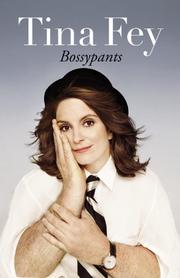
A masterclass in comic memoir and essay writing from one of the sharpest comedy writers alive. Fey demonstrates how to blend wit, structure, and a strong point of view — essential for developing your own voice.

The Onion co-founder codifies the specific techniques behind satirical and humor writing, bridging the gap between instinct and craft. It belongs here because you now have enough foundation to apply its advanced frameworks.
Stand-Up & Sketch: Writing for Performance
IntermediateTranslate comic writing skills into scripts and stand-up sets — understanding how jokes are shaped for a live audience, a character's mouth, or a sketch's escalating logic.
▸ Study plan for this stage
Pace: 4–5 weeks, ~40–50 pages/day (approximately 300 pages total; allows time for reflection and writing practice between chapters)
- The relationship between technical joke construction and live audience timing/reaction
- How a stand-up persona is developed, refined, and performed over years of stage work
- The role of repetition, testing, and iteration in perfecting material
- How physical comedy, props, and visual elements enhance verbal jokes in performance
- The discipline required to build a sustainable stand-up career from scratch
- How audience feedback directly shapes and reshapes a comedian's act
- The difference between writing jokes on the page versus delivering them to a live room
- What does Martin reveal about the relationship between joke writing and live performance testing that differs from writing comedy for other mediums?
- How did Steve Martin's persona evolve over his early career, and what role did audience feedback play in that evolution?
- What specific techniques does Martin describe for structuring jokes and building laughs through repetition and variation?
- How does Martin use physical comedy and props as integral parts of his stand-up act rather than as add-ons?
- What does Martin's journey reveal about the time and persistence required to develop a successful stand-up career?
- How does Martin describe the relationship between his 'off-stage' self and his 'on-stage' persona, and why does that distinction matter for performance?
- Write and perform a 3–5 minute stand-up set based on one observational topic from your life; record it and review for timing, pacing, and audience connection
- Identify three jokes from Born Standing Up and break down their structure (setup, misdirection, punchline); rewrite one to test how changing the structure affects the laugh
- Create a character sketch (2–3 minutes) that relies on physical comedy or a prop; perform it for a small audience and note which physical elements got the biggest reactions
- Keep a 'material journal' for one week: write down funny observations, test them as jokes in conversation, and refine based on how people react
- Rewrite one of your own jokes five different ways (different setups, different punchlines, different premises); perform each version and identify which lands best
- Analyze a 5-minute clip of Steve Martin's actual stand-up (from the era covered in the book) and annotate where he uses silence, repetition, and escalation to build laughs
Next up: This stage grounds you in the foundational discipline of stand-up—how jokes are tested, refined, and performed live—preparing you to explore sketch comedy's ensemble dynamics, character work, and narrative structure in the next stage.
The UCB manual is the definitive text on game-based sketch and improv comedy. It teaches you how scenes escalate, how to find 'the game of the scene,' and how structure creates laughs — essential before writing your own sketches.

Martin's memoir is a precise, reflective account of how he built and refined a stand-up act over years. It teaches the long-game thinking behind developing material, timing, and a persona that is entirely your own.
Advanced Craft: Satire, Wit & the Long Game
ExpertWrite with sophistication and intentionality — using satire, irony, and subverted expectations to say something true and funny at the same time, across any format.
▸ Study plan for this stage
Pace: 6–7 weeks, ~40–50 pages/day. Start with "Poking a Dead Frog" (interviews, ~350 pages) over 3–4 weeks, then "Elements of Wit" (~300 pages) over 2–3 weeks to allow time for reflection and writing between books.
- Satire as a vehicle for truth-telling: how comedians use exaggeration and subversion to critique reality and expose hypocrisy
- The architecture of wit: precision, surprise, and the mechanics of how unexpected juxtapositions create intellectual and emotional payoff
- Intentionality in comedy writing: understanding the difference between jokes that land versus those that reveal something meaningful about the human condition
- Irony as a sophisticated tool: dramatic irony, situational irony, and verbal irony as ways to create layers of meaning that reward attentive audiences
- The long game in comedy: how to structure pieces (essays, sketches, columns, monologues) so that setup and payoff work across extended formats, not just one-liners
- Learning from masters: studying how professional comedians and humorists develop their voice, process, and editorial judgment through interviews and case studies
- Subverting expectations strategically: recognizing when to fulfill audience assumptions and when to deliberately break them for maximum impact
- The ethics and responsibility of satire: understanding what you're satirizing, who you're punching at, and ensuring your work says something true rather than just being mean
- How do the comedians and writers interviewed in 'Poking a Dead Frog' use satire and exaggeration to reveal truths about society, politics, or human nature? Give specific examples.
- What is the relationship between precision and surprise in wit, according to 'Elements of Wit'? How does this principle apply to comedy writing across different formats?
- How does irony function differently in satire versus other forms of humor? What are the risks of relying too heavily on irony without clarity of intent?
- Describe the structure of a long-form comedy piece (essay, sketch, or monologue) that uses subverted expectations. How does the setup prepare the audience for the payoff?
- What distinguishes a joke or piece of satire that 'says something true' from one that is merely clever or mean-spirited? How do you evaluate your own work by this standard?
- Based on the interviews and principles you've studied, what is your personal approach to developing voice and intentionality as a comedy writer? What will you prioritize?
- Interview analysis: Select 3–4 interviews from 'Poking a Dead Frog' and annotate them, identifying the writer's stated process, their use of satire or irony, and the 'truth' they're trying to tell. Write a 1-page synthesis of what you learned.
- Wit deconstruction: Take 5 examples of wit from 'Elements of Wit' (or find your own from published comedy writing) and break down the precise mechanism—where is the setup, where is the surprise, what makes it land intellectually?
- Satire writing exercise: Write a 500–750 word satirical piece on a topic you care about (politics, culture, technology, relationships). Use exaggeration and subverted expectations to reveal something true. Annotate your own work identifying where you're setting up expectations and where you're breaking them.
- Long-form structure map: Outline a 2,000–3,000 word humor essay or monologue script that uses irony and subverted expectations across the full arc. Map the setup, escalation, and payoff. Then write the piece or a substantial excerpt (800+ words).
- Comparative analysis: Choose one writer featured in 'Poking a Dead Frog' and one principle from 'Elements of Wit.' Write a 1–2 page analysis of how that writer embodies (or could apply) that principle in their work.
- Revision for intentionality: Take a piece of your own comedy writing (old or new) and revise it with a single, clear 'truth' you want to communicate. Remove jokes that don't serve that truth, even if they're funny. Reflect on what changed and why.
- Voice development journal: Over the course of this stage, keep a weekly 1-page reflection on your evolving voice as a comedy writer. What patterns do you notice in what you find funny? What do you want to say? How are the books shaping your approach?
Next up: This stage equips you with the conceptual and technical foundation to write comedy with sophistication and purpose; the next stage will likely focus on applying these principles to specific formats (digital, performance, publication) and building a sustainable creative practice.
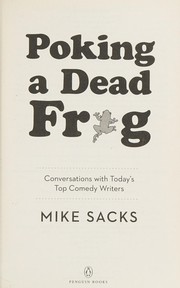
Deep interviews with professional comedy writers (SNL, The Simpsons, The Onion) reveal how working writers actually think about craft, process, and longevity. It is the best capstone for understanding comedy as a sustainable profession.

A sharp, well-researched exploration of wit as a distinct and elevated form of humor — the kind that makes readers stop and re-read a sentence. It pushes advanced writers to aim higher than the easy laugh.
Discussion
Keep reading
Paths that share books, cover the same subject, or open a related topic.