Learn improv: think fast, play well
This curriculum takes a beginner from the foundational philosophy of improv — yes-and, listening, and trust — through scene-building craft, into the advanced ensemble and long-form work that separates good improvisers from great ones. Each stage builds on the vocabulary and instincts of the last, so that by the end the learner can think deeply about improv both on stage and as a life practice.
Foundations: The Improv Mindset
BeginnerUnderstand the core philosophy of improv — yes-and, acceptance, listening, and play — and why these principles work both on stage and in everyday life.
▸ Study plan for this stage
Pace: 6–8 weeks total: Weeks 1–4 for "Improv Wisdom" (~15–20 pages/day, reading one maxim chapter per sitting and journaling before moving on); Weeks 5–8 for "Truth in Comedy" (~20–25 pages/day, pausing after each major section to reflect on how the principles connect to Madson's maxims).
- Yes-And as a foundational operating principle: accepting what is offered and building on it, as introduced through Madson's maxims and reinforced by Halpern's scene work philosophy
- Acceptance vs. Blocking: understanding how denial, hedging, and 'yes-but' thinking shut down creativity and collaboration on stage and in life
- The Gift of Listening: Madson's emphasis on paying full attention and Halpern's insistence that real listening — not planning your next line — is the engine of great improv
- Being Present / Beginner's Mind: Madson's maxim 'Just show up' and the idea of approaching every moment without assumptions or a pre-written agenda
- Ensemble over Ego: Halpern's core argument that improv is a team sport — making your partner look good is the highest goal, not getting the laugh yourself
- Agreement and Group Mind: Halpern's concept that a troupe operating in sync creates a shared intelligence greater than any individual performer
- Play as a Serious Practice: Madson's framing of play not as frivolity but as a disciplined, courageous way of engaging with uncertainty
- Mistakes as Gifts: both authors' shared view that errors are not failures but offers — raw material to be accepted and transformed
- In your own words, what does 'Yes-And' mean, and how does Madson distinguish it from mere agreement or politeness?
- What is 'blocking' according to Halpern, and can you give one on-stage example and one real-life example of a block?
- How do Madson's maxim 'Just show up' and Halpern's concept of Group Mind both point to the same underlying principle about presence and trust?
- Why do both authors argue that making your partner look good ultimately serves you better than trying to stand out individually?
- How does Madson use the concept of 'waking up' to ordinary life as a bridge between improv practice and everyday mindset?
- According to Halpern, what separates a performer who is truly listening from one who is merely waiting to speak — and why does it matter for a scene?
- Yes-And Journal (Madson-inspired): Each morning for two weeks, write 3 sentences about your day ahead using only 'Yes, and…' constructions — no qualifications, no 'but.' Notice where resistance arises.
- Blocking Audit (Halpern-inspired): For one full day, tally every time you (or someone around you) blocks an idea — verbally or with body language. At day's end, pick one block and rewrite the exchange as a Yes-And response.
- The 'Just Show Up' Challenge (Madson's Maxim 1): Commit to one activity this week with zero preparation — a conversation, a meal you cook freestyle, a walk with no route. Journal what you noticed when you removed the plan.
- Two-Person Yes-And Drill (Halpern-inspired): With a partner, build a story one sentence at a time. Every sentence must begin with 'Yes, and…' Run for 3 minutes. Debrief: where did the story surprise you? Where did you feel the urge to redirect or deny?
- Listening Meditation (Madson + Halpern): Sit in a public space for 15 minutes and practice 'full listening' — no phone, no internal commentary. Afterward, write down five specific things you heard that you would normally have filtered out.
- Ensemble Mirror Exercise (Halpern's Group Mind): In a group of 3–5, stand in a circle and pass a slow, continuous movement around the group with no leader designated. Reflect afterward on how the group found synchrony — or didn't — and what that felt like.
Next up: Internalizing Yes-And, presence, and ensemble thinking from Madson and Halpern gives the reader the philosophical bedrock they need to begin studying the structural and technical craft of improv — scene work, game, and long-form formats — without those techniques feeling like arbitrary rules divorced from a deeper purpose.
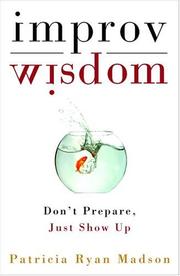
The perfect entry point: Madson distills improv into 13 simple maxims (say yes, be average, make mistakes) that are immediately accessible and deeply motivating for a total beginner.
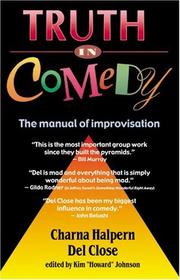
Written by one of the founders of modern improv at iO Chicago, this book introduces the Harold and the foundational principle that honest, grounded scenes are funnier than joke-chasing — essential vocabulary for everything that follows.
Scene Work: Building Blocks
BeginnerLearn how to construct a scene from scratch — initiating, accepting offers, building relationships, and finding the game of a scene.
▸ Study plan for this stage
Pace: 3–4 weeks, ~20–25 pages/day; Napier's book is dense with philosophy and technique, so allow extra time to sit with each chapter before moving on — aim to finish one major section every 3–4 days
- The 'Do Something' principle — Napier's core argument that an improviser's first job is to initiate with a strong, specific personal choice rather than waiting for the scene to define itself
- Self-Awareness as a tool — understanding your own impulses, habits, and tendencies on stage so you can make deliberate, committed choices instead of defaulting to safe patterns
- Initiation and the offer — how the very first line, action, or physical choice of a scene establishes environment, relationship, and emotional reality all at once
- Agreement vs. 'Yes, And' — Napier's nuanced critique of the 'Yes, And' rule as a beginner's crutch, and his deeper point that real agreement means honoring the emotional and relational truth of an offer, not just its literal content
- Character and relationship over plot — building scenes by focusing on who these two people are to each other and what they feel, rather than manufacturing story events
- The 'game' emerging organically — understanding that the repeatable, heightening pattern of a scene (its 'game') should grow naturally out of honest character behavior, not be imposed from the outside
- Commitment and follow-through — Napier's insistence that a half-committed choice is worse than a 'wrong' choice, and how full commitment transforms even simple initiations into compelling scenes
- Personal point of view — bringing your own genuine perspective, opinions, and emotional life into a scene as the engine of specificity and authenticity
- According to Napier, why is 'Do Something' a more useful instruction than 'Yes, And' for a beginning improviser, and what problem does each piece of advice solve?
- How does Napier define a strong initiation, and what three layers of information (environment, relationship, emotional reality) can a single opening offer communicate?
- What is Napier's critique of the traditional 'Yes, And' rule, and how does he reframe 'agreement' as something deeper than literal acceptance of your partner's words?
- In Napier's framework, how does a scene's 'game' emerge, and why does he argue it should be discovered through character behavior rather than intellectually decided upon?
- What does Napier mean by 'self-awareness' as a performance skill, and how does knowing your own on-stage habits help you make better choices in the moment?
- Why does Napier argue that full commitment to a choice — even an imperfect one — is more valuable than a cautious, hedged response, and how does this principle apply to both initiations and responses?
- Solo initiation drill: Set a timer for 10 minutes and write 20 highly specific scene-opening lines or physical actions — each one must immediately imply a relationship, an environment, AND an emotional state. Review them and circle the ones that do all three; rewrite the ones that don't.
- Partner scene starts: With one other person, practice opening a two-minute scene where the FIRST person to speak or move must make a choice so specific that their partner can immediately identify who they are to each other. Debrief after each: what did the initiation give you? What was still ambiguous?
- 'Yes, And' vs. deep agreement exercise: Run the same two-person scene twice — once using literal 'Yes, And' (repeat and add information), and once using Napier's deeper agreement (honor the emotional truth). Compare how the relationship and scene feel in each version.
- Commitment escalation: Choose the most mundane, low-stakes initiation imaginable (e.g., 'Nice weather today'). Play a scene from it with full physical and emotional commitment. Repeat with a new partner. Debrief on how commitment changed the scene's energy regardless of the 'quality' of the initiation.
- Self-awareness inventory: After each practice session, write down 3 specific habits or defaults you noticed in yourself (e.g., 'I always ask a question instead of making a statement,' 'I drop my physicality after the first 30 seconds'). Keep a running log across the 3–4 weeks and identify your top pattern to consciously work against.
- Game-spotting from character: Watch or perform a short scene and, without planning it, let one unusual character behavior repeat naturally. After the scene, identify: What was the 'game'? When did it first appear? How did it heighten? Practice naming the game only AFTER the scene ends, not before it begins.
Next up: Napier's foundation of committed, character-driven scene work — where honest choices and deep agreement create organic scenes — prepares the reader to explore ensemble dynamics, long-form structures, and more complex narrative formats, where those same principles must operate across multiple scenes and a larger group.
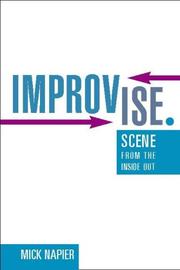
Napier challenges some conventional improv rules and teaches improvisers to make strong personal choices and commit fully — a crucial corrective after absorbing the yes-and basics.
Performance & Confidence: The Human on Stage
IntermediateDevelop stage presence, character work, and the personal confidence and quick thinking that make improv feel alive — and transfer those skills off stage.
▸ Study plan for this stage
Pace: 5–6 weeks total: Week 1–2 — Read Bossypants (~20–25 pages/day, including re-reading key chapters on SNL, improv rules, and "say yes"); Week 3–4 — Read How to Be the Greatest Improviser on Earth (~15–20 pages/day, pausing after each chapter to journal and drill concepts); Week 5–6 — Review both books
- "Yes, And" as a life philosophy — Fey's retelling of her Second City and SNL years frames "Yes, And" not as a stage trick but as a foundational mindset for collaboration, confidence, and creative risk-taking in any arena.
- Authentic stage persona vs. performed confidence — Bossypants reveals how Fey built authority on stage and in writers' rooms by leaning into her specific point of view rather than imitating others, a thread Hines deepens with his concept of committing fully to your own instincts.
- Character commitment and specificity — Hines argues that a half-committed character kills a scene; full physical, vocal, and emotional specificity is what makes characters feel real and scenes feel alive.
- Quick thinking through pattern recognition — Hines breaks down how experienced improvisers don't think faster, they think in pre-loaded patterns (game of the scene, relationship dynamics, status) that free up bandwidth for genuine spontaneity.
- Status and power dynamics on stage — Both books address how reading and playing with status — who defers, who leads, who shifts — creates dramatic tension and keeps scenes moving.
- Failure as performance fuel — Fey's candid accounts of bombing, being underestimated, and recovering model how to metabolize failure publicly; Hines provides the technical scaffolding (re-grounding, pivoting, finding the gift in the mistake).
- Transferring improv confidence off stage — Fey's career arc is itself the case study: the listening, adaptability, and self-possession trained in improv rooms translated directly into high-stakes professional and social situations.
- The "game" of a scene — Hines' central technical concept: identifying the unusual thing that is happening and then heightening it, giving performers a shared engine to drive a scene forward without pre-planning.
- According to Tina Fey's account in Bossypants, what are the core rules of improv she internalized at Second City, and how did she apply them outside of performance contexts — in the SNL writers' room, in leadership, and in her personal life?
- Will Hines defines 'the game of the scene' as the central engine of improv. In your own words, what is the game, how do you identify it in a scene, and what does Hines say happens when performers miss or ignore it?
- Both Fey and Hines address the problem of self-consciousness on stage. What specific strategies or mindset shifts does each author recommend for moving from hesitation to committed action in real time?
- How does Hines describe the relationship between character specificity and scene success? What physical and behavioral details does he say separate a memorable character from a generic one?
- Fey's Bossypants is a memoir, not an improv manual — yet it functions as one. What implicit lessons about stage presence and confidence can be extracted from her storytelling that Hines makes explicit in his instructional framework?
- How do both books treat the concept of failure and mistakes during a performance? What is the difference between recovering from a mistake as a beginner versus as a confident intermediate performer, according to these authors?
- "Yes, And" journaling (Bossypants-inspired): For one full week, keep a daily log of moments in real life — meetings, conversations, conflicts — where you either blocked or "Yes, And'd" someone. Write one sentence on what you blocked, one on what a "Yes, And" response would have looked like, and what the outcome difference might have been.
- Character walk drill (Hines): Set a 10-minute timer. Walk around a room and adopt a completely specific character — choose one unusual physical trait (posture, gait, hand position), one vocal quality, and one clear emotional state. Swap all three every 2 minutes. The goal is speed of full commitment, not polish.
- Game-spotting practice (Hines): Watch 5 short-form or long-form improv videos online (UCB, Second City archives, or YouTube). After each scene, pause and write down: (1) what you think the 'game' of the scene was, (2) the moment it was established, and (3) whether the performers heightened it or abandoned it.
- Status swap scenes (both books): With a partner or in a group, play a 3-minute scene where you begin in a low-status position. At a silent internal cue (no announcement), shift to high status — through posture, pacing, word choice, and eye contact only. Debrief: when did the partner feel the shift? What made it land?
- Failure recovery reps: Deliberately 'bomb' a moment in a low-stakes improv scene — drop a character, go blank, say something that lands flat — then practice three recovery techniques Hines outlines: (1) acknowledge and heighten, (2) re-ground in your character's physicality, (3) give the gift to your scene partner. Run this drill 5 times in one session.
- Fey-to-Hines synthesis essay: Write a 400-word personal reflection connecting one specific anecdote from Bossypants (e.g., a moment Fey describes feeling out of her depth) to a concrete technique from Hines' book that would have addressed that moment technically. This forces integration of memoir insight with instructional framework.
Next up: By internalizing stage presence, character commitment, and the "game" of a scene through Fey and Hines, the reader has built a confident, embodied foundation — making them ready to tackle the ensemble, long-form structure, and narrative complexity that define the next stage of improv mastery.

Fey's memoir weaves the rules of improv (especially yes-and and support) into a compelling narrative of a career built on them — it makes the principles feel real, human, and worth internalizing.

A practical, warm, and honest guide to the mental and emotional game of performing improv — Hines addresses fear, confidence, and the habits of mind that separate performers who thrive from those who freeze.
Ensemble & Long-Form: Playing Together
IntermediateMaster ensemble thinking, long-form structures, and the deep listening and group-mind skills needed to sustain a full show.
▸ Study plan for this stage
Pace: 6–8 weeks, ~25–35 pages/day; Spolin's book is dense with exercises, so alternate between reading chapters and actively running (or mentally rehearsing) the games described before moving on
- Group Mind & Ensemble Awareness: Spolin's foundational idea that a group of players can think, feel, and move as a single organism when truly present with one another
- The 'Where, Who, What' Framework: Establishing a shared physical environment (Where), clear character relationships (Who), and meaningful activity (What) as the backbone of any scene or long-form structure
- Sidecoaching as a Tool: Understanding how Spolin's sidecoaching technique keeps players in the moment and out of their heads — and how to internalize that voice as self-coaching during a show
- Point of Concentration (POC): Focusing collective attention on a single, agreed-upon problem so the ensemble works together rather than at cross-purposes
- Physicality & Space Substance: Using the body and imaginary objects to make the shared environment real, grounding scenes in tangible, agreed-upon reality
- Approval-Seeking vs. Genuine Play: Recognizing and shedding the impulse to perform for the audience rather than play honestly with scene partners — the enemy of group mind
- Game Structures as Ensemble Containers: How Spolin's structured games function as long-form 'containers' that give a group permission to explore, fail safely, and build shared narrative
- Deep Listening & Spontaneity: Spolin's insistence that true spontaneity only emerges when players are genuinely listening and responding, not planning — the core skill of sustaining a full show
- How does Spolin define 'group mind,' and what specific conditions (physical, attentional, emotional) does she argue must be present for an ensemble to achieve it?
- What is a Point of Concentration, and why does Spolin treat it as the single most important structural element in a group exercise or scene?
- How does the 'Where, Who, What' framework support long-form improvisation, and what happens to a scene when one of the three elements is left undefined by the ensemble?
- In what ways does approval-seeking behavior break ensemble cohesion, and which specific Spolin games are designed to expose and dissolve that habit?
- How does Spolin's concept of sidecoaching translate into a self-coaching practice that an intermediate improviser can use during a live long-form show?
- What is the relationship between physicality/space work and group trust in Spolin's system — why does making the 'Where' real with your body help the ensemble think together?
- Run the 'Mirror' and 'Follow the Follower' exercises from Spolin with your ensemble (minimum 4 people) for 15 minutes before every rehearsal, then debrief: at what exact moment did leadership dissolve and true group mind emerge?
- Pick any five Spolin games from different chapters and map each one to a segment of a long-form Harold or Montage structure — write a one-paragraph 'director's note' explaining which POC each game trains and how that skill serves the long-form format
- Solo space-work drill: spend 10 minutes handling and interacting with imaginary objects in a specific 'Where' (a diner, a submarine, a greenhouse). Record yourself, then review: does the space feel real and consistent? Could a scene partner enter and immediately know where they are from your physicality alone?
- Approval-seeking audit: perform a short 3-minute scene, then have a trusted partner flag every moment you played to the audience rather than to them. Catalog the triggers and run the scene again with a strict 'back to your partner' rule
- Design and facilitate a 30-minute ensemble warm-up drawn entirely from Spolin's games, sequencing them so each game's POC builds on the previous one — debrief the group on how the sequence felt as a collective arc
- Sustained long-form practice: use Spolin's 'Where, Who, What' cards (or hand-written equivalents) to launch a 20-minute unscripted ensemble piece. Afterward, have each player write down the Where, Who, and What they believed the group had established — compare answers to identify gaps in shared reality
Next up: Mastering Spolin's ensemble games and group-mind principles gives the improviser a living toolkit of structures and a trained instinct for collective presence, which is the essential foundation for tackling advanced topics like character depth, narrative architecture, and directorial thinking in more complex long-form and theatrical improv forms.

The foundational text of all modern improv, Spolin's exercises and theory underpin everything taught in the earlier stages — reading it now lets the learner see the roots of every technique they've practiced.
Mastery: Improv as a Way of Thinking
ExpertInternalize improv as a complete creative and cognitive discipline — understanding its psychology, its application to leadership and creativity, and how to teach and pass it on.
▸ Study plan for this stage
Pace: 8–10 weeks total: Weeks 1–5 for "Impro" (~25–30 pages/day, reading slowly and reflectively given its density); Weeks 6–10 for "Yes, And" (~20–25 pages/day, pausing to journal on real-world applications after each chapter).
- Status transactions and how subtle dominance/submission dynamics shape every human interaction, as explored through Johnstone's theatrical exercises in 'Impro'
- Spontaneity vs. the 'blocked' mind: Johnstone's argument that creativity is not a gift but a natural state suppressed by education and fear of failure
- Narrative reincorporation: the principle from 'Impro' that great storytelling and great thinking both involve looping back to earlier elements, creating coherence from apparent chaos
- Mask and persona work as a window into the unconscious — Johnstone's radical claim that characters 'possess' performers and what that means for authentic creative expression
- The 'Yes, And' principle as an organizational and cognitive philosophy, not just a stage technique — Leonard's extension of the rule into business, leadership, and everyday collaboration
- Ensemble thinking: Leonard's case, drawn from The Second City's institutional history, that sustained creative excellence is a collective, not individual, achievement
- Failure as curriculum: both Johnstone and Leonard reframe mistakes as essential data, but Leonard operationalizes this into concrete leadership and team-building practices
- Teaching and transmission: how improv principles are codified, passed on, and kept alive across generations of practitioners — the meta-skill of making others improvisers
- According to Johnstone in 'Impro', how does the education system specifically damage spontaneity, and what practical methods does he propose to reverse that damage in adult learners?
- How does Johnstone's status theory go beyond theater — what does it reveal about everyday conversations, meetings, and relationships that a trained observer would notice?
- In 'Yes, And', how does Kelly Leonard distinguish between using improv as a party trick or team-building exercise versus internalizing it as a genuine cognitive and organizational discipline?
- What specific leadership behaviors does Leonard identify as the organizational equivalent of 'blocking,' and what does he propose as their antidotes?
- How do Johnstone's concept of reincorporation and Leonard's concept of ensemble thinking complement each other as a unified theory of collaborative creativity?
- If you were designing an improv-based curriculum for a non-theater context (a classroom, a startup, a hospital team), what principles from both books would be non-negotiable, and why?
- Status Walk: Spend one full day consciously tracking status transactions in every conversation you have — note who raises and lowers status, how, and what the effect is. Journal three specific moments using Johnstone's vocabulary.
- Reincorporation Writing Sprint: Write a 10-minute free-form story, then go back and deliberately reincorporate at least four earlier details into the ending. Reflect on how intentional reincorporation changes the feeling of coherence and meaning.
- 'Yes, And' Audit: Record or recall a recent meeting or collaborative conversation. Identify every moment of implicit or explicit blocking ('yes, but,' deflection, topic-killing). Rewrite three of those exchanges using Leonard's 'Yes, And' framework and note what changes.
- Teach-Back Session: Choose one concept from each book (e.g., status from Johnstone; ensemble agreement from Leonard) and teach it to someone unfamiliar with improv in under 10 minutes — no jargon allowed. Debrief: what was hard to transmit, and why?
- Failure Resume: Following Leonard's reframing of failure, write a 'failure resume' listing 5–7 creative or professional failures. For each, write one sentence on what it taught you and how it contributed to a later success. Share it with a trusted peer.
- Scene Study with Status Reversal: With a partner, improvise or script a 3-minute scene twice — once where one character holds high status throughout, and once where status flips midway. Debrief using both Johnstone's analysis and Leonard's ensemble lens: how did the shift change the collaborative dynamic?
Next up: By internalizing improv as a full cognitive and philosophical discipline — not merely a performance skill — the reader is now equipped to engage with adjacent fields (design thinking, cognitive psychology, leadership theory, or pedagogical practice) where these same principles surface under different names, making any subsequent stage a process of recognition and synthesis rather than starting fro
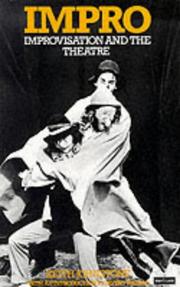
Johnstone's masterwork on spontaneity, status, and narrative is the most intellectually rich book in the improv canon — best read after the learner has real experience, so its deep ideas land with full force.

Written by a Second City executive, this book shows how improv principles apply to leadership, collaboration, and innovation — the ideal capstone that connects everything learned on stage to a lifetime of creative thinking.
Discussion
Keep reading
Paths that share books, cover the same subject, or open a related topic.