Adrian Tchaikovsky books in order: where to start
Tchaikovsky is one of the most prolific writers in science fiction and fantasy, and almost nothing he writes connects to anything else he writes — so the usual question of where to start is really the question of which sequence to start. There is no chronology to respect across the body of work, only four or five separate commitments of very different size: a stand-alone-turned-trilogy about spiders, a ten-book insect-kinden fantasy epic, a space-opera trilogy, a pair of uplift novels, and a shelf of novellas. This path takes them in order of how much they ask of you, beginning with the book that made his name and ending with the series you should only start once you know you like him.
Start Here: Children of Time
BeginnerRead the sequence Tchaikovsky is best known for, and see the thing he does better than almost anyone — writing a genuinely non-human intelligence from the inside.
▸ Study plan for this stage
Pace: Seven to nine weeks for roughly 1,650 pages. Children of Time is 616 pages and the spider chapters read slower than the human ones until you adjust — three weeks. Children of Ruin is 584 and moves faster because the method is familiar, about two and a half weeks. Children of Memory is 458 pages and
- Children of Time runs two clocks: a spider civilisation advancing over millennia in short generational chapters, and a human ark ship in which centuries pass between waking. The alternation is the novel's engine and the reason it can cover evolutionary time without summary.
- The recurring names — a Portia, a Bianca, a Fabian in each generation — are roles rather than characters. Tracking what the name means at each appearance is how the book asks you to read species-scale change.
- Tchaikovsky writes non-human cognition from inside rather than describing it from outside: chemical messaging, distributed computation, an inherited Understanding. The alien mind is a point of view, not a puzzle for humans to solve.
- Children of Ruin depends on the first book having trained you. It does the same trick with octopuses — whose split cognition it renders typographically — and then with something considerably stranger that is not an animal at all.
- Children of Memory is the formally experimental one: a failing colony, a corvid intelligence, and a structure that keeps quietly revising what you have already read. Its questions about whether something can think without being conscious are the trilogy's real destination.
- The trilogy's argument across all three books is the same one: communication is harder than contact, and most of the catastrophe in these novels comes from two intelligences each being certain it has understood.
- Children of Time contains sustained violence between species and the collapse of a human population; the human ark chapters in particular turn on desperation and coercion aboard a dying ship.
- What does the Understanding do for the spiders that writing does for humans, and what can it not carry?
- Trace one idea — mathematics, radio, the Messenger — from its first appearance in a spider generation to its mature form. How many chapters did it take?
- Children of Ruin renders octopus cognition differently on the page from spider cognition. What is the typographic or structural difference, and what claim about the mind is it making?
- In Children of Memory, at what point did you first suspect the structure was not what it presented itself as, and what gave it away?
- The three books resolve their crises in noticeably different ways. What does each ending say about whether understanding across species is possible?
- Keep a two-column log while reading Children of Time: spider chapter events on one side, ark ship events on the other, with the elapsed time in each. When you finish, look at the ratio — it explains why the ending has the weight it does.
- Write down every generation in which a Portia appears and what she is trying to do. The list is the spider civilisation's history in one page, and the book never gives it to you directly.
- After finishing Children of Ruin, reread the first spider chapter of Children of Time. It reads as a different kind of writing once you have been through two alien minds, and that difference is the trilogy's method made visible.
- In Children of Memory, mark the page where you first noticed a repetition, then go back after the ending and find the earliest one you missed. Compare the two page numbers; the gap is the measure of how the book works.
- Pick one conversation between species from each novel and write out what each side actually said versus what the other side heard.
Next up: You now know whether Tchaikovsky's alien-mind writing works on you at 600 pages, so the novellas can be read as a range test rather than as a commitment.
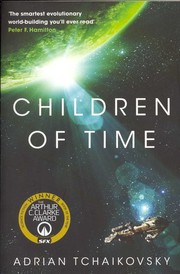
The Clarke Award winner and the correct first Tchaikovsky for nearly everyone: a terraforming experiment goes wrong, an uplift virus reaches spiders instead of monkeys, and the novel alternates between their civilisation growing over millennia and a dying human ark ship. It is self-contained, so you can stop here without owing the sequel anything.
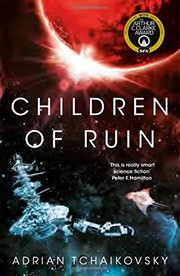
The follow-up does the same trick with octopuses and then with something considerably stranger, and it needs the first book — the alien-mind method only pays off once you have already been trained by the spiders. Read second, and only if the first book worked on you.

The third and most formally experimental of the three: a failing colony, a corvid intelligence, and a structure that keeps quietly revising what you have just read. It is the hardest of the sequence and lands properly only in third position.
The Novellas: A Smaller Commitment
BeginnerSample the range at short length and find out which register you actually like — sardonic fantasy, or straight-faced science fiction about how badly people misread each other.
▸ Study plan for this stage
Pace: Two weeks, or two long evenings. Elder Race is 192 pages and Ogres is 144 — both are single-sitting books if you have the time, and both reward being finished in as few sittings as possible because their effects are structural. Read Elder Race first.
- Elder Race is built on a single formal device: a stranded anthropologist with degraded technology and a princess who is certain he is a wizard, narrating the same events in two incompatible vocabularies.
- Clarke's law is usually quoted as a joke about advanced technology; Elder Race is what happens when a novel takes it seriously in both directions, so that the science-fictional and the fairy-tale accounts are each internally correct.
- Nyr's dissociative implant is a science-fictional device and an honest description of depression, and the book refuses to let you treat it as only one of those.
- Ogres is written in the second person, and the choice is load-bearing rather than stylish — it puts you in a class position rather than in a character.
- Ogres presents as a fable about giant aristocrats and has a hard science-fictional mechanism underneath it. The genre switches under your feet, which is the move Elder Race trains you to expect.
- Both novellas are complete in themselves and connect to nothing else in the body of work, which is true of almost everything Tchaikovsky writes.
- In Elder Race, where does Lynesse's account and Nyr's account describe the same event with no overlapping vocabulary at all?
- What does Nyr's dissociation cost him narratively — what does he fail to do because of it?
- Why is Ogres in the second person? Name what the choice makes possible that a first-person narrator could not.
- At what point in Ogres did you realise the fable had a mechanism, and did the book plant it earlier than you noticed?
- Which of the two registers — the sardonic fantasy or the straight-faced science fiction — do you actually want more of? Your answer decides which of the later stages to prioritise.
- Find the chapter of Elder Race where the same speech is rendered twice, in Nyr's terms and in Lynesse's, and read the two columns against each other line by line. Then write the third version: what a neutral observer would record.
- Take one paragraph of Ogres and rewrite it in the third person. What disappears is the argument the novella is making.
- Write a one-paragraph plot summary of Elder Race as a fantasy novel, then the same summary as a science fiction novel, using no word from the first version. This is the book's structure reduced to an exercise.
- Set the two novellas against Children of Time and note what Tchaikovsky can do at 150 pages that he cannot at 600, and vice versa.
Next up: The novellas show the range at low cost; the uplift novels take the personhood question that runs under all of it and put it in a near-future world with lawyers in it.
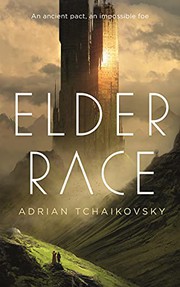
The best short thing he has written and an ideal test read: a stranded anthropologist and a princess who thinks he is a wizard narrate the same events in incompatible vocabularies. Under two hundred pages and complete in itself.

A second-person novella about a world where the aristocracy are literally enormous, with a hard science-fictional explanation waiting underneath the fable. Read it after Elder Race, which teaches you to expect the genre to switch under your feet.
The Uplift Novels
IntermediateFollow the personhood argument that runs under all his best work into a near-future setting where it is a legal and political problem rather than a cosmic one.
▸ Study plan for this stage
Pace: Four to five weeks. Dogs of War is 380 pages and reads very quickly because Rex's narration is short-sentenced and propulsive — under two weeks. Bear Head is 400 pages and is denser, with more political and corporate plotting; two to three weeks. They must be read in that order. Dogs of War is a war
- Rex narrates in the vocabulary he was built with — Good Dog, the Master, the pack — and the novel's whole moral development happens inside that vocabulary rather than by his acquiring a better one.
- The multiform pack (dog, bear, reptile, and a distributed swarm intelligence) exists so that personhood can be argued at several different cognitive architectures at once rather than as a single yes-or-no.
- Dogs of War moves from the battlefield to a courtroom on purpose: the second half converts a war story into a legal question about who counts as a person, which is the series' actual subject.
- Bear Head relocates that question to Mars and to electoral politics, where personhood is a matter of ownership, contract and votes rather than of combat.
- The distributed intelligence hiding in a construction worker's skull in Bear Head is the same argument as Rex's, run in reverse: a person forced to share the hardware rather than a weapon becoming a person.
- Together these two are the shortest complete Tchaikovsky sequence there is, and the clearest single statement of his interest in who counts.
- The catalogue record for Dogs of War credits a French translator alongside the author; it is the same novel.
- What does Rex mean by Good Dog on the first page, and what does it mean by the last? Quote both.
- Bees is written differently from every other viewpoint in Dogs of War. What is the difference doing?
- In the legal sections, what standard for personhood is actually proposed, and which member of the pack does it fail?
- How does Bear Head change the terms — what can be done to a person on Mars that could not be done in the first book's jurisdiction?
- Are these novels arguing about animals, about artificial intelligence, or about labour? Defend your answer from specific scenes.
- Mark every page in Dogs of War where Rex uses a word he was not given — where the narration reaches past its own vocabulary. Those pages are the plot of his development, and they are not the same pages as the plot of the war.
- Write down the personhood test the courtroom sections settle on, then apply it in writing to Bees, to Honey, and to the Bear Head intelligence. The cases where it breaks are what the second book is about.
- Read the first chapter of Bear Head immediately after the last chapter of Dogs of War, back to back in one sitting, and note what has and has not changed politically in the gap between them.
- Compare Rex's narration with the spiders' point of view in Children of Time: both are non-human minds, and only one of them was designed by humans. Write a paragraph on what that difference does to your sympathy.
Next up: Having seen him do intimate and argumentative at short range, the space opera shows what he does with the largest furniture the genre owns.

Rex is a bioengineered dog-soldier who wants to be a good dog, and the novel is his gradual discovery of what he is allowed to want. Narrower and angrier than the Children books, and the clearest single statement of Tchaikovsky's interest in who counts as a person. Note the record credits its French translator alongside him.
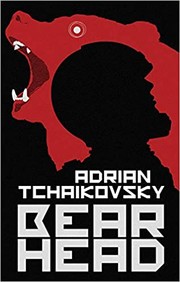
The sequel moves the same argument to Mars and to electoral politics, with a distributed bio-form intelligence hiding in a construction worker's skull. It depends on knowing Rex, so it must come second — but the two together are the shortest complete Tchaikovsky sequence there is.
The Final Architecture Trilogy
IntermediateRead his space opera as a fixed three-book unit, and see what he does with the traditional furniture of the genre — a crew, a war, an unknowable enemy.
▸ Study plan for this stage
Pace: Eight to ten weeks for roughly 1,500 pages. Shards of Earth is 560 pages and the most propulsive thing he has written — under three weeks. Eyes of the Void and Lords of Uncreation are comparable in length and denser in politics; three weeks each. Do not start unless you intend to finish all three: t
- The premise: moon-sized entities called Architects reshaped inhabited worlds, Earth among them, into vast art objects, and stopped for reasons nobody understands.
- The Intermediaries are engineered pilots who can survive unspace and who once made contact with an Architect. Idris is the last of them, and his exhaustion is the trilogy's real emotional line.
- Unspace is the trilogy's best invention: a place where being alone is a physical hazard, and where the standard space-opera convenience of fast travel is given a cost that is psychological rather than economic.
- The salvage crew of the Vulture God is the conventional furniture — the found family, the ship, the jobs — and Tchaikovsky uses it as a stable platform from which to run a much stranger cosmology.
- The politics of the middle book matter as much as the war: human factions, the Hegemony, the Essiel and the Parthenon are each a different answer to what you do when survival is not guaranteed.
- Lords of Uncreation takes the risk the whole trilogy has been deferring and explains the Architects. Whether that explanation improves or diminishes them is the fair question to hold open until the end.
- What is unspace, and what specifically makes it dangerous to be in alone? Why does that rule matter for the plot rather than just for atmosphere?
- What is an Intermediary for, and what does the process cost the people it is done to?
- Name the major factions and what each one wants. Which of them is the trilogy most sympathetic to, and how can you tell?
- Eyes of the Void resolves very little. What does it actually accomplish structurally, and could the trilogy have been two books?
- After Lords of Uncreation: were the Architects better as an unknown? Argue it either way from the text.
- Keep a faction sheet from the first hundred pages of Shards of Earth — name, goal, who they will deal with — and update it at the end of each book. The middle volume is mostly unreadable without one and completely clear with one.
- Mark every unspace passage across the three novels and reread them in sequence at the end. They are the trilogy's one recurring set piece and they escalate in a deliberate order.
- Compare the crew of the Vulture God to the ark ship crew in Children of Time: same author, same problem of people trapped together for the long term, two very different tones. Write a paragraph on what the space-opera register lets him avoid.
- Before opening Lords of Uncreation, write your prediction of what the Architects are and why they stopped. Check it afterwards — the trilogy is fair enough that a careful reader can get partway there.
Next up: With four separate Tchaikovsky commitments behind you, you can judge honestly whether you want the ten-book epic his career actually started with.

Earth has been reshaped into an art object by moon-sized entities, and the salvage crew at the centre includes the last of the engineered pilots who once talked them into stopping. The most conventionally propulsive book he has written, and the right entry if the Children books felt too contemplative.

The middle volume, which widens the war and complicates the politics rather than resolving anything. Do not start the trilogy unless you intend to reach the third book; this one is structurally a bridge.
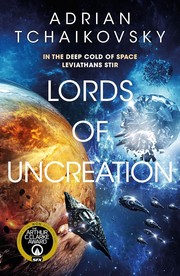
The conclusion, and it does actually conclude — the Architects are explained, which is the risk the whole trilogy has been running. Read immediately after Eyes of the Void, which assumes a large cast you will otherwise lose.
Shadows of the Apt: The Ten-Book Commitment
BeginnerBegin the long insect-kinden fantasy epic that Tchaikovsky's career started with, knowing what you are signing up for and where the first arc ends.
▸ Study plan for this stage
Pace: Three to four months for the opening four books, about 2,200 pages. Empire in Black and Gold is 624 pages, Dragonfly Falling 681, Blood of the Mantis 448 and Salute the Dark 469. Dragonfly Falling is the long one and the one where the series proves itself; give it a month. These are war novels with
- The kinden conceit: human cultures each carry the attributes of an insect — Beetle industry, Ant hive-mind communication, Spider intrigue, Mantis lethality, Wasp conquest. It is a fantasy race system that is really a system of political temperaments.
- Apt and Inapt is the division that makes the world work: some kinden can operate machinery and cannot use magic, and others the reverse, with each literally unable to perceive how the other's tools function. The industrial revolution in this world is therefore also a war of perception.
- The Wasp Empire is a genuinely nasty imperial power written without the usual fantasy softening, and the series' central question is whether the fractious Lowlands city-states can cooperate before it eats them one at a time.
- This is early-career work. The prose is rougher than the science fiction and the first book alone is a poor sample — the series' real strengths are siege warfare, competing technologies and a large cast, and none of those appear at their proper scale until Dragonfly Falling.
- Blood of the Mantis is the narrowest and fastest of the four, tightening onto a single artefact hunt; it is the tonal break between two very large war novels.
- Salute the Dark closes the opening four-book arc. Books five onward move forward in time and shift focus, so this is the natural place to take stock and decide about the remaining six.
- Nothing here connects to any of the previous four stages. Tchaikovsky's body of work has no shared chronology, so the only real reading-order question in his career is which sequence to commit to.
- Give the Apt/Inapt distinction precisely: what can each side not do, and what can each side not even perceive?
- Which kinden's attributes are most and least literal? Where does the conceit stop being a metaphor and become a biological fact in the text?
- What does Dragonfly Falling do that Empire in Black and Gold does not, and why is that the book that decides whether you continue?
- What is Stenwold Maker actually trying to build across these four books, and how much of it survives to the end of Salute the Dark?
- Is the Wasp Empire written as an antagonist or as a society? Point to the chapters that support your answer.
- Standing at the end of Salute the Dark: do you want the remaining six books? What in the first arc decides it?
- Build a kinden reference sheet as you read book one — kinden, city, Apt or Inapt, characteristic ability — and keep it updated. Dragonfly Falling introduces enough new groups that readers who skip this step routinely lose track of who is besieging whom.
- Track one piece of technology across all four books, the flying machines or the snapbows, and note who has it at each stage. The war's whole shape is in that timeline, and Tchaikovsky is deliberate about it.
- Find a scene where an Inapt character encounters a machine and reread it after an Apt character's viewpoint on the same technology. The pair of scenes is the world's best-executed idea.
- Count the viewpoint characters in Empire in Black and Gold and again in Dragonfly Falling. The growth rate is what the ten-book commitment actually consists of.
- At the end of Salute the Dark, write down which threads closed and which were left open, and use that list rather than enthusiasm to decide whether to continue into book five.
Next up: This is the end of the path: four separate commitments read, and the tenth-book question answered by the first arc rather than by reputation.
His debut and the opening of a ten-book series: a world where human cultures carry the attributes of insects, and an industrialising Wasp Empire is about to eat the rest of it. Save it for last on this path — it is early-career work and rougher than the science fiction, and it is a far larger commitment than anything above.

The invasion proper. The series' real strengths — siege warfare, competing technologies, a genuinely nasty empire — only appear at this length, which is why the first book alone is a poor sample.
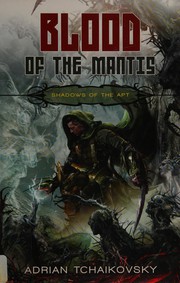
The narrowest and fastest of the early volumes, tightening onto a single artefact hunt. Third in a fixed sequence; there is no reading order argument to have here.
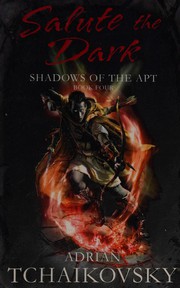
This closes the opening four-book arc, and it is the natural stopping point for anyone unsure about the remaining six. Books five onward jump forward and shift focus, so finish here, take stock, and continue only if you want the whole decade.
Discussion
Keep reading
Paths that share books, cover the same subject, or open a related topic.