Vernor Vinge books in order: where to start with the Zones of Thought
Vinge published few books and made every one count, so the ordering problem here is not volume but a genuinely confusing internal chronology: A Deepness in the Sky is a prequel written seven years after A Fire Upon the Deep, and reading it first drains the later book of its best reveals. This path reads publication order within each sequence, adds the novella that named cyberspace years before anyone else, and finishes with the Realtime books and the early work.
Start here: the Zones of Thought
IntermediateRead Vinge's major sequence in publication order, which is emphatically not its internal chronology.
▸ Study plan for this stage
Pace: 1,841 pages across three, and by far the heaviest stage here: A Fire upon the Deep 605, A Deepness in the Sky 792, The children of the sky 444. At one book a month this is a quarter of a year, which is the honest cadence for novels of this density — Deepness at 792 pages is the longest book on the p
- The Zones of Thought premise: physics itself limiting what intelligence can exist where, which turns galactic geography into a hard constraint on plot
- The Tines as a group-mind species built from a genuinely worked-out biology rather than a costume
- Publication order against internal chronology, and the specific reveal in Deepness that depends on getting it right
- The Singularity as an event the narrative can approach but not enter, which is why the Slow Zone exists at all
- The scale drop in The children of the sky — 444 pages of planetary politics after 1,397 of galaxy-spanning space opera
- Focus, in Deepness, as a technology of enslavement, and the moral argument the novel builds around it
- How do the Zones function as a plot constraint rather than as background, and where does the plot depend on them?
- What does the Tines' group mind let Vinge dramatise that a conventional alien could not?
- Which reveal in A Deepness in the Sky requires you to have read A Fire upon the Deep, and how much is lost without it?
- Why is Deepness often called the better-constructed novel despite Fire being the more famous one?
- Does The children of the sky justify its change of scale, or does it read as a smaller book by accident?
- What is the argument about Focus, and does the novel resolve it?
- Draw the Zones as a diagram as you read Fire and mark where each strand of the plot sits; the geography is the plot and the diagram makes it obvious.
- In Deepness, note the exact page at which you understood the connection to Fire, then decide how the book would have read without it.
- Track how the Tines' pack composition changes across Fire and The children of the sky, and what each change costs the character.
- Before starting The children of the sky, write down what you want resolved. Check the list at the end — the mismatch is the honest measure of whether to read it.
Next up: With the major sequence read, the short fiction shows the same ideas at their first and sharpest statement.
The correct entry point to Vinge and one of the great space operas: a galaxy stratified into zones where physics itself limits intelligence, plus the Tines, the best alien species in modern science fiction. Read this before its prequel.
Set thousands of years earlier and written second. Its power comes from a slow reveal about a character you have already met in Fire, so reading it first is a real loss. Arguably the better-constructed novel of the two.
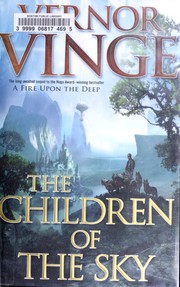
The direct sequel to A Fire Upon the Deep, and much smaller in scale — a planetary political novel among the Tines. It ends unresolved and Vinge died before continuing, which you should know before starting it.
The novella that predicted the internet
IntermediateRead the 1981 short work that put Vinge in the history books, and the short fiction around it.
▸ Study plan for this stage
Pace: 1,120 pages across three volumes — True Names 320, The collected stories of Vernor Vinge 464, Threats and Other Promises 336 — but this is collected short fiction, so it does not read like 1,120 pages of novel. A story an evening is the right rhythm, and the stage takes about six weeks that way. Rea
- True Names as the founding text of the cyberspace idea, written before the technology it describes existed
- Identity as the scarce resource in a networked world — the true name as the thing worth killing for
- Vinge's ideas-per-page rate, which is highest in the short fiction and visibly compressed there
- The Realtime world seeded in short stories before the novels, notably The Ungoverned
- Overlapping collections as a practical problem in a small bibliography, and how to buy around it
- Extrapolation done as engineering rather than as metaphor, which is the habit that makes the predictions hold
- What does True Names get right about networked identity, and what does it get wrong in an instructive way?
- How does the novella handle the problem of depicting an interface that did not yet exist?
- Which stories in the Collected Stories are doing work the novels later expand, and which are complete in themselves?
- What does The Ungoverned argue, and how does it prepare the Realtime novels?
- Is the compression of the short fiction a strength, or do the ideas need the novels' room?
- Read True Names, then list every element of it that now exists in some form. The list is long and it is the argument for the novella's reputation.
- Take one story from the Collected Stories and identify the single extrapolative move it is built on, stated in one sentence.
- Check the contents pages of the Collected Stories against Threats and Other Promises and mark the overlap before buying either.
- Note which stories share a world with The Peace War and read them immediately before starting the next stage.
Next up: The stories have already introduced the Realtime setting, so the two novels read as an expansion rather than as a fresh start.
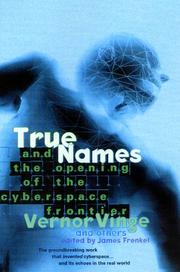
Hackers with avatars and true identities worth killing for, written before the web existed. The single most influential thing Vinge wrote. Our catalogue record is the Bluejay edition co-credited to editor James Frenkel and is the same text collected in True Names and Other Dangers.
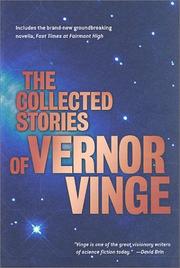
The full short fiction in one volume, including The Ungoverned and Bookworm, Run! Vinge's ideas per page are highest here, and several of these stories share a world with the Realtime novels.

The earlier of his two story collections, largely superseded by the Collected Stories but worth knowing exists if you find it cheaply.
The Realtime books
IntermediateRead the earlier sequence, in publication order, which is also its chronological order.
▸ Study plan for this stage
Pace: The lightest stage on the path: 599 pages across two — The Peace War 311 and Marooned in Realtime 288 — and a comfortable month, or a fortnight if the previous stage built momentum. Read them in order; Marooned is a direct sequel and is the better book. A practical warning carried from the catalogue
- Bobbles as a single clean technology worked out to its political conclusion, which is Vinge's characteristic method
- Stasis as a way of moving characters through deep time without ageing them, and what that enables in the sequel
- The Singularity as an offstage event with no survivors to narrate it — Vinge coined the term and this is where he dramatises it
- A locked-room murder mystery stretched across fifty million years, and how the stasis premise makes the puzzle fair
- The libertarian argument stated plainly here, and how it recurs quietly in the Zones books
- How does the bobble technology determine the shape of the politics in The Peace War?
- What makes the murder mystery in Marooned in Realtime solvable rather than arbitrary, given its timescale?
- How does Vinge dramatise an event that by definition has no witnesses?
- Where is the political argument doing work, and where is it simply asserted?
- Which of the two is the better novel, and does the answer depend on liking its politics?
- Write out the rules of the bobble technology as the novel establishes them, then check the plot of Marooned against your list for cheating.
- Build the timeline of Marooned in Realtime by hand — the mystery is genuinely solvable and the timeline is the tool.
- Compare the Singularity as depicted here with how the Zones books keep it offstage, and describe the two strategies.
- Before buying, confirm whether the edition in front of you is Across Realtime; the overlap catches people out.
Next up: Having seen Vinge extrapolate at galactic and geological scale, the near-future novel is where he holds himself to a decade.
Bobbles — impenetrable stasis fields — as a technology of total political control. Vinge's most direct libertarian argument and a very clean thriller.
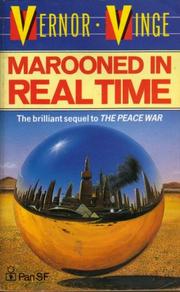
The sequel and the better book: a murder mystery set across fifty million years, with the Singularity as the offstage event nobody survived to explain. Vinge coined the term; this is the novel that dramatises it. An omnibus of both exists as Across Realtime, so avoid buying that as well.
Near future, and the early work
IntermediateFinish with the late near-future novel and the two apprentice books.
▸ Study plan for this stage
Pace: 892 pages across three — Rainbows End 384, Tatja Grimm's world 288, The Witling 220 — about six weeks, and an uneven stage by design. Rainbows End is the one that matters and is worth a month on its own; the other two are apprentice work and read quickly. Read Rainbows End first and the early novels
- Near-future extrapolation held to a short horizon, which is a harder discipline than galactic scale and easier to check
- Augmented reality and digital libraries described as infrastructure rather than as spectacle
- Recovery from dementia used as a device for making the familiar strange, and the cost of that framing
- Apprentice work read backwards: which of Vinge's habits are lifelong and which were learned
- Eleven books as a complete bibliography, and what a small output does to how a career is judged
- Which predictions in Rainbows End have come true, which have not, and which turned out to be the wrong question?
- How does Vinge use the recovered patient to explain a world without exposition, and is the device fair to the condition?
- What in Tatja Grimm's world already sounds like the author of A Fire upon the Deep?
- Why does The Witling not work, and is the reason instructive?
- Across all eleven books, what is Vinge's constant method — and can you state it in one sentence?
- List the technologies in Rainbows End and mark each as arrived, partly arrived, or not; then note which ones you had not thought to check.
- Read the first chapter of Tatja Grimm's world and the first chapter of A Fire upon the Deep back to back and describe what improved.
- Write the one-sentence extrapolative premise of each of the eleven books on this path. The exercise shows how consistent the method is.
- Decide which three books you would give a new reader, and say what you are choosing to leave out and why.
Next up: This is the whole path and close to the whole bibliography; anything further means the uncollected short fiction or the essays on the Singularity rather than more novels.
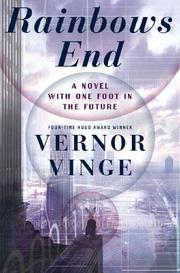
Augmented reality, digital libraries and a recovered Alzheimer's patient in 2025. Vinge's Hugo winner and his most sober prediction — much of it now reads as a report.
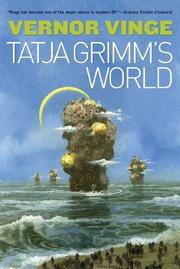
Early Vinge, expanded from 1960s stories: a genius born into a pre-industrial world. Uneven and interesting as apprentice work.
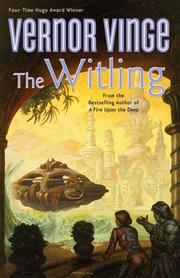
The 1976 novel, short and minor, about teleportation as an evolved trait. Included for completeness; do not start here.
Discussion
Keep reading
Paths that share books, cover the same subject, or open a related topic.