How to learn Leadership & management
This curriculum takes you from the core mindsets of leadership and management all the way to advanced organizational strategy and adaptive leadership. Each stage builds on the last — first establishing foundational self-awareness and people skills, then developing tactical management competence, and finally mastering complex, systemic, and transformational leadership challenges.
Foundations: Mindset & Self-Awareness
BeginnerUnderstand what leadership and management actually mean, develop a growth mindset, and build the self-awareness needed to lead others effectively.
▸ Study plan for this stage
Pace: 10–12 weeks total, reading ~20–25 pages per day. Suggested split: Weeks 1–4 for "The 7 Habits of Highly Effective People" (~30 pages/day, it's dense — journal after each habit), Weeks 5–7 for "Mindset" (~25 pages/day, lighter read but rich for reflection), Weeks 8–11 for "Leaders Eat Last" (~20 page
- Proactivity & the Circle of Influence (Covey): Leaders act on what they can control, not what they merely worry about.
- The P/PC Balance (Covey): Sustainable leadership balances short-term Production with long-term Production Capability — avoiding burnout and team depletion.
- Begin with the End in Mind & Putting First Things First (Covey): Effective leaders operate from a personal mission and ruthlessly prioritize high-impact, non-urgent work (Quadrant II).
- Inside-Out Leadership (Covey): Lasting influence starts with character and self-mastery, not technique or title.
- Fixed vs. Growth Mindset (Dweck): A fixed mindset treats ability as static; a growth mindset sees effort, feedback, and failure as the primary path to development — foundational for leading learning teams.
- The Power of 'Yet' and Praising Process over Talent (Dweck): How leaders give feedback shapes the mindset culture of their entire team.
- The Circle of Safety (Sinek): Leaders who create psychological safety — where people feel protected from internal threats — unlock trust, cooperation, and discretionary effort.
- The Role of Neurochemicals in Leadership (Sinek): Understanding how dopamine, serotonin, oxytocin, and cortisol are triggered by leadership behaviors explains why culture and trust are biological, not just philosophical.
- After reading Covey, can you articulate your own personal mission statement — what you stand for as a leader and what outcomes you are committed to producing?
- What is the difference between a proactive and a reactive response to a leadership challenge? Give a real example from your own life where you operated in each mode.
- Using Dweck's framework, how would you diagnose the current mindset culture of a team or organization you belong to, and what specific leader behaviors are reinforcing it?
- Sinek argues that 'leadership is not a rank, it is a choice.' How does this idea connect to Covey's inside-out principle and Dweck's growth mindset — and what does it mean for someone who has no formal authority yet?
- What does Sinek mean by the 'Circle of Safety,' and what are two concrete actions a first-time manager could take this week to begin building one?
- How do the three books collectively redefine 'effectiveness'? What does being an effective leader look like according to Covey, Dweck, and Sinek taken together?
- Personal Mission Statement Draft (Covey, Habit 2): Write a 1-page personal leadership mission statement. Identify your core values, the roles you play (team member, peer, future manager), and the legacy you want to leave. Revisit and refine it at the end of the stage.
- Circle of Influence Audit (Covey, Habit 1): List 10 current concerns or frustrations in your work/life. Sort each into 'Circle of Concern' vs. 'Circle of Influence.' For every item in your Circle of Influence, write one proactive action you will take this week.
- Quadrant II Time Audit (Covey, Habit 3): Track how you spend your time for one full week using the four-quadrant matrix. Calculate the percentage in each quadrant. Set a goal to move at least 15% of time from Quadrant I/III/IV into Quadrant II and implement it the following week.
- Mindset Journal (Dweck): For 2 weeks, keep a daily log of one moment where you noticed a fixed-mindset reaction in yourself (e.g., avoiding a challenge, feeling threatened by feedback). Write the fixed-mindset thought, then rewrite it as a growth-mindset response. Track whether the reframe changes your behavior.
- Feedback Language Audit (Dweck): Recall the last 5 pieces of feedback you gave to a peer, direct report, or classmate. Classify each as process-focused or person/talent-focused. Rewrite any talent-focused feedback using process and effort language, and practice delivering it.
- Circle of Safety Observation & Design (Sinek): Identify a group you are currently part of (team, class, club). Observe for one week: Do people speak up freely? Is information hoarded or shared? Do people have each other's backs? Write a one-page diagnosis and propose three specific leader behaviors that would strengthen the Circle of Safety in that group.
Next up: By internalizing self-mastery, a growth mindset, and the responsibility to create safety, the reader has built the personal foundation required to move outward — into the interpersonal and organizational skills (communication, motivation, delegation, and team dynamics) that define the next stage of leadership development.
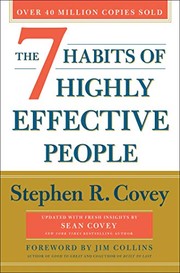
The ideal starting point — it builds the personal responsibility and principle-centered thinking that all effective leadership rests on. Reading this first ensures later frameworks land on solid personal foundations.
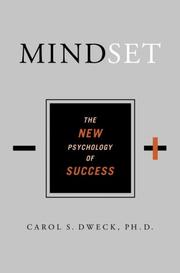
Introduces the growth vs. fixed mindset distinction, which is essential vocabulary for understanding how great managers develop themselves and their teams. Pairs perfectly with Covey by reinforcing that leadership is a learnable skill.
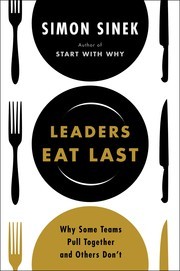
Reframes leadership as service and trust-building rather than authority, giving beginners an inspiring and accessible mental model of what great leaders actually do for their people.
Core Management Skills: People & Performance
BeginnerLearn the practical, day-to-day skills of managing people — giving feedback, having hard conversations, motivating teams, and getting results through others.
▸ Study plan for this stage
Pace: 8–10 weeks total. Week 1–3: "First, Break All the Rules" (~25–30 pages/day, ~3–4 sessions/week). Week 4–5: "The One Minute Manager" (~20–25 pages/day, 2 sessions/week — it's a short read, so allow time to reflect). Week 6–9: "Radical Candor" (~25–30 pages/day, 3–4 sessions/week). Week 10: Review, jo
- Strengths-based management: Buckingham's core argument that great managers identify and deploy each person's unique talents rather than trying to fix weaknesses
- The four keys of great managers (select for talent, define the right outcomes, focus on strengths, find the right fit) as a practical framework from 'First, Break All the Rules'
- The 12 Questions (Q12) from Buckingham as a diagnostic tool for measuring employee engagement and team health
- Situational leadership and the three management tools from 'The One Minute Manager': One Minute Goals, One Minute Praisings, and One Minute Re-directs
- The power of brevity and immediacy in feedback: why short, timely, specific interventions outperform lengthy annual reviews
- The Radical Candor framework: the two axes of 'Care Personally' and 'Challenge Directly,' and the four resulting quadrants (Radical Candor, Ruinous Empathy, Obnoxious Aggression, Manipulative Insincerity)
- The distinction between guidance (feedback), team-building, and results-getting as the three core responsibilities of a manager per Scott
- Why avoiding hard conversations (Ruinous Empathy) is the most common and most damaging management failure
- According to Buckingham, why is it a mistake to treat every employee the same way, and how should a manager adapt their approach based on individual talent?
- What are the Q12 questions in 'First, Break All the Rules,' and how can a manager use them to identify gaps in their team's engagement?
- Walk through the three tools in 'The One Minute Manager' — what makes a goal, a praising, and a re-direct effective, and what do they have in common structurally?
- Using Scott's 2x2 matrix from 'Radical Candor,' how would you classify a manager who gives only vague, positive feedback to avoid discomfort — and why is that harmful?
- How do the feedback philosophies of Blanchard and Scott complement each other, and where do they differ in emphasis?
- What concrete steps does Scott recommend for soliciting feedback as a manager, and why does she argue that the manager must go first?
- Strengths Audit (Buckingham): List each person on your team (or 3–5 peers if you're not yet a manager). For each person, write down one or two activities where they seem energized and excel. Draft a one-paragraph 'talent profile' per person and consider how their current role does or doesn't leverage those strengths.
- Q12 Self-Assessment (Buckingham): Go through the 12 engagement questions and answer them honestly from the perspective of your own current role. Score yourself, identify the two lowest-scoring items, and write a short action plan for how a manager could address each one.
- One Minute Goal-Setting Practice (Blanchard): Pick a real task or project goal — yours or a team member's. Write it out in 250 words or fewer so it fits on a single page. Then reduce it further to a single sentence that captures the desired outcome and the standard of success. Practice saying it aloud in under 60 seconds.
- Feedback Role-Play (Blanchard + Scott): With a trusted colleague or mentor, role-play two scenarios: (a) delivering a One Minute Praising for a specific behavior, and (b) delivering a One Minute Re-direct. Then repeat both using Scott's Radical Candor framework. Debrief: what felt different? What was harder?
- Quadrant Mapping (Scott): Think of three feedback moments you've witnessed or experienced in the past month — from a boss, a peer, or yourself as a giver. Plot each one on the Radical Candor 2x2 grid. Write a one-paragraph reflection on what the giver could have done differently to move toward Radical Candor.
- Hard Conversation Rehearsal (Scott): Identify one piece of feedback you've been avoiding giving (or have received but never fully addressed). Using Scott's guidance on being direct while showing you care, script out the conversation: the opening sentence, the specific behavior, the impact, and the invitation to respond. If possible, have the actual conversation before the end of the stage.
Next up: By mastering the people-facing fundamentals — strengths-based thinking, structured feedback, and candid communication — the reader has built the interpersonal foundation needed to tackle higher-order leadership challenges such as setting organizational vision, building culture at scale, and leading through change.

Grounded in Gallup research, this book reveals what great managers actually do differently. It's the best bridge from leadership philosophy to hands-on people management practice.

A short, memorable classic that teaches goal-setting, praising, and redirecting — the three core feedback loops every new manager needs to internalize before tackling more complex models.

Builds directly on feedback basics to teach a nuanced, caring-yet-direct communication framework. Reading this after Blanchard gives the 'why' and 'how' of honest, high-trust management conversations.
Intermediate: Team Dynamics & Organizational Culture
IntermediateUnderstand how teams form, how culture shapes performance, and how to build psychological safety and high-functioning groups at scale.
▸ Study plan for this stage
Pace: 4–5 weeks total: Week 1–2 — Read "The Five Dysfunctions of a Team" (~30–40 pages/day including the assessment sections; complete the team assessment tool and score your own team by end of Week 2). Week 3–5 — Read "Multipliers" (~25–30 pages/day; pause after each of the 5 Multiplier disciplines to re
- The Five Dysfunctions pyramid: absence of trust → fear of conflict → lack of commitment → avoidance of accountability → inattention to results (Lencioni)
- Vulnerability-based trust as the non-negotiable foundation of team cohesion (Lencioni)
- The role of productive ideological conflict vs. artificial harmony in healthy teams (Lencioni)
- Commitment through clarity and buy-in — not consensus (Lencioni)
- Peer-to-peer accountability as a cultural norm, not just a manager's job (Lencioni)
- The Multiplier vs. Diminisher spectrum: how leaders either amplify or suppress collective intelligence (Wiseman)
- The five Multiplier disciplines: Talent Magnet, Liberator, Challenger, Debate Maker, Investor (Wiseman)
- Accidental Diminisher patterns — well-intentioned behaviors that inadvertently shrink others' thinking (Wiseman)
- Can you map a real team you've been part of onto Lencioni's five dysfunctions pyramid and identify which layer was the primary breakdown point — and why?
- What specific behaviors does Lencioni prescribe for a leader to build vulnerability-based trust, and how do they differ from competence-based trust?
- According to Lencioni's assessment, what distinguishes a team that commits from one that merely complies, and what is the leader's role in creating that distinction?
- How does Wiseman define a Multiplier, and what is the core assumption about human intelligence that separates Multipliers from Diminishers?
- Which of Wiseman's five Multiplier disciplines is hardest to practice under time pressure, and what does she recommend to counteract the pull toward Diminisher behavior in those moments?
- How do the concepts of psychological safety (implicit in Lencioni) and the Liberator discipline (Wiseman) reinforce each other, and where do they diverge?
- Self-assessment audit: Complete Lencioni's Team Assessment for a current or recent team. Score each dysfunction, rank them by severity, and write a one-page diagnosis with three specific, actionable interventions.
- Dysfunction mapping conversation: Facilitate a 30-minute candid discussion with at least two teammates using Lencioni's five dysfunctions as a shared vocabulary. Document where they agree or disagree with your diagnosis.
- Multiplier/Diminisher self-audit: After reading Wiseman, list 5 recent leadership moments. For each, label it M (Multiplier) or D (Diminisher) and identify the specific discipline or pattern at play. Be ruthless about spotting Accidental Diminisher behaviors.
- Experiment with one Multiplier discipline for two weeks: Pick the single Wiseman discipline you score lowest on (e.g., Debate Maker). Design one real meeting or decision where you deliberately apply its practices. Write a brief after-action review.
- Culture artifact analysis: Choose one team or organization you know well. List three visible cultural artifacts (rituals, norms, stories) and trace each back to either a dysfunction (Lencioni) or a Diminisher pattern (Wiseman) — or their healthy opposites.
- Integrated reflection essay (500–700 words): Synthesize both books by answering: 'What is the single biggest structural or behavioral change a leader must make to move their team from dysfunctional to high-performing, and how do Lencioni and Wiseman each inform that change?'
Next up: Mastering team-level trust, accountability, and intelligence amplification sets the foundation for the next stage, which scales these principles to organizational strategy, change leadership, and leading across multiple teams or entire enterprises.
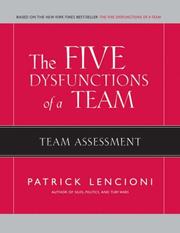
A narrative-driven model that names the most common team failure modes. It's the essential diagnostic tool for any manager moving from individual relationships to team-level leadership.

Explores how some leaders amplify the intelligence of everyone around them while others diminish it — a critical intermediate concept for managers who want to scale their impact through others.
Advanced: Strategy, Change & Organizational Leadership
ExpertLead at the organizational level — drive strategic change, manage complexity, and understand the systemic forces that shape institutions and cultures.
▸ Study plan for this stage
Pace: 8–10 weeks total: ~2.5–3 weeks per book at 20–25 pages/day. Suggested breakdown — Weeks 1–3: "Good to Great"; Weeks 4–6: "The Leadership Challenge"; Weeks 7–10: "An Everyone Culture" (slightly longer due to its conceptual density and case study depth).
- Level 5 Leadership (Good to Great): the paradox of personal humility and fierce professional will as the foundation of sustained organizational greatness
- The Hedgehog Concept (Good to Great): finding the intersection of passion, best-in-world capability, and economic engine to focus strategic effort
- The Flywheel & Doom Loop (Good to Great): how disciplined, cumulative momentum — not dramatic transformation — drives breakthrough results
- The Five Practices of Exemplary Leadership (The Leadership Challenge): Model the Way, Inspire a Shared Vision, Challenge the Process, Enable Others to Act, Encourage the Heart
- Credibility as the foundation of leadership (The Leadership Challenge): how consistency between words and actions builds or erodes follower trust at scale
- The Deliberately Developmental Organization — DDO (An Everyone Culture): organizations designed so that everyday work is also the primary vehicle for personal growth
- Immunity to Change (An Everyone Culture): the hidden competing commitments and big assumptions that cause individuals and organizations to resist transformation even when they want it
- Cultural architecture for psychological safety (An Everyone Culture): structural practices — edges, home, and groove — that make vulnerability and ongoing development the organizational norm
- According to Collins, what distinguishes a Level 5 Leader from a highly effective Level 4 Leader, and why does this distinction matter for long-term organizational performance?
- How does the Hedgehog Concept function as a strategic filter, and what are the risks of acting outside its three-circle intersection?
- Kouzes and Posner argue that leadership is a relationship, not a position — how do the Five Practices operationalize this belief, and which practice is most critical during periods of organizational change?
- What is a 'Deliberately Developmental Organization' as defined by Kegan, and how does it differ structurally and culturally from a conventional high-performance organization?
- How does the concept of 'immunity to change' explain why well-intentioned strategic initiatives frequently stall, and what diagnostic steps can a leader take to surface hidden competing commitments?
- Taken together, how do the frameworks in these three books form a coherent model of advanced organizational leadership — from strategic focus (Collins) to leadership behavior (Kouzes) to cultural infrastructure (Kegan)?
- Hedgehog Audit: Map your own organization (or a case-study organization) against Collins's three circles — where do they overlap, where are they misaligned? Write a one-page strategic recommendation based on the gaps.
- Level 5 Self-Assessment: Using Collins's leadership hierarchy, interview three colleagues or direct reports to gather behavioral evidence of where you currently operate. Identify one humility behavior and one will behavior to develop over the next 90 days.
- Five Practices Leadership 360: Select one of Kouzes & Posner's Five Practices you consider your weakest. Design and execute a 30-day micro-experiment (a specific, observable behavior change) and journal the results weekly.
- Immunity-to-Change Map (Kegan): Choose a real leadership goal you have been unable to achieve. Complete Kegan's four-column immunity map — commitment, behaviors working against it, competing commitments, and big assumptions — then test one assumption with a small safe-to-fail action.
- DDO Culture Diagnostic: Using Kegan's 'edges, home, and groove' framework, evaluate your team or organization on each dimension with a 1–5 score and written evidence. Present findings and one structural change proposal to a peer or mentor.
- Flywheel Narrative: Write a 500-word 'flywheel story' for a real or hypothetical organization, tracing how disciplined actions in sequence built compounding momentum — or, conversely, how a doom loop unfolded and what a leader could have done differently using insights from Kouzes and Kegan.
Next up: By mastering strategic focus (Collins), exemplary leadership behaviors (Kouzes), and developmental culture-building (Kegan), the reader is now equipped to engage with even more specialized or systemic topics — such as organizational design, adaptive leadership under uncertainty, or enterprise-level change management — that build directly on these integrated frameworks.
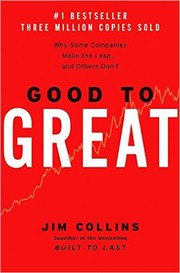
A research-backed examination of what separates truly great organizations from merely good ones. At this stage, readers have the management vocabulary to critically engage with Collins's frameworks like Level 5 Leadership and the Hedgehog Concept.
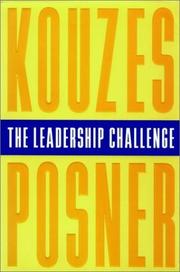
Synthesizes decades of leadership research into five evidence-based practices. It serves as a capstone that connects personal, interpersonal, and organizational leadership into one coherent, actionable model.

The most intellectually demanding book in the path — it introduces the concept of the 'deliberately developmental organization' and challenges leaders to build cultures where growth is the work itself, not a side activity.
Discussion
Keep reading
Paths that share books, cover the same subject, or open a related topic.