Bossa Nova and Brazilian Music: The Best Books to Read, in Order
Bossa nova was made by a small number of people in a few Rio apartment buildings between roughly 1958 and 1963, and it is best understood as a compression of samba rather than a break from it — João Gilberto took the rhythm apart and put it back together for one guitar and a half-spoken voice, and Antônio Carlos Jobim supplied harmony borrowed from Debussy and American jazz. This path starts with the movement itself, widens to the whole Brazilian musical map, goes back to samba and its African roots, and finishes with Tropicália and the dictatorship, which is where the story turns political and where several of these musicians were arrested or exiled. No musical training is assumed, though the harmony discussion in the survey books will reward it.
The Movement Itself
BeginnerLearn who made bossa nova, what Gilberto's beat actually did to samba, and how the music reached American jazz within five years of being invented.
▸ Study plan for this stage
Pace: 3 weeks. Castro's Bossa Nova is 376 pages of narrative history by a Brazilian journalist who interviewed most of the surviving participants — allow two weeks and read it with the records playing. Helena Jobim's Antonio Carlos Jobim is 443 pages and is a biography of the composer written by his siste
- The compression argument: bossa nova as samba reduced for one guitar and a near-spoken voice, not a break from it
- João Gilberto's beat — the division of the samba rhythm between thumb and fingers, displaced against the vocal line — and why it was the movement's single technical innovation
- Jobim's harmonic vocabulary: extended and altered chords borrowed from Debussy and from American jazz, applied to Brazilian song form
- Vinicius de Moraes as lyricist and the shift in what a popular Brazilian lyric could be about
- The geography Castro insists on: a few Copacabana and Ipanema apartment buildings, a small circle, roughly 1958 to 1963
- The Carnegie Hall concert of 1962 and the American reception, including Getz/Gilberto and what the collaboration did to the music's international identity
- Why the movement's centre of gravity shifted abroad, and what that cost it at home
- Jobim's working method as his sister describes it — piano-first composition, and the collaborators who supplied words
- What exactly did Gilberto do to the samba rhythm, and why was it new?
- Where did Jobim's harmony come from, and which of his songs shows it most plainly?
- Who was in the original circle Castro describes, and how many people is it actually?
- What happened at Carnegie Hall in 1962 and what followed commercially?
- What does Helena Jobim's account add about her brother's composition that Castro's reporting does not, and what should be read as family memoir rather than record?
- Listen to a pre-bossa samba and then to Gilberto's Chega de Saudade and write down what has been removed; Castro's compression argument is audible in one comparison
- Take five Jobim songs Castro discusses and note, for each, the harmonic feature he names — then find that moment in the recording
- Draw the social map of Castro's book: who lived where, who introduced whom, who was in which apartment; the scene is small enough that this is genuinely possible and it makes the history concrete
- Compare the Brazilian recording of a Jobim song with the Getz/Gilberto version and list every difference in tempo, instrumentation and vocal delivery
- Mark passages in Helena Jobim's biography that only a family member could have written, and note where that access helps and where it limits the account
Next up: Knowing one movement well, the next stage places it among the other Brazilian genres it came out of and alongside.

The definitive history, by a Brazilian journalist who interviewed nearly everyone involved — the apartments, the arguments, Gilberto's obsessive rehearsing, and the Carnegie Hall concert that exported it. Start here; nothing else on this path is as good on the actual events.
A biography of the composer by his sister, and the closest thing in English to an account of how he actually wrote. Less rigorous than Castro and much more intimate. Our record shows the short title; it is published as Antonio Carlos Jobim: An Illuminated Man.
The Whole Map
BeginnerPlace bossa nova among the other Brazilian genres — samba, choro, forró, MPB, axé, tropicália — and be able to hear what distinguishes them.
▸ Study plan for this stage
Pace: 3-4 weeks. McGowan and Pessanha's The Brazilian Sound is 248 pages of genre-by-genre survey with discographies and is the standard English-language reference — read it with the discography as a listening list rather than straight through. Murphy's Music in Brazil is a 173-page ethnomusicological int
- Samba and its subgenres — samba de roda, samba-canção, samba-enredo, pagode — and what distinguishes them
- Choro as an instrumental tradition older than samba, with its own repertoire and virtuoso conventions
- Forró and the Northeastern accordion tradition, and the regional divide it represents
- MPB as a category invented in the 1960s, and what it was defined against
- Axé, Tropicália, samba-reggae and the Bahian strand, geographically distinct from the Rio story of the first stage
- The percussion battery: surdo, tamborim, cuica, agogô, pandeiro, and what each contributes to the rhythmic layering
- Clave-like rhythmic cells and the sixteenth-note subdivision that underlies samba and bossa nova alike, which is Murphy's main technical contribution
- How a Brazilian rhythm section distributes a groove across instruments rather than assigning it to one
- Name six Brazilian genres and give one identifying rhythmic or instrumental feature of each
- What is choro, how does it differ from samba, and which is older?
- What does a surdo do, and what does a tamborim do, in a samba battery?
- What does Murphy identify as the underlying rhythmic cell of samba, and how does bossa nova alter it?
- Where does bossa nova sit on the map these two books draw — closest to what, and furthest from what?
- Work through Murphy's listening exercises with the recordings he specifies rather than substitutes; the book is built around them and reading it without listening teaches almost nothing
- Build a listening list of one track per genre from McGowan's discographies and, for each, write two sentences on what identifies it — this is the practical test of the stage
- Take one samba recording and try to pick out each percussion instrument in turn, writing down what pattern it plays; do it again with a bossa nova recording and note how much of the battery has disappeared
- Clap or count Murphy's rhythmic cell against a samba track, then against a bossa nova track, and describe the displacement in your own words
- Place the Jobim songs from stage one on McGowan's genre map and note which of them are not really bossa nova at all
Next up: Bossa nova was a refinement of samba, so the next stage goes back to samba, carnival and the Afro-Brazilian traditions underneath both.
The standard English-language survey, genre by genre and region by region, with discographies. Read it second: after Castro you know one movement well and need the context that makes it a movement rather than simply good songs.
An ethnomusicologist's short introduction, structured around listening rather than history, and stronger than McGowan on rhythm and instrumentation. The right book if you want to understand what a Brazilian rhythm section is actually doing.
Samba and Its Roots
BeginnerGo back to what bossa nova was refining — samba, carnival and the Afro-Brazilian traditions underneath both — and understand how a music of the poor became a national symbol.
▸ Study plan for this stage
Pace: 5 weeks. Guillermoprieto's Samba is 244 pages of immersive reportage from a year spent in a Rio favela with a samba school preparing for carnival — she is a participant in what she describes, not an outside observer, and the book covers poverty, policing and violence in the favela as daily condition
- The escola de samba as an institution: the quadra, the bateria, the wing structure, the year-long preparation and the competitive judging
- The samba-enredo and the parade as a narrative form with rules, scored on specific criteria
- The transformation Vianna asks about: samba policed as vagrancy in the 1910s becoming the official symbol of national identity within twenty years
- Vianna's answer involving mediating figures and intellectuals — the encounter between elite and popular that produced the national symbol
- Gilberto Freyre's racial-democracy thesis in the background of that transformation, and why it is contested
- Fryer's Atlantic inheritance: specific instruments, rhythms and religious practices traced from West and Central Africa into Brazilian forms
- Candomblé and the religious substrate underneath a large part of the secular repertoire
- Rio's geography as a social fact — hill and beach, favela and Zona Sul — and why which of them a song comes from matters
- How is a samba school organised, and what does a year of preparation actually consist of?
- What is Vianna's question, and what is his answer to it?
- What role does Fryer assign to specific African traditions in the formation of Brazilian music, and how does he establish the connections?
- What does Guillermoprieto show about what the music means to the people who make it that a scholarly account cannot?
- Why does it matter, in Castro's terms, whether a song comes from the hill or the beach?
- How do Vianna's and Guillermoprieto's accounts of the same institution differ in method?
- Read Guillermoprieto's account of the parade preparation and then watch a recorded carnival parade, identifying the wings, the bateria and the samba-enredo as she describes them
- Reconstruct Vianna's argument as a numbered chain and mark the point where it depends on Freyre; that dependency is what the book is contested over
- Take three instruments Fryer traces across the Atlantic and follow each from its African origin to its Brazilian use, writing down what evidence he uses at each step
- Map the locations in Castro's Rio de Janeiro onto the neighbourhoods in Castro's Bossa Nova from stage one — the same author, the same city, twenty blocks apart — and note what the geography explains about the two musics
- Listen to a samba-enredo and a bossa nova recording of the same year and write down every element the second has removed
Next up: The final stage follows what came after bossa nova, when the music collided with a military government.
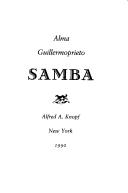
A journalist spent a year in a Rio favela with a samba school preparing for carnival, and wrote the best book in English about what the music means to the people who make it. Immersive rather than analytical, and the emotional centre of this path.
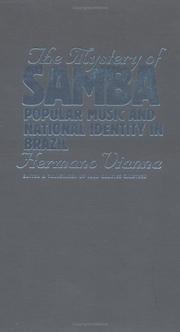
The scholarly counterpart, asking the harder question: how did a music that was policed as vagrancy in the 1910s become the official symbol of Brazilian identity within twenty years. Read it directly after Guillermoprieto.
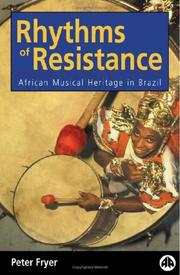
The African musical inheritance traced concretely — instruments, rhythms and religious practices carried across the Atlantic and what happened to them in Brazil. The deepest layer, and the one the other books on this stage rest on.
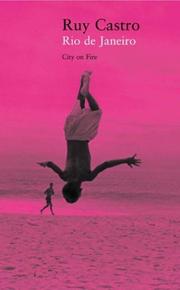
Castro's short history of the city, and the geography lesson the rest of the path needs — Copacabana, Ipanema, the hills and the beach, and why it matters which of them a song comes from. Published as Rio de Janeiro: Carnival Under Fire.
Tropicalia and the Dictatorship
IntermediateFollow what happened after bossa nova — the Tropicália movement, the military regime, censorship and exile — and see Brazilian popular music as a political institution.
▸ Study plan for this stage
Pace: 5-6 weeks. Veloso's Tropical Truth is 368 pages and is a memoir by the musician at the movement's centre, written discursively and allusively — it is a primary source, not a history, and it is demanding; give it two weeks and read it first. Dunn's Brutality Garden is 276 pages of scholarship on Trop
- Tropicália as a movement across music, theatre and visual art, not a genre — its manifesto-like gestures and its 1968 collective album
- Antropofagia: Oswald de Andrade's 1920s cannibalist metaphor for consuming foreign culture, which Tropicália explicitly revived
- The electric guitar as a political object in the 1967 festivals, and the nationalist opposition to it from the left
- AI-5 and the tightening of censorship after December 1968, and its direct effect on what could be recorded and performed
- The imprisonment and exile of Veloso and Gil, told by Veloso as participant and by Dunn as historian
- The song as a censorship-evading form: allegory, ambiguity and the reading practices that grew around it
- The globalisation argument in Perrone and Dunn: world-music marketing, the diaspora, and the authenticity disputes that followed
- Klein's view from outside the movement — an ordinary Rio adolescence during the same years
- What was Tropicália, across which art forms, and what held it together as a movement?
- What is antropofagia and what did Tropicália use it to justify?
- Why was the electric guitar contentious in 1967, and who was objecting?
- What happened to Veloso and Gil, and how does Veloso's account of it differ in emphasis from Dunn's?
- What is the authenticity argument in Perrone and Dunn, and who is making which side of it?
- What does Klein's memoir show about the period that neither the participant nor the scholar records?
- Read Veloso first and Dunn second, keeping a list of the events Veloso narrates as experience and Dunn dates and sources; the two-column list is the clearest lesson in what a memoir is and is not for
- Listen to the 1968 Tropicália album with Dunn's analysis open and identify, track by track, the foreign element each song is consuming
- Take three songs from the period and read their lyrics against Dunn's account of censorship, working out what each is saying that could not be said directly
- Place Klein's memoir events on the same timeline as Veloso's and note where an ordinary Rio life and a national scandal intersect and where they do not
- Return to the Castro book from stage one and write a paragraph on what happened to bossa nova's generation during the years Veloso describes
- Take one authenticity dispute from Perrone and Dunn and state both sides as their advocates would, without deciding between them
Next up: This closes the path: the invention of bossa nova, the wider musical map, the samba and African traditions underneath it, and the political history that followed.
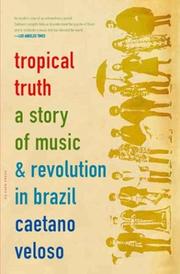
The memoir of the movement by the musician at its centre, including his own imprisonment and exile in London. Discursive and demanding, and the primary source for everything in this stage. Read it first here.
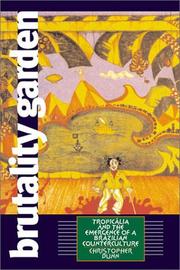
The scholarly account of Tropicália — its relationship to Brazilian modernism, to the counterculture, and to the regime that jailed its leading figures. Read it after Veloso as the analysis of what he lived through.
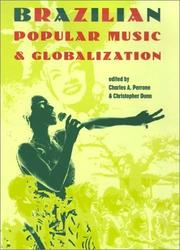
An essay collection on what happened when this music became a global export commodity — world music marketing, the diaspora, and the arguments about authenticity that followed. The natural next question after Dunn.

A memoir of growing up in Rio through the dictatorship years, and the least academic book here. It closes the path by putting the music back where the first stage found it — in ordinary lives in a specific city at a specific moment.
Discussion
Keep reading
Paths that share books, cover the same subject, or open a related topic.