Afrobeat and African Popular Music: The Best Books to Read, in Order
Afrobeat is one genre invented by essentially one man, and it makes no sense read on its own — it is highlife, jazz, Yoruba drumming and Nigerian politics fused under pressure. So this path starts by teaching the listening rather than the history, spends its centre on Fela Kuti and the highlife scene he came out of, then moves outward to the Congolese, Malian, Zimbabwean and South African traditions that are just as large and far less written about in English. Most of the serious writing here is either ethnomusicology or reported biography; the `why` for each book says which, because they demand very different things from a reader.
Learn to Listen First
BeginnerUnderstand what African rhythm is actually doing — polyrhythm, the bell pattern, the relationship between drum and dance — before attaching any names or dates to it.
▸ Study plan for this stage
Pace: Four to five weeks, and this stage is half listening. African Rhythm and African Sensibility is 261 pages of ethnomusicology written as a memoir of Chernoff's decade as a drumming apprentice in Ghana — three weeks, with a recording playing while you read the rhythmic chapters. Music in West Africa i
- The bell pattern as timeline: a fixed asymmetric cycle, usually in twelve pulses, against which everything else is placed. It is not a beat to follow but a reference all the players share.
- Polyrhythm is not complexity for its own sake. Chernoff's point is that the parts are simple and their relationship is the music, so a player's skill is measured in placement rather than in density.
- Why a Western listener hears the wrong downbeat, and why fixing that is the single most useful thing on this whole path. Everything from Fela to mbaqanga depends on hearing where the cycle actually starts.
- Music as social action rather than as repertoire: in Chernoff's account participation, dance and judgement of character are inside the music rather than around it.
- Chernoff is a participant. He apprenticed, performed and was taught by named teachers, and the book is his account of being trained rather than a neutral field report — a strength for the listening and a limit on its generality.
- Stone's short volume supplies the reference frame Chernoff's personal account leaves implicit: instrument families, regional structures, the social functions of performance, and the standard scholarly vocabulary.
- What is a timeline pattern, and why can it not be described as a beat?
- What does Chernoff say a good drummer is doing that a technically fast drummer is not?
- Where does a Western listener typically place the downbeat in West African drumming, and what makes that placement wrong?
- What does Stone's academic framing add that Chernoff's apprenticeship narrative could not have given you?
- In what sense is dance part of the music rather than a response to it, on Chernoff's account?
- Learn to clap the standard twelve-pulse bell pattern from Chernoff's transcription until you can hold it while someone else claps a cross-rhythm against you. Nothing else on this path works properly until you can do this.
- Take one Ewe or Dagomba recording and locate the bell, then deliberately hear the piece from two different starting points. The moment where the whole texture flips is the perceptual shift Chernoff's book exists to produce.
- Read Chernoff's chapters on apprenticeship and note every judgement his teachers make about a player's character rather than technique. That list is his central argument in evidence.
- Use Stone's instrument and region tables to identify what you are hearing on three recordings you already own, by family and by region, before reading any liner notes.
Next up: With the rhythm audible, the music that Fela built out of highlife, jazz and Yoruba drumming stops being a style label and becomes something you can hear the components of.
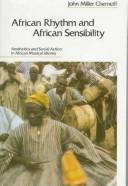
Chernoff spent a decade as a drumming apprentice in Ghana, and this is the rare ethnomusicology book that reads like a memoir while genuinely teaching the theory. It explains why a Western listener hears the wrong downbeat, which is the single most useful thing to fix before hearing anything else on this path.
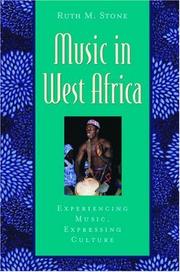
A short Oxford Global Music Series volume — the compact academic overview of the region's musical structures, instruments and social functions. Read it second as the reference frame for Chernoff's more personal account.
Fela Kuti and Afrobeat
IntermediateGet both halves of Fela — the musician who built the genre and the political figure whose commune the Nigerian state repeatedly destroyed — from the two books that disagree about him.
▸ Study plan for this stage
Pace: Five to six weeks. Moore's Fela is a 290-page authorised biography assembled largely from long interviews and presented in Fela's voice — two weeks. Veal's Fela is a 313-page musicological study by a scholar who played in Afrobeat bands; three weeks, read with recordings. Read Moore first and Veal s
- Afrobeat's construction: highlife horn writing, James Brown-derived funk rhythm sections, Yoruba percussion and call-and-response vocals over very long single-groove structures with a late-arriving vocal.
- The form itself is an argument — a twenty-minute track with a five-minute instrumental build refuses radio, and Fela's insistence on it was a commercial and political choice at once.
- Moore's book is the primary source. It is an authorised biography built from interviews, largely unfiltered, and everything written about Fela since works from it or against it.
- Veal is a musicologist and a former Afrobeat sideman, and his book supplies the analysis Moore's has none of: the highlife and jazz sources, the arrangement of the bands, the actual musical mechanics of the genre.
- Veal corrects Moore's narrative in several places, and the disagreement between an authorised account and a scholarly one is the most instructive thing in this stage.
- Fela's politics — Kalakuta as a declared independent republic, the repeated state violence against it, the presidential candidacy — are inseparable from the music and are not a biographical sidebar.
- Both books are catalogued here under the bare display title Fela, by different authors and different presses.
- Break an Afrobeat arrangement into its parts by ear: what is the bass doing, what are the two guitars doing, when do the horns enter, when does Fela?
- Which elements of Afrobeat came from highlife, which from American funk and jazz, and which from Yoruba practice? Use Veal's account.
- Where does Veal contradict Moore, and on what kind of question — chronology, causation, or credit?
- What did Kalakuta claim to be, and how did the Nigerian state respond over the decade?
- How does Moore's method — long interviews, Fela's voice, minimal challenge — shape what the book can and cannot establish?
- Take one long Fela track and time its sections with a stopwatch: instrumental build, first vocal entry, call-and-response, solo. Then read Veal's account of the same structural template and see how closely the timings match his description.
- Find a highlife recording from the 1950s and an early Koola Lobitos track by Fela, and list what carried over and what did not. This is the transition Veal spends his central chapters on.
- Pick three factual claims from Moore's book — a date, a motive, a musical credit — and check each against Veal. Note which ones Veal accepts, which he qualifies and which he rejects.
- Read Moore's account of Kalakuta and then Veal's, and write out what each book thinks the compound was for.
- Listen to one track before and after reading Veal's analysis of it and write down what you now hear that you did not.
Next up: Afrobeat only makes sense as a departure from something, and the something is the West African dance-band culture the next stage documents.
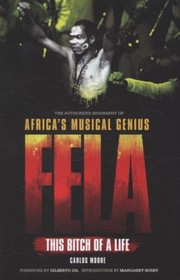
The authorised biography, built from long interviews and largely in Fela's own voice, catalogued under the bare display title Fela. It is unfiltered and frequently indefensible — his views on women are stated plainly and not softened — and it is the primary source everything else works from.

Veal is a musicologist and a former Afrobeat sideman, and this is the analytic counterweight to Moore: the actual musical construction of the genre, the highlife and jazz sources, the arrangement of the bands. Also filed simply as Fela, by a different author and press. Read it after Moore, whose narrative it corrects in several places.
Highlife, the Scene Fela Came Out Of
IntermediateRecover the West African popular music that preceded Afrobeat and outlived it, and see how dance-band culture worked as social institution rather than as repertoire.
▸ Study plan for this stage
Pace: Six to eight weeks. Highlife Saturday Night is a 318-page academic history of Ghanaian nightlife from the 1920s to the 1970s — three weeks. Highlife Time 3 is a 632-page insider chronicle by a musician who played in these bands, expansive and anecdotal rather than argued; four to five weeks, and it
- Highlife as social institution rather than repertoire: Plageman's subject is the venue, the licence, the ticket price, the band's contract and the gender politics of who could be on the dance floor and with whom.
- The dance band and the guitar band are two different traditions with different instrumentation, audiences and class positions, and collapsing them is the commonest error in writing about highlife.
- Colonial and then independence-era politics ran through the music directly — Nkrumah's Ghana used popular music as national culture, and the bands were both beneficiaries and subjects of that.
- Collins is a British-Ghanaian musician who played in these bands and has documented the scene since the 1970s. Highlife Time 3 is a participant's chronicle, and its value is exactly the detail an outsider could not have collected; it is not organised as an argument.
- The concert party — travelling theatre with music, comedy and moral drama — is the form that carried highlife to audiences outside the cities, and it is largely missing from accounts written from records alone.
- Economic collapse, the decline of live venues and the rise of the studio and the church reshaped the Ghanaian scene from the late 1970s; the music did not simply go out of fashion.
- Our catalogue holds Collins's book as Highlife Time 3, the expanded third edition.
- What is the difference between a dance band and a guitar band, in instrumentation and in audience?
- What did a highlife venue in 1950s Accra actually cost to enter, who was there, and who could not be?
- How did the politics of independence use highlife, and what did the musicians get in return?
- What does Collins record that Plageman's archival method could not have reached?
- Which specific features of highlife did Fela keep in Afrobeat, and which did he deliberately break?
- Build a timeline of Ghanaian highlife from Plageman — decade by decade, with the dominant venue type, the dominant band format and the political context. Keep it to one page.
- Use Collins's index of bands and musicians to find three names you have never heard of, then look for their recordings. This is what the book is best for and it does not work if you only read it linearly.
- Read Plageman's chapter on the dance floor's gender politics and then Collins's anecdotes about the same venues. Note where the participant account confirms the archival one and where it complicates it.
- Play a 1950s Ghanaian dance-band highlife track and an early Fela track back to back and write down the horn writing differences specifically — voicing, entry, function.
- Locate the bell pattern in a highlife recording using the skill from stage one. It is there and it is less obvious than in drum ensemble music.
Next up: Nigeria and Ghana are two scenes among many, and the next stage treats four other national traditions of comparable size at their proper weight.

An academic history of Ghanaian highlife nightlife from the 1920s to the 1970s — the venues, the licensing, the gender politics of the dance floor. The best single account of how a popular music scene actually operates in a colonial and then independent African city.

Collins is a British-Ghanaian musician who played in these bands and has been documenting the scene since the 1970s; this is his sprawling insider chronicle of highlife's players and venues. Our catalogue holds it as Highlife Time 3, the expanded third edition.
The Rest of the Continent
IntermediateBreak the habit of treating Nigerian music as African music, by following four other national traditions of comparable size through their best English-language books.
▸ Study plan for this stage
Pace: Twelve to fourteen weeks for four substantial books. Rumba on the River is 436 pages, the only comprehensive English history of Congolese popular music — four weeks. In Griot Time is 262 pages of first-person reportage about Eyre's year studying guitar in Bamako, and reads quickly; two weeks. Lion S
- Congolese rumba and soukous are arguably the most influential popular music the continent has produced, spreading across Africa in a way Afrobeat never did. Stewart's book is reported history covering both Congos, the studios of Kinshasa and Brazzaville, and figures such as Franco and Tabu Ley Roche
- The Cuban round trip: Congolese musicians building a style out of Cuban records that were themselves built out of Central African music, which is the clearest case on this path of why the roots-and-return story is too simple.
- In Griot Time is first-person reportage, not scholarship. Eyre studied guitar with Djelimady Tounkara and lived in the household, and the book's subject is how the Malian griot tradition — hereditary praise singers with obligations to specific families — operates inside a cash music economy.
- Lion Songs is a reported biography of Thomas Mapfumo, whose chimurenga songs supported the Zimbabwean liberation war and who later went into exile from the government he had helped bring to power. It is the sharpest case study here of music as a political instrument and of what happens after the ins
- Mbira music and its transfer to electric guitar is the technical heart of chimurenga, and it is a specific, describable process rather than an influence.
- In Township Tonight! is the standard academic history of black South African urban performance — marabi, jazz, township theatre — with the longest chronological reach of any book on this path.
- Each of these traditions had its own relationship to the state: patronage in Mobutu's Zaire, hereditary obligation in Mali, wartime mobilisation in Zimbabwe, and control and displacement under apartheid.
- What is the sebene, and what does the shift into it do structurally to a Congolese rumba record?
- What is a griot's obligation, and how does Eyre show it surviving inside a commercial music economy?
- How did mbira music transfer onto electric guitar in Mapfumo's bands, and what was lost and gained?
- What was marabi, and what does Coplan say the conditions of the township produced in it?
- Across these four traditions, what did the state want from popular music in each case?
- Which of these four is under-documented in English relative to its influence, and what does that say about the shape of this path's reading list?
- Take one long Franco recording and mark where the sebene begins, then compare that structural moment with the vocal entry point you timed in a Fela track. Two long-form dance structures, two different placements of the release.
- Listen to a Malian guitar recording and try to hear the kora and ngoni patterns Eyre describes being transferred to the instrument. He names specific figures; find them.
- Play an mbira recording and a Mapfumo band recording of related material back to back, and write down which guitar part is playing which mbira line.
- Build a four-column comparison from these books: country, dominant style, relationship to the state, and how the music left the country. One page.
- Pick one artist from Coplan's South African chronology per decade and listen to a recording. The stylistic distance from marabi to 1980s township jazz is the argument his book makes in prose.
Next up: Four national histories give you enough specifics to read the scholarship that argues about how this music is studied, sold and manufactured.
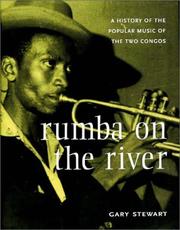
The history of Congolese rumba and soukous across both Congos — Franco, Rochereau, the studios of Kinshasa and Brazzaville. Arguably the most influential popular music the continent has produced, and this is the only comprehensive English account of it.

Eyre's year in Bamako studying guitar with Djelimady Tounkara, and the clearest picture anyone has written of how the Malian griot tradition survives inside a modern music economy. Reported and first-person, not academic.

Eyre again, on Thomas Mapfumo and Zimbabwean chimurenga — a musician whose songs helped end white minority rule and who then went into exile from the government he helped install. The sharpest case study on this path of music as political instrument.
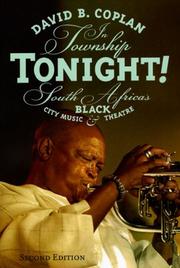
The standard history of black South African urban performance, from marabi through jazz to the theatre of the townships. It runs across the whole apartheid period and gives the longest chronological reach of any book here.
The Scholarship, and the Argument About It
IntermediateLook at how the field studies itself: what happens in a recording studio, what the transatlantic exchange with American jazz actually was, and where the music went after Afrobeat.
▸ Study plan for this stage
Pace: Eight to ten weeks. Africa Speaks, America Answers is an academic monograph tracing four musicians across the Atlantic — three weeks. Sound of Africa! is a 335-page ethnography of a single Johannesburg recording studio and is the most technically detailed book on the path; three weeks, and it assume
- Kelley follows Randy Weston, Guy Warren, Ahmed Abdul-Malik and Sathima Bea Benjamin across the Atlantic and dismantles the tidy story of jazz returning to its roots — the exchange was contested, political and frequently mutual misunderstanding.
- Africanness as a produced sound: Meintjes's ethnography shows a mbaqanga record being assembled in a studio where decisions about reverb, vocal placement and instrumentation are decisions about how African the record will sound to a buyer abroad.
- The studio as a hierarchy: engineer, producer, session musician, and the racial and economic structure of who decides what in a late-apartheid Johannesburg control room.
- World music as a marketing category with its own demands, and the way those demands travel back down into what gets recorded — the closing loop of everything this path has covered.
- Hip Hop Africa is an edited collection, so its chapters are uneven by design: each contributor covers a national scene since the 1990s, and the value is in coverage rather than in a single argument.
- The generational break matters. The traditions in stages two to four are largely a twentieth-century story, and the current scene the last book documents relates to them by sampling, refusal and reinvention rather than by descent.
- Meintjes and Kelley are both writing against the idea that there is an authentic African sound waiting behind the commercial one, and they get there by very different routes.
- What does Kelley say the transatlantic exchange actually consisted of, and which of his four musicians least fits the roots narrative?
- In Sound of Africa!, name three specific studio decisions that make a record sound more African, and say who made them.
- Who holds power in Meintjes's control room, and how is that power exercised in technical rather than explicit terms?
- Reading Hip Hop Africa: which national scenes are best covered and which are thin? What does that unevenness reflect?
- After this stage, what does authenticity mean as a term in this literature — and would you now use it?
- Listen to one mbaqanga record before reading Meintjes and again after, and write down every production choice you can now name. This is the book's stated effect and it is testable.
- Take one of Kelley's four musicians, find a recording from the period he discusses, and check the record against his account of what the musician was trying to do.
- Pick two country chapters from Hip Hop Africa and find a track from each, then trace what in that track comes from the tradition covered in stage four and what does not.
- Write a one-page account of how a single African record reaches a listener abroad — musicians, studio, label, category, retailer — using Meintjes for the studio end and your own knowledge for the rest. The gaps you cannot fill are where this literature still is.
- Return to Chernoff's opening claim about hearing the downbeat and test it on a contemporary track from Hip Hop Africa. Whether it still applies is the fairest single question this path can end on.
Next up: This is the end of the path: you can hear the rhythm, place the genres, weigh a biography against a musicology, and see the studio and the market that shape what reaches you.

Kelley traces four musicians across the Atlantic — Randy Weston, Guy Warren, Ahmed Abdul-Malik, Sathima Bea Benjamin — and dismantles the tidy story of jazz simply returning to its roots. Read it after the national histories, which give it the specifics it argues against.
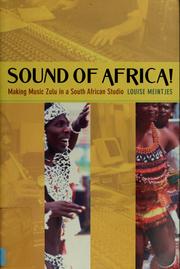
An ethnography of a single Johannesburg recording studio making mbaqanga, and of how the sound of Africanness gets manufactured for export. The most technically detailed book on the list and the one that most changes how you hear a record.

An edited collection on hip hop and youth music across the continent since the 1990s, country by country. The right closing book: it shows what the traditions in the earlier stages turned into, and it is where the current scene actually is.
Discussion
Keep reading
Paths that share books, cover the same subject, or open a related topic.