Start with the scholarship on how the category was assembled, not with the music itself. American folk music is not a genre that was discovered lying in the field; it is a canon that collectors, record companies, archivists and revivalists built between roughly 1910 and 1965, and almost every other book on this list was written by someone who helped build it. Read the participants first and you will absorb their framing without noticing.
That is the single most useful thing to know before starting: this list mixes three kinds of book that are not interchangeable. There is scholarship written at a distance, there is memoir written by people with a stake in the story, and there is one songbook, which is a primary document rather than an argument. Knowing which you are holding changes what you should believe.
The frame
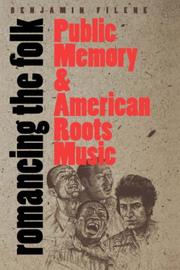
Benjamin Filene's Romancing the folk is academic cultural history and the right opening move. It traces how "authenticity" was constructed as a commercial and political value, how the Lomaxes and their contemporaries chose which performers stood for the tradition, and what that choice did to the performers themselves — Lead Belly's presentation being the case everyone argues about. It is the book that makes the rest legible.
The collectors, in their own words
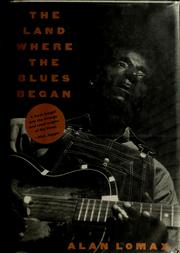
John Lomax's Adventures of a ballad hunter is a 1947 memoir, and it should be read as a primary source about a collector rather than as a reliable account of the people he recorded. Lomax sought singers in Southern prisons on the theory that isolation had preserved older material, and the book carries the racial attitudes of a white Texan of his generation openly. Alan Lomax's The land where the blues began is the son's version, published in 1993 and drawing on decades of Mississippi fieldwork; it is far better written, considerably more sympathetic, and still an interested party's account.
John Szwed's The Man Who Recorded The World is the corrective biography — the outside assessment of what Alan Lomax collected, what he claimed, what he was paid for and what the recordings did to the singers' careers and royalties.
The Guthrie problem, and a songbook
Bound for Glory is Woody Guthrie's own 1943 book, and it is closer to a picaresque novel than to autobiography: the incidents are shaped, compressed and sometimes invented. Read it for the voice. Joe Klein's biography, titled simply Woody Guthrie, is the factual account beside it, including the Huntington's disease that ended his working life.
Hard hitting songs for hard-hit people is the odd item and the most valuable one — a songbook compiled by Alan Lomax with Guthrie's commentary and Pete Seeger's transcriptions, assembled around 1940 and not published until 1967. It is the raw material rather than a book about the raw material.
The revival
Mark Zwonitzer's Will You Miss Me When I'm Gone? is a Carter Family biography and the bridge between the collecting era and the commercial one. Ronald Cohen's Rainbow Quest is the standard scholarly history of the revival from the 1940s to 1970 — dense, well documented, not a page-turner — and his Wasn't That a Time! is a shorter companion of essays and documents.
Then the participants again. Dave Van Ronk's The mayor of Macdougal Street, completed by Elijah Wald after Van Ronk's death, is the funniest and most sceptical book here and the best account of what Greenwich Village actually felt like. David Hajdu's Positively 4th Street is group biography — Dylan, Joan Baez, Mimi and Richard Fariña — and reads like a novel, which some readers hold against it. Elijah Wald's Dylan goes electric! rebuilds the Newport 1965 story from the sources and quietly dismantles several things everyone repeats about it.
Greil Marcus's Invisible Republic closes the list and is criticism rather than history. It is about the Basement Tapes and what Marcus calls the old, weird America, and it was later reissued under that phrase as its title. Readers tend to love it or find it unfalsifiable; both reactions are fair.
Follow the full path in order and you get the construction of the canon, the people inside it, and the argument about what it was for. More music reading sits on Discover.
Follow the full ordered path here: The Best Books on American Folk Music, in Reading Order.