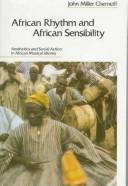
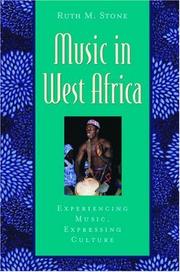
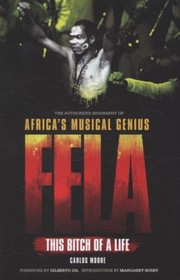
Start with African rhythm and African sensibility by John Miller Chernoff. It is not a history and not a biography — it is an account of the years Chernoff spent apprenticed to Dagbamba drummers in northern Ghana, and it is the book that teaches you what to listen for: why a rhythm is built from parts that are meant to be heard against each other, and why the aesthetic judgement being made is social as much as musical. Everything else on this list makes more sense afterwards. If you want a short textbook framing instead, Music in West Africa by Ruth M. Stone is the Oxford survey volume, built for a first course and written to be used with recordings.
A word on the name. Afrobeat is Fela Kuti's genre — Lagos, roughly 1970 onward, long horn-driven grooves built with Tony Allen on drums. Afrobeats, with the s, is the very different Nigerian and Ghanaian pop of the 2010s and after. No book in this list covers Afrobeats; the serious writing on it is still mostly in magazines and academic journals. If that is what you came for, this path will give you the deep background and not the recent scene.
Fela, twice
Two biographies, and they do different jobs. Fela by Carlos Moore is the authorised one, built from long interviews and written largely in Fela's own voice and those of the women around him. It is vivid, partisan and unfiltered, and it is a primary source more than an assessment. Fela by Michael E. Veal is the scholarly biography — a university press book by an ethnomusicologist, with actual musical analysis of how the style was assembled from highlife, jazz and Yoruba tradition, and with the political history around the Kalakuta raid handled carefully.
You do not need both, but they are not interchangeable. Take Veal if you want to understand the music and the era; take Moore if you want to hear the man.
Country by country
Highlife Saturday night by Nate Plageman is an academic history of highlife in urban Ghana that is really about nightlife, gender and colonial-era leisure — the social world the music grew in. Highlife Time 3 by John Collins is the opposite kind of book: Collins is a musician and long-resident scholar in Ghana, and this is an expanded encyclopedic compendium of bands, players and eras, more reference than argument.
Rumba on the River by Gary Stewart is a narrative history of Congolese popular music across Kinshasa and Brazzaville, and it is the best entry to what is arguably the continent's most influential twentieth-century pop tradition. In griot time by Banning Eyre is a journalist's first-person account of living and studying with the guitarist Djelimady Tounkara in Bamako — the Malian counterpart to the Chernoff book. Lion songs, also by Eyre, is a full biography of Thomas Mapfumo and, through him, of Zimbabwe from liberation to Mugabe's later years; it does not flinch from the political disappointment.
In township tonight! by David B. Coplan is the standard academic history of Black South African urban performance, from mission choirs and marabi through to the present. It is dense but it is the foundation for everything written since.
Studios, jazz and after
Sound of Africa! by Louise Meintjes is an ethnography of a single Johannesburg recording studio, and it is the sharpest book here on how "African sound" gets manufactured as a commercial category. Africa Speaks, America Answers by Robin D. G. Kelley traces the exchange running the other way, through musicians moving between modern jazz and African independence politics. Hip hop Africa, edited by Eric S. Charry, is an academic collection covering hip hop across many countries — uneven, as collections are, but the only broad survey of its subject.
Follow the full reading path in order and the continent stops sounding like one thing.
Follow the full ordered path here: Best Books on Afrobeat and African Popular Music, in Reading Order.
Ready to learn something deeply?
Build a reading path — free