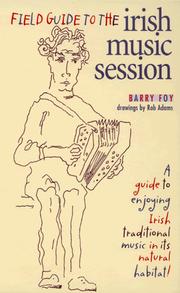
If you are about to walk into a session, read Field Guide to the Irish Music Session by Barry Foy first — it is short, funny, and it will tell you who starts tunes, when to stay quiet and why nobody wants your requests. If you want the best book about this music as an experience, read Last night's fun by Ciaran Carson, a poet's set of essays on tunes, drink, memory and the peculiar economy of a session. If you want an orderly analytic introduction, read Traditional music in Ireland by Tomás Ó Canainn.
The thing to accept early is that this is an aural tradition. The tunes are learned by ear, and the ornamentation, phrasing and rhythmic lift that make a jig sound Irish rather than merely correct are not notatable in any useful way. Books do three other jobs: they give you the history, they explain the social world you are trying to enter, and the great printed collections preserve the repertoire's skeleton. Treat the sheet music as a memory aid for tunes you have already heard.
Getting in the door
Foy's Field Guide to the Irish Music Session is pure practical etiquette, and better company than that description sounds. Last night's fun is not instructional at all, and it is the book most players press on other people. Carson's other title here, Irish traditional music, is his short pocket introduction from the 1980s covering instruments, tune types and forms — the sober companion to his own literary one.
History and reference
Traditional music in Ireland by Ó Canainn, first published in 1978, was the first serious analytic treatment of the music on its own terms: sean-nós singing, ornamentation, the relationship between song and instrumental style. It is still the book people cite. A pocket history of Irish traditional music by Gearóid Ó hAllmhuráin is the concise narrative history from the earliest sources through the collectors to the twentieth-century revival, and it is the fastest way to get the chronology straight.
The companion to Irish traditional music edited by Fintan Vallely is the encyclopedia — hundreds of entries by many contributors on players, instruments, regions, terms, festivals and disputes. Own it, consult it, do not attempt to read it. Bringing it all back home by Nuala O'Connor, written around the television series of the same name, follows the traffic between Irish music and America, and is good on emigration, the recording industry and how much of the modern tradition came back across the Atlantic.
Players, places and singers
Blooming meadows by Fintan Vallely and Charlie Piggott is a book of portraits — photographs and interviews with traditional players, letting them describe their own lives and repertoire. The Northern Fiddler by Allen Feldman and Eamonn O'Doherty came out of 1970s fieldwork among fiddlers in Donegal and Tyrone, with transcriptions, biographies and photographs; it is simultaneously an ethnography and a document of a moment that has since passed.
On a rock in the middle of the ocean by Lillis Ó Laoire is the best thing on this list about singing — a study of song, singers and community on Tory Island, and the place to go if the sean-nós tradition is what drew you in. Sean O Riada by Tomás Ó Canainn is a biography of the composer who assembled Ceoltóirí Chualann, out of which the Chieftains came, and who changed how this music was arranged and presented. He remains a divisive figure: some read him as the man who saved the tradition's public standing, others as an art-music composer imposing an arranger's frame on something that had done without one.
The collections
O'Neill's music of Ireland, eighteen hundred and fifty melodies is the 1903 collection assembled by Francis O'Neill, chief of police in Chicago, from emigrant musicians in that city. It is the single most consequential printed source for the repertoire, and a substantial part of what survives did so because he wrote it down. Irish Minstrels and Musicians is his 1913 companion volume of biographies and lore about the players themselves.
Focus by Sean Williams is a university textbook from Routledge's world music series, with listening exercises and a structured course shape — the most systematic teaching text here, and the one to use if you want to study rather than browse.
Two absences worth naming in plain text, since this list looks more complete than it is: Breandán Breathnach's Folk Music and Dances of Ireland and his Ceol Rince na hÉireann collections, and O'Neill's own Dance Music of Ireland — the "1001" — are central to the subject and are not in our catalogue.
Follow the full path in order, and go to a session in the meantime.
Follow the full ordered path here: Irish Traditional Music: The Best Books to Read First.