American Folk Music: The Best Books to Read, in Order
The literature on American folk music comes in three quite different forms, and mixing them up is the usual way to get confused: academic history that argues about what "folk" ever meant, first-person memoir by the people who were there, and songbooks that are primary sources rather than commentary. This path keeps them labelled. It starts with the scholarship on how the tradition was collected — and partly invented — by the men who went looking for it, then moves through the singers' own accounts, the postwar revival, and the moment in 1965 when the revival broke apart.
Who Collected It, and What They Changed
BeginnerUnderstand that "American folk music" is a category assembled by collectors with agendas, and learn to read every later claim about authenticity with that in mind.
▸ Study plan for this stage
Pace: Six to eight weeks for about 1,400 pages across four books of three different kinds, and keeping the kinds straight is the whole job of this stage. Benjamin Filene's Romancing the folk is academic history — 325 pages of argument with apparatus, and the slowest reading here at two to three weeks. Joh
- Authenticity as a constructed category: 'folk' was assembled by collectors, record companies and revivalists, not found intact
- Filene's central mechanism — the collector selects, edits and presents, and the selection becomes the tradition
- The Lomaxes' preference for the isolated, unrecorded, non-commercial singer, and what that preference systematically excluded
- Lead Belly's presentation to Northern audiences, including the striped prison clothes, as a case study in constructed authenticity
- Memoir versus scholarship: John Lomax's self-image on the page and the process Filene describes do not fully match, and the mismatch is the stage's central exercise
- Alan Lomax as advocate — he had a political commitment to the music he recorded and was not attempting neutrality
- The independent biography as a control: Szwed can say things about Alan Lomax's career that Lomax's own books cannot
- Field recording as an act with consequences for the people recorded, including questions of consent, credit and royalties
- What is Filene's argument in one sentence, and what evidence does he give that the category of folk music was assembled rather than discovered?
- Where does John Lomax's account of his own collecting differ from Filene's account of the same activity — is the difference emphasis, omission, or contradiction?
- What did the Lomaxes select for, and which musicians and repertoires does that selection leave out?
- The Land Where the Blues Began is written by a participant. Name three claims in it you would want checked before repeating.
- How does Szwed's biography change your reading of Alan Lomax's own book, and does it defend or complicate him?
- Read Filene's chapter on Lead Belly, then read John Lomax's account of the same period in Adventures of a Ballad Hunter, then write a one-page comparison of the two versions. This is the single most useful thing on this path and everything later depends on having done it.
- Listen to the Library of Congress recordings of Lead Belly while reading the collecting account, and note what the books tell you about the recording session that the audio alone would not — who chose the song, who was in the room, what was cut.
- Take five songs mentioned in The Land Where the Blues Began, find a recording of each, and note where Alan Lomax's prose account and the recording diverge in detail.
- Build a two-column sheet you will keep for the whole path: book, and what kind of source it is — scholarship, memoir, participant account, songbook, criticism. Fill it in as you go. The discipline of labelling is what this subject's literature most requires.
Next up: You now know to ask who collected a song and why before believing anything about it, which is exactly the equipment needed to read the singers' own accounts of themselves.
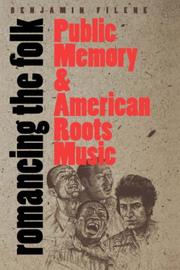
Scholarship, and the single most useful book on the subject: Filene traces how collectors, record companies and revivalists constructed an idea of the authentic American folk singer, from Lead Belly to Dylan. Read it first because every other book here is either evidence for or a reaction against its argument.

Memoir, from 1947, by the man who did much of the collecting Filene is analysing. Read it second and read it against Filene: the self-image on the page and the process described in the previous book do not entirely match, which is the point.
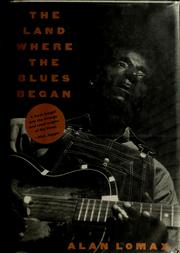
Part memoir, part field report by John Lomax's son, on the Mississippi Delta recordings. It is vivid and it is also a participant's account, so treat it as a source rather than a survey.

The independent biography that lets you check the previous book against an outside view of the same career. Read it last in this stage, once you have Lomax's own version in your head.
The Singers and the Songbook
BeginnerMeet the Popular Front generation on its own terms and see what a folk songbook actually looked like as a working document.
▸ Study plan for this stage
Pace: Six to eight weeks for about 1,630 pages, mixing memoir, primary document and biography. Woody Guthrie's Bound for Glory is 331 pages and reads like a novel, which is a warning as much as a recommendation — two weeks. Hard hitting songs for hard-hit people is not a history at all but a songbook, wit
- Bound for Glory as literature and self-invention: Guthrie was a working writer constructing a persona, and the book is the founding document of the American folk singer as a figure
- The distinction between memoir and reportage, and the specific episodes Klein establishes Guthrie invented or moved
- A songbook as a primary source — Hard Hitting Songs shows the actual repertoire that the histories only describe
- The Popular Front context: these songs were selected and published with a political purpose, stated openly at the time
- The commercial hillbilly record as the other origin of the same repertoire, which the collectors' story tends to leave out
- The 1927 Bristol sessions and A. P. Carter's collecting, which was the same activity as the Lomaxes' but done for a record label
- Copyright and credit: A. P. Carter's practice of registering traditional songs under his own name, and what that means for who owns a folk song
- Biography as correction, and the limits of that — Klein establishes what Guthrie invented without disposing of why the invention mattered
- Which specific episodes in Bound for Glory does Klein establish as invented or rearranged, and does the memoir lose value once you know?
- What does Hard Hitting Songs contain that no narrative history conveys, and what does its selection tell you about Lomax's and Guthrie's politics?
- How does the Carter Family's route to the same songs differ from the Lomaxes', and which route better fits Filene's argument?
- What did A. P. Carter do with the copyrights of the songs he collected, and how does that complicate the idea of a traditional song?
- Guthrie and the Carters were contemporaries working the same material. Why does one of them become the revival's patron saint and the other its raw material?
- Pick three songs from Hard Hitting Songs for Hard-Hit People, find recordings of each, and read Guthrie's commentary against what you hear. The book is a working document and using it as one is the intended experience.
- Read one Bound for Glory episode, then Klein's account of the same event, then write down which details survive intact. Do this for at least three episodes; the pattern of what Guthrie changed is more revealing than any single case.
- Trace one song from the Carter Family repertoire back through the Bristol sessions to whatever earlier source the Carter book identifies, and note who is credited at each stage.
- Add all four books to the source-type sheet from stage one. Two of these are primary and two secondary; being able to say which without looking is the check that the labelling habit has taken.
Next up: With the Popular Front generation and its repertoire in hand, you can follow the same songs into the postwar revival that turned them into a movement.
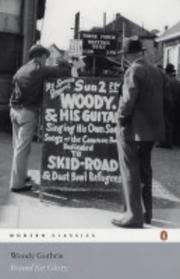
Guthrie's own memoir of riding freights through the Dust Bowl — vivid, heavily mythologised, and the founding text of the American folk-singer persona. Read it as literature and autobiography, not as reportage.
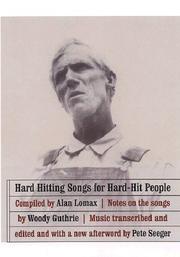
A songbook, not a history: Guthrie's commentary and Alan Lomax's selection of Depression-era songs, with a Steinbeck preface. Read it here because it shows you the actual repertoire the previous book only describes.
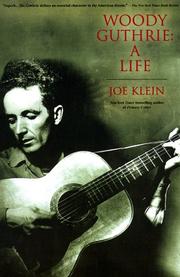
The standard biography, and the corrective to Bound for Glory: it establishes what Guthrie invented about himself and what he did not. Best read immediately after the memoir while the myth is still fresh.
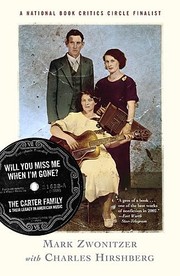
The Carter Family, whose 1927 Bristol recordings gave the revival much of its material. Read it here to see the commercial hillbilly-record side of the tradition that the collectors' story tends to leave out.
The Revival
IntermediateFollow the folk revival from the Popular Front through the hootenanny boom to Greenwich Village, with both the scholarly and the eyewitness account of the same events.
▸ Study plan for this stage
Pace: Five to six weeks for about 870 pages. Ronald Cohen's Rainbow Quest is the standard scholarly narrative of the revival from 1940 to 1970 — 384 pages, dense with names, labels and festivals, and worth reading first in this stage to get the chronology fixed before memoirs scramble it; two to three wee
- The revival's political inheritance from the Popular Front, and the cost of that inheritance during the blacklist
- Institutions as the actual story: Folkways and Vanguard, Sing Out! magazine, the Newport Folk Festival, the hootenanny circuit
- The commercial boom of the early 1960s — the Kingston Trio and its imitators — and the revival's discomfort with its own popularity
- Greenwich Village as a working economy of clubs, basket houses and rents, which is Van Ronk's subject and not Cohen's
- Authenticity as an internal weapon: revivalists policing one another over instrumentation, repertoire and origin
- The edited collection as a form — Wasn't That a Time! is the same events told by people who disagree, and the disagreements are the content
- A posthumously completed memoir: Wald assembled Van Ronk's book from tapes, and the voice is Van Ronk's while the shaping is not entirely
- The rediscovery of surviving prewar musicians in the early 1960s, and what the revival did with them
- What happened to the Weavers, and what does the blacklist episode show about the revival's relationship to the American left?
- Where do contributors in Wasn't That a Time! flatly contradict one another, and how does Cohen handle those contradictions in Rainbow Quest?
- What is Van Ronk's account of how a Village musician actually made a living, and what does that add to the institutional history?
- Which mythology about the Village does Van Ronk most want to demolish, and is he persuasive or merely funny?
- How were rediscovered prewar musicians presented to revival audiences, and does Filene's argument from stage one apply to that presentation?
- Build a one-page timeline from Rainbow Quest: 1940 to 1970, with the labels, festivals, magazines and legal episodes marked. Keep it open while reading the two memoirs — the whole difficulty of this literature is that eyewitnesses do not narrate chronologically.
- Pick one event covered in both Rainbow Quest and Wasn't That a Time! and write down every point of disagreement between the accounts. Then decide, in writing, which you believe and on what grounds.
- Read Van Ronk's account of any musician who also appears in Cohen, and mark where his judgement is evidence and where it is a grudge. He is explicit enough that the distinction is usually possible.
- Listen to one Van Ronk recording and one Kingston Trio recording of the same or a similar traditional song. The revival's internal argument about authenticity is audible in about four minutes, and having heard it makes the next stage's fight comprehensible.
Next up: You have the revival at its height and its own quarrel about authenticity already running, which is what breaks open in 1965.
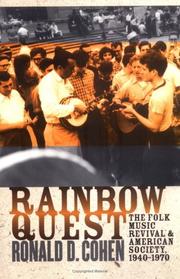
Scholarship, and the standard narrative history of the revival from 1940 to 1970 — the politics, the labels, the festivals and the blacklist. Read it first in this stage to get the chronology straight before the memoirs scramble it.

An edited collection of firsthand accounts from the same period, by the author of the previous book. It is the raw material behind Rainbow Quest, so read it second and enjoy the disagreements between contributors.
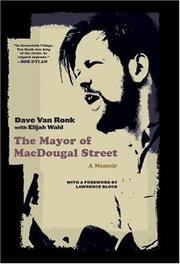
Memoir, finished by Elijah Wald after Van Ronk's death, and the funniest and least sentimental book on this list. Van Ronk was in the room for the Village scene, disliked most of the mythology about it, and says so.
1965 and After
IntermediateUnderstand why the revival fractured, and what the argument about authenticity turned into once it stopped being about folk music at all.
▸ Study plan for this stage
Pace: Five to six weeks for around 750 pages across three books that are history, reconstruction and criticism respectively. David Hajdu's group biography of Dylan, Joan Baez, Mimi Baez and Richard Fariña comes first and sets the personal stakes; two weeks. A catalogue note: Open Library files it under a
- The revival as a social world rather than a movement — Hajdu's method is to treat four intertwined lives as the unit of analysis
- Newport 1965 as the moment the revival's idea of authenticity collapsed, and the difference between what happened and what is remembered
- Wald's reconstruction method: contemporary reports, recordings and interviews used to test a legend that had hardened into fact
- What the booing at Newport was actually about, on Wald's account, as against the standard story
- The Basement Tapes and Marcus's argument about an older, stranger America audible underneath the 1960s
- Criticism as a mode: Marcus is not establishing what happened, he is arguing what it means, and reading him requires a different posture
- Chronicles and the persistence of self-invention — the founding move of Bound for Glory reappearing forty years later
- The end of authenticity as a usable criterion, and what the argument turned into once it stopped being about folk music
- What does Hajdu's four-way structure show that a single biography of Dylan could not?
- On Wald's reconstruction, what was the audience at Newport 1965 actually reacting to, and how does that differ from the received account?
- Which pieces of evidence does Wald use to test the legend, and are they sufficient?
- What is Marcus claiming about the Basement Tapes, and is it a historical claim at all?
- Return to Filene from stage one. Does the 1965 break confirm his argument that authenticity was constructed, or does it show something he did not anticipate?
- Listen to the Newport 1965 recording in full before reading Wald, write down what you hear, then read the book and compare. The gap between your impression and the reconstructed account is the exercise.
- Read Marcus with the Basement Tapes playing. His criticism is written against specific recordings and it is close to unreadable without them; this is not an optional accompaniment.
- Take one incident that appears in both Hajdu and Wald and set the two accounts side by side. One is writing a social world and one is reconstructing an event; note how the same facts get used differently.
- Finish the source-type sheet you began in stage one — all fourteen books, each labelled scholarship, memoir, participant account, songbook, biography or criticism. Then write one paragraph on which category you found hardest to read sceptically. That answer is the durable thing this path teaches.
Next up: This closes the path: you have the collectors, the singers, the repertoire itself, the revival and the argument it broke on, and a working habit of asking what kind of source each book is before believing it.
A four-way group biography of Dylan, Joan Baez, Mimi Baez and Richard Fariña that treats the revival as a social world rather than a movement. Read it first here — it sets the personal stakes for the break that follows. Open Library files it under a mangled display title, but it is Hajdu's 2001 book.

The Newport 1965 set, reconstructed carefully and stripped of legend, with the whole preceding decade as context. The best single account of the moment the revival's idea of authenticity collapsed.
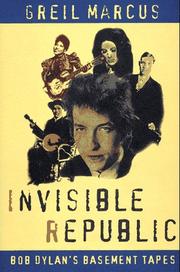
Criticism rather than history, on the Basement Tapes and the older, stranger America they draw on — the most demanding book here and the right one to end on. Note that it was reissued as The Old, Weird America, which is the same book under a new title, so you only need one.
Discussion
Keep reading
Paths that share books, cover the same subject, or open a related topic.