Best Books on Borderline Personality Disorder
This curriculum builds a deep, well-rounded understanding of Borderline Personality Disorder across four progressive stages — starting with the emotional and diagnostic core, moving through evidence-based treatments (especially DBT), then into the experience of loving someone with BPD, and finally into recovery and lived-experience narratives. Because the learner starts at an intermediate level, the path skips introductory pop-psychology and goes straight to the most respected, canonical texts in each area.
Understanding the Diagnosis
IntermediateGain a clinically grounded yet accessible understanding of what BPD is, how it is diagnosed, and what drives the emotional dysregulation at its core.
▸ Study plan for this stage
Pace: 4–5 weeks, ~25–30 pages/day. Start with "I Hate You - Don't Leave Me" (approximately 350 pages over 2 weeks), then move to "Borderline Personality Disorder Demystified" (approximately 250 pages over 2–3 weeks). Allow 3–4 days at the end for review and integration.
- The core diagnostic criteria of BPD and how they manifest across relationships, identity, and emotional regulation
- The concept of 'abandonment anxiety' and 'engulfment fear' as the central emotional drivers in BPD (Kreisman's framework)
- Emotional dysregulation as the neurobiological and psychological foundation of BPD symptoms
- The distinction between BPD and other personality disorders, particularly Narcissistic and Histrionic PD
- How splitting (seeing people/situations as all-good or all-bad) operates as a defense mechanism in BPD
- The role of early attachment trauma and invalidating environments in BPD development (Friedel's perspective)
- Impulsivity and self-harm as emotion regulation strategies rather than purely self-destructive acts
- The difference between state-dependent symptoms and trait-level personality patterns in BPD
- What are the nine diagnostic criteria for BPD, and how do Kreisman and Friedel explain the psychological mechanisms behind each?
- How do abandonment anxiety and engulfment fear create the characteristic relationship instability in BPD?
- What is emotional dysregulation, and why is it considered the core feature of BPD rather than a secondary symptom?
- How does splitting function as a coping mechanism, and what are its consequences for relationships and self-perception?
- What developmental factors (attachment, invalidation, trauma) contribute to BPD according to Friedel, and how do these differ from other personality disorders?
- How can impulsive and self-harming behaviors be understood as attempts to regulate emotion rather than purely self-destructive acts?
- Create a detailed comparison chart mapping the nine DSM-5 BPD criteria to specific passages in both books, noting how each author explains the underlying mechanism
- Write a case study (fictional or based on a composite) that illustrates the abandonment-engulfment dynamic; identify which diagnostic criteria are present and trace them back to emotional dysregulation
- Develop a 'splitting diagram' showing how a person with BPD might perceive the same person or situation as all-good and then all-bad; explain the emotional triggers that shift perception
- Record a 5–10 minute voice memo explaining emotional dysregulation in BPD to a friend unfamiliar with the condition, using examples from the books
- Create a timeline of early developmental experiences (attachment, invalidation) that might lead to BPD, then map how these experiences connect to adult symptoms described in Friedel's work
- Design a comparison table distinguishing BPD from Narcissistic and Histrionic Personality Disorders using diagnostic criteria and case examples from both books
Next up: This stage establishes the diagnostic and neurobiological foundation of BPD, preparing you to move into the next stage—likely focused on treatment approaches, recovery pathways, and practical strategies for managing symptoms—by giving you a clear, clinically grounded understanding of what needs to be treated and why.

The definitive lay-reader introduction to BPD's core paradox of push-pull attachment; establishes the vocabulary (splitting, dysregulation, identity disturbance) used throughout every subsequent book on this list.
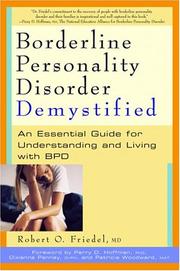
Written by a psychiatrist, this book explains the neurobiological and genetic underpinnings of BPD in clear language, giving the learner a scientific framework to complement the emotional portrait in the first book.
Evidence-Based Treatment: DBT and Beyond
IntermediateUnderstand Dialectical Behavior Therapy (DBT) — the gold-standard treatment for BPD — and other evidence-based approaches, both from a clinical and a self-help perspective.
▸ Study plan for this stage
Pace: 8–10 weeks, ~40–50 pages/day, with 1–2 days per week for workbook exercises and reflection
- The biosocial theory of BPD: how biological vulnerability and invalidating environments interact to produce emotional dysregulation
- The four core modules of DBT: mindfulness, distress tolerance, emotion regulation, and interpersonal effectiveness
- Dialectics and validation as foundational DBT principles—balancing acceptance and change
- Individual therapy, skills training, phone coaching, and team consultation as the four modes of DBT delivery
- How DBT targets suicidal and self-harm behaviors through a clear hierarchy of treatment targets
- Practical skills for emotion regulation, distress tolerance, and interpersonal effectiveness applicable to daily life
- The role of therapist stance and commitment in DBT—why the therapeutic relationship is central to treatment
- Evidence base and outcomes: what research shows about DBT's effectiveness and when other approaches may be indicated
- How does the biosocial theory explain the development of BPD, and what role do invalidating environments play?
- What are the four core skill modules of DBT, and what specific problems does each module address?
- How do dialectics and validation work together in DBT, and why is this balance critical for treatment?
- What are the four modes of DBT delivery, and how do they work together to support the client?
- How does DBT prioritize treatment targets, and why is the hierarchy important for managing self-harm and suicidality?
- What specific distress tolerance and emotion regulation skills can you apply to your own emotional challenges?
- What does research show about DBT's effectiveness, and for which presentations is it most strongly indicated?
- How would you adapt or combine DBT with other evidence-based approaches for a client who doesn't respond to standard DBT?
- Complete the full DBT skills workbook (McKay) sequentially, practicing each skill module over 2–3 weeks; journal your observations about which skills resonate most and why
- Select one emotion regulation skill (e.g., opposite action, ABC PLEASE) and practice it daily for one week; track your emotional state before and after to measure impact
- Practice a distress tolerance skill (e.g., TIPP, distraction, self-soothing) during a moment of mild-to-moderate distress; document what worked and what didn't
- Map out a personal invalidating environment or relationship pattern from your own life using the biosocial theory framework; identify where biological vulnerability and environmental factors interact
- Role-play or write out an interpersonal effectiveness scenario (DEAR MAN, GIVE, FAST) relevant to your own life; compare your natural response to the DBT-informed approach
- Create a personal distress tolerance plan (a written crisis card) with 3–5 skills you'll use when in acute distress; test it during a low-stakes moment
- Read Linehan's theoretical chapters and create a one-page summary of the biosocial model in your own words; share it with a peer or therapist for feedback
- Compare and contrast DBT with another evidence-based approach (e.g., mentalization-based therapy, schema therapy) mentioned in Mondimore; write a brief reflection on when each might be most useful
Next up: This stage equips you with a deep understanding of the most rigorously tested treatment for BPD and a toolkit of practical skills; the next stage will likely explore how to integrate DBT with other modalities, navigate treatment in real-world settings, and address comorbidities and special populations.

The foundational clinical text by DBT's creator; reading this gives the learner an authoritative understanding of why DBT works and what it actually consists of, forming the intellectual backbone for everything else in this stage.
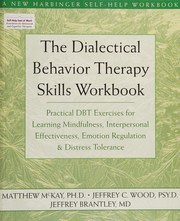
Translates Linehan's clinical model into practical, learnable skills (mindfulness, distress tolerance, emotion regulation, interpersonal effectiveness); reading it after Linehan's theory makes the exercises far more meaningful.

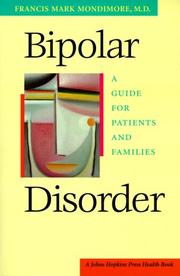
Surveys the full landscape of evidence-based treatments beyond DBT — including MBT, schema therapy, and medication — giving the learner a complete picture of the treatment ecosystem.
Loving Someone with BPD
IntermediateDevelop empathy, communication strategies, and healthy boundaries when in a relationship — romantic, familial, or professional — with someone who has BPD.
▸ Study plan for this stage
Pace: 4–5 weeks, ~25–30 pages/day (alternating between both books to reinforce complementary perspectives)
- The cycle of eggshell-walking: how fear-based accommodation enables rather than helps someone with BPD
- Validation vs. agreement: how to validate emotions without endorsing harmful behaviors
- Dialectics in relationships: balancing acceptance and change, compassion and boundaries
- Recognizing splitting, idealization, and devaluation as symptoms, not personal rejection
- The role of emotional regulation in your own responses when triggered by BPD behaviors
- Setting and maintaining healthy boundaries without guilt or abandonment fears
- Communication techniques that reduce conflict escalation and promote genuine connection
- Understanding the difference between supporting someone with BPD and taking responsibility for their recovery
- What is 'eggshell-walking' and how does it paradoxically harm both you and the person with BPD?
- How can you validate someone's emotions while still maintaining your own boundaries and refusing to accept mistreatment?
- What are splitting, idealization, and devaluation, and how do you avoid personalizing these experiences?
- What are three specific communication strategies from Manning that reduce conflict escalation in moments of high emotion?
- How do you distinguish between supporting someone with BPD and enabling their avoidance of personal responsibility?
- What role does your own emotional regulation play in managing relationships with someone who has BPD?
- Identify one area where you currently 'walk on eggshells' in your relationship; write down the fear driving it and one boundary you could set instead
- Practice the DEAR MAN or GIVE skills (from Manning) in a low-stakes conversation; record what you noticed about the other person's response
- Create a personal emotional regulation plan for when you feel triggered; include 3–5 grounding techniques you'll use before responding
- Role-play a difficult conversation with a trusted friend or therapist, focusing on validating emotion while refusing a specific unreasonable request
- Write a letter (not to send) to the person with BPD expressing your needs and boundaries; notice what guilt or fear arises and examine it
- Document one instance of splitting or idealization you witnessed; afterward, write down what the person's underlying emotion likely was beneath the behavior
Next up: This stage equips you with the relational skills and emotional resilience to show up authentically in relationships with someone who has BPD; the next stage will deepen your understanding of BPD's roots—trauma, neurobiology, and treatment options—so you can move from managing symptoms to supporting genuine healing.

The most widely read guide for family members and partners; introduces the SET (Support-Empathy-Truth) communication framework and is best read after understanding the diagnosis so the strategies make clinical sense.

Written by a DBT-trained therapist, this book applies DBT principles specifically to the loved-one's perspective, bridging the treatment knowledge from Stage 2 directly into relationship skills.
Recovery and Lived Experience
ExpertIntegrate everything learned through first-person recovery narratives and a clinician's long-term outcome research, internalizing what genuine recovery from BPD looks like.
▸ Study plan for this stage
Pace: 4–5 weeks, ~40–50 pages/day. Week 1–2: "Get Me Out of Here" (approximately 280 pages); Week 3–4: "Beyond Borderline" (approximately 200 pages); Week 5: Review, integration, and reflection exercises.
- The subjective experience of BPD from inside: dissociation, emotional dysregulation, identity disturbance, and self-harm as described in Reiland's first-person narrative
- The role of therapeutic relationships and specific turning points in recovery (Reiland's journey with her therapist and the long-term commitment required)
- Gunderson's evidence-based framework for understanding BPD outcomes: what constitutes genuine recovery versus symptom management
- The distinction between remission, recovery, and resilience in BPD: how symptoms may improve while identity integration and relational capacity continue to develop
- Longitudinal patterns in BPD: how recovery unfolds over years and decades, not weeks or months (Gunderson's research perspective)
- The integration of vulnerability and strength: how Reiland's lived experience demonstrates that recovery includes accepting one's sensitivity while building coping capacity
- The role of meaning-making and narrative coherence in recovery: how Reiland constructs a coherent identity after fragmentation
- Systemic and relational factors in recovery: family dynamics, professional support, and the importance of sustained therapeutic alliance
- How does Reiland's description of her internal experience (dissociation, emotional pain, identity confusion) illustrate the diagnostic criteria for BPD, and what does her recovery process reveal about the subjective reality of living with the disorder?
- What were the critical turning points in Reiland's recovery, and what role did her therapeutic relationship play in each one? How does this align with or challenge Gunderson's research on treatment effectiveness?
- According to Gunderson's research, what are the key differences between remission, recovery, and resilience in BPD, and how do these distinctions appear in Reiland's narrative?
- How does the timeline of Reiland's recovery (spanning years) support Gunderson's evidence on long-term outcomes, and what does this suggest about realistic expectations for people with BPD?
- What evidence does Reiland provide that recovery from BPD is possible, and what specific capacities (emotional, relational, identity-based) did she develop that Gunderson's research identifies as markers of genuine recovery?
- How do Reiland's ongoing vulnerabilities and struggles after recovery demonstrate that BPD recovery is not about 'cure' but about transformation, as Gunderson's framework suggests?
- Create a detailed timeline of Reiland's recovery journey, marking major symptoms, crises, therapeutic breakthroughs, and periods of stability. Annotate each with Gunderson's outcome categories (remission, recovery, resilience) to see how these frameworks map onto her lived experience.
- Write a comparative analysis: identify 3–4 specific moments in Reiland's narrative where she describes dissociation, emotional dysregulation, or identity disturbance, then explain how Gunderson's research would interpret these moments and what they suggest about her trajectory.
- Conduct a 'turning points' interview or reflection: identify the 5 most critical moments in Reiland's recovery. For each, write: (a) what happened, (b) what internal shift occurred, (c) what external support was present, and (d) how this moment changed her capacity for relationships or self-understanding.
- Create a 'recovery dimensions' chart: using both books, map out the different areas of recovery (emotional regulation, identity coherence, relational capacity, self-harm reduction, meaning-making). Rate Reiland's progress in each dimension at different stages of her journey, and note what Gunderson's research says about which dimensions predict long-term stability.
- Write a letter from Gunderson to Reiland (or vice versa): have the researcher respond to her narrative with insights from his outcome data, or have Reiland respond to his research with her lived experience. This forces integration of both perspectives.
- Develop a 'recovery readiness' framework: based on both books, identify the personal, relational, and systemic factors that enabled Reiland's recovery. Then reflect on how these factors align with or diverge from what Gunderson identifies as predictors of positive outcomes in his research.
Next up: This stage grounds abstract clinical knowledge in the messy, nonlinear reality of lived recovery, preparing you to engage with implementation—whether that means understanding how to support others in recovery, designing or evaluating treatment approaches, or contextualizing BPD within broader conversations about mental health, resilience, and human transformation.

One of the most detailed and unflinching memoirs of BPD and recovery ever written; after three stages of clinical and relational knowledge, the reader can now fully contextualize every symptom and turning point described.

Edited by one of the world's foremost BPD researchers, this collection of first-person recovery essays paired with clinical commentary is the ideal capstone — weaving together lived experience, long-term outcome data, and hope.
Discussion
Keep reading
Paths that share books, cover the same subject, or open a related topic.