Best Books on Panic Attacks, in Reading Order
This curriculum moves from compassionate self-understanding through evidence-based treatment techniques and into advanced clinical and pharmacological knowledge, so each stage builds directly on the last. Starting with accessible psychoeducation, the path progresses through CBT and interoceptive exposure workbooks, then into medication and neuroscience, and finally into relapse prevention and full life reclamation — giving the learner both the "why" and the "how" at every step.
Foundations: Understanding the Panic Cycle
BeginnerUnderstand what panic disorder is, why the body produces panic attacks, and how the fear-of-fear cycle maintains the disorder — building the vocabulary needed for all later stages.
▸ Study plan for this stage
Pace: 2–3 weeks, ~20–25 pages/day, focusing on Part 1 and foundational chapters (Chapters 1–5 of "The Anxiety and Phobia Workbook")
- The physiological basis of panic: how the fight-flight-freeze response is triggered and what happens in the body during a panic attack
- The panic cycle: how initial panic triggers fear of panic, which then triggers more panic (the fear-of-fear loop)
- The role of avoidance and safety behaviors in maintaining panic disorder over time
- Distinguishing panic disorder from other anxiety disorders and medical conditions
- The concept of interoceptive conditioning: how the body learns to fear its own sensations
- Baseline anxiety, triggers, and the threshold model of panic attacks
- The three-component model of anxiety: physical sensations, thoughts, and behaviors
- What is the fight-flight-freeze response, and how does it manifest physically during a panic attack?
- How does the fear-of-fear cycle perpetuate panic disorder, and why is this cycle central to understanding the disorder?
- What is interoceptive conditioning, and how does it cause the body to misinterpret normal sensations as danger signals?
- How do avoidance and safety behaviors (like avoiding certain places or checking your heart rate) maintain panic disorder?
- What is the difference between panic attacks and panic disorder, and what role does anticipatory anxiety play?
- How can understanding the three-component model (physical, cognitive, behavioral) help explain why panic feels so overwhelming?
- Track your own anxiety baseline for 3–5 days: note your resting heart rate, breathing, and general tension level at different times to establish what 'normal' feels like for your body
- Create a personal panic cycle diagram: map out a recent panic attack or anxiety episode using the fear-of-fear loop model, identifying the initial trigger, physical sensations, thoughts, and behaviors that followed
- List your current avoidance and safety behaviors: write down places you avoid, activities you've stopped doing, or things you do to 'prevent' panic (e.g., carrying water, staying near exits), then note how each one might reinforce the disorder
- Practice body awareness meditation: spend 10 minutes daily noticing physical sensations without judgment, using the workbook's guidance to build tolerance for normal bodily sensations
- Identify your personal panic triggers and warning signs: create a detailed list of situations, thoughts, or sensations that precede your panic, then categorize them as external triggers or internal (interoceptive) cues
- Write a narrative of a recent panic attack using the three-component model: describe what you felt physically, what thoughts went through your mind, and what actions you took—then analyze how each component fed the others
Next up: By mapping the panic cycle and understanding how your body's alarm system works, you'll be ready to learn concrete cognitive and behavioral techniques in the next stage to interrupt this cycle and retrain your nervous system's threat detection.

A comprehensive yet beginner-friendly reference that maps out the full anxiety landscape, introduces coping skills, and provides the shared vocabulary (triggers, avoidance, safety behaviors) that all later CBT books assume.
Core Treatment: CBT and Interoceptive Exposure
BeginnerLearn and actively practice the gold-standard Cognitive Behavioral Therapy techniques for panic disorder, including cognitive restructuring, breathing retraining, and interoceptive exposure exercises.
▸ Study plan for this stage
Pace: 4–5 weeks, ~20–25 pages/day. Week 1–2: "Mastery of Your Anxiety and Panic" (foundational CBT framework and cognitive restructuring). Week 3: Transition to "Panic Attacks Workbook" (applied exercises). Week 4–5: Cycle through both books, deepening practice with interoceptive exposure and real-world a
- The cognitive model of panic: how thoughts, physical sensations, and behaviors create and maintain panic cycles
- Cognitive restructuring: identifying and challenging catastrophic thoughts that fuel panic attacks
- Breathing retraining and hyperventilation: understanding why slow, controlled breathing reduces panic symptoms
- Interoceptive exposure: deliberately triggering bodily sensations in a safe, controlled way to build tolerance and reduce fear of internal cues
- The role of avoidance and safety behaviors: how they maintain panic disorder and why systematic exposure is necessary
- Graded exposure hierarchy: creating and progressively working through a personalized ladder of feared situations
- Distinguishing panic from other anxiety: recognizing the specific thought patterns and physical triggers unique to panic disorder
- How does the cognitive model explain the relationship between thoughts, physical sensations, and panic escalation?
- What are the main cognitive distortions in panic disorder, and how do you restructure them using evidence-based techniques?
- Why is hyperventilation a key factor in panic attacks, and what breathing techniques counteract it?
- What is interoceptive exposure, and how does deliberately triggering bodily sensations help break the panic cycle?
- How do avoidance and safety behaviors maintain panic disorder, and why must they be systematically reduced?
- How do you construct and use a graded exposure hierarchy in your own panic treatment plan?
- Complete the thought records from 'Mastery of Your Anxiety and Panic': capture a recent panic episode and identify the triggering thought, physical sensations, and behavioral response; then practice cognitive restructuring by generating alternative, evidence-based thoughts.
- Practice diaphragmatic (slow) breathing daily for 10 minutes using Barlow's breathing retraining protocol; record your baseline heart rate and anxiety level before and after to track changes.
- Create your personal interoceptive exposure hierarchy from the 'Panic Attacks Workbook': list 8–10 bodily sensations you fear (e.g., racing heart, dizziness, shortness of breath) and rate each 0–100 for anxiety.
- Conduct 2–3 interoceptive exposure exercises per week (e.g., hyperventilation for 1 minute, spinning in a chair, holding breath, climbing stairs) using the workbook's guided protocols; record anxiety ratings before, during, and after each exercise.
- Identify and list your personal avoidance and safety behaviors (e.g., avoiding crowds, carrying water, staying near exits); commit to reducing one safety behavior per week while practicing exposure.
- Develop a graded in-vivo exposure hierarchy for situations you avoid due to panic (e.g., driving, public places, exercise); practice one exposure per week, starting with lower-anxiety items, and log your anxiety ratings and outcomes.
Next up: Mastering CBT and interoceptive exposure equips you with concrete, evidence-based tools to interrupt panic cycles; the next stage will build on this foundation by addressing relapse prevention, maintaining gains, and managing residual anxiety or comorbid conditions.

The patient workbook from the most rigorously validated CBT protocol for panic disorder (Barlow's Panic Control Treatment); it walks step-by-step through interoceptive exposure — the cornerstone skill of panic recovery.

Written by a specialist in anxiety disorders, this workbook reinforces interoceptive exposure with a uniquely practical, almost humorous approach that helps readers stop fighting sensations and start accepting them.
Going Deeper: Acceptance, Mindfulness, and the Anxious Mind
IntermediateSupplement CBT with Acceptance and Commitment Therapy (ACT) and mindfulness-based strategies, understanding how psychological flexibility and defusion from anxious thoughts accelerate recovery.
▸ Study plan for this stage
Pace: 4–5 weeks, ~25–30 pages/day, with 2–3 days per week dedicated to practice exercises
- The DARE Response framework (Defuse, Allow, Run Toward, Engage) as an alternative to avoidance-based coping
- Defusion techniques: separating from anxious thoughts rather than fighting or believing them
- The role of acceptance in reducing the power of panic sensations and catastrophic thoughts
- How running toward fear (rather than away) breaks the panic cycle and builds confidence
- Mindfulness and present-moment awareness as tools to interrupt anxious rumination
- The distinction between discomfort and danger, and why panic sensations are uncomfortable but not dangerous
- Psychological flexibility: the ability to feel anxiety while still taking meaningful action
- Building a personal panic recovery plan using DARE principles in real-world situations
- What is the DARE Response, and how does each component (Defuse, Allow, Run Toward, Engage) address panic differently than avoidance?
- How does thought defusion differ from positive thinking or cognitive restructuring, and why is it more effective for panic disorder?
- What does 'running toward' fear mean in practice, and how does this break the panic cycle?
- How can acceptance of uncomfortable sensations paradoxically reduce their intensity and frequency?
- What is the relationship between psychological flexibility and panic recovery?
- How do you apply DARE principles to your specific panic triggers and situations?
- What role does present-moment awareness play in interrupting the anxiety-panic spiral?
- Daily DARE practice: Identify one anxious thought or sensation each day and apply all four DARE steps (Defuse the thought, Allow the sensation, Run Toward the fear, Engage in an activity)
- Thought defusion exercises: Write down a recurring panic thought, then repeat it aloud rapidly until it loses meaning; practice observing thoughts as mental events rather than facts
- Exposure with acceptance: Deliberately enter a mild panic trigger while practicing acceptance (e.g., sit with heart palpitations without trying to control them) for 10–15 minutes
- Mindfulness meditation: Practice 10–15 minutes daily of body-scan or breath-focused meditation to build present-moment awareness and observe sensations without judgment
- Create a personal DARE action plan: Document 3–5 specific panic situations and write out your DARE response for each (defusion statement, acceptance strategy, toward-action, engagement activity)
- Behavioral experiments: Test the distinction between discomfort and danger by intentionally creating mild physical sensations (e.g., running in place to elevate heart rate) and observing that nothing harmful happens
- Journaling: After each DARE practice, record what you noticed about your anxiety level, thoughts, and ability to take action despite discomfort
Next up: This stage equips you with practical, acceptance-based tools to coexist with anxiety and act despite it; the next stage will deepen your understanding of long-term relapse prevention, lifestyle factors, and how to sustain recovery while building a life aligned with your values.

A widely read, motivating guide that reframes the 'fight or flight' response as something to move toward rather than escape, reinforcing acceptance-based strategies in plain, encouraging language.
Medication and the Biology of Panic
IntermediateUnderstand the neurobiological basis of panic disorder, the classes of medications used (SSRIs, SNRIs, benzodiazepines), how they work, and how to think about medication as a complement — not a replacement — for therapy.
▸ Study plan for this stage
Pace: 4–5 weeks, ~25–30 pages/day, with 2–3 days per week for review and exercises
- Serotonin hypothesis of depression and anxiety: how SSRIs work by increasing serotonin availability in the synapse
- SSRI mechanisms: selective serotonin reuptake inhibition and the lag time between neurochemical changes and symptom relief
- SNRIs and their dual action on serotonin and norepinephrine systems, and how this differs from SSRIs
- Benzodiazepines: GABAergic action, rapid symptom relief, tolerance, dependence, and why they are short-term tools rather than long-term solutions
- The role of medication in panic disorder: symptom suppression vs. addressing underlying fear conditioning and avoidance patterns
- Withdrawal and discontinuation syndromes: why abrupt cessation is dangerous and how to taper safely
- The complementary relationship between medication and cognitive-behavioral therapy: medication reduces acute anxiety to enable exposure work
- Individual variation in medication response: genetic factors, metabolism, and the reality that no single drug works for everyone
- How do SSRIs reduce panic symptoms, and why is there typically a 2–4 week lag before patients notice improvement?
- What is the fundamental difference between how SSRIs and SNRIs work, and when might an SNRI be preferred over an SSRI for panic disorder?
- Why are benzodiazepines effective for acute panic but problematic for long-term panic disorder management?
- How should medication and therapy be integrated in panic disorder treatment, and what is the risk of relying on medication alone?
- What is a discontinuation syndrome, why does it occur, and how should patients safely taper off SSRIs or benzodiazepines?
- How do individual differences in metabolism and genetics affect medication response, and what does this mean for personalizing treatment?
- Create a side-by-side comparison chart of SSRIs, SNRIs, and benzodiazepines: mechanism of action, onset time, typical dosing, side effects, and role in panic disorder
- Write a 1–2 page explanation of the serotonin hypothesis as if teaching it to someone unfamiliar with neurobiology; identify gaps in your understanding
- Map out a hypothetical 12-week panic disorder treatment plan that integrates medication (e.g., an SSRI) with cognitive-behavioral therapy, explaining how each component supports the other
- Research and summarize one real case study or patient narrative (from the book or credible sources) of someone managing panic disorder with medication; note what worked, what didn't, and why
- Create a visual diagram of the synapse showing how SSRIs, SNRIs, and benzodiazepines alter neurotransmission; label key structures and explain the cascade of effects
- Develop a patient education handout on SSRI discontinuation: why abrupt stopping is risky, what a taper schedule might look like, and what withdrawal symptoms to expect
Next up: This stage establishes the neurobiological and pharmacological foundations of panic disorder treatment, preparing you to integrate this knowledge with psychological mechanisms—such as fear conditioning, interoceptive awareness, and cognitive distortions—in the next stage on cognitive-behavioral and exposure-based interventions.
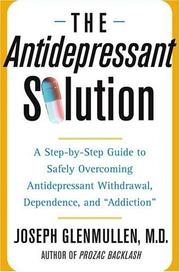
Offers a frank, balanced look at SSRI/SNRI use, tapering, and discontinuation — critical practical knowledge for anyone considering or already on medication for panic disorder.
Getting Your Life Back: Relapse Prevention and Full Recovery
ExpertConsolidate all prior learning into a long-term recovery plan, address residual avoidance and agoraphobia, prevent relapse, and rebuild a full, values-driven life beyond panic disorder.
▸ Study plan for this stage
Pace: 4–5 weeks, ~25–30 pages/day, with 2–3 days per week dedicated to exercises and integration work
- The Cognitive Model applied to panic: how thoughts, feelings, and behaviors create and maintain panic cycles, and how to interrupt them at each level
- Exposure and response prevention (ERP) as the core tool for overcoming residual avoidance and agoraphobia—gradual, systematic confrontation of feared situations
- Cognitive restructuring and thought records: identifying and challenging catastrophic thinking patterns that fuel panic and avoidance
- The role of safety behaviors and subtle avoidance in perpetuating panic disorder—learning to drop these to build genuine confidence
- Building a personalized relapse prevention plan: identifying triggers, early warning signs, and specific coping strategies for long-term maintenance
- Values-driven living: reconnecting with meaningful activities, relationships, and goals that panic disorder has disrupted, and using these as motivation for sustained recovery
- Consolidating self-efficacy: understanding how repeated successful exposures and skill application build lasting confidence and resilience
- Addressing perfectionism, control, and intolerance of uncertainty as underlying vulnerabilities that can fuel relapse
- How does the cognitive model explain the relationship between your thoughts about panic sensations, your emotional response, and your behavioral avoidance—and where are the most effective points to intervene?
- What is the difference between safety behaviors and genuine coping, and why is dropping safety behaviors essential for true recovery from panic disorder?
- How would you design a personalized exposure hierarchy for a residual fear or avoidance pattern you still struggle with, and what would success look like?
- What are your personal early warning signs of a panic relapse, and what specific cognitive and behavioral strategies would you deploy at each stage?
- How can you identify and challenge the underlying beliefs about control, perfectionism, or uncertainty that may be keeping you vulnerable to panic?
- What are 3–5 core values or life goals that panic disorder has disrupted, and how will you systematically rebuild engagement with them as part of your recovery?
- Complete a detailed thought record for a recent panic episode or avoidance situation: identify the trigger, the automatic thoughts, the emotions, the physical sensations, and the behaviors—then practice cognitive restructuring to generate realistic alternative thoughts
- Build a personal exposure hierarchy for one remaining avoidance pattern (e.g., driving, crowds, being alone); start with the least anxiety-provoking item and commit to weekly exposures, rating your anxiety before and after each one
- Identify 3–5 safety behaviors you still use during anxiety (e.g., carrying medication, staying near exits, checking your phone) and design a plan to gradually drop them during exposures while using cognitive coping instead
- Create a written relapse prevention plan that includes: your personal panic triggers, your early warning signs (thoughts, feelings, behaviors), your coping toolkit, and specific action steps to take if you notice warning signs returning
- Conduct a values clarification exercise: list 5–10 life domains (relationships, work, hobbies, health, spirituality, etc.), rate how much panic has disrupted each, and set 2–3 concrete, measurable goals to rebuild engagement in your top 3 values
- Practice a 20–30 minute interoceptive exposure session (deliberately inducing mild panic sensations—e.g., running in place, spinning, breathing through a straw) and use cognitive and mindfulness skills to stay present without avoidance; record your anxiety level before, during, and after
Next up: This stage consolidates panic disorder recovery into a durable, personalized framework; the next stage (if applicable) would deepen resilience by addressing co-occurring conditions, building advanced emotion regulation skills, or transitioning to broader life optimization and post-traumatic growth beyond the disorder itself.
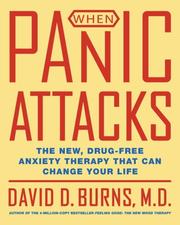
Burns applies his proven cognitive techniques specifically to panic and anxiety, offering advanced thought records and behavioral experiments that help readers dismantle the last layers of avoidance and catastrophic thinking.
Discussion
Keep reading
Paths that share books, cover the same subject, or open a related topic.