The Best Books for 6-Year-Olds: First Chapter Books, in Order
Six is the year of the first chapter book, and the jump is bigger than the page count suggests: the child has to carry a story across a break, remember it overnight, and keep going without a picture on every page. So this ladder starts with chapter books that are still mostly pictures, moves to the first long-running series (the point at which a six-year-old learns to want the next one), and ends with read-alouds and non-fiction that deliberately run ahead of what they can decode. Keep both tracks going: a six-year-old's listening comprehension is years ahead of their reading, and Winnie-the-Pooh read aloud is doing as much good as Nate the Great read alone.
Chapter books that are still mostly pictures
BeginnerFinish a book with chapters in it without the chapters becoming the obstacle.
▸ Study plan for this stage
Pace: Six to eight weeks with no fixed rate — these are 57 to 80 pages each and a chapter a night is plenty, whether the child reads it or you do. Content notes for the adult: Amelia Bedelia dates from 1963, its heroine is a domestic servant, and the illustrations and household details are of that period;
- All four are chapter books that have kept the pictures, which is what makes them different from the picture books beside them. The chapter break is the new thing on the page, and the illustrations are what make it survivable.
- Mercy Watson to the Rescue is the most picture-heavy: full-colour art on almost every spread, very short chapters, and a pig who wants buttered toast. It looks like a picture book and is structured like a novel.
- Amelia Bedelia is a single joke sustained for sixty pages — every instruction taken literally, so drawing the drapes and dressing the chicken go exactly as the words say. It is a book about how language works disguised as a book about a housekeeper.
- Nate the Great is written in short flat declarative sentences on purpose, and the plot puts clues on the page for the reader to notice. It asks a reader to carry information from one chapter into the next, which is more work than it looks.
- Flat Stanley takes one absurd idea — a boy flattened by a falling noticeboard — and runs a whole short novel on it. It is the longest of the four in pages and the fastest to read.
- Two tracks can run at once here without any conflict: a book the child reads alone and a longer one you read aloud. They are different activities and neither replaces the other.
- Rereading is not a stall. A book read four times is doing something a fourth new book would not, and there is no reason to steer away from it.
- What is the joke in Amelia Bedelia, and does it depend on knowing the ordinary meaning of the phrase first?
- Where does Nate the Great put the clue, and is it findable before he explains it?
- What does Mercy Watson want, and how does the book get an entire plot out of it?
- In Flat Stanley, what can Stanley do flat that he could not do before? How many of them does the book use?
- Which of these four made the chapter break invisible, and which made it noticeable?
- Read the first chapter of Mercy Watson aloud yourself and time it. Knowing a chapter takes four minutes changes what you offer at bedtime.
- In Amelia Bedelia, pause after the instruction and before the picture that shows what she did. The gap is where the joke lives, and it disappears if you read straight through.
- Put a bookmark in at the end of every session, even mid-book, and leave the book out where it can be seen. A visible bookmark is a promise that the story is still going.
- Read Nate the Great yourself first and note where the clue is planted, so you can say nothing at exactly the right moment.
- Do not correct a reread. If the same book comes back four nights running, read it four nights running.
Next up: Four short books finished is enough to make the next question interesting, which is not whether a book can be finished but whether there is another one after it.
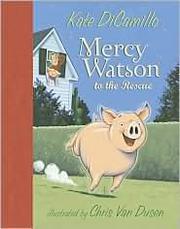
Full-colour illustrations on nearly every spread and very short chapters, so it looks like a picture book and reads like a novel. This is the gentlest possible first chapter book and the right place to start the year.

A housekeeper who takes every instruction literally, which turns the whole book into a running joke about how words work. Six is exactly when a child finds that funny rather than confusing.
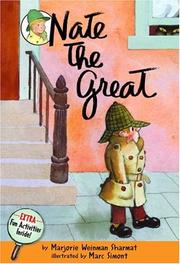
A deadpan detective story in clipped, easily decoded sentences, with a plot the reader is invited to solve. Put it after Mercy Watson because it asks the child to hold clues in mind across chapters.
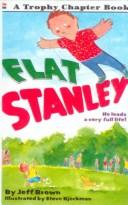
One absurd premise stretched over a whole short novel, so a six-year-old gets the experience of a sustained story with a single idea to hang on to. It is longer than everything above it and reads faster than all of them.
The first series they disappear into
BeginnerDiscover that a book can have a sequel — the habit-forming step that separates a six-year-old from a five-year-old.
▸ Study plan for this stage
Pace: Eight to ten weeks, and expect it to be uneven — a series can absorb a month and then be dropped. All four are 64 to 96 pages. Content notes for the adult: Horrid Henry is genuinely badly behaved and mostly gets away with it, which some adults enjoy and some do not, so read one story before deciding
- Dinosaurs Before Dark is the first Magic Tree House book, and its real feature is that there are dozens more. The formula repeats deliberately — the same tree house, the same mechanism, a new period each time — and the repetition is what makes the next one easy to pick up.
- Horrid Henry and the Secret Club is four self-contained stories rather than one plot, so nothing has to be carried overnight. That structure is useful when a book is being put down and picked up unpredictably.
- The Owl Who Was Afraid of the Dark is built as a sequence of encounters: Plop meets somebody, that person explains why the dark is exciting or kind or necessary, and the chapter ends. Each chapter is one answer, and the natural history in it is accurate.
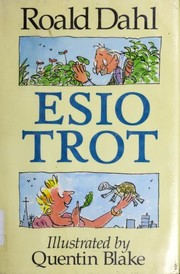
- The Magic Finger is Dahl's shortest book and the least frightening way to meet him. The longer ones with the darker machinery are a later year's business.
- It has a moral position and states it plainly, which makes it the first book on this ladder that can be argued with rather than only enjoyed.
- A series being abandoned halfway is a normal outcome. The point of a series is that the next book is available, not that it is compulsory.
- The four differ in what they ask: a formula to settle into, a story per sitting, a feeling at the centre, and an argument. Having all four available at once means there is always one that matches the evening.
- What is the Magic Tree House formula, exactly? Name the parts that repeat in every book.
- Why does a story-per-chapter structure suit some evenings better than a single continuous plot?
- How many reasons does Plop collect for the dark not being frightening, and which one is the one he actually believes?
- In The Magic Finger, who is punished and for what? Is the punishment proportionate, and does the book think so?
- Henry is not made to be sorry. What is the book doing, and is it doing it on purpose?
- Read one Horrid Henry story yourself before it enters the house, and decide then rather than three chapters in.
- Have the second Magic Tree House book present, unmentioned, before the first is finished. Availability does more than recommendation.
- With The Owl Who Was Afraid of the Dark, stop at the end of a chapter and say nothing. Each chapter is one complete answer and it works better with a night's gap.
- After The Magic Finger, be ready to be asked whether the family deserved it, and have your own answer rather than deflecting the question.
- Keep a short list on the fridge of what has been finished. It is a record rather than a chart, and it stays factual — titles and nothing else.
Next up: With a series habit in place on one track, the other track can run well ahead of it — books meant to be heard rather than decoded.
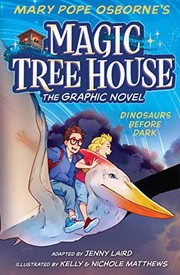
Book one of the Magic Tree House, and the point of it is that there are dozens more waiting. The formula is repetitive by design, which is what makes a newly independent reader confident enough to pick up the next one alone.
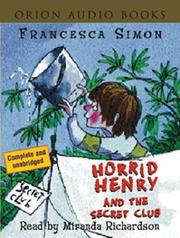
Four short self-contained stories about a genuinely badly behaved child, which six-year-olds find enormously satisfying. The story-per-sitting structure means a reluctant reader never has to hold a plot overnight.
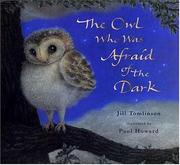
A baby barn owl asks a series of people why the dark is not frightening, and each answer is a chapter. It is the first book here with a real feeling at its centre rather than a joke, and it is quietly full of accurate natural history.
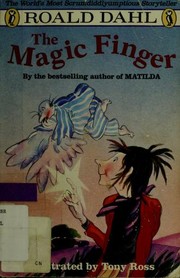
Dahl's shortest book by a distance and the correct one to meet him with at six — the longer titles come next year. It is also the first book on the ladder with a moral edge sharp enough to argue about.
Read-alouds and non-fiction that stay ahead of them
BeginnerKeep listening comprehension running well ahead of decoding, and prove that poetry and information books count as reading too.
▸ Study plan for this stage
Pace: Open-ended and running alongside everything else. Winnie-the-Pooh is 158 pages in ten chapters and works at one chapter a night over a fortnight; Now We Are Six is 103 pages of short poems to dip into; Actual Size is 32 pages and is opened rather than read. Content notes for the adult: Winnie-the-Po
- Winnie-the-Pooh has two audiences in the same sentence. The events are simple and the narration is dry and adult, so the jokes about Owl's spelling and Eeyore's gloom work over the child's head while the balloon and the bees work directly.
- The chapters are self-contained — the honey and the bees, the Woozle tracks going round the spinney, Eeyore's tail, the Expotition to the North Pole, Piglet entirely surrounded by water — so a chapter a night is the shape the book was built in.
- Reading aloud puts a book years beyond a child's decoding within reach of their enjoyment, and the two tracks do not have to be at the same level or ever meet.
- Now We Are Six is metrical and rhymed, which makes it the easiest thing here for a new reader to attempt alone — a failed poem costs four lines rather than a chapter.
- Several of the poems are about the small indignities of being this age, and the last one in the book is explicitly about being six and wanting to stay there. Milne's companion volume of earlier poems is the obvious follow-on.
- Actual Size prints animals and animal parts life-size, so a gorilla's hand sits next to the reader's own on the page and a giant squid's eye fills the spread. The information arrives through the body rather than through the text.
- Non-fiction that works as an object holds a child who will not sit still for a story, and it counts as reading. So does a book of poems opened in the middle.
- Which jokes in Winnie-the-Pooh are for the listener and which are for the reader? Find one of each in the same chapter.
- What actually happens in the Woozle chapter, and how long does it take before the trick is visible?
- Which Now We Are Six poem is worth learning by heart, and what makes it stick — the rhyme, the rhythm or the joke?
- In Actual Size, which page produced the biggest reaction, and was it the largest animal or the strangest one?
- What is the difference between a book being read aloud and a book being handed over, in terms of what it can be?
- Read Winnie-the-Pooh aloud a chapter a night rather than handing the book over. It is the whole method for this stage.
- When reading a Now We Are Six poem, pause just before the rhyme word and let it be supplied. It is the fastest way a rhyme scheme becomes audible.
- Leave Actual Size open on a table at the gorilla hand page. It is designed for hands to be put on it and does nothing shut on a shelf.
- Keep the read-aloud book and the read-alone book physically separate — different shelves, different times of day — so neither becomes an obligation attached to the other.
- Read one chapter of Winnie-the-Pooh ahead of time and mark where the narrator is being funny at the characters' expense. Those are the lines that need the pause.
Next up: With chapter books finished alone, a series underway and a read-aloud running years ahead of both, the ladder for the following year can start from longer books on all three tracks at once.

Far beyond what most six-year-olds can decode and perfectly within what they can enjoy being read — the vocabulary and the dry jokes are aimed over their heads on purpose. Read a chapter a night rather than handing it over.
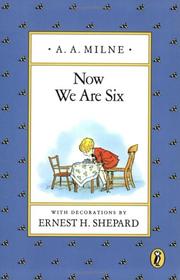
The obvious poetry choice for the year, and a good one: short, metrical, and often about exactly the small indignities of being this age. Poems are also the easiest thing for a new reader to attempt alone, because failure only costs four lines.
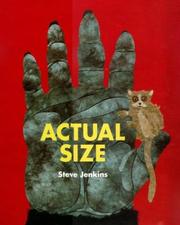
Animals and animal parts printed life-size, so a gorilla's hand fills the page next to the child's own. Non-fiction that works as a physical object holds six-year-olds who will not sit for a story.
Discussion
Keep reading
Paths that share books, cover the same subject, or open a related topic.