Magic Tree House Reading Order: Where to Start
Magic Tree House is read in numbered order, and unlike most long children's series it genuinely rewards that. Mary Pope Osborne built the first twenty-eight books as seven four-book missions: Jack and Annie are given a task, the four books that follow complete it, and the last of each four resolves something set up in the first. Book one, Dinosaurs Before Dark, is the correct starting point for a new reader, and the first four books together make a complete unit if a child wants to stop. After book twenty-eight the series becomes the Merlin Missions, which are longer, aimed slightly older, and still numbered continuously. The nonfiction Fact Trackers are companion research guides, not part of the story — pair one with its matching novel when a child wants to know whether any of it was real. This path takes the numbered sequence in order and marks where each mission begins and ends.
The first missions: books 1, 2, 3 and 5
BeginnerStart the series at book one and finish a complete four-book arc, which is enough to tell whether a reader wants the rest
▸ Study plan for this stage
Pace: Four short books totalling about 296 pages — Dinosaurs Before Dark 80, The knight at dawn 71, Mummies in the Morning 65 and Night of the Ninjas 80. At one book a sitting that is a week; read aloud it is closer to two. One thing for whoever is buying: this stage lists books 1, 2, 3 and 5, not 1 to 4.
- The mechanism, established in Dinosaurs Before Dark and never re-explained: point at a picture in a book in the tree house and you go there
- The four-book mission as the series' unit of structure — a task set, four destinations, a resolution in the fourth
- Jack and Annie as a deliberate pair, the one who reads the guidebook and the one who walks in first
- Morgan le Fay as the frame that turns episodes into a sequence, introduced properly in Night of the Ninjas
- The recurring shape of every book: arrival, small crisis, a clue or object collected, home before anyone notices
- Historical settings chosen for image density rather than curriculum — a Cretaceous plain, a castle, a tomb, feudal Japan
- What are the rules of the tree house exactly as book one states them, and does any later book break them?
- What is collected in each of these books, and what is the collection for?
- How does Osborne end each chapter, and what does the pattern do to a reader who wants to stop?
- Which of the four settings is carrying the most research, and how can you tell from the page?
- Is this a series to read in order, or a set of interchangeable episodes? Point to evidence either way.
- Read Dinosaurs Before Dark yourself first, before handing it over — it is 80 pages and takes half an hour, and it is the only book that explains the machinery.
- Keep the four collected clues written on a card. The pay-off in the fourth book of a mission only lands if someone remembers the first three, and the books do not recap.
- Note which chapter break in each book made a child ask for one more, and check whether Osborne uses the same device each time.
- Read the author's note at the back of Mummies in the Morning and decide in advance which questions you want to answer and which you want to send to a Fact Tracker.
Next up: With the mechanism understood and one mission's shape clear, the next seven books show what the series does when it stops visiting civilisations and starts visiting ecosystems.
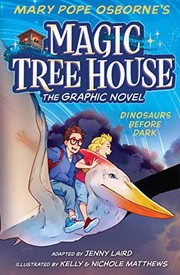
Book one and the only correct entry point: Jack and Annie find the tree house, discover that pointing at a picture in a book takes them there, and land in the Cretaceous. Everything about how the magic works is established here in about seventy pages.
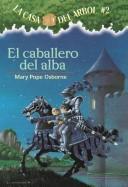
Book two, a medieval castle, and the book where the pattern becomes visible — a destination, a small crisis, a clue collected. Read in order; the four clues in this first mission are a single puzzle.
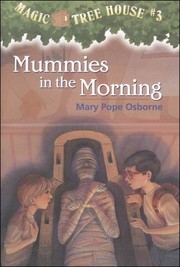
Book three, ancient Egypt, and the point where the historical research starts carrying real weight. A note for whoever is buying: our catalogue's record for book four, Pirates Past Noon, is the graphic-novel adaptation rather than the original chapter book, so it is not listed on this path — buy the numbered paperback to complete the mission.

Book five, and the opening of the second mission — feudal Japan, and the introduction of Morgan le Fay's own predicament, which drives the next four. It follows straight on whether or not you have read book four.
The second and third missions: books 6 to 11
BeginnerRead through two complete missions and watch the series widen from historical settings to natural-history ones
▸ Study plan for this stage
Pace: Seven books, about 524 pages in total: Afternoon on the Amazon 70, Sunset of the Sabertooth 74, Midnight on the moon 76, Dolphins at Daybreak 73, Ghost Town at Sundown 78, Lions at Lunchtime 73 and Polar bears past bedtime 80. At one book a sitting this is a fortnight. Books 9 to 12 form the riddle
- The switch from objects to riddles at book nine, and how it changes what a reader has to hold in their head
- Natural-history settings as a different problem for Osborne than historical ones — no civilisation to describe, so the tension has to come from the animals
- Midnight on the moon as the first forward jump in time, and what that does to a series premised on the past
- Repetition as the series' method: the same eight beats in every book, with the destination as the only variable
- How Osborne handles danger for this audience — proximity and consequence, but no injury
- The end of book twelve as the close of the series' first quarter and a designed off-ramp
- What are the three riddles, and does the answer to each come from the setting or from the characters?
- Which of these seven destinations is described with the most specific detail, and what is the detail doing?
- How does Osborne generate danger without injuring anyone, and where does the seam show?
- What does the series gain and lose when the destination is a place rather than a period?
- Is book twelve a real ending, or does it only feel like one?
- Write the three riddles on the same card as the earlier clues and see whether the child can answer any of them before book twelve does.
- Pick one natural-history book and one historical book from this run and compare how many pages each spends on description before the first problem appears.
- Before starting book nine, tell the child that the task has changed — the series does not signal it loudly, and the mission structure is the main reason these books reward order.
- Decide, in writing, whether you are stopping at book twelve or continuing, and note what you would be stopping on.
Next up: Book twelve closes the light half of the early series; the fourth mission takes the same eighty-page format into Pompeii, an imperial book-burning and a Viking raid.

Book six, the rainforest, and the first outing that is about an ecosystem rather than a civilisation. The variety between destinations is the main reason children keep reading, and this is where it becomes obvious.

Book seven, the Ice Age, and the closest the early books come to genuine danger. Read in sequence — the second mission's four clues resolve in book eight.
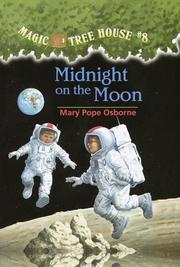
Book eight, which closes the second mission and takes the tree house forward in time rather than back for the first time. A good pause point for a reader who needs one.
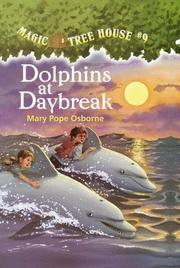
Book nine and the start of the third mission, in which Jack and Annie must solve riddles rather than collect objects. The task changes, so the reading order matters again here.

Book ten, the American West, and one of the better-researched settings in the early run. Continue straight on from book nine.

Book eleven, the Serengeti, and the third riddle. Read it in place; the answers only make sense together in book twelve.
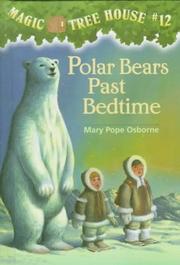
Book twelve, the Arctic, and the resolution of the riddle mission. This is the natural end of the first quarter of the series and a genuine stopping point.
The fourth mission: books 13 to 16
BeginnerRead a complete later mission and see the historical material get more demanding as the assumed reader gets older
▸ Study plan for this stage
Pace: Four books, about 314 pages: Vacation Under the Volcano 74, Day of the Dragon King 80, Viking Ships at Sunrise 80 and Hour of the Olympics 80. A week at one book a sitting. This mission is noticeably more serious than anything before it, and the four books should be read in order because the task —
- The lost-library-books mission as the first task with an argument behind it — writing survives or it does not
- Osborne's method for hard history: the child characters leave before the catastrophe, and the catastrophe is stated rather than shown
- The author's note as a load-bearing part of these books, doing the work the fiction deliberately does not
- Hour of the Olympics and Annie's exclusion from the stadium — the series' first direct treatment of historical injustice, resolved without pretending it was not real
- How the reading level shifts across the run even though the page count does not
- Why the fourth mission is the strongest argument for reading in order rather than by topic
- In each book, what exactly are Jack and Annie rescuing, and why does Morgan want it?
- How does Osborne end Vacation Under the Volcano, and what does she choose not to put on the page?
- What does Day of the Dragon King say happened to the scholars, and how does the author's note handle it?
- What does Hour of the Olympics do with Annie's exclusion, and does the resolution satisfy you as an adult reading it?
- Is this mission harder to read aloud than the first three, and if so, what specifically makes it harder?
- Read Vacation Under the Volcano and Day of the Dragon King ahead of the child. They are 74 and 80 pages, and both contain a question you may want to be ready for.
- Read the author's note in each of the four books before the story, and mark which historical claims the fiction actually depends on.
- Ask the child, after Hour of the Olympics, why Annie could not go in, and note what they think the answer is. Osborne leaves that question genuinely open on the page.
- Compare the vocabulary of a page of Dinosaurs Before Dark with a page of Viking Ships at Sunrise — the format is identical and the demand is not.
Next up: Sixteen books in, the next stage covers the two transitions the series makes — into its most difficult single subject, and then into the longer Merlin Missions written for a slightly older reader.

Book thirteen, Pompeii on the day of the eruption, and the opening of the mission to rescue lost library books for Morgan. It is noticeably more serious than anything before it.
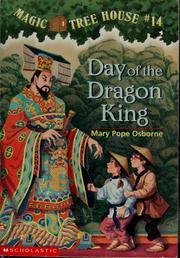
Book fourteen, ancient China and the burning of the books, which is a genuinely dark historical subject handled for seven-year-olds. Read in sequence after Pompeii.

Book fifteen, an Irish monastery under Viking raid, and the third of the four lost books. The mission structure is doing real work by this point.
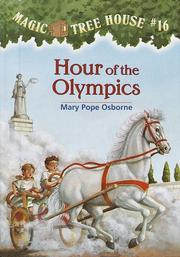
Book sixteen, the ancient Games, closing the mission — and the book where Annie's exclusion from the stadium gives Osborne her first direct handling of historical injustice. Read last in this stage.
Into the Merlin Missions
IntermediateMake the transition to the longer books, and know how to use the nonfiction Fact Trackers alongside the novels
▸ Study plan for this stage
Pace: Four books, about 482 pages: Tonight on the Titanic 96, then the first two Merlin Missions — Christmas in Camelot 144 and Haunted castle on Hallows Eve 123 — and the Fact Tracker Knights and Castles 119. Expect these to take longer per book than everything before: Christmas in Camelot is roughly twi
- The Merlin Missions as a deliberate re-pitch: longer books, continuous plots, an older assumed reader, numbering that continues anyway
- Serialisation — the Merlin books carry Merlin's own predicament forward in a way the originals never did
- A story where the protagonists cannot fix the historical outcome, and what Osborne does instead
- The Fact Trackers as a separate line: research guides co-written with Will Osborne, paired to specific novels, with real sources
- Fiction and nonfiction answering different questions about the same event — the pairing is the point of the companion line
- How to place a book series a child is outgrowing in one direction and growing into in another
- What can Jack and Annie change on the Titanic and what can they not, and how does the book handle the difference?
- What is structurally different about Christmas in Camelot beyond its length?
- What does Haunted castle on Hallows Eve carry forward from Christmas in Camelot, and would it stand alone?
- Where does Knights and Castles correct or complicate The knight at dawn?
- Is the jump from book seventeen to book twenty-nine a problem for a reader, and how would you bridge it?
- Read Tonight on the Titanic yourself before handing it over, and decide in advance how you will answer the question of what happened to everyone else.
- Read Knights and Castles beside The knight at dawn and list three things the novel simplified. That comparison is the whole use of the Fact Tracker line.
- Time a chapter of Christmas in Camelot against a chapter of Dinosaurs Before Dark read aloud, so you know what you are committing to.
- Check the numbering before buying: the Merlin Missions continue the series count from book twenty-nine, and the shelf edition may be renumbered from one.
- Note which of the two lines — novels or Fact Trackers — the child reaches for unprompted, and buy accordingly.
Next up: That is the numbered series' first act, its hardest single book and its second format, which is enough to judge how far along the shelf to keep going.
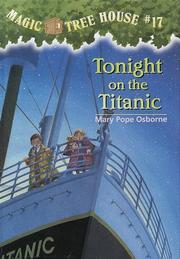
Book seventeen and the start of the fifth mission, on the most emotionally difficult subject the series had attempted so far. Included here because it is the book most often bought out of order, and it does assume the previous sixteen.
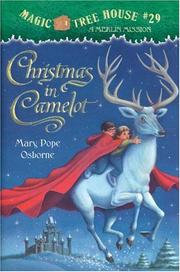
Book twenty-nine and the first Merlin Mission: roughly twice the length of the earlier books, with a continuous plot instead of a single destination. This is the point at which the series is deliberately re-pitched at a slightly older reader.

The second Merlin Mission, continuing from Christmas in Camelot with Merlin's own troubles as the throughline. The Merlin books are more serialised than the originals, so read them in order.
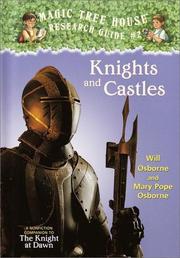
A Magic Tree House Fact Tracker rather than a novel, co-written with Will Osborne, pairing with book two: the real history behind the story, with photographs and a bibliography. Read a Fact Tracker whenever a child asks whether something in a novel actually happened — that question is the whole point of the companion line.
Discussion
Keep reading
Paths that share books, cover the same subject, or open a related topic.