Organ Transplantation: The Best Books on How It Became Possible, in Order
Transplantation is the branch of medicine that had to solve a problem no other branch has: the body's own defences work correctly and must be defeated for the patient to live. This path reads the field in the order it makes sense — first the surgeons describing what the operation is actually like, then the history of how rejection, preservation and immunosuppression were beaten, then the ethics and the sociology, then the allocation and the market. Two things worth flagging before you start. The books here divide sharply between clinical or academic writing and journalism, and this path says which is which for each entry, because they are not interchangeable: a surgeon's memoir is evidence about the operating room and not about policy. And two entirely different real books on this subject are both titled Spare Parts, by different authors thirty years apart; both are listed here, and both are worth reading.
What the Operation Is
BeginnerUnderstand transplantation from inside the operating room — the procurement flight, the clock on a cold organ, the immunosuppression that follows for life.
▸ Study plan for this stage
Pace: Three to four weeks for roughly 1,080 pages, all three of them written by transplant surgeons and none of them neutral. Mezrich's When Death Becomes Life is 384 pages and is the entry point: a working surgeon alternating his own cases with the history of the field, written for a general reader with
- The central problem of the field: the immune system working correctly is what kills the graft, so the operation only becomes possible once that response can be suppressed without killing the patient
- The mechanics of a transplant as an operation - retrieval, cold preservation, the ischaemic clock, the anastomoses, and why time is the constraint on everything logistical
- Rejection in its varieties: hyperacute, acute cellular and chronic, and the fact that they are different problems with different solutions
- The immunosuppression sequence from irradiation and azathioprine through steroids to ciclosporin, and how each step changed what was survivable
- Living versus deceased donation, and how differently the two feel from inside an operating room
- Starzl as a primary source: what a participant's memoir is good evidence of - the sequence of attempts, the reasoning at the time, the institutional resistance - and what it is not evidence of, which is policy
- The mortality of the experimental period, and the ethical question of consent that hangs over an operation nobody had yet survived
- Why is the immune response the central obstacle, and why did solving it require accepting a different set of risks rather than removing risk?
- Describe the physical sequence of a deceased-donor liver transplant from retrieval to reperfusion. Where is the clock running?
- What changed when ciclosporin arrived, in terms of both survival and the range of organs that could be attempted?
- Starzl's early patients mostly died. On his own account, what justified continuing, and would that justification be accepted now?
- Where does Tilney's account of rejection contradict or complicate the version you get from Mezrich's cases?
- Build a dated timeline as you read all three, one line per milestone, with a column for who is claiming it - Starzl about his own work, Tilney about the field, Mezrich retelling both. Where the three disagree about priority or date, mark it. Stage two's historians will settle several of these entries.
- Take one of Mezrich's cases and write out what had to happen for it to be possible: the donor, the definition of death used, the preservation, the drugs, the allocation decision. Every one of those five items becomes a chapter of this path, and doing this once gives you the map.
- Read Starzl's account of a specific early failure and write half a page on what he treats as the lesson. Then note what he does not discuss - the patient's consent, the family, the institutional review. The omissions are what the sociologists in stage three are reacting to.
- Draw the immunosuppression timeline from Tilney: drug, date, mechanism, and the survival figure before and after. This is the single most useful page to keep from this stage, because every later ethical argument assumes the operation works.
Next up: You know what the operation is and how the surgeons describe it; the next stage takes the same story out of surgeons' hands and gives it to historians.

A working transplant surgeon's memoir, and the best entry point: Mezrich alternates his own cases with the history of the field, so you get the operation and its origins together. Published in Britain as How Death Becomes Life, which is a separate edition of the same book.
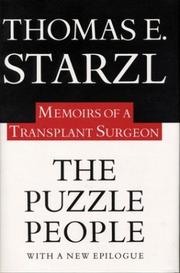
The memoir of the surgeon who made liver transplantation work, written by him in 1992. A primary source rather than a popular account, and unusually candid about the early failures — Starzl lost a great many patients before the operation became survivable, and he says so.

A Harvard transplant surgeon's history of the field from the inside, more measured than Starzl and more technical than Mezrich. The best of the three on the science of rejection and immunosuppression specifically.
How It Became Possible
IntermediateTrace the long, strange prehistory — blood transfusion, skin grafts, tissue typing — that had to happen before a transplanted organ could survive a week.
▸ Study plan for this stage
Pace: Two to three weeks for about 540 pages, and the shortest stage here. Craddock's Spare Parts is 320 pages of popular history by a medical historian, covering four centuries from seventeenth-century blood transfusion and tooth transplants onward; it assumes no background and is the widest historical f
- The long prehistory - transfusion, skin grafting, tooth transplantation - and how much of transplantation's conceptual work was done before anyone could do the surgery
- Why the immunological barrier was invisible for centuries: the operations failed and nobody could say why
- Blood as the first successfully transferred tissue, and the typing that made it routine
- Lederer's argument about consent: how the ethical and legal expectations around taking tissue from a body were assembled, and how recently
- Race in the American transfusion and transplantation record, including segregated blood supply, and its consequences for whose bodies were used and whose were treated
- Public acceptance as a historical achievement rather than a natural state - the cultural work required before moving organs between people seemed normal
- How a popular history and an academic monograph differ in practice: what Craddock's narrative gains in reach and what Lederer's citation apparatus buys in reliability
- What did seventeenth-century transfusion experimenters believe they were transferring, and how did that belief shape what they tried?
- Why did skin and tooth grafting between individuals fail, and when did anyone establish the reason?
- What does Lederer show about consent practices in early-twentieth-century America, and what would count as consent by those standards?
- How does the racial history of the American blood supply bear on later arguments about equity in organ allocation?
- Where does Craddock's four-century sweep let him claim continuity that Lederer's narrower study would not support?
- Add Craddock's and Lederer's dates to the timeline you started in stage one, in a different colour, and mark every place a surgeon's memoir and a historian's account give different origins for the same technique. Priority disputes are endemic in this field and the timeline is where they become visible.
- Take one episode both books cover and read the two accounts consecutively, then write a paragraph on what the academic historian does that the popular historian does not: sources named, alternatives considered, claims hedged. This is the labelling exercise the whole path depends on.
- Using Lederer, write out the consent standard applied to tissue procurement at three points in the twentieth century, in the plainest language you can. Keep the page - Defining Death and The Organ Thieves both turn on exactly this, and having your own summary makes both much sharper.
- List the things that had to be true before transplantation was possible in the order they became true - conceptual, surgical, immunological, legal, cultural - and note which was the binding constraint at each stage. Both books answer this differently, which is the argument between them.
Next up: With the history in place, the field's own literature turns from how it was done to whether it should be, and the books stop being written by doctors.

Popular history by a medical historian, covering four centuries from seventeenth-century blood transfusion and tooth transplants onward. Accessible, no background assumed, and the widest historical frame on this path. Note the identically titled sociology book in the next stage — different author, different book.

Academic history of transfusion and transplantation in twentieth-century America, and much more interested than Craddock in race, consent and how the public came to accept moving body parts between people. Scholarly prose but not technical.
The Ethics and the Sociology
IntermediateConfront the questions the surgery created — what counts as death, what a family can consent to, and what a transplant costs the people around the patient.
▸ Study plan for this stage
Pace: Five to six weeks and the densest stage on this path, roughly 1,240 pages, none of it journalism. Fox and Swazey's The Courage to Fail is 437 pages, the foundational sociological study of transplantation and dialysis, published in 1974 while the field was still experimental - academic in style, and
- The tyranny of the gift: Fox and Swazey's account of how an unreciprocable donation binds recipient and donor family, and why gratitude becomes a burden
- The courage to fail as an ethos - the clinical culture that justifies continuing an experimental operation through repeated deaths, and what it does to the people inside it
- Fox and Swazey's 1992 withdrawal: the specific charges they make about routinisation, escalation and the ethics of scarcity, and the fact that this is a position taken rather than a finding reported
- The whole-brain criterion of death, its alternatives - higher-brain and circulatory - and what each implies about who counts as dead
- The dead donor rule, and why almost all deceased donation depends on a definition that Veatch and Ross show to be contested rather than settled
- Presumed consent, opt-out and mandated choice as distinct policies with different empirical records
- Living donation and the problem of a healthy person undergoing surgery for no medical benefit of their own
- The payment question in its several forms - regulated markets, reimbursement, priority for registered donors - and where the real disagreement sits
- State the tyranny of the gift in your own words. Whom does it bind, and in which direction?
- What exactly do Fox and Swazey object to in 1992 that they did not object to in 1974, and is the change in the field or in them?
- Give the whole-brain, higher-brain and circulatory criteria of death and say, for each, who would be dead under it who is not dead under the others.
- Why does the dead donor rule matter, and what would change if it were abandoned rather than reinterpreted?
- From Caplan's collection: what is the strongest argument for a regulated market in organs, and what is the strongest response to it?
- Write the three definitions of death out on a single page, each in one paragraph, then go back through Mezrich and Starzl and mark which definition each of their described retrievals depends on. Veatch and Ross are abstract until you attach them to an operation you have already read about.
- Read The Courage to Fail and Spare Parts as a pair and produce a two-column list: what Fox and Swazey observed in 1974 versus what they concluded in 1992. Then mark each 1992 conclusion as supported by their own fieldwork or as a judgement added on top. Doing this is the difference between accepting a withdrawal and understanding it.
- Take Caplan's collection and, for each of consent, presumed consent, living donation and payment, write the strongest one-paragraph case on each side without indicating which you hold. The volume is arranged to make this possible; being able to do it is the mark of having read it properly.
- Trace the phrase 'tyranny of the gift' forward: find where the ethnography and the journalism in the next stage use it, and check each time whether the user has kept Fox and Swazey's meaning. Concepts drift, and this is the cleanest example on the path.
- Write a page arguing against the dead donor rule as strongly as you can, then a page defending it. Veatch and Ross show that the definition is unsettled; the exercise is finding out what you actually think follows from that.
Next up: The ethics literature argues about a system in the abstract; the last stage puts real cases, real fieldwork and real markets underneath the arguments.

The foundational sociological study of transplantation and dialysis, by Fox and Judith Swazey in 1974, written while the field was still experimental. Academic, and the origin of most of the vocabulary later ethicists use — including the tyranny of the gift.

Fox and Swazey's 1992 sequel, and the book in which two scholars who had spent thirty years studying the field publicly withdrew from it, arguing that transplantation had outrun its own ethics. Same title as Craddock's history above and an entirely different book.

A philosopher's book on the brain-death criterion, written with Lainie Ross — the definitional question that almost all deceased donation rests on. The most technical entry here, and the one that shows how contested a settled-looking definition actually is.
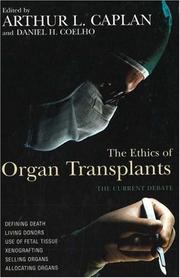
An edited bioethics collection covering consent, presumed consent, living donation and payment. Useful as a survey of the arguments rather than as a single thesis; read it to see the range of defensible positions before the next stage's polemics.
Scarcity, Allocation and the Market
IntermediateFollow the consequences of permanent organ shortage — waiting-list policy, the cultural work of donation, and the international trade in bodies.
▸ Study plan for this stage
Pace: Four to five weeks for about 1,270 pages, and the stage where the disciplines are most mixed - read the labels. Munson's Raising the Dead is 301 pages of philosophy built case by case: each chapter opens with a real transplant case and argues the ethics out of it, which makes it the most readable et
- Allocation as an explicit design problem: waiting lists, urgency scoring, geography, and the fact that every rule advantages someone
- Munson's case method, and what building an ethical argument from a particular patient does that principle-first reasoning does not
- Sharp's finding about how the language of gift is produced and maintained by institutions - the letters, the memorials, the vocabulary given to donor families
- Organ personhood: what recipients report about the donor's presence in them, and what an anthropologist does with that material
- The 1968 Virginia case in specifics - who the patient was, what was documented, what the family were told - and its relation to the brain-death criterion being formalised the same year
- Race and consent as a documented history in American transplantation rather than as an abstract worry, and the effect of that history on donation rates
- The global market Carney reports: kidney selling, bone and tissue supply chains, and the traffic that a system explicitly designed to prevent it has not prevented
- Why journalism and ethnography are not interchangeable evidence, and what each is good for on this subject
- Take one of Munson's cases and state what the allocation rule in force decided, then say what a different defensible rule would have decided.
- What does Sharp show about who writes the script that donor families and recipients use, and why does that matter to the gift argument from stage three?
- In the Virginia case Jones reconstructs, what precisely was and was not documented at the time, and what did the family know?
- The brain-death criterion was formalised in 1968, the same year as that transplant. What is the relationship, and what does it do to the claim that the criterion was settled on purely clinical grounds?
- Which of Carney's findings would survive a hostile reading, and which rest on a single source?
- Take Munson's cases and re-decide three of them yourself before reading his argument, writing down your reasoning first. Then compare. This is the only way to use a case-based ethics book rather than be led by it.
- Read The Organ Thieves against the consent standards you summarised from Lederer in stage two, and write a paragraph on whether the 1968 conduct met the standard of its own moment or only of ours. The book supplies the documents to answer this and does not require you to accept its framing.
- Sort every one of the sixteen books on this path into three lists - clinical or participant account, academic scholarship, journalism - and write one line on what each is reliable evidence about. This is the deliverable of the whole path and it takes an hour once the reading is done.
- Take Carney's central claim about the trade in body parts and write down what evidence would confirm it and what would falsify it, then check which of the two his reporting supplies. Doing this on a book you are inclined to agree with is the point of the exercise.
- Write two pages of policy: given everything you have read, what allocation and consent regime would you actually adopt, and what does each choice cost. Name the books you are relying on for each element, and note where you are relying on a memoir for something only a study could settle.
Next up: This is the last stage, and it closes the path where the ethics of stage three had to lead: everything earlier describes a system built to prevent exactly what Carney documents happening anyway.
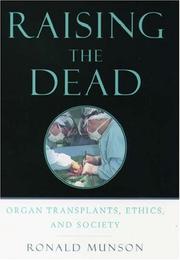
A philosopher builds each chapter around a real transplant case and then argues the ethics from it. The most readable ethics book on this path and the best bridge between the academic and the journalistic material.

An anthropologist's fieldwork on how donor families, recipients and procurement staff actually talk about organs — the rituals, the letters, the language of gift. Academic ethnography, and the corrective to any purely policy-level account.

Investigative journalism on the 1968 heart transplant at the Medical College of Virginia, in which a Black man's organs were taken without family consent. A specific, documented case rather than a general argument, and it is what the ethics literature is abstracting from.
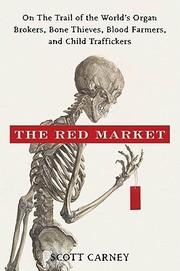
Reporting on the global trade in kidneys, blood, bones and bodies. Journalism, occasionally sensational, and the right last book: everything earlier on this path describes a system designed to prevent exactly what Carney documents happening anyway.
Discussion
Keep reading
Paths that share books, cover the same subject, or open a related topic.