Two things trip readers up in this subject, and both are fixable by reading in the right sequence.
The first is that the popular story is compressed. In the version most people know, Enigma was unbreakable until British mathematicians at Bletchley Park solved it. In fact Polish cryptanalysts — Marian Rejewski above all — had reconstructed the machine's wiring and were reading traffic years before the war, and handed their work to Britain and France weeks before the invasion of Poland. Early British accounts underplayed this badly. A reading order that starts with the technical history rather than the country-house memoirs puts it back.
The second is a naming problem. Codebreakers is F. H. Hinsley and Alan Stripp's edited collection of first-hand accounts by Bletchley veterans. The codebreakers is David Kahn's enormous 1967 history of cryptology from antiquity onward. One definite article separates them.
Start with the cryptography
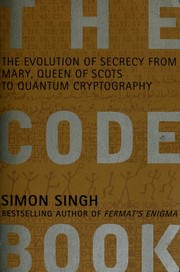
The Code Book by Simon Singh is the best possible entry point, with one expectation to set: it is a history of cryptography in general, from Mary Queen of Scots to public-key encryption, and Enigma occupies a long central chapter rather than the whole book. That is a feature. You cannot understand what Bletchley achieved without knowing what a cipher is and why a rotor machine was such a leap, and Singh explains both without mathematics.
Bletchley as a place
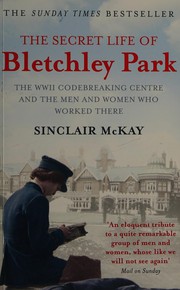
The secret life of Bletchley Park is Sinclair McKay writing social history — who the thousands of staff were, what they ate, how they kept the secret for thirty years afterward. It is the human counterweight to the cryptanalysis.
Station X is Michael Smith's account, closer to the operational and intelligence side, and the better of the two if you want to know what the decrypts were used for rather than what the huts were like.
The Bletchley Girls is Tessa Dunlop interviewing surviving women who worked there. Roughly three quarters of Bletchley's staff were women, most of them doing the machine operation and traffic work the popular story reduces to a background, and this book is the corrective.
How the break actually worked
Seizing the enigma is David Kahn on the naval Enigma problem specifically, and on the capture operations at sea that supplied the codebooks the mathematicians needed. It is the clearest account of the relationship between cryptanalysis and old-fashioned physical seizure.
The Hut Six Story is Gordon Welchman's own account, and it carries a story of its own. Welchman ran Hut Six and published in 1982; the NSA and GCHQ objected, he was censured, lost his clearance and was barred from discussing the subject further. He issued corrections to parts of the book afterward. It remains the most technically detailed insider account there is.
Alan Turing is Andrew Hodges's biography, published as Alan Turing: The Enigma, and it is the standard work — mathematically serious, unusually good on the ideas, and the source behind most later portrayals.
Colossus is B. Jack Copeland's edited volume, and it corrects a confusion the films caused. Colossus was not built to attack Enigma. It was built for the Lorenz cipher used for German high command traffic, it was a different and harder problem, and Colossus was the first large-scale electronic computing machine. Bill Tutte's break of Lorenz without ever seeing the machine is arguably the greatest single feat at Bletchley, and almost nobody has heard of it.
The reference tier
Codebreakers collects the veterans' own essays under Hinsley and Stripp, and is the closest thing to a documentary record of what different sections did.
Finish with The codebreakers. David Kahn's history is a thousand pages, it predates the public disclosure of Ultra, and it is still the foundation of the field. Use it as a reference rather than reading it end to end.
Follow the full path below for the sequence in order.
Follow the full ordered path here: Bletchley Park and the Enigma Code: A Reading Order.