Organic chemistry: a reading path from structure to reaction mechanisms
This curriculum builds organic chemistry mastery in four tightly sequenced stages, starting from a solid intermediate foundation and advancing through mechanistic reasoning, stereochemical thinking, and finally graduate-level synthesis strategy. Each stage's books are ordered so that earlier reads supply the conceptual vocabulary — bonding models, arrow-pushing, functional group behavior — that later books demand, turning rote memorization into a unified, mechanistic understanding of how and why molecules react.
Mechanistic Foundations
IntermediateSolidify the core language of organic chemistry — Lewis structures, resonance, inductive effects, and the logic of arrow-pushing — so that every reaction encountered later is understood as a consequence of electron flow, not a fact to memorize.
▸ Study plan for this stage
Pace: 8–10 weeks, ~40–50 pages/day (Klein first semester: ~250 pages in 5–6 weeks; Clayden chapters 1–3: ~150 pages in 3–4 weeks)
- Lewis structures and formal charges: representing valence electrons, octet rule, and identifying reactive sites
- Resonance structures and resonance hybrids: delocalization of electrons and stability prediction
- Inductive effects and electronegativity: how electron-withdrawing and electron-donating groups polarize bonds
- Arrow-pushing formalism: nucleophile–electrophile interactions, curved arrows as electron flow, and mechanism writing
- Acid–base chemistry and pKa: predicting protonation states and understanding conjugate bases as leaving groups
- Nucleophilicity and electrophilicity: factors affecting reactivity (charge, polarizability, solvation)
- Reaction mechanisms as electron flow: SN2, SN1, E1, E2 as direct consequences of electron movement, not isolated facts
- Orbital overlap and bonding: σ and π bonds, hybridization, and why certain geometries and reactivity patterns emerge
- How do you draw a Lewis structure with correct formal charges, and what does formal charge tell you about reactivity?
- What is a resonance structure, and how do you identify the major and minor contributors to a resonance hybrid?
- How do inductive effects and electronegativity differences create polarity in C–X bonds, and how does this predict nucleophile–electrophile pairing?
- Walk through a complete SN2 mechanism using curved arrows, explaining why the nucleophile attacks and the leaving group departs simultaneously.
- Why is pKa central to predicting whether a group will act as a nucleophile, electrophile, or leaving group in a given reaction?
- How do you use hybridization and orbital overlap to explain why a reaction proceeds through a particular mechanism (e.g., SN2 vs. SN1)?
- Draw Lewis structures for 20+ organic molecules (alkanes, alkenes, alkynes, alcohols, ethers, amines) and assign formal charges to every non-hydrogen atom.
- For 10 molecules with resonance (e.g., allyl cation, benzene, carboxylic acid), draw all significant resonance structures and rank them by stability using octet rule and formal charge rules.
- Predict the polarity of 15 C–X bonds (C–O, C–N, C–Cl, C–Br) using electronegativity; then explain how inductive effects propagate through a chain.
- Write complete arrow-pushing mechanisms for 8–10 reactions (SN2, SN1, E2, E1, acid–base) from Klein, explicitly showing every electron pair movement and intermediate.
- Given 10 substrates and nucleophiles, predict the product and mechanism (SN2, SN1, E2, E1) by analyzing steric hindrance, leaving group quality, and nucleophile strength; justify each choice.
- Solve 30+ pKa and acid–base problems: predict protonation state, identify conjugate bases, and explain why certain groups are better leaving groups than others.
Next up: Mastery of electron flow and mechanistic reasoning here enables you to predict and understand multi-step syntheses, carbocation rearrangements, and addition reactions in the next stage without memorizing individual reaction names.

Written explicitly for learners who already have some exposure, this book reframes bonding, resonance, and nucleophile/electrophile thinking as a coherent language rather than a list of rules — the perfect re-entry point for an intermediate learner.
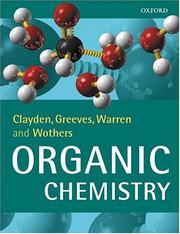
The gold-standard undergraduate text, read now as a comprehensive reference and narrative — Clayden's emphasis on mechanism and molecular intuition over memorization makes it the ideal backbone for the entire curriculum.
Stereochemistry & Molecular Shape
IntermediateDevelop a three-dimensional mental model of molecules — chirality, conformational analysis, and stereochemical outcomes of reactions — so that spatial reasoning becomes second nature.
▸ Study plan for this stage
Pace: 8–10 weeks, ~25–30 pages/day (with 2–3 days/week for problem sets and 3D modeling)
- Chirality and stereogenic centers: recognition, nomenclature (R/S), and the relationship between structure and optical activity
- Conformational analysis: Newman projections, chair conformations, and gauche/steric interactions that determine molecular shape
- Diastereomers vs. enantiomers: how stereochemical relationships affect physical and chemical properties
- Fischer and Haworth projections: translating between 2D representations and 3D reality
- Stereochemical descriptors (syn/anti, exo/endo, threo/erythro): precise language for describing spatial relationships
- Prochirality and enantiotopic/diastereotopic groups: recognizing hidden stereochemistry in achiral molecules
- Stereochemical outcomes of reactions: how mechanism and substrate geometry determine product stereochemistry
- How do you assign R/S configuration to a stereogenic center, and why does the priority system matter?
- What is the difference between a diastereomer and an enantiomer, and how do their properties differ?
- How do you analyze conformational stability using Newman projections and chair conformations, and what role do steric interactions play?
- How do you convert between Fischer, Haworth, and 3D wedge-dash representations without losing stereochemical information?
- What is prochirality, and how do you identify enantiotopic vs. diastereotopic groups in a molecule?
- How does the stereochemistry of a substrate and reaction mechanism determine the stereochemical outcome (syn addition, anti addition, inversion, retention)?
- Build physical 3D molecular models (ball-and-stick or digital) for 15–20 molecules with varying stereochemical complexity; rotate them to visualize conformations and identify stereogenic centers
- Practice R/S assignment on 30+ structures, including those with heteroatoms and multiple stereogenic centers; check your work against a key
- Draw Newman projections for 10 different molecules in multiple rotamers; identify the most and least stable conformations and explain why
- Convert 20 Fischer projections to wedge-dash 3D structures and back; practice with sugars, amino acids, and other natural products from Eliel
- Solve 15–20 problems on diastereomer and enantiomer relationships; predict how stereoisomers differ in boiling point, solubility, and reactivity
- Analyze 10 reaction mechanisms (SN2, E2, addition reactions) and predict the stereochemical outcome given substrate and reagent; compare your predictions to literature results
- Identify prochiral groups in 8–10 achiral molecules; label enantiotopic and diastereotopic hydrogens and explain why they are magnetically non-equivalent
Next up: This stage builds the spatial reasoning and stereochemical vocabulary essential for understanding how reactivity is controlled by 3D structure, preparing you to apply these principles to reaction mechanisms, synthesis planning, and the stereochemistry of named reactions in subsequent stages.

The definitive, exhaustive treatment of stereochemistry; reading it after Clayden means every concept (chirality, diastereomers, conformational analysis) is encountered with enough mechanistic background to be fully absorbed rather than merely catalogued.
Reaction Mechanisms in Depth
ExpertAchieve a rigorous, graduate-level command of reaction mechanisms — understanding why reactions proceed, what controls selectivity, and how to predict outcomes from first principles of physical organic chemistry.
▸ Study plan for this stage
Pace: 8–10 weeks, ~40–50 pages/day (March's chapters on mechanisms: ~2,500 pages total; Levy: ~300 pages). Allocate 5–6 weeks to March's, 2–3 weeks to Levy's, with 1 week for integration and problem sets.
- Fundamental principles of reaction mechanisms: bond dissociation, orbital overlap, and electronic effects (inductive, resonance, hyperconjugation) that govern reactivity
- Nucleophilicity vs. basicity: why strong bases are not always good nucleophiles, and how solvent, substrate, and leaving group control SN1 vs. SN2 pathways
- Carbocation stability and rearrangement: hyperconjugation, ring expansion, and hydride/alkyl shifts as manifestations of electronic stabilization
- Electrophilic aromatic substitution mechanisms: directing effects (ortho/para vs. meta), resonance stabilization of intermediates, and prediction of substitution patterns
- Addition mechanisms to C=C and C≡C: Markovnikov's rule from a mechanistic perspective, carbocation vs. concerted pathways, and regioselectivity/stereoselectivity
- Arrow-pushing formalism as a rigorous language: electron flow, formal charges, curved arrows as electron movement, and how to write mechanisms that reflect true electronic rearrangement
- Selectivity control: how reaction conditions (temperature, solvent, nucleophile strength) shift mechanisms and outcomes; kinetic vs. thermodynamic control
- Predicting reaction outcomes from first principles: using pKa, orbital theory, and electronic effects to anticipate which mechanism dominates and what products form
- Why is the hydroxide ion a strong base but a poor nucleophile in protic solvents, and how does this explain the difference between E2 and SN2 selectivity?
- Draw a detailed mechanism for the bromination of toluene, explaining why the ortho/para ratio is observed and why the meta isomer is disfavored using resonance structures.
- For a given substrate (e.g., 2-methylpropene), predict whether hydration will proceed via a carbocation or a concerted mechanism, and explain the regioselectivity using electronic effects.
- How do you use curved arrows to represent electron flow in a carbocation rearrangement? What does each arrow tell you about which electrons move and where they go?
- Given a set of reaction conditions (solvent, temperature, nucleophile/base strength), explain which mechanism (SN1, SN2, E1, E2) is favored and predict the major product.
- What is the relationship between pKa values and the stability of intermediates in a mechanism? How does this help you predict whether a proton transfer step is fast or rate-determining?
- Work through March's detailed mechanism problems (chapters on SN1/SN2, E1/E2, and electrophilic aromatic substitution). For each, write out the full mechanism with curved arrows, identify the rate-determining step, and explain why that step is rate-determining.
- Using Levy's arrow-pushing framework, redraw 10–15 mechanisms from March's chapters, focusing on correct formal charge assignment and electron flow. Check your work against Levy's examples.
- Predict the products and mechanisms for 5–8 substitution/elimination problems with varying substrates, nucleophiles, and solvents (e.g., primary alkyl halide + strong nucleophile in aprotic solvent → SN2; tertiary alkyl halide + weak nucleophile in protic solvent → SN1/E1). Justify each prediction.
- Analyze 3–4 electrophilic aromatic substitution reactions (nitration, sulfonation, Friedel–Crafts) by drawing resonance structures of the sigma complex intermediate and explaining the directing effects of the substituent.
- Solve 6–8 carbocation rearrangement problems: identify which rearrangement is likely, draw the mechanism with arrows, and explain why the rearranged carbocation is more stable (using hyperconjugation or ring strain relief).
- Create a 'mechanism decision tree' or flowchart: given a substrate, nucleophile/base, solvent, and temperature, use pKa, nucleophilicity trends, and substrate structure to predict the dominant mechanism (SN1, SN2, E1, E2) and the major product. Test it on 10 problems.
Next up: This stage equips you with the mechanistic reasoning and arrow-pushing fluency to understand and predict the behavior of complex, multi-step syntheses and advanced transformations (e.g., rearrangements, pericyclic reactions, catalytic cycles) that depend on controlling selectivity through mechanism.
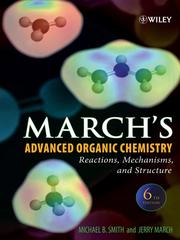
The canonical advanced reference for reaction mechanisms and structure; approached after Clayden and Eliel, the learner can now navigate its encyclopedic coverage purposefully, using it to deepen mechanistic understanding reaction class by reaction class.

Provides intensive, focused drill on electron-pushing logic — reading this alongside March's ensures that mechanistic notation becomes fully automatic and that complex multi-step mechanisms can be decoded on sight.
Synthesis Strategy & Total Synthesis
ExpertThink like a synthetic chemist — plan multi-step routes using retrosynthetic analysis, understand selectivity and protecting-group strategy, and appreciate how all prior knowledge converges in the construction of complex molecules.
▸ Study plan for this stage
Pace: 8–10 weeks, ~40–50 pages/day, with 2–3 dedicated synthesis-planning sessions per week
- Retrosynthetic analysis as a systematic framework for planning multi-step syntheses, working backward from target to available starting materials
- Named reactions as reliable building blocks: their scope, limitations, stereochemistry, and strategic deployment in complex molecule construction
- Protecting group strategy: selection criteria, installation/removal sequences, and how protecting groups enable selective transformations on polysubstituted molecules
- Selectivity principles: chemoselectivity, regioselectivity, and stereoselectivity in the context of multi-step synthesis with competing functional groups
- Convergent vs. linear synthesis design: when to employ each strategy to minimize steps and maximize efficiency in total synthesis
- Disconnection analysis and synthetic equivalents: identifying key C–C bond disconnections and recognizing which named reactions can forge them
- Functional group compatibility and managing reactivity: how to sequence transformations to avoid unintended side reactions in complex substrates
- Learning from literature precedent: analyzing published total syntheses to extract transferable strategies and recognize common pitfalls
- How do you systematically apply retrosynthetic analysis to a complex natural product, and what criteria guide your choice of key disconnections?
- Given a target molecule with multiple functional groups, how would you design a protecting group strategy and justify your choices?
- For a named reaction you have studied, what are its scope, typical limitations, and how would you deploy it strategically in a multi-step synthesis?
- What is the difference between convergent and linear synthesis design, and when would you choose one over the other for a given target?
- How do chemoselectivity, regioselectivity, and stereoselectivity interact in a multi-step synthesis, and how do you manage competing reactivity?
- Analyze a published total synthesis from the literature: identify the key strategic decisions, named reactions used, and protecting group sequences employed
- Work through 5–8 retrosynthetic analyses of natural products or drug molecules (not yet in the books), starting with the target structure and working backward to identify 3–4 key disconnections before consulting literature syntheses
- Create a detailed protecting group strategy for a polysubstituted molecule (e.g., a diol, amino acid, or phenolic compound): specify which groups to protect, in what order, and justify each choice based on reactivity and selectivity
- Plan a 6–10 step synthesis of a moderately complex target using named reactions from Kürti's book; write out the full retrosynthetic tree and forward synthesis with reagents, conditions, and expected yields
- Comparative analysis: take two different published total syntheses of the same natural product and contrast their strategic approaches, protecting group choices, and key named reactions used
- Synthesis problem sets: solve 10–15 multi-step synthesis problems that require choosing the right named reaction, protecting groups, and sequence to achieve selectivity
- Literature deep-dive: select one total synthesis from Nicolaou's book, annotate it with retrosynthetic logic, identify all named reactions, and write a 2–3 page strategic summary explaining the key decisions
Next up: This stage synthesizes all prior organic chemistry knowledge into a coherent, strategic framework for constructing complex molecules; the next stage will likely focus on specialized topics (e.g., asymmetric synthesis, catalysis, or domino reactions) or practical laboratory skills, building on the foundation that synthesis is a disciplined art of planning, selectivity, and problem-solving.

Bridges mechanism and synthesis by presenting named reactions with their mechanistic rationale and real synthetic applications, giving the learner a powerful toolkit of reliable transformations to deploy in route planning.

The capstone of the curriculum — by dissecting landmark total syntheses step by step, this book shows how bonding theory, stereochemistry, and mechanistic reasoning all integrate into the highest expression of organic chemistry: building complex natural products from scratch.
Discussion
Keep reading
Paths that share books, cover the same subject, or open a related topic.