How to learn Astronomy
This curriculum takes you from stargazing wonder to rigorous astrophysical understanding across four carefully sequenced stages. Each stage builds the conceptual vocabulary, mathematical comfort, and observational intuition needed to tackle the next, turning a curious beginner into a well-rounded student of the cosmos.
First Light: Wonder & Orientation
BeginnerDevelop a felt sense of the night sky, its scale, and its major objects — building the curiosity and basic vocabulary that every later book assumes.
▸ Study plan for this stage
Pace: 10–12 weeks total. Week 1–4: "The Backyard Astronomer's Guide" (~25–30 pages/day, focusing on equipment chapters and sky-tour sections). Week 5–8: "NightWatch" (~20–25 pages/day, reading alongside actual observing sessions on clear nights). Week 9–11: "The Universe in a Nutshell" (~15–20 pages/day,
- The celestial sphere: how we map the sky using coordinates (right ascension, declination, altitude, azimuth) — introduced practically in both Dickinson books
- Angular measurement and scale: using hand-spans and degrees to estimate distances between objects in the sky, as taught in NightWatch
- The electromagnetic spectrum and why astronomers observe beyond visible light — grounded in Hawking's visual explanations in The Universe in a Nutshell
- Major classes of objects: stars, constellations, planets, nebulae, galaxies, and clusters — catalogued and described across The Backyard Astronomer's Guide and NightWatch
- Light pollution, dark adaptation, and the practical conditions for naked-eye vs. telescopic observing, covered extensively in The Backyard Astronomer's Guide
- Cosmic scale and distance: light-years, the solar system vs. galactic vs. universal scales — bridged from Dickinson's accessible prose to Hawking's conceptual overview
- Optics basics: how binoculars and telescopes work, aperture, magnification, and eyepiece selection, as detailed in The Backyard Astronomer's Guide
- The dynamic sky: why objects rise and set, seasonal constellations, and the motion of planets against the fixed stars — demonstrated through NightWatch's star charts
- After reading NightWatch, can you use the star charts to identify at least five constellations and two planets visible in the current season from your location?
- How does aperture affect what you can see through a telescope, and what trade-offs does The Backyard Astronomer's Guide describe between reflectors and refractors?
- What is the difference between a nebula and a galaxy, and can you give one example of each from the object descriptions in NightWatch or The Backyard Astronomer's Guide?
- In your own words, how does Hawking use the concept of 'spacetime' in The Universe in a Nutshell, and how does it change the way you think about the distances between objects you observed with Dickinson's guides?
- What practical steps does The Backyard Astronomer's Guide recommend for preserving dark adaptation, and why does it matter for visual observing?
- How do the scales described by Hawking (solar system, galaxy, observable universe) connect to the specific objects — Moon, Orion Nebula, Andromeda Galaxy — that NightWatch directs you to find?
- Sky journal: On at least 6 separate nights while reading the Dickinson books, go outside and sketch what you see — record the time, Moon phase, limiting magnitude (how faint a star you can see), and identify objects using NightWatch's charts. Date and annotate each entry.
- Constellation connect-the-dots: Using NightWatch's seasonal star charts, print or copy three charts and physically trace the constellation lines, label the brightest stars by name, and note their colors. Then verify each one live under the sky.
- Scale model walk: After reading the cosmic-scale sections in The Backyard Astronomer's Guide and The Universe in a Nutshell, build a solar-system scale model on a street or park using common objects (e.g., a basketball for the Sun). Calculate the distances yourself using the ratios Dickinson provides.
- Equipment audit and comparison: Using the telescope and binocular chapters of The Backyard Astronomer's Guide as a rubric, visit a local telescope store or browse online specs and compare three instruments — note aperture, focal length, mount type, and what objects each is best suited for. Write a one-page buying recommendation for a fictional beginner.
- Hawking visual re-draw: Choose one diagram or illustration from The Universe in a Nutshell (e.g., the light-cone, the expanding universe, or the brane-world image) and redraw it by hand with your own annotations explaining what it means in plain language.
- Messier starter list: Using the object descriptions in NightWatch and The Backyard Astronomer's Guide, select 10 Messier objects (mix of clusters, nebulae, and galaxies) and create a personal observation checklist with the object type, constellation host, best season, and minimum aperture recommended — then attempt to observe at least 3 of them.
Next up: By the end of this stage the reader can navigate the night sky with charts, name and locate its major object classes, and hold a conceptual picture of cosmic scale — exactly the observational literacy and vocabulary that more physically rigorous or instrument-focused stages will build upon.
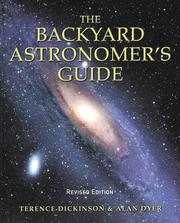
The single best entry point for beginners: covers naked-eye observing, binoculars, and telescopes with clear language and stunning visuals, grounding abstract concepts in what you can actually see.

Pairs perfectly with the previous book by providing seasonal star charts and guided tours of the sky, cementing the spatial intuition needed before diving into physics.
A richly illustrated, jargon-light overview of modern cosmology that sparks big-picture questions and introduces key ideas — dark matter, spacetime, black holes — without demanding any math.
Foundations: How the Universe Actually Works
BeginnerUnderstand the physical processes behind astronomical phenomena — light, gravity, stellar life cycles, and the structure of the universe — at a conceptual but rigorous level.
▸ Study plan for this stage
Pace: 10–12 weeks total, reading ~25–35 pages/day. Allocate roughly 3 weeks for "The Elegant Universe" (focus on Parts I–II, skim Parts III–V conceptually), 4 weeks for "Cosmos" (one chapter per sitting, ~3–4 sittings/week), and 3–4 weeks for "A Brief History of Time" (short chapters but dense — re-read k
- The two pillars of modern physics — general relativity and quantum mechanics — and why they are fundamentally incompatible, as introduced by Greene in 'The Elegant Universe'
- Spacetime as a unified fabric: how mass curves space and time, producing the phenomenon we experience as gravity (Greene, Hawking)
- The electromagnetic spectrum and how astronomers 'see' the universe across all wavelengths of light, not just the visible — a cornerstone of Sagan's 'Cosmos'
- Stellar evolution: the life cycle of stars from nebula to main sequence to end states (white dwarf, neutron star, or black hole), explored richly in 'Cosmos'
- The expanding universe, Hubble's Law, and the Big Bang as the origin of space and time itself — addressed in both 'Cosmos' and 'A Brief History of Time'
- Black holes: formation, event horizons, Hawking radiation, and the information paradox, as rigorously explained by Hawking in 'A Brief History of Time'
- The arrow of time, entropy, and why the universe has a past and a future — a key theme in 'A Brief History of Time'
- The human scale in cosmic context: how science itself evolved as a tool for understanding the universe, the unifying philosophical thread of Sagan's 'Cosmos'
- After reading 'The Elegant Universe,' can you explain in plain language why general relativity and quantum mechanics break down when applied to each other's domain — and what problem string theory attempts to solve?
- Drawing on 'Cosmos,' how does a star like our Sun convert hydrogen to helium, and what determines whether it ends its life as a white dwarf versus a neutron star versus a black hole?
- Using concepts from both 'Cosmos' and 'A Brief History of Time,' what is the observational and theoretical evidence that the universe began with a Big Bang and has been expanding ever since?
- From 'A Brief History of Time,' what is Hawking radiation, and why is its existence philosophically significant for our understanding of black holes and information?
- How does the concept of spacetime curvature (Greene and Hawking) explain phenomena like gravitational lensing, time dilation near massive objects, and the orbit of planets?
- Across all three books, how do the authors use the history of scientific discovery — from Newton to Einstein to modern cosmology — to show that our model of the universe is always provisional and self-correcting?
- **Cosmic Distance Ladder sketch:** After finishing 'Cosmos,' draw a hand-labeled diagram mapping the universe's scales — from the Earth-Moon distance out to the observable universe — annotating each rung with the measurement method Sagan describes (parallax, Cepheid variables, redshift).
- **Stellar Life Cycle flowchart:** Create a branching flowchart of stellar evolution based on 'Cosmos' Chapter 9. Start with a molecular cloud and branch by stellar mass, ending at each possible remnant. Test yourself by covering the labels and filling them in from memory.
- **Spacetime curvature analogy journal:** After Greene's treatment of relativity, write a 1-page analogy of your own (not the rubber-sheet analogy) that explains how mass curves spacetime. Compare it to Hawking's explanation in Chapter 2 of 'A Brief History of Time' and note where your analogy succeeds and fails.
- **Redshift demonstration:** Using a free online tool (e.g., the Doppler effect simulator at PhET Interactive Simulations), observe how a receding light source shifts toward red. Connect this directly to Hubble's Law as described in 'A Brief History of Time' and Sagan's discussion of the expanding universe.
- **'Two Pillars' debate card:** Write two index cards — one arguing from general relativity's perspective, one from quantum mechanics' — on the question: 'What happens at the center of a black hole?' Use Greene's framing of the incompatibility to structure the tension, then read Hawking's Chapter 7 to see how he navigates it.
- **Reading log with 'big idea' summaries:** After each chapter of all three books, write exactly two sentences: (1) the single biggest idea in the chapter, and (2) one question it raises that the book hasn't yet answered. Review the full log after finishing 'A Brief History of Time' to see how many questions were eventually resolved.
Next up: By internalizing the physical laws governing light, gravity, stellar evolution, and cosmic structure through Greene, Sagan, and Hawking, the reader has built the conceptual vocabulary needed to engage with more observational and data-driven astronomy — where these principles are applied to specific objects, missions, and discoveries in the universe.

Builds essential intuition for relativity and quantum mechanics — the twin pillars of modern astrophysics — in an accessible narrative before more technical treatments appear.
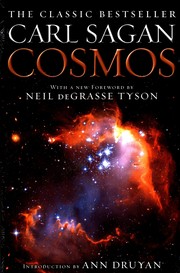
A landmark survey of astronomy and its human context; Sagan's precise yet poetic explanations of stellar evolution, galaxies, and cosmic time set a conceptual baseline that later technical books will deepen.

Introduces black holes, the Big Bang, and the arrow of time with careful logic; reading it after Cosmos ensures the cosmological vocabulary is already in place.
Going Deeper: Astrophysics Unlocked
IntermediateEngage with the actual physics and mathematics of stars, galaxies, and the cosmos — moving from qualitative understanding to quantitative reasoning.
▸ Study plan for this stage
Pace: 10–12 weeks total. Week 1–2: "Astrophysics for People in a Hurry" (~20–25 pages/day; it's short and punchy — read it in one sustained push, then re-read key chapters). Weeks 3–6: "The Whole Shebang" (~25–30 pages/day; denser cosmology — pause at each chapter to take notes on the physics arguments).
- The electromagnetic spectrum and why different wavelengths reveal different cosmic phenomena (Tyson: dark matter, CMB, and the four fundamental forces as a unified lens on the universe)
- Cosmic composition: dark matter and dark energy as the dominant ingredients of the universe, and the observational evidence Tyson marshals for each
- The Big Bang framework and the expanding universe — Hubble's Law, redshift, and the observational pillars Ferris lays out in 'The Whole Shebang'
- Inflation theory and the flatness/horizon problems it solves, as explained by Ferris through the work of Guth and Linde
- Large-scale structure of the universe: how galaxies cluster into filaments and voids, and what this tells us about initial conditions (Ferris)
- General Relativity as the geometry of curved spacetime — Thorne's exposition of how mass-energy warps space and time, and what that means for light, clocks, and orbits
- Black holes: their formation from stellar collapse, the anatomy of an event horizon, singularities, and Hawking radiation as Thorne presents them through his own research history
- Gravitational time dilation, frame dragging, and wormholes — Thorne's treatment of exotic spacetime solutions and their physical (im)plausibility
- After reading Tyson, can you explain in one paragraph why the universe is 'mostly nothing we can directly detect' — naming the approximate percentage breakdown of ordinary matter, dark matter, and dark energy?
- Ferris describes several independent lines of evidence for the Big Bang. Can you list at least three (e.g., CMB, light-element abundances, Hubble expansion) and explain what each one actually measures?
- What problem does cosmic inflation solve that a 'plain' Big Bang does not? Use Ferris's treatment of the horizon and flatness problems to construct your answer.
- Using Thorne's explanation, describe what happens — physically and geometrically — to space, time, and light as an observer falls toward and crosses a black hole's event horizon. How does the experience differ for the infalling observer versus a distant observer?
- Thorne traces how Einstein's field equations were first solved exactly by Schwarzschild. What does the Schwarzschild radius represent, and how does it connect to the concept of escape velocity at the speed of light?
- Across all three books, a consistent theme is that indirect evidence drives discovery. Choose one example from each book where astronomers inferred something fundamental about the universe without directly 'seeing' it, and compare the reasoning strategies used.
- Cosmic inventory calculation: Using the percentages Tyson cites (~5% ordinary matter, ~27% dark matter, ~68% dark energy), calculate the approximate mass-energy contribution of each component for a hypothetical observable universe volume. Vary the volume and observe how the ratios stay constant — this builds intuition for the cosmological principle.
- Hubble's Law sketch: Using the formula v = H₀ × d (with H₀ ≈ 70 km/s/Mpc), calculate the recession velocities of galaxies at 100, 500, and 1000 Mpc. Plot distance vs. velocity by hand. Then look up actual Hubble diagram data online and compare your line to real observations — directly connecting Ferris's narrative to the math.
- Schwarzschild radius worksheet: Using the formula r_s = 2GM/c², compute the Schwarzschild radius for (a) the Sun, (b) Earth, and (c) a 10-solar-mass star. Compare these to the actual sizes of those objects. This makes Thorne's event horizon concept concrete and quantitative.
- Timeline of the universe: After finishing Ferris, draw a logarithmic timeline from the Big Bang to today, annotating key events (inflation, quark epoch, nucleosynthesis, recombination, first stars, galaxy formation, present). Use Tyson's chapter on the first billion years as a cross-reference to fill in early epochs.
- Concept-mapping session: After finishing Thorne, create a two-column concept map linking each major idea in 'Black Holes and Time Warps' (e.g., curved spacetime, event horizon, Hawking radiation, wormholes) to a corresponding passage in either Tyson or Ferris. Identify gaps — topics Thorne covers that the earlier books only hint at.
- Discussion or journal prompt — 'What would falsify this?': For each of the three books, identify one central claim (e.g., dark energy's existence, inflation, black hole evaporation) and write a short paragraph describing what observational evidence would, in principle, disprove it. This trains the scientific reasoning habit all three authors model.
Next up: By mastering the physical and mathematical scaffolding in these three books — from cosmic composition and expansion to curved spacetime and black holes — the reader has the quantitative vocabulary needed to tackle more specialized or research-adjacent texts in areas like stellar evolution, observational cosmology, or gravitational wave astronomy at an advanced level.

A compact but surprisingly dense tour of dark matter, dark energy, the CMB, and more — ideal as a bridge that reframes everything learned so far in the language professional astronomers use.
A thorough, journalist-level account of modern cosmology — inflation, large-scale structure, the fate of the universe — that demands and rewards the conceptual grounding built in earlier stages.
Written by a Nobel laureate, this book gives the deepest accessible treatment of general relativity, neutron stars, and black holes, preparing readers for graduate-level texts.
Mastery: University-Level Astronomy
ExpertWork through canonical university textbooks to achieve a systematic, mathematically grounded command of modern astronomy and astrophysics.
▸ Study plan for this stage
Pace: 6–9 months total. Carroll's "An Introduction to Modern Astrophysics" (~1,300 pp): 4–6 months at ~20–25 pages/day, dedicating extra time to chapters on stellar structure, radiative transfer, and cosmology. Binney's "Galactic Dynamics" (~900 pp): 2–3 months at ~15–20 pages/day, given the higher mathem
- Radiative transfer and the equation of transfer: how photons interact with matter in stellar interiors and atmospheres (Carroll, Ch. 9–10)
- Stellar structure and evolution: the four equations of stellar structure, the H-R diagram, main-sequence physics, and post-main-sequence evolution including white dwarfs, neutron stars, and black holes (Carroll, Ch. 10–18)
- Nuclear astrophysics: energy generation via the pp chain, CNO cycle, and helium/advanced burning; nucleosynthesis (Carroll, Ch. 10)
- Compact objects and general relativistic effects: Schwarzschild metric, Chandrasekhar and Tolman–Oppenheimer–Volkoff limits, accretion disks, and pulsars (Carroll, Ch. 16–18)
- Galactic and extragalactic astronomy: the Milky Way structure, galaxy morphology, active galactic nuclei, and large-scale structure (Carroll, Ch. 19–27)
- Cosmology: the Friedmann equation, cosmic expansion, dark matter and dark energy, the CMB, and Big Bang nucleosynthesis (Carroll, Ch. 27–29)
- Collisionless stellar dynamics: the collisionless Boltzmann equation (CBE), the Jeans equations, and their application to stellar systems (Binney, Ch. 4–5)
- Galactic potentials and orbits: gravitational potential theory, orbit families in axisymmetric and triaxial potentials, epicycle theory, resonances, and the role of integrals of motion (Binney, Ch. 2–3)
- Stability and dynamics of disks and spheroids: the Jeans instability, spiral density wave theory, the Toomre Q parameter, and violent relaxation (Binney, Ch. 6–8)
- N-body methods and galaxy formation: numerical simulation techniques, dynamical friction, tidal stripping, and the formation of structure in a cosmological context (Binney, Ch. 8)
- Derive the four equations of stellar structure from first principles and explain how each constrains the interior model of a star; what boundary conditions are required and why? (Carroll)
- Trace the complete evolutionary path of a 1 M☉ star and a 20 M☉ star from the zero-age main sequence to their respective endpoints, identifying the dominant nuclear burning stages and the physical mechanisms driving each transition. (Carroll)
- Starting from Maxwell's equations and the specific intensity, derive the equation of radiative transfer and explain the physical meaning of the source function and optical depth. (Carroll)
- State the collisionless Boltzmann equation, explain every term physically, and show how integrating over velocity space yields the Jeans equations; what assumptions are required and where do they break down? (Binney)
- Describe the major families of orbits in an axisymmetric galactic potential (e.g., box orbits, tube orbits, loop orbits) and explain how the concept of integrals of motion organizes them; what is the significance of the third integral? (Binney)
- Explain the Toomre stability criterion for a differentially rotating disk: derive the Q parameter, state the physical instability condition, and discuss its implications for star formation in spiral galaxies. (Binney)
- What is dynamical friction? Derive the Chandrasekhar formula qualitatively and quantitatively, and apply it to estimate the inspiral timescale of a satellite galaxy merging into a larger host. (Binney)
- Work every end-of-chapter problem in Carroll for at least the stellar structure (Ch. 10–11), radiative transfer (Ch. 9), and cosmology (Ch. 27–29) chapters; check dimensional analysis and limiting cases for every result.
- Build a simple numerical stellar structure integrator in Python: implement the four structure equations with a polytropic equation of state, integrate from center to surface using a shooting method, and reproduce the mass-radius relation for a polytrope of index n = 1.5 and n = 3.
- Use a publicly available stellar evolution code (e.g., MESA or the simpler EZ-Web) to evolve a 1 M☉ and a 5 M☉ star; plot the resulting evolutionary tracks on an H-R diagram and compare key features (ZAMS position, RGB tip, horizontal branch) with Carroll's analytical predictions.
- Implement a 2D orbit integrator in Python for test-particle orbits in a Miyamoto–Nagai disk potential and a Hernquist sphere (potentials defined in Binney Ch. 2); plot orbit families, compute the epicycle frequency κ, and verify it against the analytical formula.
- Solve at least 10 problems from Binney's problem sets, focusing on Chapters 4 (CBE and Jeans equations) and 6 (disk stability); for each, write out the full derivation and check against known limiting cases or published results.
- Reproduce a classic result from Binney: numerically solve the isotropic Jeans equation for a Hernquist sphere to recover the line-of-sight velocity dispersion profile σ_los(R), then plot it and discuss what observational data would be needed to constrain the mass profile.
Next up: Mastering the mathematical frameworks in Carroll and Binney — stellar physics, radiative processes, galactic dynamics, and cosmological structure — equips the reader with the quantitative vocabulary needed to engage directly with the primary research literature and specialized monographs in areas such as high-energy astrophysics, cosmological simulations, or gravitational wave astronomy.
The definitive undergraduate astronomy textbook — covering stellar structure, galactic dynamics, cosmology, and more with full mathematical rigor; everything in the prior stages has prepared you to read this fluently.
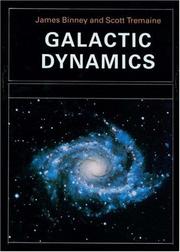
The graduate-level standard for understanding how galaxies form, move, and evolve; best read after Carroll's text has solidified your grasp of gravity and stellar physics.
Discussion
Keep reading
Paths that share books, cover the same subject, or open a related topic.