Nanotechnology: the science of the very small
This curriculum takes a beginner from everyday intuitions about small things all the way to the cutting edge of nanoscience research and policy. Each stage builds on the last: first you develop a feel for the nanoscale and its strange physics, then you learn the real science and engineering toolkit, then you engage with frontier applications and honest assessments of what nanotech can and cannot do, and finally you wrestle with the societal, ethical, and future-facing dimensions of the field.
Foundations — The Nanoscale World
BeginnerDevelop an intuitive feel for how matter behaves at the nanoscale, why quantum effects and surface forces dominate, and what makes nanotechnology fundamentally different from ordinary engineering.
▸ Study plan for this stage
Pace: 8–10 weeks total. Weeks 1–5: "Nano" by Ed Regis (~20–25 pages/day, 4–5 days/week) — read it narrative-first, letting the history and characters build intuition before theory. Weeks 6–10: "Nanofuture" by J. Storrs Hall (~15–20 pages/day, 4–5 days/week) — slower pace to absorb the more technical and c
- The nanoscale defined: 1–100 nm and why that range is special — atoms are ~0.1–0.5 nm, DNA ~2 nm, viruses ~100 nm; developing a visceral sense of these proportions
- Surface-area-to-volume ratio: why shrinking an object causes surface effects (adhesion, friction, van der Waals forces) to dominate over bulk/gravitational effects, as illustrated throughout Regis's lab vignettes
- Quantum mechanical effects at the nanoscale: quantized energy levels, wave-particle duality, quantum tunneling, and why classical Newtonian intuitions break down below ~10 nm (introduced narratively in Regis, elaborated conceptually in Hall)
- Scanning Tunneling Microscopy (STM) and Atomic Force Microscopy (AFM): how these tools 'see' and manipulate individual atoms, and why their invention was the practical birth of nanotechnology (central to Regis's historical narrative)
- Drexlerian molecular manufacturing: the vision of atomically precise construction, molecular assemblers, and the theoretical basis Hall uses to argue this is physically permissible under known chemistry and physics
- Self-assembly vs. top-down fabrication: the contrast between nature's bottom-up nanoscale machinery (proteins, DNA) and human top-down lithographic approaches, and why Hall argues bottom-up is the long-term path
- Scaling laws and their consequences: how physical properties (strength, speed, power density) change non-linearly as dimensions shrink — Hall's 'performance vs. scale' arguments
- The distinction between what is forbidden by the laws of physics vs. what is merely an unsolved engineering problem — a critical thinking lens Hall applies throughout Nanofuture
- After reading Regis: In your own words, why did the invention of the STM by Binnig and Rohrer represent a conceptual turning point, not just a technical one? What did it prove was possible?
- If you shrink a cube of iron to 10 nm on a side, what happens to the ratio of surface atoms to interior atoms, and why does this change the material's chemical and mechanical behavior? Use examples Regis or Hall provide.
- What is quantum tunneling, and why does it matter for both the operation of nanoscale instruments (like the STM) and the theoretical limits of nanoscale devices?
- Hall argues that molecular assemblers are not forbidden by physics. What is his core line of reasoning, and what evidence from biology (e.g., ribosomes, motor proteins) does he use to support it?
- What are scaling laws, and how does Hall use them to argue that nanoscale machines would be faster, stronger per unit mass, and more energy-efficient than their macroscale counterparts?
- What is the fundamental difference between 'self-assembly' and 'directed assembly,' and why does that distinction matter for the practical future of nanotechnology as both authors frame it?
- Scale ladder sketch: Draw a hand-made number line from 0.1 nm to 1 mm, placing at least 15 objects on it (atom, glucose molecule, DNA helix, ribosome, virus, bacterium, human cell, transistor node, etc.). Annotate which zone is 'the nanoscale.' Refer back to this diagram every time Regis or Hall introduces a new object.
- Surface-area-to-volume calculation: Pick a cube and repeatedly halve its side length five times (e.g., start at 1 cm). Calculate SA:V at each step. Plot the result and write two sentences connecting the trend to a specific phenomenon Regis describes (e.g., nanoparticle reactivity, gold color change).
- STM simulation exploration: Use the free PhysVis or similar online STM simulation (or watch NIST's published STM footage of xenon atoms on nickel) and write a one-page reflection connecting what you observe to Regis's account of the IBM 'IBM' atom-spelling experiment.
- Concept map after each book: After finishing Regis, draw a concept map linking: STM → atomic manipulation → Drexler's vision → public controversy. After finishing Hall, extend the map to include: scaling laws → assembler design → self-assembly → path to molecular manufacturing.
- 'Permitted or not?' log: While reading Hall, keep a two-column journal. Left column: a claim Hall makes about what nanotechnology could do. Right column: classify it as (a) demonstrated, (b) theoretically permitted but undemonstrated, or (c) speculative/contested. Aim for at least 15 entries.
- Analogy writing exercise: Write a 300–500 word analogy explaining van der Waals forces and why they make nanoscale objects 'sticky' to a curious 14-year-old — no equations allowed. This forces you to test whether your intuition is genuine or just vocabulary.
Next up: By internalizing why the nanoscale is physically unique and what atomically precise construction would require in principle, the reader is primed to move into the next stage's more technical material — covering actual nanomaterials (carbon nanotubes, quantum dots, nanocomposites) and real fabrication methods — where the 'why it's different' intuition built here becomes the essential lens for evalu

A highly readable, journalist-written narrative that introduces the history and core ideas of nanotechnology without requiring a science background — the perfect first entry point.
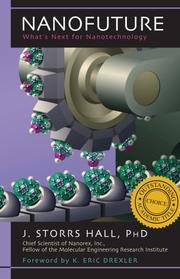
Written by a researcher, this book builds on the narrative foundation by explaining what physical laws actually permit at the nanoscale, giving beginners a grounded (not hype-driven) picture of possibilities and limits.
The Science Toolkit — Physics and Chemistry of the Small
BeginnerUnderstand the core scientific principles — quantum mechanics, thermodynamics, self-assembly, and surface chemistry — that govern how nanoscale objects behave and are built.
▸ Study plan for this stage
Pace: 6–8 weeks, ~20–25 pages/day, 5 days/week. Focus on Vol. 1 chapters covering atoms, energy, thermodynamics, kinetics, and wave-particle duality. Prioritize Chapters 1–2 (atoms in motion), 6–7 (probability and statistical mechanics), 10 (conservation of momentum), 13–14 (work and potential energy), 39
- Atoms in motion: everything is made of atoms jiggling with thermal energy, and temperature is a measure of that kinetic energy
- The quantum nature of matter: at the nanoscale, particles exhibit wave-particle duality and cannot be described by classical mechanics alone
- Heisenberg's Uncertainty Principle: the fundamental limit on simultaneously knowing a particle's position and momentum — critical for understanding nanoscale confinement effects
- Statistical mechanics and probability: the behavior of nanoscale systems is governed by probability distributions (e.g., Maxwell-Boltzmann), not deterministic paths
- Conservation laws: energy, momentum, and angular momentum are the bookkeeping rules that constrain every nanoscale interaction
- Thermodynamics at small scales: entropy, heat flow, and the equipartition theorem explain why nanoscale systems behave differently from bulk materials — surface-to-volume ratios dominate
- Intermolecular forces and potential energy: the shape of potential energy wells (attraction vs. repulsion) governs how atoms and molecules stick together — the basis of self-assembly
- Wave behavior of matter: interference and diffraction of electrons and photons underpin imaging techniques (e.g., electron microscopy) used to see nanoscale structures
- According to Feynman's atomic hypothesis, what single statement contains the most information about the natural world — and why is it especially powerful at the nanoscale?
- How does the Uncertainty Principle (as Feynman introduces it) set a practical lower bound on how tightly you can confine an electron, and what does this imply for nanoscale device design?
- Feynman uses the kinetic theory of gases to derive pressure and temperature. How does the Maxwell-Boltzmann speed distribution change your expectation of particle behavior when you are dealing with only dozens of molecules rather than 10²³?
- What is the equipartition theorem, and why does it predict that thermal fluctuations become increasingly significant — and potentially dominant — as the size of a system shrinks toward the nanoscale?
- How does Feynman's treatment of potential energy wells and intermolecular forces lay the conceptual groundwork for understanding why molecules spontaneously self-assemble into ordered structures?
- Feynman describes light as both a wave and a particle. How does this dual nature underpin the operation of tools like the electron microscope or atomic force microscope used to image nanoscale objects?
- **Atomic Jiggling Visualization:** After reading Chapters 1–2, sketch a diagram of a solid, liquid, and gas at the atomic level, annotating each with approximate inter-atomic distances (pm–nm scale) and relative thermal energy. Label which regime nanotechnology operates in.
- **Uncertainty Principle Calculation:** Use Feynman's qualitative derivation of ΔxΔp ≥ ℏ/2 to estimate the minimum kinetic energy of an electron confined to a 1 nm box (a rough model of a quantum dot). Compare this to the thermal energy kT at room temperature (~0.025 eV) — which dominates?
- **Maxwell-Boltzmann Sampling:** Write a short Python (or spreadsheet) simulation that draws 10²³ vs. 50 random speeds from a Maxwell-Boltzmann distribution for nitrogen at 300 K. Plot both histograms. Observe how statistical fluctuations explode at small N — this is the noise floor of nanoscale devices.
- **Entropy and Surface Area Thought Experiment:** Take a 1 cm cube of gold and mentally subdivide it into 1 nm cubes. Calculate the ratio of surface atoms to bulk atoms for both cases. Reflect on Feynman's thermodynamics chapters: how does this surface-to-volume explosion change chemical reactivity and melting point?
- **Potential Energy Well Sketch:** Using Feynman's discussion of intermolecular forces as a guide, draw a Lennard-Jones-style potential energy curve (attraction at long range, repulsion at short range). Mark the equilibrium bond length, the depth of the well (binding energy), and annotate where self-assembly 'locks in' — the energy minimum.
- **Concept Map:** After finishing the stage, build a one-page concept map connecting: atoms → thermal motion → statistical mechanics → surface-to-volume ratio → intermolecular forces → self-assembly → quantum confinement. Draw arrows showing causal or enabling relationships. This map will serve as your personal reference for all future stages.
Next up: Feynman's foundational treatment of atomic behavior, quantum uncertainty, and thermodynamic statistics provides the physical intuition needed to understand how nanoscale materials are synthesized, characterized, and engineered in the next stage of the curriculum.
Feynman's famous 'There's Plenty of Room at the Bottom' lecture is the intellectual origin of nanotechnology; Vol. 1 gives the physical intuition (mechanics, thermodynamics, atoms) needed to understand why the nanoscale is special.
Engineering Reality — Tools, Materials, and Real Devices
IntermediateLearn how scientists actually fabricate, image, and manipulate matter at the nanoscale today — including scanning probe microscopy, lithography, nanomaterials, and MEMS/NEMS — and distinguish proven technology from speculation.
▸ Study plan for this stage
Pace: 10–13 weeks total. Book 1 — "Introduction to Nanotechnology" (Poole): ~6–7 weeks at 20–25 pages/day, covering fabrication methods, characterization tools, and nanomaterial classes chapter by chapter. Book 2 — "Soft Machines" (Jones): ~4–5 weeks at 15–20 pages/day, reading more reflectively given its
- Scanning probe microscopy (STM and AFM): operating principles, resolution limits, and use as both imaging and manipulation tools — as grounded in Poole's survey of characterization techniques
- Top-down vs. bottom-up fabrication: lithographic patterning (photolithography, e-beam, nanoimprint) versus self-assembly and chemical synthesis, with Poole providing the engineering detail and Jones providing the biological counterpoint
- Nanomaterials taxonomy: carbon nanotubes, fullerenes, quantum dots, nanowires, and thin films — their synthesis routes, size-dependent properties, and real-world application status per Poole
- MEMS and NEMS: how micro- and nano-electromechanical systems are fabricated, actuated, and applied, including resonators, sensors, and cantilevers as covered in Poole
- The physics of the nanoscale: quantum confinement, surface-area-to-volume dominance, and how classical bulk intuitions break down — threaded through both books
- Soft nanotechnology and biological machines: Jones's argument that molecular motors, membranes, and polymers in living cells are the most sophisticated nanomachines that exist, and what engineers can learn from them
- Brownian motion, thermal noise, and the stochastic environment: Jones's core insight that nanoscale devices must work with — not against — thermal fluctuations, distinguishing real nanoscale engineering from science-fiction 'assembler' narratives
- Critical evaluation of speculation vs. proven technology: using Jones's explicit critique of Drexlerian assemblers alongside Poole's empirical device catalog to build a calibrated sense of what nanotechnology can and cannot do today
- After reading Poole, can you explain how an atomic force microscope generates contrast, and name at least two imaging modes (e.g., contact, tapping) and the type of sample each suits best?
- What distinguishes electron-beam lithography from photolithography in terms of resolution, throughput, and cost, and why does this trade-off matter for commercial nanofabrication?
- Drawing on Poole's materials chapters, how does quantum confinement in a semiconductor quantum dot change its optical properties compared to the bulk material, and what applications does this enable?
- Jones argues that Brownian motion is not merely an obstacle but a resource at the nanoscale — what does he mean, and how do biological molecular motors exploit this?
- How does Jones's analysis of biological soft machines challenge or refine the vision of nanotechnology presented in Poole's more engineering-focused framework?
- Which specific nanotechnology devices or materials described in Poole can you now classify as commercially mature, in research/prototype stage, or largely speculative — and what criteria did you use to make those distinctions?
- SPM image analysis: Download a set of open-access STM or AFM images from a nanoscience repository (e.g., Nanoscale journal supplementary data or NIST databases). Annotate each image: identify the scale bar, estimate feature sizes, and match the surface structures to concepts from Poole's characterization chapters.
- Fabrication flowchart: For one device class covered in Poole (e.g., a MEMS pressure sensor or a carbon nanotube field-effect transistor), draw a complete step-by-step fabrication process flow — deposition, patterning, etching, and characterization — labeling each step with the technique used and its resolution limit.
- Nanomaterial property table: Build a comparison table for at least five nanomaterial types from Poole (fullerenes, CNTs, quantum dots, nanowires, nanoparticles). Columns: synthesis method, key size-dependent property, one proven application, one still-speculative application.
- Jones reading journal — 'real vs. speculative' log: While reading Soft Machines, keep a two-column running log. Left column: claims Jones identifies as experimentally demonstrated. Right column: claims he flags as speculative or physically implausible. At the end, write a one-page synthesis of where the boundary lies.
- Thermal noise estimation exercise: Using Jones's discussion of Brownian motion as a guide, estimate the thermal energy (kT) at room temperature and compare it to the energy scales of: (a) a covalent bond, (b) a hydrogen bond, (c) a molecular motor step. Use these numbers to explain why a rigid Drexlerian assembler arm would face fundamental difficulties.
- Cross-book essay: Write a 600–900 word essay answering the question: 'What would a realistic, physically grounded nanoscale device look like in 2030, based on the trajectory described by Poole and the constraints identified by Jones?' Cite specific chapters or arguments from both books.
Next up: By mastering the real fabrication toolkit and physical constraints laid out by Poole and Jones, the reader has a grounded empirical baseline from which to explore the cutting-edge and emerging frontiers of nanotechnology — such as DNA nanotechnology, nanoelectronics scaling, and nanomedicine — without conflating genuine breakthroughs with hype.

A comprehensive, rigorous survey of real nanoscale fabrication methods and characterized nanomaterials; reading it after the toolkit stage lets you connect physical principles to actual laboratory practice.

Jones, a leading physicist, provides a critical and scientifically honest account of what biology teaches us about nanomachines and why 'hard' Drexlerian assemblers face deep physical obstacles — essential for calibrating expectations.
Frontier Applications — Medicine, Energy, and Electronics
IntermediateExplore where nanotechnology is delivering real-world impact today — drug delivery, cancer therapy, solar cells, transistors, and advanced materials — and understand the gap between laboratory results and commercial deployment.
▸ Study plan for this stage
Pace: 3–4 weeks, ~20–25 pages/day — Sargent writes in vivid, accessible prose, so the pace is comfortable, but pausing to reflect on each application domain (medicine, energy, electronics) before moving on is strongly recommended. Dedicate the first week to Part I (foundations and biological applications)
- Quantum dots and their size-tunable optical/electronic properties — the central metaphor Sargent uses to unify biology, energy, and electronics
- Targeted drug delivery: how nanoparticles can be engineered to find and bind to specific cell receptors, reducing systemic toxicity in cancer therapy
- The lab-to-market gap: why promising nanoscale phenomena often stall at the prototype stage due to manufacturing scalability, toxicology, and regulatory hurdles
- Nanostructured solar cells (including quantum-dot photovoltaics): how nanoscale engineering extends light absorption beyond the limits of bulk silicon
- Molecular electronics: using individual molecules or nanoscale structures as transistors, wires, and switches — and why integration into chips remains elusive
- Self-assembly as a fabrication strategy: letting molecules organize themselves rather than carving structures top-down
- Biocompatibility and nanotoxicology: the open questions about how engineered nanoparticles interact with living tissue and the environment
- The interplay between fundamental quantum-mechanical effects (confinement, tunneling, surface-area-to-volume ratio) and macroscopic device performance
- How does quantum confinement cause quantum dots to emit different colors, and why does this make them useful as both biological imaging agents and photovoltaic absorbers?
- What specific strategies does Sargent describe for making nanoparticle drug carriers 'find' a tumor, and what barriers still prevent these from replacing conventional chemotherapy at scale?
- According to Sargent's treatment of energy, in what ways can nanostructured materials theoretically exceed the Shockley–Queisser efficiency limit, and what practical obstacles remain?
- What is the core promise of molecular electronics as Sargent presents it, and why has the transistor count on a chip not yet been driven down to the single-molecule level commercially?
- How does self-assembly differ from top-down lithography, and what advantages and limitations does Sargent associate with each approach for manufacturing real devices?
- Where does Sargent come down on the question of nanotoxicology — does he treat it as a solved problem, an open risk, or something in between, and what evidence does he cite?
- Domain map: Draw a single diagram with three columns — Medicine, Energy, Electronics. For each chapter of The Dance of Molecules, place every nanotech application Sargent mentions into the correct column, note the nanomaterial involved (quantum dot, carbon nanotube, nanoparticle, etc.), and mark whether Sargent describes it as lab-stage, prototype, or commercially deployed. This forces active read
- Quantum dot color calculator: Using the simple particle-in-a-box approximation (E = h²n²/8mL²), calculate the confinement energy for a quantum dot of diameter 2 nm, 4 nm, and 6 nm. Compare your predicted emission wavelengths to the colors Sargent describes. No advanced physics required — this grounds the book's prose in a concrete number.
- Lab-to-market gap analysis: Choose one application from the book (e.g., quantum-dot cancer imaging or nanostructured solar cells). Write a one-page structured memo with three sections: (1) What the lab result achieves, (2) What Sargent identifies as the remaining barriers, and (3) One regulatory or manufacturing step — researched briefly online — that would need to be cleared for commercialization
- Analogical explanation exercise: Sargent is famous for his use of analogy. Identify five analogies he uses in the book, write each one down, then write your own alternative analogy for the same concept. This builds the habit of translating nanoscale ideas into intuitive language — essential for intermediate learners.
- Self-assembly vs. top-down comparison table: Create a two-column table contrasting self-assembly and lithographic (top-down) fabrication across six dimensions: cost, precision, scalability, defect rate, materials flexibility, and current commercial maturity. Use only evidence from the book, then flag any cell where you feel Sargent left the answer ambiguous — those gaps are worth researching next.
- Reflection journal — 'What surprised me?': After finishing each major application section (medicine, energy, electronics), write a short paragraph answering: What did I assume before reading this section? What did Sargent say that contradicted or complicated that assumption? Keeping this journal primes critical thinking and provides raw material for the synthesis work in the next stage.
Next up: Sargent's survey of frontier applications reveals how much nanoscale promise still lives in the lab, naturally motivating the next stage's focus on the engineering, policy, and ethical frameworks needed to close that gap and bring nanotechnology safely and reliably into society.

Focuses specifically on quantum dots, nanophotonics, and energy applications, bridging the gap between laboratory nanoscience and the clean-energy and sensing technologies now entering the market.
Society, Ethics, and the Long View
ExpertCritically evaluate the societal risks, regulatory challenges, environmental impacts, and long-range trajectory of nanotechnology — and form an informed, nuanced view of where the field is genuinely headed.
▸ Study plan for this stage
Pace: 6–8 weeks total: Weeks 1–3 on "Nanotechnology & Society" (~25–30 pages/day, including re-reading dense ethical arguments); Weeks 4–7 on "Engines of Creation" (~20–25 pages/day, pausing to journal on speculative claims); Week 8 reserved for synthesis, debate prep, and reflection exercises across both
- The precautionary principle vs. proactionary principle as competing frameworks for governing emerging technologies, as debated in Nanotechnology & Society
- Distributive justice and equity concerns — who bears nanotechnology's risks vs. who reaps its benefits, a central tension in Allhoff's ethical analysis
- Dual-use dilemma: how the same nanoscale capabilities that enable medicine or clean energy can enable weapons or surveillance
- The 'grey goo' scenario and self-replicating assemblers — Drexler's original framing in Engines of Creation and its evolution into a serious (if contested) existential risk argument
- Molecular assemblers and the concept of bottom-up manufacturing — Drexler's core technical vision and its long-range economic and social implications
- Regulatory gap problem: how existing chemical, pharmaceutical, and environmental law frameworks struggle to keep pace with nanomaterial novelty, as analyzed in Nanotechnology & Society
- Nanotoxicology and environmental fate — the challenge of assessing risk for materials whose properties change at the nanoscale, addressed across both books
- Long-range trajectory thinking: how Engines of Creation models the practice of reasoning rigorously about transformative but not-yet-realized technologies
- According to Allhoff in Nanotechnology & Society, what are the strongest arguments for applying the precautionary principle to nanomaterials, and what are its most significant practical limitations?
- How does Drexler's vision of molecular assemblers in Engines of Creation challenge or complement conventional top-down manufacturing, and what societal disruptions does he anticipate?
- What specific regulatory deficiencies does Nanotechnology & Society identify in existing frameworks (e.g., TSCA, FDA guidelines), and what reform models does it propose?
- How credible is the self-replication risk ('grey goo') as analyzed across both books — what technical and governance safeguards do the authors suggest, and where do they disagree?
- In what ways do the ethical frameworks presented in Nanotechnology & Society (consequentialist, deontological, virtue ethics) lead to different policy conclusions about the same nanotechnology application?
- After reading Engines of Creation, how would you characterize Drexler's methodology for long-range technological forecasting — what are its strengths and its blind spots?
- Regulatory audit exercise: Choose one real nanomaterial (e.g., silver nanoparticles in consumer products) and map it against the regulatory gaps identified in Nanotechnology & Society — write a 1-page memo identifying which agency has jurisdiction, what data is missing, and what Allhoff's framework would recommend.
- Structured debate: Divide Drexler's core claims in Engines of Creation into 'well-supported,' 'plausible but speculative,' and 'not yet validated' columns using evidence from both books and current literature; defend your categorizations in writing.
- Ethical matrix: Build a 3×3 grid with three stakeholder groups (e.g., developing-world populations, industrial workers, future generations) on one axis and three ethical frameworks from Nanotechnology & Society (consequentialist, deontological, virtue ethics) on the other — fill each cell with a concrete nanotechnology policy implication.
- Scenario planning: Write two 500-word future scenarios set in 2075 — one where Drexler's assembler vision was responsibly governed using Allhoff's frameworks, and one where it was not — then identify the three decision points that diverge the timelines.
- Critical annotation: Re-read Drexler's chapter on 'Engines of Destruction' and annotate every claim with either a supporting or challenging passage from Nanotechnology & Society, building a cross-book dialogue on the page.
- Policy brief: Draft a 2-page policy brief addressed to a fictional national nanotechnology oversight body, synthesizing the risk, equity, and regulatory arguments from both books into three concrete, actionable recommendations.
Next up: By stress-testing both the ethical guardrails from Allhoff and the long-range technical vision from Drexler, the reader has built the critical vocabulary and risk-aware mindset needed to engage with cutting-edge primary literature and ongoing research debates in the next stage.
An edited volume of essays by scientists, ethicists, and policy scholars that rigorously examines risk, equity, governance, and the ethics of emerging nanotechnologies — essential for a complete picture.
The foundational and most influential vision of molecular nanotechnology; reading it last — after you have the science and critical tools — lets you engage seriously with its arguments and understand both its lasting influence and its contested claims.
Discussion
Keep reading
Paths that share books, cover the same subject, or open a related topic.