The Best Books to Learn Biostatistics, In Order
This curriculum builds a rigorous, practical mastery of biostatistics — from core statistical reasoning in medical contexts, through clinical trial design and survival analysis, to advanced modeling and causal inference. Because the learner starts at an intermediate level, the path skips elementary probability and moves quickly into applied medical statistics, deepening into specialized methods used in epidemiology, clinical research, and public health.
Foundations in Medical Statistics
BeginnerSolidify the core statistical concepts as they are actually applied in medicine and public health — hypothesis testing, confidence intervals, regression, and study design — building the shared vocabulary needed for everything that follows.
▸ Study plan for this stage
Pace: 8–10 weeks, ~25–30 pages/day from Intuitive Biostatistics (weeks 1–6), then 2–3 weeks on Medical Statistics at a Glance Workbook (~40–50 pages/day with active problem-solving)
- Hypothesis testing framework: null hypothesis, p-values, Type I and Type II errors, and statistical power in medical contexts
- Confidence intervals as a measure of precision and uncertainty, and how they complement p-values
- Probability distributions (normal, binomial, Poisson) and their role in medical data
- Regression analysis (linear and logistic) for modeling relationships between variables in clinical studies
- Study design principles: randomization, blinding, confounding, and bias in observational vs. experimental studies
- Choosing appropriate statistical tests based on data type, sample size, and research question
- Interpreting and communicating statistical results responsibly in medical literature and practice
- What is the difference between a p-value and a confidence interval, and when is each most useful in medical research?
- How do Type I and Type II errors relate to statistical power, and why do clinicians need to understand these trade-offs?
- What are the key sources of bias in observational studies, and how do randomized controlled trials address them?
- When would you use linear regression vs. logistic regression, and what does each tell you about the relationship between variables?
- How do you interpret a 95% confidence interval reported in a clinical trial, and what does it mean if it crosses the null value?
- What study design (RCT, cohort, case-control, cross-sectional) is most appropriate for a given research question, and why?
- Work through Intuitive Biostatistics' end-of-chapter problems systematically, focusing on interpreting p-values and confidence intervals from real medical studies
- Complete all worked examples in Medical Statistics at a Glance Workbook, paying close attention to the step-by-step reasoning for test selection
- Extract a published medical paper (e.g., from PubMed), identify the study design, hypothesis test used, and confidence intervals reported, then explain why those choices were appropriate
- Solve 5–10 practice problems from the workbook on hypothesis testing and regression, writing out your reasoning for which test to use and why
- Create a one-page decision tree or flowchart for choosing the right statistical test based on data type, sample size, and research question
- Conduct a mini-analysis: take a small dataset (provided or from the workbook), perform a hypothesis test, calculate a confidence interval, and write a brief clinical interpretation
Next up: This stage establishes the statistical vocabulary and reasoning you'll need to understand advanced methods—you now know *why* tests are chosen and *how* to interpret their results, which prepares you to learn specialized techniques (survival analysis, mixed models, Bayesian approaches) and apply them confidently in real research contexts.
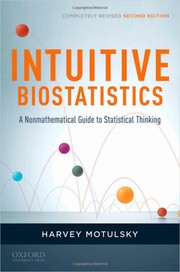
A uniquely readable bridge for the intermediate learner: it builds deep conceptual intuition about p-values, power, and common pitfalls in medical research without drowning in formulas. Read this first to sharpen your critical lens on biostatistical reasoning.

A concise, well-organized reference that maps the full landscape of methods used in medical literature — from t-tests to logistic regression — giving you a reliable mental framework before diving into any single topic deeply.
Core Biostatistics Methods
IntermediateDevelop working proficiency in the canonical biostatistical toolkit: regression modeling, survival analysis, and the statistical logic behind clinical study design.
▸ Study plan for this stage
Pace: 12–14 weeks, ~40–50 pages/day, with 1–2 weeks per book plus integration time
- Probability distributions, hypothesis testing, and p-values as the foundation for all biostatistical inference
- Linear and logistic regression as tools for modeling relationships between predictors and outcomes in clinical data
- Model selection, interpretation of coefficients, and assessment of model fit and assumptions
- Confounding, effect modification, and strategies for controlling bias in observational studies
- Survival analysis as a specialized framework for time-to-event data with censoring and competing risks
- Kaplan-Meier curves, Cox proportional hazards models, and their clinical interpretation
- Study design principles: randomization, blinding, sample size calculation, and power analysis
- Translating statistical results into clinically meaningful conclusions and communicating uncertainty
- What is the difference between linear and logistic regression, and when would you use each in a clinical study?
- How do you interpret a regression coefficient, and what does it tell you about the relationship between a predictor and outcome?
- What is confounding, how do you identify it, and what are the main strategies (stratification, matching, regression adjustment) to control for it?
- What does censoring mean in survival analysis, and why can't you simply use standard regression methods on time-to-event data?
- How do you interpret a Kaplan-Meier survival curve and a Cox proportional hazards model, and what assumptions must hold?
- How do sample size, effect size, and power relate to each other, and how would you design a study to detect a clinically meaningful difference?
- Using Fisher's Biostatistics, work through 3–4 complete hypothesis testing problems from end-of-chapter exercises, explicitly stating null/alternative hypotheses, calculating test statistics, and interpreting p-values in context
- Fit a linear regression model to a real clinical dataset (e.g., from R or provided in Vittinghoff), interpret all coefficients, check assumptions (linearity, homoscedasticity, normality), and report results in publication-ready format
- Fit a logistic regression model to a binary outcome, interpret odds ratios with confidence intervals, and compare model fit using AIC or likelihood ratio tests
- Identify confounders in a published observational study; stratify the data and use regression adjustment to control for confounding, comparing crude vs. adjusted estimates
- Construct a Kaplan-Meier survival curve by hand (or using software) for a small dataset, interpret the curve, and test for differences between groups using the log-rank test
- Fit a Cox proportional hazards model to a time-to-event dataset, interpret hazard ratios, check the proportional hazards assumption, and present results with confidence intervals
Next up: This stage equips you with the statistical machinery to design, analyze, and interpret clinical studies; the next stage will deepen specialized applications (e.g., mixed models, causal inference, or advanced study designs) and teach you to navigate real-world complexity and limitations in biostatistical practice.
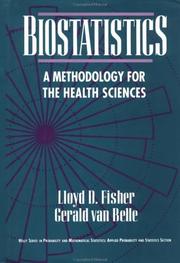
A thorough, rigorous treatment of the core methods — ANOVA, regression, nonparametric tests, and survival analysis — grounded in real health-science data. Read early in this stage to build methodological depth.

Covers linear, logistic, Poisson, and Cox regression in a unified framework with medical examples throughout. This is the essential regression reference for anyone analyzing clinical or epidemiological data.
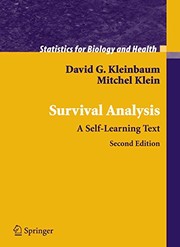
Survival analysis is central to clinical trials and epidemiology; this self-paced text with worked examples makes the Kaplan–Meier estimator, log-rank test, and Cox proportional hazards model genuinely accessible.
Clinical Trials and Epidemiological Study Design
IntermediateUnderstand how biostatistics drives the design, monitoring, and analysis of clinical trials and observational epidemiological studies — the primary engines of evidence-based medicine.
▸ Study plan for this stage
Pace: 8–10 weeks, ~40–50 pages/day (alternating between the two books: 3 weeks on Friedman, 3 weeks on Rothman, then 2–4 weeks for integration and review)
- Randomization, blinding, and control group design as mechanisms to reduce bias and establish causality in clinical trials
- Sample size calculation and power analysis: determining how many subjects are needed to detect clinically meaningful effects
- Inclusion/exclusion criteria, stratification, and adaptive designs in clinical trial protocols
- Confounding, effect modification, and selection bias in observational studies; how epidemiological study designs (cohort, case–control, cross-sectional) address these differently
- Measures of association (relative risk, odds ratio, hazard ratio) and their interpretation in different study contexts
- Intent-to-treat analysis, per-protocol analysis, and handling of missing data and non-compliance in trial analysis
- Study monitoring, interim analyses, and stopping rules in clinical trials
- Causal inference frameworks in epidemiology: distinguishing association from causation using Hill's criteria and directed acyclic graphs (DAGs)
- Why is randomization essential in clinical trials, and what specific biases does it prevent compared to observational studies?
- How do you calculate sample size for a clinical trial, and what are the key parameters (effect size, significance level, power) that drive this calculation?
- What are the main differences between cohort, case–control, and cross-sectional study designs, and when is each most appropriate?
- How do confounding and effect modification differ, and what strategies can you use in study design and analysis to address each?
- Explain the difference between intent-to-treat and per-protocol analysis: when should each be used, and what are the trade-offs?
- What does it mean to establish causality in epidemiology, and how do Hill's criteria help distinguish causal from non-causal associations?
- Design a hypothetical randomized controlled trial (RCT) for a drug intervention: specify the primary outcome, inclusion/exclusion criteria, randomization scheme, blinding strategy, and justify your choices using Friedman's framework
- Calculate sample size for a two-arm trial with a specified effect size, alpha, and power using formulas or software (e.g., R, G*Power); document assumptions and sensitivity analyses
- Critique a published clinical trial protocol or results paper: identify the design choices (randomization method, blinding, control arm), potential sources of bias, and whether intent-to-treat analysis was appropriately applied
- Analyze a cohort study from the epidemiological literature: extract the exposure, outcome, and confounders; calculate or interpret relative risk; discuss unmeasured confounding and effect modification
- Design a case–control study for a disease of interest: specify the case definition, control selection strategy, and exposure measurement; discuss selection bias and information bias risks
- Create a directed acyclic graph (DAG) for a hypothetical causal question in epidemiology; use it to identify confounders and mediators, and propose an analysis strategy
Next up: Mastery of clinical trial design and epidemiological study methods provides the statistical foundation for understanding advanced topics such as meta-analysis, real-world evidence synthesis, and causal inference methods (instrumental variables, propensity scores) that integrate evidence across multiple studies.
The definitive textbook on randomized clinical trial design, covering randomization, blinding, sample size, interim analysis, and reporting. Essential reading before working on or interpreting any trial.
The canonical advanced reference for epidemiological study design and analysis — cohort, case-control, and cross-sectional studies — with rigorous treatment of bias, confounding, and effect measure modification.
Advanced Modeling and Causal Inference
ExpertMaster the advanced methods increasingly required in modern biostatistical practice: mixed models for longitudinal data, Bayesian thinking, and the causal inference frameworks now standard in public health research.
▸ Study plan for this stage
Pace: 12–14 weeks, ~40–50 pages/day (mix of dense technical content and worked examples)
- Longitudinal data structure: repeated measures, time-varying covariates, and missing data mechanisms (MCAR, MAR, MNAR)
- Mixed effects models: random intercepts, random slopes, and covariance structures for within-subject correlation
- Generalized Estimating Equations (GEE) as a marginal modeling alternative to mixed models
- Bayesian fundamentals: prior specification, likelihood, posterior inference, and credible intervals
- Bayesian hierarchical models and their application to health economic outcomes and patient heterogeneity
- Markov Chain Monte Carlo (MCMC) methods and convergence diagnostics for posterior sampling
- Causal inference foundations: confounding, exchangeability, positivity, and the potential outcomes framework
- Sensitivity analysis and robustness checking in both longitudinal and Bayesian contexts
- What are the key differences between MCAR, MAR, and MNAR missing data mechanisms, and how does each affect inference in longitudinal studies?
- How do random intercept and random slope models differ in structure and interpretation, and when would you choose one over the other?
- What is the conceptual difference between marginal (GEE) and conditional (mixed model) interpretations of regression coefficients in longitudinal data?
- How do you specify a prior distribution in a Bayesian analysis, and what role does prior sensitivity analysis play in health economic decision-making?
- Explain the potential outcomes framework and how it relates to causal identification assumptions (exchangeability, positivity, consistency).
- What are the practical advantages and computational challenges of MCMC-based Bayesian inference compared to frequentist approaches?
- Analyze a longitudinal dataset (e.g., from Fitzmaurice's examples) using both random intercept and random slope models; compare fitted values, residuals, and interpretation of fixed effects.
- Fit a GEE model to the same longitudinal data and contrast marginal vs. conditional coefficient estimates; document when and why they differ.
- Conduct a missing data sensitivity analysis: fit models under MCAR, MAR, and MNAR assumptions to a dataset with intentional missingness; assess robustness of conclusions.
- Specify prior distributions for a simple health economic model (e.g., cost-effectiveness of a treatment) and perform prior sensitivity analysis using Baio's framework.
- Implement an MCMC algorithm (using Stan, JAGS, or WinBUGS) to fit a hierarchical Bayesian model to a real or simulated health outcome dataset; diagnose convergence using trace plots and Gelman-Rubin statistics.
- Design a causal inference analysis for an observational health study: identify confounders, assess positivity, and apply inverse probability weighting or stratification to estimate a causal effect.
Next up: This stage equips you with the statistical machinery to handle complex, real-world biostatistical problems—longitudinal follow-up, uncertainty quantification via Bayesian methods, and causal reasoning—preparing you to tackle specialized applications (e.g., network meta-analysis, real-world evidence synthesis, or advanced trial design) and lead methodological innovation in public health research.

Longitudinal and clustered data are ubiquitous in clinical and public health research; this book rigorously covers GEE, mixed-effects models, and missing data — the natural next step after mastering cross-sectional regression.
A freely available, rigorous treatment of causal inference using potential outcomes and DAGs, directly applied to epidemiology and public health. Ties together everything learned about study design and confounding into a unified causal framework.
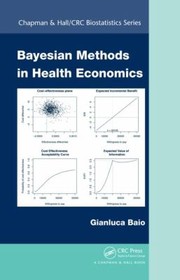
Introduces Bayesian reasoning in a health-science context — decision models, prior specification, and posterior inference — preparing the reader for the growing role of Bayesian adaptive trial designs and health technology assessment.
Discussion
Keep reading
Paths that share books, cover the same subject, or open a related topic.