Barbara Kingsolver Reading Order: Where to Start
Barbara Kingsolver writes political novels that never stop being novels: a trained biologist's eye for ecosystems applied to families, borders and Appalachian towns. Start with the early Arizona books, which are the warmest and shortest way in, move to the major novels where the ambition scales up, then the late big ones, and finish with the nonfiction where she argues the case directly.
The Early Arizona Novels
BeginnerMeet Kingsolver's voice at its most companionable, and see the politics arrive through character rather than argument.
▸ Study plan for this stage
Pace: 4 weeks, ~25 pages a day. The Bean Trees (259 pages) goes quickly — ten days is comfortable. Then Pigs in Heaven (362 pages) over two and a half weeks; read it soon after, while the first novel's ending is still fresh enough to be taken away from you.
- Politics arriving through character: sanctuary, Central American refugees and Indian child welfare law all enter as things happening to people Taylor already loves
- The first-person comic voice of Taylor Greer — plain, wisecracking, Kentucky — which is Kingsolver's most companionable narrator and the reason the argument goes down easily
- The Bean Trees' road-novel structure, and what it lets her get away with: a woman is simply handed a child, and the novel proceeds as though that settles it
- Pigs in Heaven as a deliberate self-correction — the sequel reopens the adoption under the Indian Child Welfare Act and denies the first book's happy ending
- Two goods in genuine conflict: Taylor's love for Turtle and the Cherokee Nation's claim, with the novel refusing to make either side wrong
- The move from one narrator to several, which is the first appearance of the multi-voice method the later novels are built on
- Kingsolver's biologist habits already visible — plants, birds and desert water treated as characters with needs of their own
- How does The Bean Trees make Taylor's acceptance of Turtle feel inevitable, and what has it declined to ask?
- What exactly does Pigs in Heaven accuse its predecessor of, and is the accusation fair to the earlier book?
- Annawake Fourkiller could easily have been a scold. What does Kingsolver do to keep her a person?
- Where does the sanctuary movement enter The Bean Trees, and why is it kept in the background rather than the plot?
- By the end of Pigs in Heaven, has a compromise actually been reached, or has the conflict been dissolved by a coincidence?
- After The Bean Trees, write down your judgement on the adoption in two sentences. Read Pigs in Heaven, then write it again and compare.
- Mark five of Taylor's jokes and identify what political point each one is carrying while it lands.
- List every plant, bird and animal named in The Bean Trees; the wisteria and rhizobia are doing thematic work Kingsolver states outright.
- Note where Pigs in Heaven switches viewpoint and what each switch prevents you from believing.
Next up: You have the voice and the method in its friendliest form; the major novels scale the same multi-voice technique up to colonialism and ecology.
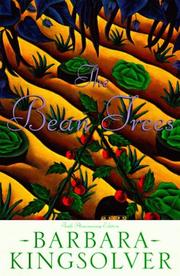
Her first novel: a Kentucky woman drives west and is handed an abandoned Cherokee child. Funny, fast, and the cleanest introduction to how she smuggles sanctuary politics into a road story.
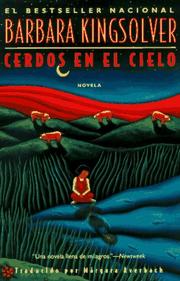
The direct sequel, in which the adoption from The Bean Trees is challenged by the Cherokee Nation. Read second, because it deliberately complicates the happy ending you just enjoyed.
The Major Novels
BeginnerUnderstand the books that made her reputation, and how she uses multiple narrators to hold a moral argument open.
▸ Study plan for this stage
Pace: 9–10 weeks, ~25 pages a day. Animal Dreams (352 pages) in two and a half weeks. The Poisonwood Bible (576 pages) is the centrepiece — give it a month, and read each daughter's sections as continuing voices rather than as chapters. Prodigal Summer (444 pages) in three weeks; its three strands alterna
- The multi-voice novel as a device for holding a moral argument open — five narrators in The Poisonwood Bible, none of whom can be taken as the author
- Orleanna Price's retrospective sections versus the daughters' present-tense ones, and how the frame makes the book a confession rather than an indictment
- Rachel, Leah, Adah and Ruth May as four distinct positions on complicity: refusal, conversion, irony and innocence
- Adah's palindromes and doubled speech — the one place where Kingsolver lets style itself carry the argument
- Congolese independence and the Lumumba assassination as historical spine: the family's failure is written to rhyme with the country's
- Animal Dreams' pairing of a returning sister and one in Nicaragua, and its use of memory that turns out to be unreliable
- Predator-prey ecology as the organizing structure of Prodigal Summer, where the three human strands are arranged as an ecosystem rather than a plot
- Kingsolver's tendency to give one character the lecture, and the question of whether the novels survive it
- Which of the four daughters does The Poisonwood Bible trust most, and how can you tell without being told?
- What is Orleanna's guilt, and does the novel grant her the absolution she is asking for?
- How does the Congo's political history get into a domestic novel without the domestic novel becoming a lecture — and where does that seam show?
- In Animal Dreams, what has Codi misremembered, and what does the correction cost her?
- Prodigal Summer keeps insisting that predators are necessary. What is the human version of that claim in each of the three strands?
- Where in these novels does the argument get ahead of the characters, and does it damage the book?
- Keep a page per daughter in The Poisonwood Bible, noting the first sentence of each of their sections; the voices are distinguishable from the syntax alone.
- Read a short factual account of the 1960 Congolese independence and Lumumba's assassination at the novel's halfway point, then reread the preceding fifty pages.
- Write out Nathan Price's argument in his own terms, as sympathetically as you can. The novel never lets him narrate, and the exercise shows you why.
- Chart the three Prodigal Summer strands on one sheet and mark where they touch. The near-misses are deliberate.
- For Animal Dreams, list what Codi remembers and what Hallie's letters report; the discrepancies are the novel's engine.
Next up: With the multi-voice method understood, the late novels can be read for what they add — history, climate and addiction — rather than for how they are built.
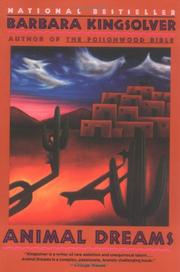
A woman returns to a dying Arizona mining town while her sister works in Nicaragua. The bridge book — bigger politically than The Bean Trees, still intimate in scale.
A missionary family in the Congo, narrated by the mother and four daughters. Her masterpiece and the fullest use of the multi-voice method; read it once you know her sentence rhythms.
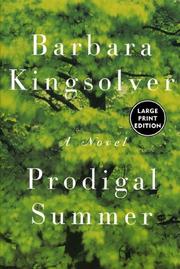
Three interlocking Appalachian stories governed by predator-prey ecology. The most biological of the novels and the pivot from her southwestern books to her Appalachian ones.
The Late Big Books
IntermediateFollow the ambition into history, climate and addiction, where the novels get longer and the arguments harder.
▸ Study plan for this stage
Pace: 10–11 weeks, ~25–30 pages a day. The Lacuna (528 pages) needs a month; it is her most formally elaborate book and the notebook-and-archivist frame rewards patience. Flight Behavior (436 pages) in three weeks. Demon Copperhead (560 pages) last, in about a month — its voice pulls hard, so the risk her
- The Lacuna's found-document structure — notebooks, clippings and an archivist's interventions — and the fact that its central absence is deliberate and named in the title
- Rivera, Kahlo and Trotsky seen from the servants' quarters: Kingsolver's habit of narrating world history from the person carrying the plaster
- The red scare and the press as an argument about how public truth is manufactured, which is why the archivist's editorial hand matters
- Flight Behavior's central image — monarchs overwintering on the wrong mountain — as a climate argument that never has to be stated as one
- Dellarobia's class position, and Kingsolver's insistence that rural poverty rather than ignorance governs what people can afford to believe
- The scientist Ovid Byron as the outsider whose expertise is useless until it is translated, which is the novel's real subject
- Demon Copperhead as a full transposition of David Copperfield into opioid-era Appalachia, keeping Dickens's plot beats and foster-care machinery intact
- Demon's first-person voice as her best technical achievement: funny, furious, and doing the political work without a single speech
- What is the lacuna in The Lacuna — name every level on which the title operates.
- Why does Kingsolver keep Harrison Shepherd at the edge of every famous life he touches, rather than at the centre?
- How does Flight Behavior make Dellarobia's scepticism about climate science intelligible without endorsing it?
- Where does Flight Behavior come closest to a lecture, and does Dellarobia's own voice rescue it?
- Which Dickens characters can you identify in Demon Copperhead, and what does each transposition prove about the opioid crisis?
- Across these three books, has the argument taken over the novel, or has the novel absorbed the argument? Answer per book.
- Read the David Copperfield plot summary before Demon Copperhead, or better, read Dickens's first hundred pages; the pleasure of the transposition depends on recognizing it.
- Track the archivist's interventions in The Lacuna and write a paragraph on what she is protecting and what she is withholding.
- Note the three sources of income in Dellarobia's household and check them against the choices she is able to make.
- Write down every technical fact about monarch migration the novel teaches you, then judge whether it was delivered as story or as instruction.
- Compare a page of Taylor Greer's narration with a page of Demon's. Thirty years apart, both are first-person Appalachian comedy — describe what changed.
Next up: The novels have been arguing all along; the nonfiction lets you hear Kingsolver make the case in her own voice and judge it directly.
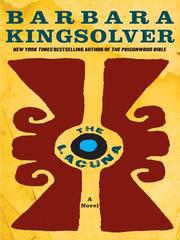
Diego Rivera, Frida Kahlo, Trotsky and the American red scare, told through a servant's notebooks. Her most formally elaborate novel, and a real step up in demand from Prodigal Summer.

Monarch butterflies overwinter on a Tennessee mountain and a rural community has to reckon with climate change. The clearest fusion of her science training and her class politics.
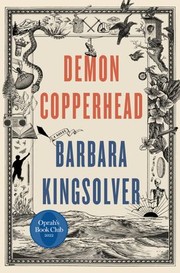
David Copperfield transposed to opioid-era Appalachia. Her Pulitzer winner and the culmination of everything the earlier Appalachian books were circling — best read last among the fiction.
The Nonfiction
IntermediateHear Kingsolver make her food, land and community arguments in her own voice, without a character to mediate them.
▸ Study plan for this stage
Pace: 4 weeks. Animal, Vegetable, Miracle (384 pages) is organized by month — read a month's chapter a sitting over about two and a half weeks, and it works especially well read during the season it describes. High Tide in Tucson (273 pages) at one or two essays an evening for a week and a half.
- The year of local eating as a designed experiment, complete with data, recipes and sidebars — the biologist's method applied to a household
- Food economics as the concrete version of the arguments Prodigal Summer and Flight Behavior make in fiction
- The class problem she runs into and mostly acknowledges: a family with land, time and two incomes is not a model most readers can copy
- The naturalist's habit of attention in High Tide in Tucson — a hermit crab, a canyon, a bird count — as the source of every landscape in the novels
- Kingsolver writing directly about motherhood, marriage and the writing life, without a character to mediate the claim
- The difference in rhetorical register: what an essay can assert that a novel has to dramatize, and the cost of the swap
- What does Animal, Vegetable, Miracle actually prove, and what does it only demonstrate is possible for the Kingsolvers?
- How does she handle the objection that local eating is a privilege, and is the answer sufficient?
- Which passages of High Tide in Tucson could be lifted into Prodigal Summer without alteration, and what does that tell you about her fiction?
- Where does the essayist state a position that the novels are more ambivalent about — and which version do you trust?
- After the whole path: is Kingsolver a novelist with politics, or a polemicist who writes novels? Argue it from specific books.
- Pick one month of Animal, Vegetable, Miracle and try a single practice from it for a week — a farmers' market, one homemade staple — then reread that chapter.
- Find the essay in High Tide in Tucson that most closely matches a scene in a novel you have read, and put them side by side.
- Write a 400-word summary of Kingsolver's core argument about land and community using only the nonfiction, then check how many of the novels it accounts for.
- Rank the eleven books in this path by how well the politics and the story are fused, and defend your top and bottom choices in a sentence each.
Next up: That is the whole case, fiction and evidence together — you can now read any Kingsolver book against the argument she has been making for thirty-five years.
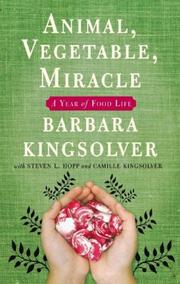
A year of her family eating only what they could grow or source locally. The nonfiction spine under Prodigal Summer and Flight Behavior, and a hugely readable book in its own right.
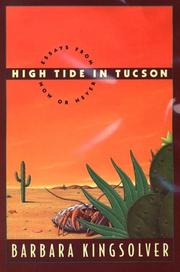
Essays on biology, motherhood, writing and the desert. A good closing stage: it shows the naturalist's habits of attention that every novel in this path is built on.
Discussion
Keep reading
Paths that share books, cover the same subject, or open a related topic.