Best Australian Literature to Read, in Order
This curriculum traces Australian literature from its colonial roots through to contemporary voices, building the reader's feel for the land, language, and culture at each stage. Beginning with accessible colonial and bush narratives, it moves through Patrick White's Nobel-winning modernism, then centres Indigenous storytelling, before arriving at the richest works of modern Australian fiction — each stage deepening the reader's understanding of what makes Australian literature distinct.
Colonial Foundations & the Bush Tradition
BeginnerUnderstand the landscape, settler anxieties, and vernacular voice that define the colonial literary imagination — the bedrock on which all later Australian writing rests.
▸ Study plan for this stage
Pace: 8–10 weeks, ~40–50 pages/day (accounting for the density of colonial dialect and narrative complexity)
- The bush as both landscape and symbol of Australian identity — how colonial writers use the outback to explore isolation, self-reliance, and alienation from European culture
- Settler anxiety and the 'colonial cringe' — the tension between aspiring to British cultural standards and the reality of frontier life
- Vernacular voice and linguistic authenticity — the use of Australian slang, colloquialism, and working-class speech as a marker of 'true' Australian experience
- Gender and colonial ambition — how female protagonists (Franklin) navigate limited opportunities and challenge patriarchal settler society
- Convictism and the criminal underworld — the shadow of transportation and punishment that haunts colonial institutions and social hierarchies
- Narrative unreliability and the episodic form — how these novels resist conventional plot structure to capture the fragmented reality of colonial life
- Class and social mobility in the colonies — the possibility of reinvention and the persistence of social stratification across the three texts
- How does Furphy use the character of Tom Collins and the episodic structure of *Such is Life* to capture the vernacular voice and lived experience of the Australian bush?
- What does Sybylla's rejection of conventional femininity and marriage in *My Brilliant Career* reveal about gender anxieties in colonial Australian society?
- How does Clarke use the convict system and the penal settlement in *For the Term of His Natural Life* to critique colonial institutions and social order?
- What is 'settler anxiety' and how is it expressed differently across these three novels — through landscape, social aspiration, or institutional critique?
- How do these three novels establish a distinctly Australian literary voice that resists or departs from British literary conventions?
- What role does isolation — geographic, social, or psychological — play in shaping character and plot across *Such is Life*, *My Brilliant Career*, and *For the Term of His Natural Life*?
- Close-read 2–3 passages from *Such is Life* that showcase Furphy's use of Australian dialect and vernacular; annotate how the language constructs authenticity and working-class identity
- Create a character map of *My Brilliant Career* tracking Sybylla's relationships and decisions; write a 500-word analysis of how each relationship tests her commitment to independence
- Trace the journey of Rufus Dawes through *For the Term of His Natural Life*; identify 3–4 turning points and explain how the penal system shapes his agency at each stage
- Compare one scene from each novel that depicts the bush or colonial landscape; write a comparative paragraph on how landscape functions symbolically in each text
- Write a 1000-word essay on 'settler anxiety' using one specific example from each of the three novels — show how anxiety manifests differently depending on class, gender, or institutional context
- Rewrite a scene from one of the novels in modern Australian English; reflect on what is lost and gained in translation, and what this reveals about Furphy's, Franklin's, or Clarke's linguistic choices
Next up: This stage establishes the colonial literary DNA — the landscape obsession, the vernacular voice, the anxiety about identity — that later Australian modernists and contemporary writers will either embrace, subvert, or transcend, preparing you to see how 20th-century literature both inherits and rebels against these foundational concerns.
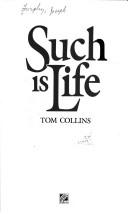
The great colonial novel — sprawling, ironic, and deeply Australian in voice. Reading it first gives you the bush idiom, the larrikin humour, and the class tensions that echo through the entire tradition.
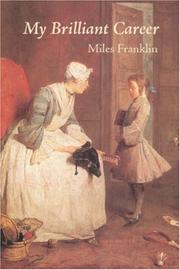
Published in 1901, this is the defining portrait of a young woman chafing against colonial constraint. Its plain, passionate prose is an ideal bridge from Furphy's digressive style to more personal narrative voices.
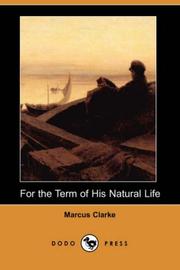
The canonical convict novel, establishing the dark underside of colonial history — suffering, injustice, and survival — themes that resurface powerfully in later Indigenous and modern fiction.
Patrick White & the Nobel Generation
IntermediateEngage with Australia's most demanding and celebrated modernist voice, understanding how White transformed the bush myth and suburban life into universal, Nobel-level literature.
▸ Study plan for this stage
Pace: 12–14 weeks, ~40–50 pages/day. *The Tree of Man* (4 weeks), *Voss* (5 weeks), *Riders in the Chariot* (5 weeks). White's dense prose and symbolic layering require slower, deliberate reading with frequent pauses for reflection.
- White's transformation of the Australian bush myth from romantic frontier narrative into a site of spiritual struggle, alienation, and existential meaning
- The suburban domestic sphere as a microcosm of human consciousness and moral complexity—how ordinary lives contain profound psychological and spiritual dimensions
- Modernist narrative technique: stream-of-consciousness, fragmented chronology, interior monologue, and symbolic density as tools for exploring the inner lives of outsiders and visionaries
- The visionary protagonist archetype in White's work: the individual who perceives deeper truths but remains isolated, misunderstood, or destroyed by society
- Religious and spiritual symbolism (Christian, mystical, and syncretic) woven throughout White's realism as a means of transcendence and redemption
- White's use of landscape—both bush and suburb—as a character that shapes, tests, and reveals the human soul
- The tension between individual aspiration and social conformity, between artistic/spiritual vision and material reality
- White's prose style: baroque density, repetition, sensory immersion, and linguistic innovation as formal expressions of consciousness itself
- How does Patrick White reimagine the Australian bush in *The Tree of Man* and *Voss* as something other than a space of heroic conquest or romantic escape? What spiritual or existential dimensions does he add?
- Compare the visionary protagonists Stan Parker (*The Tree of Man*) and Voss (*Voss*). How does each man's pursuit of meaning or transcendence lead to isolation or failure, and what does White suggest about the cost of such vision?
- What role does the suburban domestic life play in *The Tree of Man*? How does White elevate the ordinary marriage, family, and property ownership into a site of profound human struggle?
- Analyze the function of modernist narrative technique in one of these novels. How do stream-of-consciousness, fragmented time, or symbolic density serve White's exploration of consciousness and alienation?
- How do religious and spiritual symbols operate in *Riders in the Chariot*? What is White suggesting about redemption, community, and the possibility of transcendence in modern life?
- What is the relationship between landscape (bush or suburb) and character psychology in White's work? How does place shape or reveal the inner lives of his protagonists?
- Close-read a 3–5 page passage from each novel that exemplifies White's prose style (e.g., Stan Parker's first encounter with the land in *The Tree of Man*, or Voss's desert visions). Annotate for sensory detail, repetition, syntax, and symbolic imagery.
- Create a character map for each novel tracking the visionary protagonist's relationships with family, society, and landscape. Note moments of connection, misunderstanding, and isolation.
- Write a comparative essay (1,500–2,000 words) on how White uses domestic life differently in *The Tree of Man* versus *Riders in the Chariot*—what does each novel suggest about marriage, family, and the possibility of meaning within ordinary life?
- Identify and trace one recurring symbol or motif across all three novels (e.g., water, light, gardens, journeys, art). Write a short analysis of how White develops or transforms this symbol.
- Rewrite a key scene from one novel in a different narrative style (e.g., convert a stream-of-consciousness passage to third-person objective, or vice versa). Reflect on what is gained and lost in the translation.
- Create a visual or textual map of the spiritual/religious symbolism in *Riders in the Chariot*. How do the four protagonists embody different paths to transcendence or redemption?
Next up: This stage establishes White as the foundational modernist voice of Australian literature and the standard-bearer for formally ambitious, spiritually serious fiction; the next stage will likely explore how subsequent Australian writers either build on, react against, or redefine White's legacy and the relationship between individual vision and national identity.

White's most accessible major novel — a settler couple carving a life from the bush — making it the ideal entry point into his dense, luminous prose before tackling his more complex works.
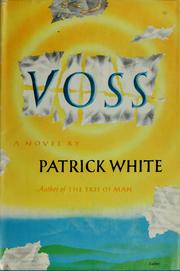
White's masterpiece and the book that secured his international reputation. Read after The Tree of Man, the reader is now equipped to follow its visionary inland explorer and White's full symbolic power.
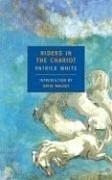
Broadens White's scope to suburban Sydney and four social outcasts, deepening the reader's grasp of his spiritual and moral vision — essential for understanding why the Nobel committee called him a continent's conscience.
Indigenous Voices & Sovereign Stories
IntermediateRead Australia's literature from the inside — through the perspectives of Aboriginal and Torres Strait Islander writers who reframe history, Country, and identity on their own terms.
▸ Study plan for this stage
Pace: 10–12 weeks, ~40–50 pages/day (accounting for dense, lyrical prose and multiple narrative threads)
- Country as a living, sentient entity with agency and memory—not merely landscape or setting
- Palimpsestic storytelling: how Indigenous narratives layer oral tradition, history, and mythology to challenge linear Western narrative structures
- Sovereignty and self-determination as literary acts: reclaiming narrative authority over history, identity, and law
- Language as resistance: code-switching, dialect, and linguistic hybridity as tools for asserting cultural identity and challenging colonial discourse
- Kinship systems and relational ontologies: understanding family, community, and obligation through Indigenous frameworks rather than Western individualism
- The politics of representation: how these writers depict violence, trauma, and resilience without exoticizing or victimizing Indigenous peoples
- Humour and satire as survival and critique: the role of dark comedy and wit in exposing hypocrisy and asserting cultural continuity
- How does each author use narrative structure and language to assert Indigenous sovereignty over storytelling itself?
- What role does 'Country' play in each novel—how is it characterized, and what agency or voice does it possess?
- How do Wright, Scott, and Lucashenko use humour, satire, or linguistic play to critique colonial systems and assert cultural identity?
- What kinship systems and relational obligations are depicted in these texts, and how do they differ from Western individualistic frameworks?
- How do these novels address historical trauma and violence while resisting narratives of victimhood or exoticization?
- What does 'sovereignty' mean in the context of each novel—is it political, cultural, linguistic, or something else?
- Create a character/kinship map for each novel, tracking relationships and obligations across generations and communities—note how these differ from typical Western family trees
- Annotate 3–4 passages from each book where language, dialect, or code-switching serves a political or cultural purpose; write a paragraph explaining the effect
- Write a comparative essay (1500–2000 words) on how each author uses humour or satire to critique colonial systems or assert Indigenous identity
- Trace references to Country/place in one novel: map how specific locations are named, described, and given agency; write reflections on what this reveals about the author's worldview
- Conduct a close reading of a pivotal scene from each novel that deals with sovereignty, law, or authority; analyze how the author challenges or reframes colonial legal/political systems
- Create a glossary of Indigenous terms, concepts, and references used across all three novels; research their cultural significance and how the authors deploy them
Next up: This stage establishes Indigenous literary sovereignty and narrative authority as foundational; the next stage will likely expand outward to explore how these frameworks reshape Australian literature more broadly, or deepen into specific genres, regions, or contemporary Indigenous voices building on these traditions.
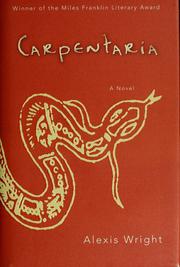
A landmark of world literature: epic, mythic, and rooted in Waanyi storytelling. It resets everything the colonial tradition assumed about the land and who belongs to it — best read after the colonial stage so the contrast is fully felt.

Scott's Booker-shortlisted novel about Noongar people returning to a massacre site is quieter and more realist than Wright, offering a complementary register and deepening the reader's understanding of memory and Country.

Winner of the Miles Franklin Award, this contemporary novel is urgent, funny, and politically sharp — showing Indigenous literature's full range from the mythic to the fiercely modern.
Modern Australian Fiction
ExpertArrive at the contemporary literary landscape — psychologically complex, globally aware, and stylistically diverse — with the full historical and cultural context now in place to read at the deepest level.
▸ Study plan for this stage
Pace: 6–7 weeks, ~40–50 pages/day (alternating between both novels; complete "The Secret River" in weeks 1–3, then "Cloudstreet" in weeks 4–7)
- Settler-colonial guilt and historical reckoning: how Grenville's narrative of dispossession interrogates the Australian founding myth through William Thornhill's moral deterioration
- Psychological interiority and moral ambiguity: the shift from external action to internal consciousness, where characters' motivations are fractured and contradictory rather than heroic
- Place as character and psychological landscape: how the Hawkesbury River and the Cloudstreet house function as active forces shaping identity and relationships
- Linguistic layering and narrative perspective: Grenville's use of historical distance and Winton's polyphonic voices to create meaning through form, not just plot
- Redemption and damage: the impossibility of simple resolution—how both novels present families and individuals as permanently altered by trauma, violence, and time
- Postcolonial consciousness in contemporary Australian fiction: the integration of Indigenous presence (Grenville) and working-class, immigrant experience (Winton) into the literary mainstream
- Stylistic diversity as cultural maturity: recognizing how contemporary Australian fiction moves beyond a single national voice to embrace formal experimentation and psychological depth
- How does William Thornhill's journey from London to the Hawkesbury River reveal the psychological cost of colonial settlement, and what does his moral compromise suggest about the founding of Australia?
- Compare the treatment of Indigenous Australians in 'The Secret River' with the working-class immigrant families in 'Cloudstreet': how do both novels expand the definition of Australian identity?
- What role does the river in 'The Secret River' and the house in 'Cloudstreet' play in shaping character psychology and family dynamics? How are these places more than mere settings?
- How do Grenville's third-person historical narrative and Winton's multiple first-person voices create different kinds of psychological complexity, and what does this formal difference suggest about contemporary Australian fiction?
- In what ways do both novels resist simple moral judgment or redemptive endings? What does this refusal suggest about how modern Australian literature engages with trauma and history?
- How do 'The Secret River' and 'Cloudstreet' together demonstrate that contemporary Australian fiction is now globally aware and psychologically sophisticated, rather than parochial or historically naive?
- Create a timeline of William Thornhill's moral decisions in 'The Secret River' (from arrival to the novel's climax), annotating each with the psychological justifications he offers versus the historical reality—then write a short reflection on how Grenville uses narrative distance to critique these justifications
- Map the spatial geography of Cloudstreet (the house, the river, the street itself) and track how characters' movements through these spaces correlate with emotional states and relationship shifts; write a brief analysis of how Winton uses place to externalize internal conflict
- Select one scene from 'The Secret River' involving an Indigenous character and one from 'Cloudstreet' involving a migrant character; compare how each novel represents the perspective of those marginalized by dominant Australian culture
- Analyze the opening pages of both novels side by side: how do Grenville's historical framing and Winton's immediate sensory immersion establish different relationships between reader and character? Write a 500-word comparative analysis
- Identify three moments of violence or violation in 'The Secret River' and three moments of damage or loss in 'Cloudstreet'; create a chart showing how each novel treats these moments (as inevitable, tragic, redemptive, etc.) and what this reveals about each author's worldview
- Write two short character monologues—one as William Thornhill reflecting on his actions 20 years later, one as a character from Cloudstreet (e.g., Dolly or Quick)—focusing on how they rationalize or reckon with damage they've caused or endured
Next up: This stage establishes that contemporary Australian literature has achieved psychological depth, formal sophistication, and the capacity to interrogate national mythology from within—preparing you to engage with even more experimental or genre-bending works that build on this foundation of cultural self-awareness.

A settler-colonial historical novel that consciously revisits the ground of Marcus Clarke and Furphy but now with full moral reckoning over frontier violence — the perfect synthesis of the colonial and Indigenous stages.
Australia's best-loved modern novel: two working-class families sharing a Perth house across decades. Its warmth, vernacular richness, and spiritual undertow make it the ideal capstone of the whole curriculum.
Discussion
Keep reading
Paths that share books, cover the same subject, or open a related topic.