Arundhati Roy Reading Order: Where to Start
Arundhati Roy has published only two novels in nearly thirty years, so a reading order for her is mostly a reading order for her non-fiction — the essays and reportage she turned to after The God of Small Things made her famous. Start with the first novel, follow the essays chronologically as the targets shift from dams to nuclear weapons to empire to Hindu nationalism, then read the reportage from inside the Maoist insurgency, and finish with the second novel, which is unreadable in the same way as the first until you know what she spent the intervening two decades doing.
Start Here
BeginnerRead the novel everything else answers to, and understand why its author stopped writing fiction for twenty years.
▸ Study plan for this stage
Pace: 1–2 weeks for 357 pages. Slower than the length implies: the first sixty pages give away the ending, introduce roughly a dozen family members and invent their private vocabulary all at once, so read those in one long sitting rather than in fragments. After that it accelerates sharply, and most reade
- The Love Laws — Roy's own phrase for the rules governing 'who should be loved, and how, and how much', which is the single sentence the whole novel and most of the later essays argue with
- A structure that tells you the outcome first: the deaths and the disgrace are known within fifty pages, so the suspense is entirely about how and why, not what
- Caste as the mechanism, not the backdrop — Velutha is a Paravan, and everything catastrophic in the book follows from that fact rather than from anyone's intentions
- Kerala's specific politics: a Syrian Christian family, a Communist state government, and the contradiction between a party's rhetoric and its members' caste loyalties
- Child's-eye language as a technique — the coined compounds, capitalised nouns and reversed words are Rahel and Estha's perception, not decoration
- Big things and small things: the novel's insistence that the enormous historical forces are only ever visible in domestic detail
- Twins as a single divided consciousness, which sets up the novel's ending and its treatment of what cannot be said
- What are the Love Laws, and who in the novel enforces them — is it ever the person you would expect?
- Why does Roy reveal the ending at the start, and what is the reader made to do with that knowledge for three hundred pages?
- How does the novel treat the Communist Party in Kerala, and how is that treatment complicated rather than simply hostile?
- Where does the prose stop belonging to the twins and start belonging to an adult narrator, and how can you tell?
- What is the function of Sophie Mol's arrival and death in a book that is really about Velutha?
- Write down every capitalised phrase in the first fifty pages — Orangedrink Lemondrink Man, Laterol Ammunition, and the rest. The list is the twins' private lexicon and it is how Roy encodes fear.
- Draw the family tree, marking each person's caste and religion. The tragedy is legible from the diagram alone.
- After finishing, reread the first chapter. It is written to be read twice and almost every sentence changes meaning.
- Note three passages where Roy's political anger surfaces in the fiction. These are the seams the essays open up next.
Next up: Roy has published only two novels in nearly thirty years, so what follows this book is not more fiction but the non-fiction she turned to instead — and the anger you just watched her keep dissolved in language is about to be stated flat out.
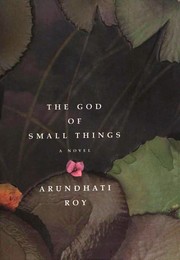
Twins in Kerala, a drowned cousin, a caste line crossed. The Booker winner and the only sensible entry point: the politics of caste, communism and family that drive all her later essays are already here, dissolved into language.
The Essays That Followed
BeginnerWatch a novelist become a polemicist, and learn the recurring method — take one enormous state project and reduce it to the people standing in its path.
▸ Study plan for this stage
Pace: 4 weeks for roughly 800 pages across four collections — 135, 157, 324 and 200 pages. These are much faster than fiction: read one essay per sitting rather than by page count, since each is a self-contained argument and they lose force when run together. Expect the pace to slow at The Algebra of Infi
- The turn itself — a Booker winner giving up fiction to write about dams and nuclear tests, and treating that as a moral necessity rather than a hiatus
- Roy's recurring method: take one enormous state project, establish its official arithmetic, then stand it next to the people it displaces
- The Narmada Valley dams as her founding case — the numbers on submerged villages and resettled families are where her whole practice of counting begins
- India's 1998 nuclear tests and the argument that national pride is manufactured to be sold, which is her first sustained attack on how consent is produced
- The writer's right to speak on subjects outside her expertise — a charge repeatedly made against her, and answered directly in Power Politics
- The widening after 2001, where the subject moves from Indian development policy to American power, occupation and the war on terror
- Rhetoric as an explicit tool: irony, repetition and direct address, at their heaviest in the speeches. Notice when the technique is doing the work that evidence should
- What is Roy's actual case against the Narmada dams, as distinct from her tone about them?
- In Power Politics, how does she defend a novelist's standing to write on hydrology, economics and nuclear policy — and is the defence persuasive?
- How does the argument change once the subject shifts from Indian state projects to American empire after 2001?
- Where does Roy rely on figures and where does she rely on rhetoric, and does the balance shift across the four collections?
- What does she mean by the machinery of consent, and who does she identify as operating it?
- Which of these essays would still stand if you removed every rhetorical flourish, and which would not?
- Read the collections in this order and keep a note of essays you have already met — they overlap heavily, with the same pieces reprinted across volumes. Knowing this in advance stops the repetition reading as padding.
- Take the Narmada essay and separate it into claims of fact and claims of judgement, in two columns. Do the same for one post-2001 essay and compare the ratio.
- Pick one paragraph of pure rhetoric and rewrite it as flat reportage. What survives is the argument; what disappears is worth thinking about.
- Write 200 words naming the strongest objection an Indian development economist would make to her, then her likely reply. Roy is a polemicist and reads better under resistance.
- Go back to one passage in The God of Small Things about the river and the hotel, and set it beside the dam essays. The subject was already there in the novel.
Next up: You now know the arguments in their pure form, made from a desk and from public platforms — which is exactly the condition the reportage sets out to change by taking them into the places they are about.
Two long essays: the Narmada dams and India's nuclear tests. Her first non-fiction and the cleanest demonstration of the turn — start here rather than with a later collection.

Privatisation, big dams and the writer's role in public argument. Read second: it is where she defends the very act of a novelist writing this kind of prose.

The post-9/11 essays on the war on terror and American power. The point where her subject widens from India to empire.

Speeches and essays on Iraq, occupation and the machinery of consent. The most rhetorical of the collections and best read after the earlier ones have set her terms.
The Reportage
IntermediateFollow Roy out of the essay and into the field, where the arguments are tested against places she actually went.
▸ Study plan for this stage
Pace: 3 weeks for about 520 pages — Field Notes on Democracy 253, Walking with the Comrades 144, Capitalism 125. The two short books can each be done in a weekend. Read Walking with the Comrades in as few sittings as possible; it is a continuous march narrative and breaks badly if interrupted.
- The move from argument to witness — the same positions now tested against places Roy physically went, with the reporting exposed to contradiction in a way an essay is not
- Kashmir as the case where Roy's charge against Indian democracy is most direct, and where the personal cost to her at home was highest
- Majoritarianism: her claim that formal elections and functioning courts can coexist with, and legitimise, the crushing of a minority
- Sedition, the courts and the criminalisation of dissent — the legal apparatus treated as a subject rather than a neutral arena
- Bastar and the mining frontier: land, adivasi displacement and armed insurgency as one economic story rather than three separate problems
- The reporter's own position inside the story — Roy walking with armed guerrillas, sleeping in their camps, and refusing to pretend to neutrality about it
- Corporate philanthropy as governance: the argument that foundations and mining capital shape which politics are thinkable
- The title problem worth knowing about — this book has circulated under more than one name depending on edition and territory, so check the contents page before assuming you have an unread volume
- What does Roy see in Bastar that the essays could not have supplied, and what does the walking narrative add to the argument?
- How does she handle the Maoists' own violence, and does the account hold up as reporting rather than advocacy?
- What is the specific charge against Indian democracy in Field Notes on Democracy — is it that institutions have failed, or that they are working as designed?
- How does the argument about corporate philanthropy connect mining, foundations and public debate into one mechanism?
- Where in these books does Roy's presence as narrator strengthen the reporting, and where does it get in the way?
- Map the Bastar journey as you read — the route, the days, the people met. Walking with the Comrades is structured as a march and the geography carries the argument.
- Take one claim from the essays stage and find where the reportage tests it in the field. Note whether it survives intact, is sharpened, or is quietly dropped.
- Write a one-page summary of the mining-and-philanthropy argument in your own words. It is the most compressed and most contestable thing in these three books.
- Check the contents pages of all three volumes against each other. Overlap between Roy's collections is routine and worth confirming before you reread something.
Next up: Twenty years of essays and reporting have accumulated a whole population — the displaced, the detained, the people in the forest and in Kashmir — and the second novel is where Roy finally puts them back into fiction.
On Kashmir, the courts, and what she calls India's slide toward majoritarian rule. The bridge between the essays and the reporting, and the book that made her most enemies at home.
Weeks on foot with Maoist guerrillas in the forests of central India. Her single best piece of non-fiction and the one that shows what the earlier essays were arguing toward.
How corporate philanthropy and mining capital shape Indian politics. Short, angry, and the clearest statement of the economic argument underneath the reportage.
The Second Novel and After
IntermediateReturn to fiction with everything the essays taught you, then read the two late books that show where her argument ended up.
▸ Study plan for this stage
Pace: 5 weeks for about 890 pages. The Ministry of Utmost Happiness (464) is the hard one — it changes narrator and location repeatedly for its first two hundred pages and readers who stall almost always stall there, so give it a fortnight and push through the Delhi graveyard sections before judging it. T
- A novel built out of twenty years of reportage: the hijra community, the Kashmir conflict, a foundling, and the protest ground at Jantar Mantar are all subjects Roy first covered as a journalist
- Deliberate structural difficulty — the book refuses a single protagonist and a single timeline, and the disorientation is the argument about who gets to be at the centre of a story
- Anjum's graveyard as a counter-society, built by the discarded on ground nobody wants
- The Ambedkar–Gandhi argument in The Doctor and the Saint: Roy's case that caste, not colonialism alone, is the central Indian question, and her direct challenge to Gandhi's standing
- Annihilation of Caste as the text she is introducing — this is a long preface, and it is arguing with a specific document you may want beside you
- Azadi and language under nationalism: what happens to a word, and to a writer, when the state fixes the meaning of both
- The novelist's function as Roy's final subject — the late essays are explicitly about why fiction is the form she returned to
- Why does The Ministry of Utmost Happiness withhold a central character for so long, and what does the reader do in the meantime?
- Which of the essays and reports in this path are recognisable inside the novel, and what changes when they become fiction?
- What is Roy's case against Gandhi, and what would a sympathetic Gandhian reply be?
- How does The Doctor and the Saint change your reading of Velutha in The God of Small Things?
- In Azadi, what is Roy claiming about the relationship between political language and the freedom to write?
- After both novels, what is the recurring shape of a Roy protagonist — and what does she consistently refuse to give them?
- Keep a character index for the first two hundred pages of The Ministry of Utmost Happiness with the page each person enters. Nearly everyone returns, and the novel is much less chaotic on a second pass with the list in hand.
- Read Ambedkar's Annihilation of Caste alongside The Doctor and the Saint if you can get it. Roy's essay is an introduction and is written to be argued with, not read alone.
- List every subject from the essays and reportage stages that reappears in the second novel. The overlap is the clearest evidence for reading her in this order.
- Reread the final pages of The God of Small Things and then the final pages of The Ministry of Utmost Happiness. Twenty years apart, they are doing the same thing with hope, and the difference is the whole path.
- Write 300 words on whether the essays improved the fiction or crowded it. This is the live critical dispute about Roy, and you now have everything you need to take a side.
Next up: This is the end of the path — with two novels and roughly a dozen books of non-fiction between them, the only thing left is to reread the first novel with the caste argument fully articulated, which is precisely where Roy's own writing points you.
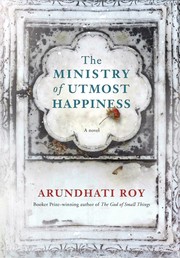
A hijra graveyard in Delhi, a foundling, and the war in Kashmir. Twenty years after her first novel and deliberately harder to hold; the essays are effectively its footnotes, which is why it belongs here and not second.
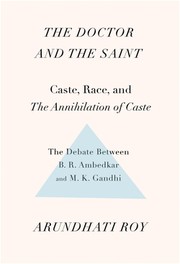
Her long introduction to Ambedkar's Annihilation of Caste, arguing against Gandhi. The most sustained thing she has written on caste, and it sends you back to the Kerala of her first novel.

Essays on Kashmir, the pandemic and language itself under Hindu nationalism. The most recent statement and a fitting close: it is explicitly about what a novelist is for.
Discussion
Keep reading
Paths that share books, cover the same subject, or open a related topic.