Anthony Trollope Reading Order: Where to Start
This curriculum guides an intermediate reader through Anthony Trollope's major fictional worlds in a deliberate order: first establishing fluency in his voice and the Barsetshire world, then mastering the political Palliser sequence, and finally exploring the rich standalone novels that reveal his full range. Each stage builds on the social, moral, and narrative vocabulary of the last, so that by the end the reader can appreciate Trollope's subtlety, irony, and psychological depth at their fullest.
Enter Barsetshire: The Cathedral World
IntermediateEstablish fluency in Trollope's narrative voice, his clerical social world, and his gift for character comedy and moral drama — the essential foundation for everything that follows.
▸ Study plan for this stage
Pace: 10–12 weeks total, reading at a relaxed but consistent pace: The Warden (~3 weeks, ~20 pages/day for its ~280 pages), Barchester Towers (~4 weeks, ~25 pages/day for its ~500 pages), Doctor Thorne (~4 weeks, ~25 pages/day for its ~500 pages). Allow one buffer week between books for reflection and jou
- Trollope's narrative voice and intrusive narrator: recognizing moments where Trollope directly addresses the reader, comments on his own characters, or breaks the fictional frame — especially prominent in Barchester Towers ('But let the gentle-hearted reader be reassured...') and The Warden
- The clerical social world as a microcosm: how cathedral close, deanery, wardenship, and diocese function as a complete society with its own politics, ambitions, and moral codes across all three novels
- Character comedy vs. moral seriousness: the dual register Trollope sustains — figures like Mrs. Proudie and Mr. Slope are comic grotesques, yet the suffering of Harding and Eleanor is treated with genuine pathos
- The 'Trollopian hero': the quietly decent, unheroic protagonist — Septimus Harding in The Warden, Eleanor Bold in Barchester Towers, Frank Gresham in Doctor Thorne — who muddles toward the right thing without grand gestures
- Social class, money, and marriage: how inheritance, income, and rank drive plot in all three books, culminating in Doctor Thorne's central question of whether Frank can marry the illegitimate, newly wealthy Mary Thorne
- Institutional critique without radicalism: Trollope's method of exposing the corruption or absurdity of institutions (the wardenship sinecure, the new bishop's regime, the landed gentry's debt) while remaining fundamentally conservative and sympathetic
- The press and public opinion as antagonist: John Bold's campaign and The Jupiter newspaper in The Warden introduce a theme — the destructive power of reformist publicity — that echoes through Barchester Towers
- Seriality and the long novel: understanding how Trollope builds character through accumulation and repetition rather than dramatic revelation, and why re-encountering characters (Harding, Eleanor) across books rewards patient reading
- In The Warden, why does Septimus Harding resign his position even though the legal case against him is dropped? What does this tell us about Trollope's moral universe?
- How does Trollope use the rivalry between Mrs. Proudie and Mr. Slope in Barchester Towers to satirize both evangelical enthusiasm and worldly ambition simultaneously — and why does neither 'win' cleanly?
- What role does the intrusive narrator play in shaping the reader's sympathy in Barchester Towers? Find at least two passages where Trollope's direct address changes how you feel about a character or event.
- In Doctor Thorne, how does Mary Thorne's illegitimacy and eventual inheritance function as a critique of the landed gentry's values — and does Trollope endorse that critique or merely observe it?
- Trace Eleanor Harding/Bold across The Warden and Barchester Towers: how does her character develop, and what does her romantic plot in Barchester Towers reveal about Trollope's attitude toward female agency?
- All three novels involve a conflict between an 'old' order and a 'new' force threatening it. Identify the old and new in each book and explain how Trollope resolves — or refuses to resolve — the tension.
- Keep a 'Character Ledger': for each major character in all three novels, maintain a running index card or document entry tracking their defining trait, their social position, their want, and one memorable line or scene. This trains the Trollopian skill of holding a large cast in mind across long books.
- Narrator-spotting exercise in Barchester Towers: read with a pencil and mark every passage where Trollope speaks directly as narrator. After finishing, categorize them — is he defending a character, teasing the reader, commenting on fiction itself, or editorializing on society? Write a one-page reflection on what these intrusions add.
- Write a 500-word 'Trollope-style' scene: choose a social gathering (a dinner party, a committee meeting, a church service) and narrate it in close third person, including at least one direct address to the reader and at least three characters with competing agendas. This forces active engagement with his technique.
- Moral case study on The Warden: write a structured argument (one page) either defending or prosecuting Harding's decision to resign, using only evidence from the novel. Then write the opposing argument. This sharpens attention to Trollope's deliberate moral ambiguity.
- Comparative mapping exercise: draw a simple social diagram for each of the three novels showing the key relationships, rivalries, and power structures (e.g., Bishop–Slope–Mrs. Proudie–Harding–Eleanor in Barchester Towers). Compare the three diagrams — what structural patterns repeat? What does this reveal about Trollope's storytelling architecture?
- Read one contemporary Victorian review of either The Warden or Barchester Towers (available via Google Books or the Victorian Web) and write a paragraph comparing the reviewer's concerns to your own reading experience. This contextualizes Trollope's original reception and the social stakes his first readers felt.
Next up: Mastering Trollope's narrative voice, his clerical world, and his character-driven moral drama in these three foundational novels equips the reader to follow the deepening political and psychological complexity of the remaining Barsetshire Chronicles — and eventually the darker, more ambitious Palliser series — where the same techniques are applied to parliamentary power, adultery, and genuine tra
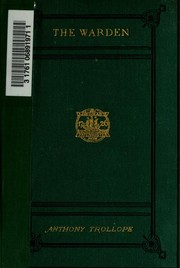
The shortest and most perfectly formed Barsetshire novel, it introduces the cathedral close of Barchester and Trollope's signature moral dilemma: a good man caught between duty and public opinion. Its brevity makes it the ideal entry point.
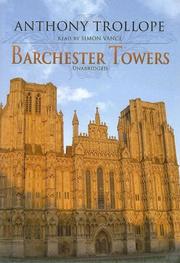
Widely considered Trollope's comic masterpiece, this sequel expands the cast enormously and introduces the unforgettable Mrs. Proudie and Mr. Slope. Reading it second lets you feel the world deepen and the comedy sharpen.
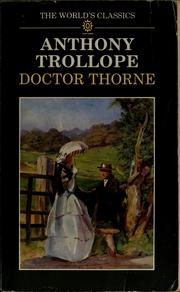
The third Barsetshire novel shifts focus to questions of class, money, and marriage — themes that will dominate the Palliser novels. It is a self-contained story and a bridge between the clerical and political worlds.
Deeper into Barsetshire: Society and Ambition
IntermediateComplete the Barsetshire sequence, experiencing how Trollope sustains and evolves a fictional world across six novels, with increasing psychological and social complexity.
▸ Study plan for this stage
Pace: 10–13 weeks total: ~3–4 weeks per novel at roughly 25–35 pages per day. Suggested breakdown — Framley Parsonage: weeks 1–3; The Small House at Allington: weeks 4–7 (the longest and densest of the three); The Last Chronicle of Barset: weeks 8–13 (savour the finale, allow extra time for reflection and
- The serial/episodic novel structure: how Trollope builds momentum across instalments and sustains reader investment over long narratives
- Social ambition and its costs: the tension between personal integrity and the desire for worldly advancement, dramatised through Mark Robarts in Framley Parsonage and Adolphus Crosbie in The Small House at Allington
- The anatomy of debt and financial recklessness as a moral and social index, especially in Framley Parsonage
- Romantic disappointment and its long aftermath: Lily Dale's refusal to 'recover' from Crosbie as a study in psychological realism and female agency within Victorian constraints
- The Barsetshire world as a closed ecosystem: how recurring characters (the Grantlys, Mrs Proudie, Mr Harding, Johnny Eames) accumulate meaning across novels
- The Reverend Josiah Crawley and the crisis of pride, poverty, and honour as the moral and emotional centrepiece of The Last Chronicle of Barset
- Trollope's narrative voice: ironic sympathy, direct address to the reader, and the ethics of authorial intrusion
- Closure and elegy: how The Last Chronicle consciously dismantles the Barsetshire world, including the death of Mrs Proudie and the retirement of Mr Harding, as a meditation on endings
- In Framley Parsonage, how does Mark Robarts's entanglement with Nathaniel Sowerby illustrate Trollope's view of the relationship between social aspiration and moral compromise — and does Mark earn his eventual redemption?
- What does Lily Dale's repeated rejection of Johnny Eames reveal about Trollope's understanding of female interiority and the limits of the Victorian marriage plot? Is Lily a sympathetic figure, a frustrating one, or both?
- How does Adolphus Crosbie function as both villain and victim in The Small House at Allington, and what does Trollope's treatment of him suggest about his moral philosophy?
- Trace the figure of Mr Harding across all three novels in this stage: how does his role and symbolic weight shift as the Barsetshire sequence approaches its conclusion in The Last Chronicle?
- How does Trollope use the mystery of the stolen cheque in The Last Chronicle of Barset to explore questions of class, pride, and institutional justice? In what ways is Crawley's ordeal both a legal plot and a spiritual one?
- Across all three novels, how does Trollope balance comedy and pathos? Identify one scene from each book where the two modes are most intricately entwined.
- Character web mapping: After each novel, draw a diagram connecting all recurring Barsetshire characters, annotating each link with the nature of the relationship and how it has changed since earlier books. Pay special attention to how characters like Johnny Eames and the Grantlys shift in status and sympathy.
- Debt and consequence ledger (Framley Parsonage): Create a timeline tracking every financial obligation Mark Robarts incurs and the social/moral consequence each one triggers. Write a one-paragraph verdict on whether Trollope treats debt as a moral failing, a social trap, or both.
- Lily Dale close-reading journal (The Small House at Allington): Select four scenes featuring Lily — two before and two after Crosbie's betrayal — and write 200-word close readings of each, focusing on Trollope's free indirect discourse and what it reveals about her inner life versus her public performance.
- Comparative character essay: Write a 500–700 word comparison of Mark Robarts (Framley Parsonage) and Adolphus Crosbie (The Small House at Allington) as studies in weak-willed men. How does Trollope's tone differ toward each, and what accounts for the difference in their fates?
- Elegy and ending exercise (The Last Chronicle): Identify three moments in The Last Chronicle that read as deliberate farewells to the Barsetshire world. For each, write a short note on the literary technique Trollope uses (e.g., retrospective summary, a character's valedictory speech, authorial direct address) and its emotional effect.
- Reading-aloud session: Choose one extended dialogue scene from each of the three novels — ideally one involving Mrs Proudie, one involving Lily Dale, and one involving Crawley — and read them aloud. Note how Trollope differentiates character through speech rhythm, vocabulary, and what is left unsaid.
Next up: Completing the Barsetshire sequence equips the reader with a deep feel for Trollope's world-building, moral realism, and serial craft — the ideal foundation for moving into the Palliser novels, where the same techniques are applied to the higher-stakes arena of parliamentary politics and aristocratic society.
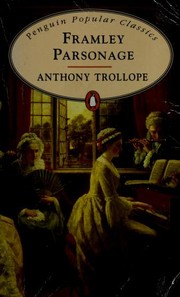
Originally serialised in the Cornhill Magazine, this novel introduces the Crawley family and weaves together clerical, political, and domestic plots — a perfect warm-up for the Palliser world just ahead.
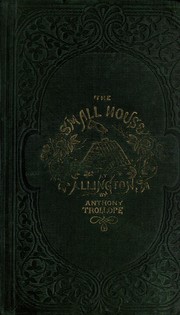
A darker, more emotionally searching novel that introduces Lily Dale, one of Trollope's most debated heroines. It marks the transition from comedy to the more serious moral register of the later Barsetshire and Palliser books.
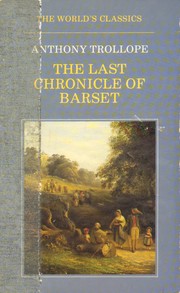
Trollope's own favourite among his novels, and the grand finale of Barsetshire. The story of the Reverend Crawley's ordeal is among the greatest sustained character studies in Victorian fiction — read it last in this sequence to feel its full weight.
The Palliser Sequence: Politics and Marriage
IntermediateNavigate Trollope's six-novel political saga, following Plantagenet Palliser and Lady Glencora from courtship to the heights of power, and understanding how Trollope maps private feeling onto public life.
▸ Study plan for this stage
Pace: 16–20 weeks total, reading roughly 25–35 pages per day. Suggested pacing: "Can You Forgive Her?" — 4 weeks (it is the longest and sets the political and marital architecture for the whole sequence); "Phineas Finn" — 4 weeks (a brisk, plot-rich novel that rewards steady daily reading); "The Eustace D
- The Palliser marriage as a political metaphor: how Plantagenet's rigidity and Glencora's passion mirror the tension between institutional duty and individual desire throughout all four novels
- Trollope's doctrine of 'negative capability' in politics: his admiration for politicians who resist the temptation of personal ambition and act from principle, best embodied in Palliser's reluctant rise to Prime Minister
- The parallel-plot structure: each novel braids a political story with a marriage or courtship plot (e.g., Alice Vavasor's double engagement in 'Can You Forgive Her?', Phineas Finn's romantic entanglements alongside his parliamentary career) to argue that private and public life obey the same moral l
- The 'outsider' figure as social probe: Phineas Finn (Irish, Catholic, without money) and Lizzie Eustace (female, manipulative, self-inventing) are placed at the edges of English society to expose its hypocrisies and unwritten rules
- Property, money, and marriage law: the Eustace diamonds plot dramatises how Victorian law, gender, and ownership intersect — Lizzie's battle over the necklace is simultaneously a battle over female autonomy and self-definition
- Trollope's narrative voice and ironic free indirect discourse: his habit of gently mocking characters while remaining sympathetic to them, inviting readers to judge and then revise their judgements
- The Club, the House, and the Drawing Room as competing arenas of power: how Trollope maps gendered spaces (Westminster, the Reform Club, country houses, London salons) onto different kinds of influence and exclusion
- The ethics of ambition: contrasting George Vavasor's violent, self-destructive hunger for a seat in Parliament with Phineas Finn's more charming but equally self-interested political ascent
- In 'Can You Forgive Her?', Alice Vavasor oscillates between two suitors and two visions of womanhood. What does Trollope ultimately argue about female agency and the cost of 'forgiveness', and how does Glencora's subplot complicate or reinforce that argument?
- How does Phineas Finn's Irishness and lack of independent income function as narrative devices in 'Phineas Finn'? What does his career reveal about the meritocratic promises and class realities of Victorian parliamentary life?
- Lizzie Eustace is one of Trollope's most discussed anti-heroines. How does 'The Eustace Diamonds' use her relationship to the necklace — legally, emotionally, and symbolically — to interrogate Victorian constructions of femininity, honesty, and property?
- Plantagenet Palliser appears in all four novels but is most central in 'The Prime Minister'. How does his character develop across the sequence, and what does his tenure as Prime Minister — marked by paralysis and self-doubt — say about Trollope's ideal of political virtue?
- Trollope consistently pairs a 'bad' marriage plot with a 'good' one within the same novel (e.g., Glencora/Palliser vs. Alice/Grey in 'Can You Forgive Her?'). What moral or social criteria does he use to distinguish them, and do you find his judgements convincing?
- How does Trollope's narrative irony work differently in 'The Eustace Diamonds' compared to the other three novels? Is Lizzie Eustace treated with the same sympathy extended to Glencora or Phineas, and what does the difference reveal about Trollope's moral imagination?
- Maintain a 'Character Ledger': for Plantagenet Palliser and Lady Glencora, record one entry per novel noting their dominant desire, their chief obstacle, and one passage that best captures their voice. At the end of the four novels, write a one-page character arc summary for each.
- Diagram the parallel plots: for each novel, draw a two-column chart labelling the 'political' plot and the 'marriage/courtship' plot. Then draw arrows showing every moment the two plots intersect or mirror each other. Write two sentences explaining what Trollope gains by keeping them in dialogue.
- Close-read the diamonds: re-read the three key scenes in 'The Eustace Diamonds' where the legal status of the necklace is debated (the lawyer's opinion, the theft, the final revelation). Annotate each for how legal language, gendered assumptions, and Lizzie's self-presentation interact. Write a 300-word analysis.
- Write a 400-word 'Trollopian' scene of your own: choose a contemporary political or institutional setting and dramatise a private moral dilemma within it, imitating Trollope's free indirect discourse and his habit of addressing the reader directly ('the reader will perhaps wonder…').
- Conduct a 'space audit' for one novel of your choice: list every named location (club, house, parliamentary chamber, drawing room, park) and note who has access to it and who is excluded. Write a paragraph on how the geography of the novel encodes its social hierarchies.
- After finishing all four novels, write a 500-word essay answering the question: 'Is Trollope a conservative or a reformist novelist?' Use at least one piece of evidence from each of the four books, and take a clear, arguable position.
Next up: Mastering the Palliser sequence's interplay of politics, marriage, and social irony gives the reader the analytical vocabulary — dual plots, narrative voice, the ethics of ambition — needed to tackle Trollope's standalone social comedies and darker psychological novels, where those same tensions play out without the scaffolding of a continuing cast.
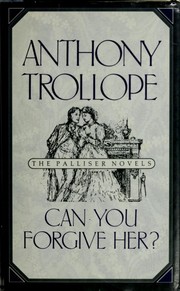
The opening Palliser novel introduces the series' central couple and its great question: what does a woman owe to herself versus society? Reading Barsetshire first means you arrive here already fluent in Trollope's moral world.
The introduction of the Irish MP Phineas Finn shifts the series toward Westminster politics and social climbing. Its energy and romantic entanglements make it the most immediately gripping of the Palliser novels.
A brilliant satirical detour featuring the scheming Lizzie Eustace, this novel can be read as a standalone thriller of manners. Placed here, it deepens your sense of the Palliser world's moral corruption before its darkest phase.
Palliser reaches the pinnacle of political power and finds it hollow — Trollope's most searching study of ambition, duty, and the loneliness of leadership. The Barsetshire and earlier Palliser reading makes its emotional stakes fully legible.
The Standalone Novels: Trollope's Full Range
ExpertDiscover Trollope beyond his two great sequences — his darkest psychological fiction, his sharpest social satire, and his most experimental work — arriving at a complete picture of his genius.
▸ Study plan for this stage
Pace: 10–13 weeks total: ~5 weeks on "The Way We Live Now" (~25–30 pages/day, given its 800+ page length), ~4 weeks on "He Knew He Was Right" (~25 pages/day), and ~2 weeks on "An Autobiography" (~20–25 pages/day, with time for reflection and note synthesis).
- The anatomy of financial fraud and moral corruption: how Melmotte in 'The Way We Live Now' functions as a systemic indictment of Victorian capitalism, not merely a villain
- Trollope's satirical range at full stretch: the interplay of multiple plotlines in 'The Way We Live Now' as a panoramic social critique of aristocracy, journalism, publishing, and marriage markets simultaneously
- Psychological obsession and the destruction of selfhood: Louis Trevelyan's descent in 'He Knew He Was Right' as Trollope's most sustained and harrowing character study
- The 'monomania' theme — how Trollope traces the precise, incremental steps by which a reasonable man becomes unreachable, anticipating later psychological realism
- Trollope's self-construction as a professional author: 'An Autobiography' as a deliberate, provocative act of demystification — the famous revelation of his writing method as a challenge to Romantic notions of artistic genius
- The tension between Trollope's self-deprecation in 'An Autobiography' and the ambition and craft evident in the two novels read before it
- Serialisation, the literary marketplace, and the writer's craft: how 'An Autobiography' reframes the commercial context of everything Trollope wrote
- The question of Trollope's reputation — why 'An Autobiography' arguably damaged his standing after his death, and what it reveals about Victorian anxieties around art versus labour
- How does Augustus Melmotte function as more than a character — in what sense is he a symbol of an entire era's values, and how does Trollope distribute moral responsibility across the novel's society rather than concentrating it in one villain?
- Trace the stages of Louis Trevelyan's psychological collapse in 'He Knew He Was Right': at what point, if any, does Trollope suggest Trevelyan could have been saved, and how does the novel implicate the social structures around him as well as his own will?
- In 'An Autobiography', Trollope famously describes rising at 5:30 a.m. and writing 250 words per quarter-hour by the clock. What is the rhetorical purpose of this confession — is it honest self-portraiture, provocation, or something more complex?
- How does reading 'An Autobiography' after the two novels change or deepen your understanding of Trollope's intentions in those works — particularly his stated views on character creation and his claim that his characters felt real to him?
- Both 'The Way We Live Now' and 'He Knew He Was Right' feature characters who are catastrophically wrong about reality yet cannot be corrected. What does Trollope suggest about the relationship between self-deception and social performance in Victorian England?
- How does 'An Autobiography' position Trollope's own career within the Victorian literary marketplace, and what does his frank discussion of earnings and contracts reveal about his understanding of the author's social role?
- Melmotte's web: Draw a diagram mapping every major character in 'The Way We Live Now' and their relationship to Melmotte — financial, social, romantic, or journalistic. Annotate each link with the form of self-interest or self-deception it represents. Use this map to write a one-page argument for who, besides Melmotte, bears the greatest moral responsibility.
- Trevelyan's timeline: Create a scene-by-scene log of Louis Trevelyan's mental state in 'He Knew He Was Right', rating his grip on reality on a simple scale at each major turning point. Write a short analytical paragraph identifying the single scene you believe marks the point of no return, and defend your choice with close textual evidence.
- Autobiography as argument: After finishing 'An Autobiography', write a one-to-two page response as if you were a contemporary Victorian reviewer — first hostile (arguing that Trollope has debased the idea of literary art), then sympathetic (arguing that his honesty is itself a form of artistic integrity). Compare both responses to see which feels more defensible.
- Cross-book thematic essay: Write a 600–800 word essay on the theme of 'systems that corrupt': how does the financial system in 'The Way We Live Now', the institution of marriage in 'He Knew He Was Right', and the literary marketplace in 'An Autobiography' each function as environments that deform individuals? What is Trollope's cumulative diagnosis?
- Voice and method: Choose one chapter from each of the two novels and read it aloud or transcribe a key passage. Then re-read Trollope's description of his own compositional method in 'An Autobiography'. Write a brief reflection on whether the prose 'feels' mechanical or alive — and what that question itself reveals about assumptions regarding artistic creation.
- Reputation experiment: Research (briefly) contemporary reviews of 'The Way We Live Now' and 'He Knew He Was Right' published in Trollope's lifetime, then look at how 'An Autobiography' (published posthumously in 1883) was received. Write a half-page reflection on how the Autobiography shaped — or distorted — the critical reception of his fiction for subsequent generations.
Next up: By arriving at 'An Autobiography' last, the reader now holds both Trollope's full creative range and his own account of his artistic philosophy, providing an ideal critical vantage point from which to engage with scholarly reassessments, comparative studies, or deeper archival and biographical work in any subsequent stage.
Trollope's most ambitious novel and his savage indictment of Victorian financial and moral corruption. Having absorbed his gentler worlds first, the reader can fully feel the shock and bitterness of this panoramic masterwork.
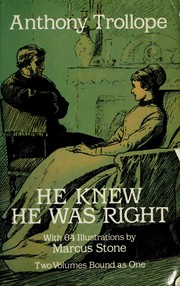
A relentless psychological study of jealousy and marital breakdown that anticipates twentieth-century fiction. It is Trollope at his most disturbing and modern, best appreciated after his more socially comic work.
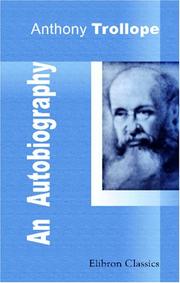
Trollope's frank, witty, and sometimes provocative account of his own life and working methods. Read last, it reframes everything you have read and reveals the man behind the vast fictional world you have just traversed.
Discussion
Keep reading
Paths that share books, cover the same subject, or open a related topic.