The Palliser Novels Reading Order and Guide
This curriculum guides an intermediate reader through Trollope's six Palliser novels in their intended sequence, treating the series as a single, evolving political and social epic. The stages move from establishing the world and its key players, through the turbulent heart of the political drama, to the grand resolution — with each novel building directly on the characters, relationships, and parliamentary intrigues introduced before it.
Enter the World: The Palliser Foundations
IntermediateMeet Plantagenet Palliser and Lady Glencora, understand Trollope's narrative style and social milieu, and establish the emotional and political stakes that will drive the entire series.
▸ Study plan for this stage
Pace: 10–12 weeks total: ~6 weeks for "Can You Forgive Her?" (~30–35 pages/day, accounting for its length of ~800 pages) and ~4–5 weeks for "Phineas Finn" (~25–30 pages/day across ~750 pages), with 1 week of buffer for reflection, re-reading key passages, and completing exercises.
- The 'Woman Question' and female agency: Alice Vavasor's agonizing choice between George Vavasor and John Grey dramatizes mid-Victorian anxieties about marriage as a woman's only meaningful career, while Lady Glencora's thwarted love for Burgo Fitzgerald frames the same tension within aristocratic so
- Trollope's narrative irony and free indirect discourse: Trollope frequently addresses the reader directly and inhabits his characters' rationalizations without endorsing them — learning to distinguish the narrator's voice from a character's self-justification is essential to reading the series.
- The Palliser marriage as the series' emotional spine: 'Can You Forgive Her?' establishes Plantagenet and Glencora's union as a study in duty versus passion; their negotiated, imperfect partnership will evolve across all six novels and must be understood at its fragile origin.
- Westminster politics as social theater: 'Phineas Finn' introduces Parliament not as an abstract institution but as a world of patronage, ambition, loyalty, and performance — Phineas's outsider perspective (Irish, without independent means) defamiliarizes a system insiders take for granted.
- The 'Palliser world' social geography: Both novels map a precise landscape of London clubs, country houses, Parliamentary divisions, and drawing-room dinners; understanding who belongs where and why is inseparable from understanding character motivation.
- Money, independence, and political integrity: From George Vavasor's financial desperation to Phineas Finn's inability to survive without a paid office, both novels insist that economic dependence corrupts or constrains idealism — a theme Trollope will deepen throughout the series.
- Trollope's serial and realist form: Originally published in parts, both novels reward attention to chapter-level structure, the management of multiple plot strands, and Trollope's deliberate pacing — slowness is a feature, not a flaw, encoding the texture of lived social time.
- Female networks and political influence: Lady Laura Standish (Phineas Finn) and Lady Glencora (both novels) exercise real political influence through informal channels — salons, letters, marriages brokered — making visible a parallel power structure alongside formal Parliamentary life.
- In 'Can You Forgive Her?', what does Alice Vavasor's repeated reversal of her engagement decisions reveal about Trollope's attitude toward female self-determination — is the narrator sympathetic, ironic, or both, and where in the text do you find evidence?
- How does the Palliser–Glencora marriage subplot in 'Can You Forgive Her?' function as a counterpoint to Alice's story, and what does their eventual reconciliation suggest about Trollope's vision of a workable Victorian marriage?
- What structural role does Phineas Finn's Irishness and lack of private income play in 'Phineas Finn'? How does his outsider status allow Trollope to expose the unspoken rules of Westminster society that insiders never need to articulate?
- Compare Lady Laura Standish's decision to marry Mr. Kennedy with Alice Vavasor's marital deliberations in 'Can You Forgive Her?' — what does the parallel suggest about the systemic, rather than merely personal, nature of women's constrained choices?
- Both George Vavasor and Phineas Finn are ambitious men who rely on women's money or influence to advance themselves. How does Trollope differentiate our moral judgment of the two characters, and by what narrative techniques does he achieve this?
- By the end of 'Phineas Finn', what has Phineas sacrificed and what has he gained? Does Trollope present his final choice as heroic, naive, or something more ambiguous — and how does that ambiguity set up the reader's expectations for the rest of the series?
- Dual-protagonist journal: After every 50 pages of 'Can You Forgive Her?', write a short paragraph (150–200 words) in Alice's voice and another in Glencora's, capturing each woman's current emotional logic. At the end of the novel, compare the two voices — what has changed, and what has each woman accepted or refused?
- Narrator-vs.-character annotation: Select three passages where Trollope addresses the reader directly ('Can You Forgive Her?' is rich with these). Annotate each one: What is the narrator claiming? Does the surrounding action support or undercut that claim? Build a one-page 'reliability map' of the narrator's stance.
- Political scene close-reading: Choose one Parliamentary debate or club conversation from 'Phineas Finn' and rewrite it as a modern political scene (a committee hearing, a party caucus). Identify which dynamics translated easily and which required the most transformation — this reveals what is historically specific versus perennially human in Trollope's politics.
- Character relationship web: Draw a diagram connecting every major character in both novels, labeling each connection with its primary currency (love, money, political favour, social obligation). Identify the three most over-burdened nodes — the characters on whom the most relationships converge — and write a paragraph on why Trollope places such structural weight on them.
- Comparative women's choices essay (500–700 words): Write a structured comparison of Alice Vavasor, Lady Glencora, and Lady Laura Standish as case studies in the options available to women of different social positions in these novels. Use at least one direct quotation from each book.
- Reading-pace reflection: At the midpoint of each novel, note where you felt Trollope was moving 'too slowly.' Return to those passages after finishing and ask whether the slowness served a purpose — characterization, social texture, dramatic irony. Keep a running log of at least five such moments and what you discovered on review.
Next up: ">Having established the Palliser marriage's fragile foundations and Phineas Finn's debut in Westminster, the reader is now equipped with the emotional and political baseline against which the next stage's higher-stakes crises — Glencora's growing independence and Phineas's return to a more dangerous political arena — will register with full dramatic force.
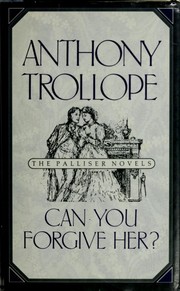
The first Palliser novel introduces Glencora and Plantagenet's troubled marriage alongside Alice Vavasor's parallel romantic dilemma — reading it first is essential, as every subsequent novel assumes knowledge of these foundational relationships.
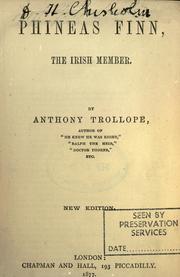
The second novel broadens the world by introducing the charming Irish MP Phineas Finn, whose political career and romantic entanglements weave through the rest of the series; reading it here builds the social web you will need for later volumes.
Crisis and Consequence: The Middle Novels
IntermediateFollow the deepening political and personal crises of the Palliser circle, track Phineas Finn's dramatic fall and return, and understand how Trollope uses scandal and ambition to interrogate Victorian public life.
▸ Study plan for this stage
Pace: 10–13 weeks total: spend 5–6 weeks on The Eustace Diamonds (~25–30 pages/day across its ~750 pages), then 5–6 weeks on Phineas Redux (~25–30 pages/day across its ~750 pages), with a 1-week pause between the two novels for reflection, journaling, and review of notes.
- Possession and deception: The Eustace Diamonds uses the legal and moral dispute over the necklace as an extended metaphor for dishonesty in Victorian society — in marriage, politics, and self-presentation.
- Lizzie Eustace as a new kind of Trollopian protagonist: her romantic scheming, intellectual posturing, and refusal of conventional femininity challenge and expose the hypocrisies of the men and institutions around her.
- The intersection of law and morality: the novel's prolonged debate over whether the diamonds are a 'gift' or an 'heirloom' dramatises how legal technicality and moral truth can diverge, and how institutions can be gamed.
- Phineas Finn's fall from grace: Phineas Redux opens with Phineas returning from Ireland politically diminished; his re-entry into Westminster life, his murder trial, and his ultimate disillusionment map the psychological and moral cost of political ambition.
- Scandal as a political instrument: both novels show how scandal — whether over jewels or a murder charge — is manufactured, circulated, and weaponised within the Palliser social world, reflecting on Victorian journalism and public opinion.
- The limits of meritocracy: Phineas, an Irish outsider who rose on talent and charm, discovers in Redux that the system ultimately protects its own; his acquittal does not restore his faith in English public life.
- Female agency and its constraints: Madame Max Goesler's role in saving Phineas, and Lizzie's relentless self-invention, both illuminate how women navigated — and subverted — the narrow channels of Victorian power.
- Trollope's narrative irony: across both novels, Trollope's narratorial voice distances itself from characters' self-justifications, inviting the reader to judge where characters cannot judge themselves.
- In The Eustace Diamonds, what does the legal dispute over the necklace reveal about the relationship between property law, marriage, and personal integrity in Victorian England — and how does Trollope use different characters (Frank Greystock, Mr. Camperdown, Lord Fawn) to embody different positions in that debate?
- How does Lizzie Eustace function as both a satirical target and a vehicle for social critique? In what ways does Trollope invite sympathy for her even as he exposes her dishonesty?
- Phineas Redux begins with Phineas deeply alienated from the political world he once embraced. Trace the specific experiences in the novel — his re-election, his relationships, the murder charge — that deepen rather than resolve that alienation.
- How does the murder trial in Phineas Redux function as a commentary on English justice, class, and the treatment of outsiders? What role does Madame Max Goesler play, and what does her involvement suggest about the limits of official institutions?
- Both novels feature characters who are publicly accused or suspected of wrongdoing. Compare how Lizzie Eustace and Phineas Finn each respond to public suspicion, and what those responses reveal about gender, class, and reputation in Victorian public life.
- By the end of Phineas Redux, Phineas declines a cabinet post and retreats from the political arena. Is this an act of moral integrity, personal defeat, or both? Use specific scenes and Trollope's narratorial commentary to support your reading.
- Possession map for The Eustace Diamonds: Draw a timeline charting where the necklace physically is at each stage of the novel, and alongside it note each character's legal claim, moral position, and personal motive regarding it. Use this map to write a one-page argument: does Trollope ultimately side with law or conscience?
- Character dossier — Lizzie Eustace: Keep a running log as you read, recording every lie Lizzie tells, every literary or romantic pose she adopts, and every moment another character sees through her. At the end, write a 400-word assessment: is she a villain, a victim, or a satirical mirror held up to Victorian society?
- Cross-novel comparison essay: After finishing both books, write 600–800 words comparing how scandal circulates in each novel. Who generates it? Who benefits? Who is destroyed? Focus on at least two specific scandal episodes — one from each book — and consider what Trollope implies about the Victorian press and public opinion.
- Trial close-reading: Select three consecutive chapters from Phineas Redux's murder-trial sequence and annotate them for (a) legal procedure, (b) class and ethnic bias, and (c) Trollope's ironic narrative voice. Then write a paragraph explaining what the trial reveals about the gap between 'justice' and 'the law' in the novel.
- Madame Max Goesler character study: Track every scene in Phineas Redux in which Madame Max acts independently — gathering evidence, making decisions, spending her own resources. Write a 300-word reflection on how her agency is both celebrated and quietly contained by the novel's social world.
- Socratic discussion or journal prompt — 'The cost of ambition': After completing Phineas Redux, respond in writing (500 words) to this question: Trollope shows us a man who achieved everything he sought and found it hollow. Does the novel offer any alternative model of a meaningful public life, or is it purely a critique?
Next up: By tracing how personal scandal and political disillusionment corrode the Palliser world from the inside, these two novels set the stage for the next phase of the series, in which the consequences of ambition, marital unhappiness, and institutional decay converge directly on Plantagenet Palliser himself as he assumes the highest political office.
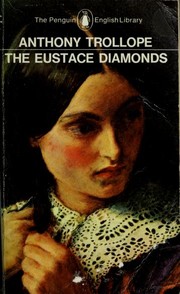
The third novel, centred on the scheming Lizzie Eustace, is a brilliant satirical detour that enriches the series' moral landscape; it introduces characters who reappear later and deepens your sense of the society surrounding the Pallisers.
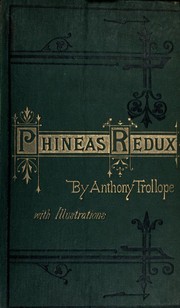
The fourth novel returns Phineas to Westminster under far darker circumstances — a murder trial and political disillusionment — and should be read immediately after The Eustace Diamonds, whose characters carry directly into this plot.
Power and Its Price: The Summit
ExpertWitness Plantagenet Palliser's rise to the premiership and its personal cost, then experience the elegiac close of the entire series — arriving here with full knowledge of every major character makes these final novels deeply resonant.
▸ Study plan for this stage
Pace: 10–12 weeks total: ~6 weeks for The Prime Minister (~30–35 pages/day across its four volumes), then ~4–5 weeks for The Duke's Children (~25–30 pages/day) — allow an extra week for re-reading key chapters and reflective journaling between the two novels.
- The burden of high office: how Plantagenet Palliser's premiership exposes the gap between his idealistic vision of public service and the brutal realities of political coalition-building and social performance
- Lady Glencora as political force: her role as the Premier's unofficial campaign manager, her lavish entertaining at Gatherum Castle, and the tragic irony that her greatest political asset — her gregarious ambition — is precisely what her husband cannot endorse
- The Palliser marriage under maximum pressure: the Prime Minister years as the crucible that tests and ultimately strains the partnership between two people who love each other but inhabit incompatible temperaments
- Ferdinand Lopez as the series' darkest interloper: his manipulation of the Pallisers' social position, his fraudulent ambitions, and his shocking death as a moral reckoning for Plantagenet's sense of guilt and honour
- Trollope's anatomy of a coalition government: the Lib-Con fusion ministry, the compromises it demands, and Palliser's inability to subordinate his personal integrity to the necessities of party management
- Grief, authority, and the widowed Duke: how Glencora's death (off-page between the novels) reshapes Palliser entirely — transforming him from a burdened statesman into a lonely, autocratic, and ultimately humbled father
- The next generation's claims: Lord Silverbridge's Toryism, Lady Mary's love for Frank Tregear, and Gerald Palliser's recklessness as a collective challenge to the Duke's values and class assumptions
- Elegiac closure and Trollope's farewell: The Duke's Children as a meditation on change, loss, and accommodation — the Duke learning that love, not rank, is the only inheritance worth leaving
- In The Prime Minister, what specific failures of political temperament prevent Palliser from being an effective Prime Minister, and how does Trollope invite the reader to sympathise with him nonetheless?
- How does Lady Glencora's death function structurally and emotionally in The Duke's Children, given that it occurs before the novel opens — and what does her absence 'say' that her presence never could?
- Trace Ferdinand Lopez's relationship with the Pallisers across The Prime Minister: in what ways does he exploit their social position, and why does his death weigh so heavily on the Duke's conscience?
- Compare the romantic plots of The Prime Minister (Emily Wharton / Lopez) and The Duke's Children (Lady Mary / Tregear, Silverbridge / Isabel Boncassen): what does each pairing reveal about Trollope's evolving views on marriage, class, and individual will?
- How does Trollope use the American Isabel Boncassen in The Duke's Children to interrogate English aristocratic assumptions about blood, breeding, and worth?
- By the final pages of The Duke's Children, in what ways has the Duke of Omnium changed from the Plantagenet Palliser we first met — and what has remained immovably constant about his character?
- Dual-column character audit: Create a two-column document tracking Plantagenet Palliser across both novels — left column records his stated principles, right column records his actual decisions. Where do they diverge, and what does the pattern reveal?
- Glencora's ghost: Write a 400–600 word interior monologue from the Duke's point of view at any moment in The Duke's Children, imagining what Glencora would have said or done in that scene. Use her established voice from The Prime Minister as your guide.
- Political speech analysis: Select the Duke's resignation speech or any of his parliamentary reflections in The Prime Minister and annotate it closely — identify every place where personal pride, genuine principle, and political calculation are tangled together.
- Lopez moral tribunal: Stage a written 'debate' in which you argue both sides — (a) the Duke bears genuine moral responsibility for Lopez's fate, and (b) the Duke is blameless. Use only textual evidence from The Prime Minister. Then write a one-paragraph verdict.
- Generational contrast essay: Write a 500-word comparative essay on how Lord Silverbridge and his father each define 'duty' in The Duke's Children, drawing on at least three specific scenes from the novel.
- Series-long character map: Now that you have read all six Palliser novels, draw a relationship web connecting every major recurring character. Annotate each connection with the novel in which it was most decisively shaped — then identify which threads were resolved in these final two books and which Trollope left deliberately open.
Next up: Having traced the full arc of Palliser's public and private life — from shy Chancellor to grief-worn Duke — readers are now equipped to step back and engage with Trollope's craft and legacy as a whole, exploring his place in the Victorian novel tradition and the critical conversation his work has generated across time.
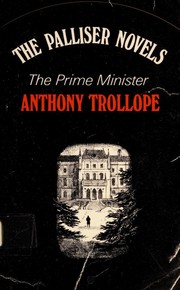
The fifth novel places Palliser at the apex of power as Prime Minister while Glencora schemes on his behalf — the emotional and political payoff of everything built across the first four books, and Trollope's most searching study of integrity in office.
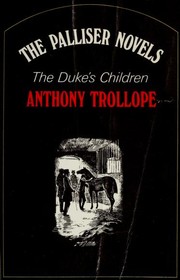
The sixth and final novel, set after Glencora's death, follows a widowed, mellowed Duke navigating his children's futures — a moving coda that rewards readers who have followed every step of the journey and resolves the series' central themes of duty, love, and change.
Discussion
Keep reading
Paths that share books, cover the same subject, or open a related topic.