Barchester Reading Order: Trollope's Chronicles
This curriculum guides an intermediate reader through all six of Anthony Trollope's Barchester Chronicles in their intended narrative sequence, grouped into three stages that mirror the thematic arc of the series: establishing Barsetshire society, exploring its political and moral tensions, and finally confronting its decline and transformation. Each novel builds directly on the characters, relationships, and ecclesiastical world introduced before it, so reading in order is essential.
Foundations of Barsetshire
IntermediateMeet the cathedral close of Barchester, its clergy, and its social hierarchies; establish familiarity with Trollope's leisurely, ironic narrative voice and the world of the Church of England as a social institution.
▸ Study plan for this stage
Pace: 6–8 weeks total: Weeks 1–2 for The Warden (~20–25 pages/day, ~220 pages), Weeks 3–6 for Barchester Towers (~25–30 pages/day, ~530 pages), with Weeks 7–8 reserved for review, re-reading key chapters, and completing exercises.
- The Church of England as a social institution: Trollope portrays the cathedral close not as a place of spiritual drama but as a microcosm of English class, patronage, and professional ambition — understand how ecclesiastical appointments, livings, and sinecures function as social currency.
- Trollope's ironic narrative voice: Recognize his habit of gently mocking characters he also sympathizes with, his direct addresses to the reader ('the author'), and his refusal to cast anyone as a pure villain or hero.
- The warden's moral dilemma as Trollope's central ethical engine: Septimus Harding's resignation in The Warden establishes Trollope's recurring theme — the tension between institutional comfort and personal conscience — which echoes throughout Barchester Towers.
- The politics of ecclesiastical patronage: In Barchester Towers, the arrival of Bishop Proudie, Mrs. Proudie, and Mr. Slope dramatizes how external (Low Church/Evangelical) forces disrupt an entrenched (High Church/Tractarian-adjacent) establishment, making church appointments a proxy for ideological
- Gender and power in the Close: Mrs. Proudie's dominance over her husband and Mr. Slope's manipulation of women around him show how women exercise real power within the constraints of Victorian social form — contrast her with Eleanor Bold and the Signora Neroni.
- The Barsetshire world as a self-contained social ecosystem: Map the recurring families (Harding, Grantly, Bold/Arabin, Stanhope) and understand how Trollope builds a believable provincial world through accumulation of domestic and professional detail.
- Satirical targets — journalism and public opinion: The Jupiter newspaper in The Warden and its editor Tom Towers represent Trollope's deep skepticism of press power and mob sentiment as forces that override individual justice.
- The comedy of manners as moral commentary: Scenes like the Ullathorne Sports in Barchester Towers are not mere comic relief — they reveal social rank, aspiration, and embarrassment as the true currency of Barsetshire life.
- In The Warden, why does Septimus Harding resign his wardenship, and what does Trollope seem to think of that decision — does the novel endorse it, critique it, or both?
- How does Trollope use the Jupiter newspaper and the character of John Bold to critique the relationship between reformist idealism and unintended personal harm?
- In Barchester Towers, what does the three-way rivalry between Mr. Slope, Mrs. Proudie, and Archdeacon Grantly reveal about the difference between Low Church and High Church values as Trollope presents them?
- How does Eleanor Bold function as the moral and romantic center of Barchester Towers, and what does the novel's treatment of her suitors (Slope, Stanhope/Bertie, Arabin) say about Trollope's ideal of marriage?
- What role does the Signora Madeline Neroni play in Barchester Towers — is she a villain, a victim, a satirical device, or something more complex?
- By the end of these two novels, what picture has Trollope constructed of the Church of England — is it a spiritual body, a social club, a political arena, or all three simultaneously?
- Character map exercise: After finishing each novel, draw a diagram of Barchester's social hierarchy — place characters by rank (Bishop, Archdeacon, Warden, etc.) and draw arrows showing relationships of power, rivalry, affection, and obligation. Update it as you move from The Warden to Barchester Towers to track how the ecosystem shifts.
- Voice imitation journal: Choose one scene per novel where Trollope addresses the reader directly (e.g., his famous 'It is not my purpose to write a history of the Low Church party' aside in Barchester Towers). Write a one-paragraph continuation of that scene in Trollope's ironic, confiding voice to internalize his narrative style.
- Comparative close-reading: Select Archdeacon Grantly's first major scene in The Warden and his equivalent scene in Barchester Towers. Write 300–400 words on how his character is consistent yet deepened — what new facets of him does the second novel reveal?
- Reform debate exercise: Stage a written debate (two short paragraphs each side) between John Bold's reformist position and Archdeacon Grantly's conservative one on the question of the Hiram's Hospital beadsmen. Then write a third paragraph from Harding's perspective — someone who sees merit and harm on both sides.
- Thematic tracking log: Keep a running list as you read Barchester Towers of every scene in which a church appointment, living, or position is discussed, negotiated, or schemed over. At the end, write a one-page reflection: what does this frequency tell you about what the Church of England actually *does* in Trollope's world?
- Reread and annotate the Ullathorne Sports chapters (Chapters 35–37 of Barchester Towers): identify every moment of social embarrassment, class anxiety, or status negotiation. Write a brief note on how this garden party functions as a miniature version of the whole novel's social drama.
Next up: Completing these two novels gives the reader a fully inhabited mental map of Barsetshire and its recurring cast, making it possible to follow the more complex, multi-plot novels ahead — where Trollope expands beyond the cathedral close into county politics, landed gentry, and the entanglement of church with money and inheritance.
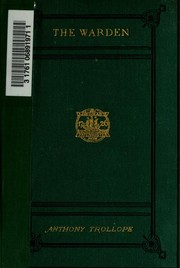
The first and shortest Barchester novel, it introduces Septimus Harding, the cathedral close, and Trollope's central preoccupation with conscience versus social pressure. Its brevity makes it the perfect entry point for calibrating to Trollope's style.
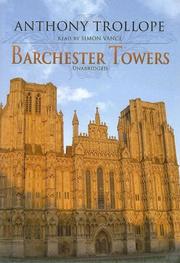
The most celebrated novel in the series, it expands the cast enormously — Mrs. Proudie, Slope, Arabin — and deepens the ecclesiastical politics established in The Warden. Reading it second allows full appreciation of how the world has shifted since the first book.
Politics, Land, and Ambition
IntermediateFollow Barsetshire's gentry and clergy as worldly ambition, money, and parliamentary politics enter the picture, broadening the series from cathedral intrigue to the full social landscape of the county.
▸ Study plan for this stage
Pace: 6–7 weeks total: ~3 weeks for Doctor Thorne (~30 pages/day across ~500 pages), then ~3–4 weeks for Framley Parsonage (~25–30 pages/day across ~500 pages), with a short reflective pause of 2–3 days between the two novels to consolidate notes and prepare comparative questions.
- The intersection of land, money, and social rank: how inherited wealth vs. new commercial money creates tension in Barsetshire society, especially through the Gresham estate's debts and Roger Scatcherd's self-made fortune in Doctor Thorne
- The marriage plot as social negotiation: Frank Gresham's obligation to 'marry money' versus his love for Mary Thorne dramatises how matrimony functions as an economic and class institution
- The role of the professional gentleman: Dr. Thorne's ambiguous social position as a medical man without independent means illustrates the Victorian anxiety about professional status and gentility
- Parliamentary politics and county influence: the Greshamsbury and De Courcy interests in Doctor Thorne, and the Duke of Omnium's political shadow in Framley Parsonage, show how Westminster power reaches into rural Barsetshire
- Clerical worldliness and financial temptation: Mark Robarts's acceptance of Lord Lufton's bill in Framley Parsonage demonstrates how ambition and social climbing corrupt even well-meaning clergymen
- Patronage networks and social obligation: the web of favours, debts, and loyalties connecting landowners, clergy, and politicians across both novels
- The expanding geography of Barsetshire: both novels move beyond Barchester's cathedral close to country houses, hunting fields, and London drawing-rooms, widening the social canvas
- Class permeability and its limits: Mary Thorne's secret origins and Lucy Robarts's quiet moral authority both test — and ultimately confirm — the boundaries of Victorian class mobility
- In Doctor Thorne, how does the Gresham family's financial ruin reflect Trollope's critique of the English landed gentry's relationship to old money and new commercial wealth, and what does Roger Scatcherd's rise and fall add to this critique?
- How does Dr. Thorne's guardianship of Mary function as both a plot mechanism and a vehicle for exploring the tension between personal integrity and social convention?
- In Framley Parsonage, what sequence of social pressures leads Mark Robarts to sign the bills, and how does Trollope use this chain of events to argue about the dangers of clerical ambition and aristocratic patronage?
- Compare the female protagonists of the two novels: in what ways do Mary Thorne and Lucy Robarts each resist or accommodate the social expectations placed on women of uncertain or modest standing, and what does each woman's resolution reveal about Trollope's values?
- How do parliamentary elections and political allegiances in Doctor Thorne shape the personal relationships and fortunes of the Gresham family, and how does the Duke of Omnium's off-stage presence in Framley Parsonage perform a similar structural function?
- Taken together, how do Doctor Thorne and Framley Parsonage broaden the Barsetshire world established in the earlier cathedral novels, and what new social institutions and classes does Trollope bring into focus?
- Debt and inheritance mapping: draw a diagram of the Gresham estate's financial entanglements in Doctor Thorne — creditors, mortgages, political expenses, and the Scatcherd money — then annotate each node with the social or moral implication Trollope attaches to it
- Character motivation journal: for Mark Robarts in Framley Parsonage, keep a running log at the end of each weekly reading session tracking every social temptation he faces, his stated reasoning, and the consequence; at the end, write a one-page verdict on whether Trollope treats him sympathetically or critically
- Comparative close reading: select one scene of social embarrassment from each novel (e.g., Frank Gresham's declaration to Mary; Lucy Robarts's refusal of Lord Lufton) and write a 400-word comparison of how Trollope uses dialogue and free indirect discourse to convey class anxiety
- Political landscape essay: using only evidence from the two novels, write 500 words explaining how Trollope presents the relationship between land ownership, parliamentary seats, and local social power in Barsetshire — who holds power, how it is maintained, and what threatens it
- Rewrite exercise: choose any scene in which a character's social rank is a barrier to honest communication and rewrite it (1–2 pages) from the perspective of the lower-status character, then reflect on what Trollope's original narration conceals or reveals by not taking that perspective
- Thematic timeline: create a side-by-side chronological timeline of the two novels' major plot events, colour-coded by theme (money/debt, marriage/courtship, politics, clerical conduct); use it to write a short paragraph identifying which theme dominates each novel and where the two novels most closely mirror each other
Next up: By tracing how worldly ambition and money reshape both clerical and gentry life across Doctor Thorne and Framley Parsonage, the reader is now equipped to follow the deeper political and moral consequences of those forces in the later Barsetshire novels, where the stakes of power, inheritance, and social hypocrisy are raised even higher.
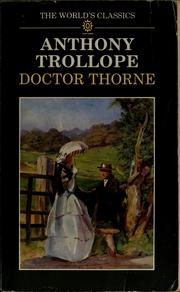
The third novel shifts focus from the cathedral to the landed gentry and introduces the Gresham family and questions of class and inheritance. It broadens the reader's map of Barsetshire beyond Barchester itself.
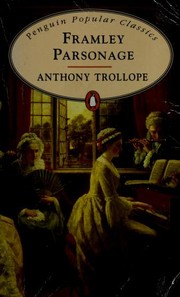
Originally serialised in the Cornhill Magazine, this novel weaves together the clerical and gentry worlds through Mark Robarts's financial entanglements and Lucy Robarts's love story, drawing together threads from the earlier books.
Twilight of Barsetshire
ExpertExperience the full moral and emotional weight of the series as Trollope examines old age, pride, institutional decay, and the passing of a way of life — requiring all the accumulated knowledge of characters and society built across the earlier novels.
▸ Study plan for this stage
Pace: 8–10 weeks total: ~3 weeks on The Small House at Allington (~30–35 pages/day) and ~5–6 weeks on The Last Chronicle of Barset (~30–35 pages/day), with one buffer week for re-reading key chapters, note consolidation, and comparative reflection across both novels.
- The anatomy of pride and stubbornness: Josiah Crawley's tortured dignity as a study in how pride can be simultaneously noble and self-destructive
- Romantic stasis and the refusal of resolution: Lily Dale's deliberate choice to remain 'the old maid' as a radical act of emotional self-definition against Victorian matrimonial expectations
- Institutional decay and the Church of England: the Barchester ecclesiastical establishment shown in its twilight — preferment politics, the Jupiter's reforming pressure, and the erosion of old clerical certainties
- The passing of a generation: the deaths, retirements, and diminishments of characters (Harding, the Grantlys, the Dales) as Trollope's elegy for a vanishing social world
- Class, money, and moral worth: the cheque subplot in The Last Chronicle as a forensic examination of how financial suspicion exposes class prejudice against the deserving poor
- Crosbie and the consequences of moral failure: tracking Adolphus Crosbie across The Small House at Allington as a sustained portrait of a man who knows his own weakness and cannot escape it
- The narrator's explicit farewell: Trollope's self-conscious authorial valediction to Barsetshire and what it means for the reader's relationship with a fictional world
- Emotional realism over plot mechanics: how Trollope prioritises psychological truth and the slow accumulation of feeling over dramatic incident in both novels
- How does Lily Dale's rejection of Johnny Eames function as both a personal psychological statement and a critique of the social pressure placed on women to marry, and does Trollope endorse, pity, or admire her choice?
- In what ways does Josiah Crawley's pride serve as his greatest virtue and his greatest flaw simultaneously — and how does Trollope prevent him from becoming either a simple hero or a simple fool?
- How does the mystery of the stolen/misremembered cheque in The Last Chronicle operate as more than a plot device — what does the community's readiness to believe Crawley guilty reveal about class and clerical society in Barsetshire?
- Compare the roles of Archdeacon Grantly in The Small House at Allington and The Last Chronicle: in what direction does his character travel, and what does his eventual softening toward Crawley signify thematically?
- How does Trollope use the figure of Mr. Harding's death and the closing of Hiram's Hospital to signal the end of the Barsetshire world, and why is this elegiac note so carefully prepared across both novels?
- What does Crosbie's trajectory — from charming opportunist to trapped, joyless husband to widower seeking re-entry into Lily's life — suggest about Trollope's view of moral accountability and the possibility (or impossibility) of redemption?
- Character consequence map: Before beginning The Small House at Allington, draw a diagram of every major character carried over from earlier Barchester novels, noting their status, relationships, and unresolved tensions. Update it chapter by chapter as fates are sealed or transformed, and write a one-paragraph 'verdict' on each character arc at the end of The Last Chronicle.
- Lily Dale's voice journal: After every five chapters of The Small House at Allington, write a short (200–300 word) first-person journal entry as Lily Dale, forcing yourself to articulate her emotional reasoning from the inside. Compare your entries to Trollope's own narratorial commentary on her to identify where he agrees, qualifies, or gently contradicts her self-perception.
- The cheque dossier: As you read The Last Chronicle, compile a running 'legal brief' — a structured document listing every piece of evidence for and against Crawley's guilt as it emerges chapter by chapter. At the novel's resolution, write a closing argument (500 words) that uses only the textual evidence you gathered, then reflect on how Trollope managed your suspicion and sympathy.
- Close-reading comparison — two farewell scenes: Select the chapter describing Mr. Harding's death in The Last Chronicle and the final chapter of The Small House at Allington. Write a 600-word comparative close reading focusing on Trollope's prose rhythm, tone, and use of the narrator's voice to create an elegiac effect. Identify at least three specific stylistic techniques he uses in both.
- Institutional autopsy essay: Write a 700–900 word analytical essay arguing either that the Church of Barsetshire 'deserves' its decline as depicted across both novels, or that Trollope mourns it as an unjust loss. You must draw specific evidence from both books and acknowledge the strongest counterargument to your thesis.
- Re-read and reconsider: Choose one character whose behaviour you judged harshly on first reading (Crosbie, Mrs. Proudie, or Archdeacon Grantly are strong candidates). Re-read their key scenes in The Last Chronicle with the explicit goal of building the most sympathetic possible case for them. Write a 300-word 'defence' and reflect on what this exercise reveals about Trollope's moral complexity.
Next up: Mastering the elegiac register, moral complexity, and character depth of these two novels equips the reader to engage with Trollope's later Palliser and standalone works, where the same tensions — institutional decline, individual pride, the cost of social conformity — are transposed from a cathedral close to the political and financial worlds of Victorian England.
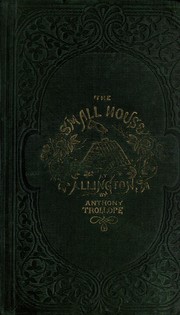
The fifth novel introduces Lily Dale and Johnny Eames, whose story of disappointed love and stubborn pride is among Trollope's most psychologically rich. It marks a tonal darkening that prepares the reader for the series' conclusion.
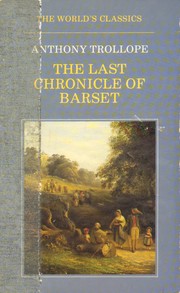
Widely considered Trollope's masterpiece, this final volume brings nearly every major Barsetshire character together for a farewell. Its full power depends entirely on having read the five preceding novels, as Trollope himself bids goodbye to the world he created.
Discussion
Keep reading
Paths that share books, cover the same subject, or open a related topic.