Anthony Burgess Reading Order: Where to Start
This curriculum moves from Burgess's most famous novel into the full arc of his fiction, then grounds everything in biography and critical context. Because the learner starts at an intermediate level, the path skips basic introductions and instead builds outward from A Clockwork Orange — first understanding its world, then inhabiting the Enderby tetralogy, then tackling Burgess's own critical and autobiographical writing, and finally engaging serious scholarly criticism.
The Central Text
IntermediateRead A Clockwork Orange with full attention to its language, structure, and moral argument, establishing the benchmark against which everything else in Burgess's career is measured.
▸ Study plan for this stage
Pace: 4–5 weeks total: Week 1–2 — Read A Clockwork Orange at a measured pace (~20–25 pages/day), pausing after each of the three parts to take notes on language and moral shifts. Week 3 — Re-read key chapters of A Clockwork Orange closely (the Ludovico Technique sequence, the final chapter), then read Bur
- Nadsat: the invented Russo-Anglo slang as both an artistic device and a moral instrument — language that implicates the reader in Alex's world
- The three-part symmetrical structure of A Clockwork Orange and the significance of Burgess's insistence on 21 chapters (the 'coming of age' number)
- Free will vs. conditioned behaviour: the Pelagian/Augustinian theological tension at the heart of the moral argument
- The Ludovico Technique as a critique of behaviourism (Skinner) and state power — goodness that is not chosen is not goodness
- The suppressed 21st chapter and the Anglo-American publishing divide: how the ending changes the entire moral meaning of the novel
- 1985 as Burgess's own critical apparatus — his essay dissecting Orwell's Nineteen Eighty-Four and how it reframes A Clockwork Orange's dystopian credentials
- Workerism and trade-union tyranny in the fictional 1985 as a contrasting dystopian model to Soviet-style totalitarianism
- Burgess's Catholicism and its role in shaping his view that the capacity for evil is inseparable from the capacity for moral choice
- What does Nadsat accomplish that standard English could not, and how does the reader's gradual fluency in it mirror Alex's own arc of socialisation and de-socialisation?
- Why did Burgess consider the American 20-chapter edition a fundamentally different — and lesser — novel, and what does the restored 21st chapter argue about human development?
- How does the Ludovico Technique function as a philosophical argument, and which real-world ideological targets (behaviourism, state paternalism, utilitarian ethics) is Burgess attacking through it?
- In the critical essay within 1985, how does Burgess distinguish his own dystopian vision from Orwell's, and what does he see as Orwell's central blind spot?
- How does the fictional novella in 1985 use trade-union corporatism as a dystopian mechanism, and how does this compare structurally and thematically to the world-building in A Clockwork Orange?
- What is the relationship between Burgess's Catholic theology of free will and his political conclusions about the limits of state intervention in individual behaviour?
- Nadsat immersion log: Keep a running glossary as you read A Clockwork Orange — but go further by writing a single diary entry (one paragraph) in Nadsat yourself after finishing Part One, forcing active rather than passive acquisition of the language.
- Structural mapping: Draw a chapter-by-chapter arc diagram for A Clockwork Orange, annotating each of the three parts with Alex's level of autonomy, the dominant power structure he faces, and the emotional register of the prose. Identify the hinge moments.
- Comparative endings essay (500 words): Write a close reading comparing the final paragraph of the 20-chapter American edition (end of Chapter 20) with the final paragraph of the full 21-chapter edition. Argue which ending Burgess's moral framework demands and why.
- Burgess vs. Orwell debate notes: After reading the critical essay in 1985, draft a two-column table — Burgess's critique of Orwell on the left, your own assessment of whether each critique is fair on the right. Use specific passages from both texts as evidence.
- Dystopia design comparison: Write a one-page analytical note comparing the mechanisms of social control in A Clockwork Orange (Ludovico, prison, the State) with those in the fictional 1985 (union tyranny, Workerism). Which does Burgess present as the more insidious threat, and how can you tell?
- Free-will position paper (750 words): Synthesise the moral argument across both books into a single position paper titled 'What Burgess Believes About Human Freedom.' Cite at least three specific scenes or passages from A Clockwork Orange and at least one from 1985 to support each claim.
Next up: Having established A Clockwork Orange as the moral and linguistic benchmark and used 1985 to see Burgess thinking critically about his own work and Orwell's, the reader is now equipped to explore how the same preoccupations — free will, language, history, and the artist's conscience — play out across the full breadth of Burgess's other novels.
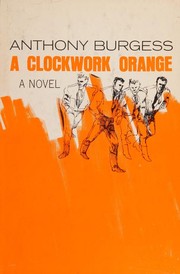
The unavoidable starting point: reading the complete 21-chapter text (restoring the omitted final chapter) lets you experience Nadsat, Burgess's invented argot, and the novel's Augustinian free-will thesis at first hand before any secondary commentary shapes your view.
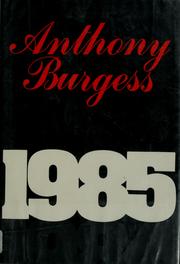
Burgess's own extended essay-plus-novella directly glosses A Clockwork Orange by placing it in dialogue with Orwell and with 1970s Britain; reading it immediately after the novel shows how Burgess himself contextualised his most famous work.
The Enderby Tetralogy
IntermediateRead the four Enderby novels in sequence to understand Burgess's comic, self-deprecating portrait of the artist, his views on poetry and popular culture, and the sustained fictional project that he considered his most personal achievement.
▸ Study plan for this stage
Pace: 8–10 weeks total, reading the four novels in sequence: ~2 weeks each for "Inside Mr. Enderby" and "Enderby Outside" (roughly 20–25 pages/day), ~1 week for the shorter "The Clockwork Testament" (~15–20 pages/day), and ~2–3 weeks for "Enderby's Dark Lady" (~20 pages/day), with a buffer week at the end
- The poet-as-antihero: Enderby as Burgess's comic, self-deprecating alter ego — a flatulent, bathroom-dwelling versifier who embodies the artist's alienation from modern society
- Poetry vs. popular culture: the tetralogy's sustained tension between Enderby's devotion to serious verse and the encroachments of mass media, celebrity culture, and commercial entertainment, dramatized most sharply in 'The Clockwork Testament'
- Identity, death, and resurrection: Enderby's repeated symbolic deaths and rebirths (the breakdown and 'cure' in 'Inside Mr. Enderby', the erasure of self in 'Enderby Outside', the mock-execution in 'The Clockwork Testament', the American exile in 'Enderby's Dark Lady') as a structuring motif across
- The creative process and artistic integrity: how Burgess uses Enderby's struggles with the muse, writer's block, and commercial compromise to dramatize his own convictions about what poetry demands of its maker
- Satire of psychotherapy and social conformity: the Freudian 'rehabilitation' of Enderby in 'Inside Mr. Enderby' as a critique of mid-century therapeutic culture and its hostility to artistic eccentricity
- Intertextuality and the poet's tradition: Enderby's relationship to Hopkins, Keats, and the broader English lyric tradition, and how Burgess embeds actual poems within the novels to blur the line between fiction and verse
- The media spectacle and authorial loss of control: 'The Clockwork Testament' as a metafictional satire on how a literary work (the fictional film of 'Gerard Manley Hopkins') is distorted by television culture and celebrity interviews
- 'Enderby's Dark Lady' and the Shakespeare connection: the novel's engagement with Shakespearean biography, the Dark Lady sonnets, and Burgess's parallel project in 'Nothing Like the Sun', deepening the tetralogy's meditation on artistic legacy
- How does Burgess use Enderby's bathroom-studio and his physical grotesquerie in 'Inside Mr. Enderby' to make a serious argument about the conditions — social, psychological, bodily — that genuine poetic creation requires?
- What does the therapeutic 'cure' administered to Enderby in 'Inside Mr. Enderby' satirize, and how does Enderby's subsequent reclamation of his identity in 'Enderby Outside' complicate or reverse that satire?
- In 'The Clockwork Testament', how does the television interview format function as a structural and satirical device, and what does Enderby's on-screen death say about Burgess's fears regarding the relationship between literature and mass media?
- How does 'Enderby's Dark Lady' use the conceit of a Shakespeare musical in Stratford, Indiana to revisit and extend the tetralogy's central themes of artistic compromise, cultural appropriation, and the poet's survival in a commercial world?
- Trace the motif of the 'stepmother' and Enderby's fraught relationships with women across all four novels — how do these relationships function both psychologically and as obstacles or catalysts to his poetry?
- In what ways does the tetralogy as a whole constitute Burgess's most personal artistic statement, and which specific passages, poems, or scenes across the four books best support that claim?
- Keep a running 'Enderby Poem Log': each time an actual poem by Enderby appears in any of the four novels, copy it out, annotate its apparent influences (Hopkins, Keats, etc.), and write two sentences on how it functions within its narrative context — by the end of the tetralogy you will have a small anthology that reveals Burgess's own poetic sensibility.
- After finishing 'Inside Mr. Enderby', write a one-page mock case-file in the voice of Enderby's therapist, Dr. Wapenshaw, diagnosing Enderby and recommending his 'cure' — then write Enderby's furious one-page rebuttal; this exercise sharpens your grasp of the novel's central ideological conflict.
- After reading 'The Clockwork Testament', script a two-page continuation of the Enderby television interview in which the host asks about one of the other three novels — this forces you to synthesize the tetralogy's themes and inhabit Burgess's satirical voice.
- Create a four-column 'Identity Tracker' chart — one column per novel — listing Enderby's name(s), living situation, relationship to poetry, and relationship to popular culture at the end of each book; use this chart to write a 300-word analysis of how his identity evolves (or refuses to evolve) across the sequence.
- Research and read three to five real poems by Gerard Manley Hopkins (referenced heavily in 'The Clockwork Testament') and write a one-page comparison of Hopkins's sprung rhythm and compression with the style of Enderby's own poems in the tetralogy — this grounds Burgess's literary arguments in actual poetic practice.
- Write a 500-word personal essay answering the question: 'Is Enderby a hero, a fool, or both?' Draw specific evidence from at least three of the four novels, and conclude by reflecting on what Burgess's ambivalence toward his alter ego reveals about his own anxieties as a writer.
Next up: Completing the Enderby tetralogy establishes a firm command of Burgess's comic register, his self-reflexive treatment of artistic identity, and his recurring preoccupation with the poet's place in history — all of which are essential preparation for engaging with his more formally ambitious and historically expansive novels, such as "Nothing Like the Sun" and "Napoleon Symphony".
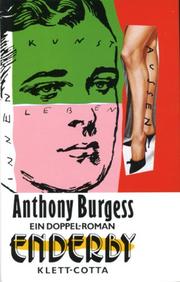
The first Enderby novel introduces the flatulent, bathroom-dwelling poet; reading it first establishes the character's voice and domestic comedy before the later books complicate and darken him.
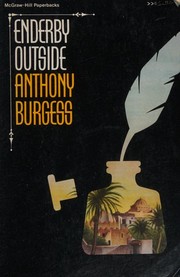
The sequel takes Enderby into the wider world of celebrity and pop culture, deepening the satire; it builds directly on the first book's characterisation and should follow it without a gap.
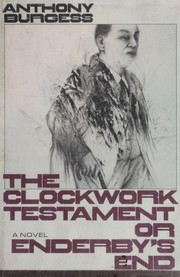
This short, savage novella — in which Enderby appears on American television to defend a film adaptation of Gerard Manley Hopkins — is Burgess's most direct fictional commentary on A Clockwork Orange's reception, linking the two strands of the curriculum.
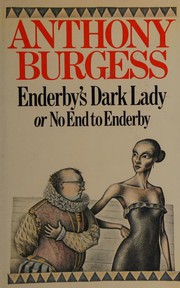
The final Enderby novel, set partly in the world of a Shakespeare musical, closes the tetralogy and rewards readers who have followed the full arc; its Shakespearean themes also prepare for the critical stage ahead.
Burgess on Burgess: Autobiography and Self-Criticism
IntermediateUnderstand Burgess's own account of his life, influences, and literary intentions through his memoirs and his critical writing on the novel form, giving you the authorial perspective before turning to outside scholars.
▸ Study plan for this stage
Pace: 10–12 weeks total: ~5 weeks for "Little Wilson and Big God" (~30 pages/day), ~4 weeks for "You've Had Your Time" (~25 pages/day), and ~2–3 weeks for "The Novel Now" (~20 pages/day, with slower reading for critical annotation). Plan for 5 reading days per week, leaving weekends for reflection and exe
- Burgess's Catholic guilt and apostasy as a recurring psychological and thematic engine across his fiction — traced directly through his account of his Manchester upbringing and Xaverian education in 'Little Wilson and Big God'
- The 'colonial' experience: Burgess's years in Malaya and Brunei as formative for his sense of cultural outsiderdom, linguistic plurality, and postcolonial irony, as he narrates them in 'Little Wilson and Big God'
- The 'condemned man' myth: Burgess's claim in 'You've Had Your Time' that a false terminal diagnosis in 1959 drove his furious productivity — and how he interrogates the honesty of that self-narrative
- Financial desperation and artistic compromise: 'You've Had Your Time' reveals the tension between Burgess's commercial hackwork (journalism, screenplays, novelizations) and his ambitions as a serious novelist, raising questions about artistic integrity
- Burgess's theory of the novel as a linguistic artifact: in 'The Novel Now' he argues that fiction's primary medium is language itself, not plot or character, placing him in a tradition running from Joyce through Nabokov
- The novelist as polymath: across all three books Burgess constructs an authorial identity inseparable from musicology, linguistics, and translation — understanding this self-image is essential for reading his fiction
- Self-criticism and self-mythologizing: comparing the two memoirs reveals how Burgess shapes, omits, and occasionally contradicts himself, making his autobiographical writing itself an act of fiction
- Canon-making and aesthetic hierarchy: 'The Novel Now' shows Burgess championing certain novelists (Joyce, Greene, Spark) and dismissing others, exposing the ideological assumptions behind his literary judgments
- According to 'Little Wilson and Big God', how did Burgess's Catholic upbringing in Manchester and his later rejection of institutional Catholicism shape the moral and theological preoccupations visible throughout his career?
- In 'You've Had Your Time', how does Burgess present the 1959 brain-tumor diagnosis, and what does his own retrospective skepticism about that story reveal about the relationship between autobiography and self-myth?
- How does Burgess use 'You've Had Your Time' to negotiate the tension between his identity as a 'serious' literary novelist and his prolific output of journalism, film scripts, and potboilers — and does he resolve it satisfactorily?
- What is Burgess's central argument in 'The Novel Now' about what distinguishes great fiction from merely competent fiction, and which novelists does he use as his primary touchstones?
- Across all three books, how does Burgess construct a consistent authorial persona, and where do the two memoirs and the critical work contradict or complicate each other?
- Based on 'The Novel Now', what does Burgess believe the novel form can do that no other art form can, and how does his answer reflect his own practice as a novelist?
- Autobiography timeline: As you read both memoirs, build a running chronological timeline of Burgess's life events alongside the novels he wrote at each period. After finishing 'You've Had Your Time', annotate the timeline with the stated motivations he gives for each major work — then flag any moments where the two memoirs give different or contradictory accounts of the same event.
- Self-myth audit: Identify the three or four most dramatic self-defining stories Burgess tells (the diagnosis, the wartime incident with Lynne, the Malayan postings). Write a one-paragraph analysis of each asking: What does Burgess gain, narratively or reputationally, by telling it this way? What might he be omitting or softening?
- Critical manifesto extraction: Read 'The Novel Now' with a highlighter for every prescriptive claim Burgess makes ('the novel must…', 'the novelist should…', 'what separates great fiction is…'). Compile these into a one-page 'Burgess Manifesto' in your own words, then test each claim against one novel you have already read by Burgess.
- Voice comparison exercise: Select two passages of roughly equal length — one from either memoir and one from 'The Novel Now'. Perform a close stylistic analysis: How does Burgess's prose voice shift between autobiographical and critical modes? What does this tell you about how he performs different versions of himself for different audiences?
- Influence mapping: Using 'The Novel Now' as your primary source, draw a literary influence map with Burgess at the center. Connect him to every writer he discusses approvingly, and annotate each connection with the specific quality he admires. Then, using the memoirs, add a second layer: writers he mentions reading at formative moments in his life.
- Anticipatory reading journal: Before moving to outside scholarship in the next stage, write a two-page personal response answering: 'What does Burgess most want us to believe about him, and where am I most skeptical?' This will serve as a baseline to test against critical and biographical perspectives you will encounter later.
Next up: By establishing Burgess's own carefully constructed self-image — his Catholic guilt, colonial outsiderdom, linguistic obsessions, and the 'condemned man' myth — this stage gives you an authorial baseline against which outside scholars and biographers can push back, making the critical literature in the next stage immediately legible as a conversation rather than a monologue.
The first volume of Burgess's autobiography covers his Manchester Catholic upbringing through his years in Malaya — the biographical soil from which A Clockwork Orange and the Enderby books grew; it is essential for understanding his obsessions with language, religion, and mortality.
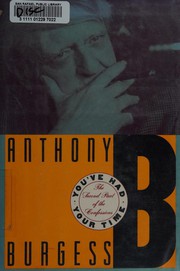
The second memoir volume covers the period of his major novels, including the writing and controversial reception of A Clockwork Orange, and should be read directly after the first volume to complete the self-portrait.

Burgess's survey of the contemporary novel reveals his critical framework and the writers he measured himself against; reading his own criticism here sharpens your sense of what he was consciously attempting in his fiction.
Scholarly Criticism and Deep Context
ExpertEngage with the best external critical and biographical scholarship on Burgess to test, challenge, and enrich the picture built from the primary texts and autobiography.
▸ Study plan for this stage
Pace: 3–4 weeks, ~25–35 pages/day — Roger Lewis's biography is dense, polemical, and digressive, so allow extra time to pause, annotate, and cross-reference claims against Burgess's own autobiographical writing from earlier stages.
- Roger Lewis's adversarial critical method: Lewis writes as a deliberately provocative, often hostile biographer, and understanding his rhetorical stance is as important as absorbing his facts — readers must learn to separate documented evidence from authorial animus
- Burgess as self-mythologizer: Lewis systematically interrogates the gap between the life Burgess constructed in interviews and autobiography and the life the archival and biographical record actually supports, making the concept of authorial self-fashioning central
- Productivity vs. quality: Lewis raises the sustained critical argument that Burgess's enormous output was driven by financial desperation and self-promotion rather than artistic necessity, forcing the reader to weigh quantity against lasting literary value
- Burgess's relationship to Englishness and exile: Lewis contextualizes Burgess's decades of voluntary expatriation (Malta, Italy, Monaco, Switzerland) as both a tax strategy and a psychological condition, illuminating how displacement shaped the fiction
- The A Clockwork Orange problem: Lewis grapples with the outsized cultural shadow of a single novel and how it distorted Burgess's reputation, critical reception, and self-perception for the rest of his career
- Burgess as polymath and dilettante: Lewis critically examines the breadth of Burgess's work across fiction, criticism, linguistics, music composition, and screenwriting, asking whether genuine mastery or restless superficiality better describes the range
- Biographical scholarship as genre: Lewis's book is itself a contested critical object — widely attacked for its tone — making it a case study in the ethics, limits, and possibilities of literary biography
- Reassessing the Burgess canon: Lewis's evaluative hierarchy of the novels (championing some, dismissing others) gives the advanced reader a framework to argue with, refine, or reject based on their own primary reading
- What is Roger Lewis's central thesis about Burgess's character and literary legacy, and what evidence does he marshal to support it — and where does that evidence appear weakest or most tendentious?
- How does Lewis's account of Burgess's biography challenge or complicate the self-portrait Burgess constructed in his own autobiographical writings, and which specific episodes are most sharply contested?
- According to Lewis, in what ways did financial pressure and the need for celebrity shape Burgess's creative decisions, and how convincing is this argument when applied to specific novels?
- How does Lewis treat the cultural phenomenon of A Clockwork Orange — the novel, the Kubrick film, and Burgess's lifelong ambivalence about both — and what does this reveal about the relationship between a writer and their most famous work?
- What does Lewis's biography reveal about Burgess's working methods, his relationship to his two wives, and his life in exile that is not available in Burgess's own accounts?
- How should a reader calibrate trust in Lewis as a source, given the critical controversy his biography generated, and what strategies can be used to read it rigorously rather than either accepting or dismissing it wholesale?
- Adversarial annotation: As you read, mark every major claim Lewis makes about Burgess's character or motives with a symbol — (E) for claims backed by external evidence, (A) for claims that seem to rest on Lewis's own assertion or attitude. At the end, tally the ratio and write a one-page assessment of Lewis's reliability as a biographer.
- Contested episode comparison: Choose three biographical episodes where Lewis's account directly contradicts or reframes what Burgess wrote about himself in his autobiography. Write a 300–400 word comparative note for each, identifying what is at stake in the discrepancy and which account you find more credible and why.
- Canon re-evaluation exercise: Lewis champions and dismisses specific Burgess novels. Make a two-column list of his verdicts, then write a short paragraph for each novel you have read arguing either in agreement or disagreement with Lewis, grounded in your own reading of the primary texts.
- Critical reception research: Lewis's biography was itself controversially received. Find and read at least two published reviews of the Lewis biography (available in literary journals or newspaper archives) and write a 500-word synthesis: what do reviewers praise, what do they attack, and does their critique change how you weight Lewis's arguments?
- Exile and identity mapping: Create a timeline-map of Burgess's geographical movements as reconstructed by Lewis, annotating each location with the works produced there. Then write a short analytical note on whether Lewis's thesis about exile as psychological condition is borne out by the creative output at each stage.
- Synthesis essay: Write a 600–800 word essay answering the question: 'After reading Roger Lewis, has your overall assessment of Burgess as a writer and a man changed, and if so, how?' This essay should cite specific passages from Lewis and push back where warranted, serving as a capstone document for the entire curriculum.
Next up: Engaging critically with Lewis's polemical scholarship trains the reader to hold Burgess's work and life at an analytical distance, providing the evaluative independence needed to form a fully argued, personal critical position — the essential foundation for any subsequent stage focused on original writing, research, or teaching about Burgess.
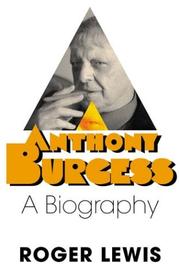
Lewis's full-length biography is the most substantial and provocative life of Burgess, drawing on extensive archival research; its sometimes adversarial tone makes it a productive counterweight to Burgess's own self-mythologising memoirs.
Discussion
Keep reading
Paths that share books, cover the same subject, or open a related topic.