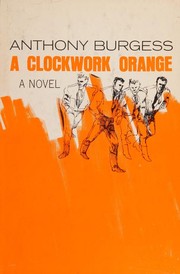
Start with A Clockwork Orange, and before you buy a copy, count the chapters. For roughly thirty years the American edition omitted the twenty-first and final chapter, in which Alex simply grows out of violence. Burgess considered that omission a mutilation that turned his fable about free will into a nihilist shrug, and he was right. Any edition with twenty-one chapters is the book he wrote.
The other thing to know before you begin is that the first thirty pages are genuinely hard. Alex narrates in Nadsat, an invented teenage argot built mostly from Russian, and it is deliberately disorienting. Do not use the glossary. Burgess intended the reader to be conditioned into fluency by repetition, which is the novel's whole method turned on the reader, and looking words up defeats it. By page forty you will be reading it without noticing.
After Clockwork: the Enderby comedies
This is where Burgess actually lived as a writer, and almost nobody goes here. F. X. Enderby is a flatulent, misanthropic poet who composes in the bathroom, and the four books following him are the funniest thing Burgess wrote.
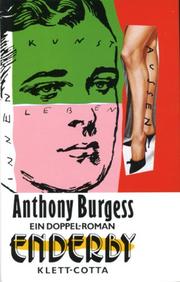
Our catalogue lists the first two together as Enderby (Enderby Outside / Inside Mr. Enderby), which is the omnibus of the 1963 and 1968 novels — the most economical way in. Enderby outside is also listed separately. Then The Clockwork Testament or Enderby's End, a short, savage 1974 novel in which Enderby goes to New York and watches a film adaptation ruin his life, written in obvious response to what happened to A Clockwork Orange. Then Enderby's Dark Lady, which resurrects a character Burgess had killed off, cheerfully and without apology.
Read the Enderby books in that order. They are sequential and the jokes accumulate.
The polemic and the criticism
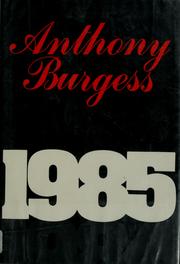
1985 is half essay and half fiction, and the halves are unequal. The first section is an extended argument with George Orwell about Nineteen Eighty-Four, and it is sharp, contrarian and worth reading. The second is a novella imagining a Britain run by trade unions, and it has dated badly. Read the essay, skim the fiction — that is an honest recommendation, not a dodge.
The Novel Now is his survey of post-war fiction, and it shows the side of Burgess that reviewed and read everything. It is opinionated in the way only a working novelist's criticism can be.
The memoirs, and what to do with them
Little Wilson and Big God and You've Had Your Time are the two volumes of autobiography, covering the early life and the writing career respectively. They are enormously entertaining and they are also where the trouble starts, because Burgess embroidered. The famous story of his terminal diagnosis and the year he spent writing novels to leave royalties for his wife is, at minimum, heavily improved in the telling.
Roger Lewis's biography Anthony Burgess takes that unreliability as its subject. Read it knowing what it is: a hostile book, widely criticised on publication for its tone and its treatment of its subject, and simultaneously the most sceptical account available. Some readers find it a necessary corrective, others an act of demolition. Do not read it as neutral.
What is missing here
Burgess considered Earthly Powers, his 1980 novel narrated by an elderly homosexual writer across the whole twentieth century, his major work, and many critics agree. It is not in our catalogue, and that is a real gap rather than a judgement — if the Enderby books work for you, that is where to go next.
More author reading orders are on Discover.
Follow the full ordered path here: Anthony Burgess Reading Order: Where to Start.