The English-language literature on anime divides into three kinds of book that argue with each other: film and cultural scholarship reading the works as texts, industry history reconstructing how the shows were actually financed and made, and insider memoir from people who were in the room. The scholarship is the accessible entry point, the industry history is the corrective, and the memoirs are evidence rather than analysis.
That order matters because the fan-facing narrative of anime history — a lineage of auteurs, a few landmark films, a steady rise — mostly survives contact with the scholarship and mostly does not survive contact with the trade records. Read the industry history first and the criticism afterwards feels naive; read it in the sequence below and you watch the picture get revised in front of you.
Start with the criticism and the reference
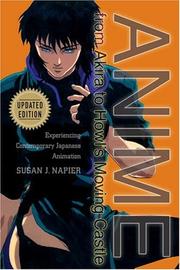
Susan Napier's Anime from Akira to Howl's moving castle is the standard academic introduction, and the revised edition of a book first published as a study running to Princess Mononoke. It reads anime as film — genre, gender, apocalypse, the body — and it is written for a reader who has seen some of the works but has no theory background. Alongside it, The anime encyclopedia by Jonathan Clements and Helen McCarthy is the reference volume: thousands of entries, production credits, and enough dry corrective detail that people read it for pleasure.
Manga is the substrate
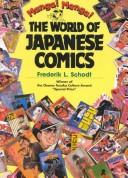
Three Frederik Schodt books sit here, and none of them is about anime. Manga! Manga! was the first serious English-language book on Japanese comics, published in 1983 with an introduction by Osamu Tezuka, and it explains the industrial and cultural base that television anime was built on top of. The Astro Boy Essays is Schodt on Tezuka specifically — biography, the Astro Boy franchise, and the argument that Tezuka's studio economics set the low budgets and limited-animation conventions the whole industry inherited. Dreamland Japan is his 1996 survey of the manga market at its peak. If you only read one, take Manga! Manga! for history or The Astro Boy Essays for the Tezuka argument.
The industry history
Jonathan Clements's Anime, published as a history of the medium, is the most important book on this list and the least like the others. It is built from Japanese-language trade sources, production budgets, labour records and company histories rather than from the films, and it systematically replaces auteur explanations with commercial ones. It is also a corrective to Clements's own encyclopedia in places.
Then the memoirs, which are primary sources. Fred Ladd's Astro Boy and anime come to the Americas is the account of the man who localised Astro Boy and Gigantor for US television, and it is candid about how much was cut and rewritten. The Notenki Memoirs by Yasuhiro Takeda is the Gainax story from inside — the fan-club origins, the near-bankruptcies, the making of Evangelion — and is partisan in the way any insider account is. Roland Kelts's Japanamerica is journalism from 2006 about the American reception, and its predictions have aged unevenly; read it as a snapshot of that moment.
The theory, and Miyazaki
Thomas LaMarre's The anime machine is the hardest book here by a distance. It is media theory, arguing that the physical layering of animation cels — what LaMarre calls the animetic interval — is itself the medium's meaning, and it assumes fluency with film theory and continental philosophy. Rayna Denison's Anime is the more recent critical introduction and the better place to meet contemporary anime studies as a field, including its work on franchising and transnational production.
Close with Miyazaki. Starting Point: 1979-1996 collects his own essays, interviews and memos, and it is the primary document — opinionated, contradictory, often unflattering about the industry and about himself. Susan Napier's Miyazakiworld is the critical biography that reads the films against the life. Taking the two together, in that order, is the most rewarding pairing on this list.
Work through the full path in order and you end up with the works, the money and the people separated out. If games interest you as well, video game history and culture runs a similar argument about a similar industry.
Follow the full ordered path here: Anime History and Culture: The Best Books to Read First.