Abstract Expressionism is badly served by browsing. Search the subject and you get a slim Taschen paperback, a university-press survey, a 900-page Pulitzer-winning biography and a collection of 1940s art criticism, all filed together and all described as books about Abstract Expressionism. They are not interchangeable. One is mostly plates, one is a scholarly narrative, one is a life, and one is a primary document written by a participant in the fight.
Order matters here for a second reason: the story has been rewritten at least three times. There is the version the critics wrote while it was happening, the formalist version that treats the paintings as a problem in the history of flatness, and the revisionist version that reads the whole thing as Cold War soft power. Those arguments only make sense if you meet them in sequence, because each one is answering the last.
Start with a survey
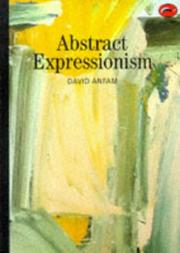
Begin with Abstract expressionism by David Anfam — the Thames and Hudson World of Art volume. It is a genuine scholarly survey at paperback length, well illustrated, and it covers the whole group rather than the four famous men. The obvious alternative, Abstract Expressionism by Barbara Hess, is a Taschen introduction: cheap, handsome, mostly pictures with short linking essays. It is a fine object to own for the reproductions, but it will not give you an argument, and if you are buying only one book the two overlap enough that Anfam is the better spend.
From there, The triumph of American painting by Irving Sandler is still the standard chronological history. Sandler was a critic in New York while this was happening and knew most of the painters, which makes it vivid and also partial. Abstract expressionist painting in America by William Chapin Seitz began life as a 1955 doctoral thesis and reads like one, but it is the closest thing to a contemporary academic account — it shows how the work was being discussed before the mythology set. Life and times of the New York school by Dore Ashton is the social and intellectual history: the bars, the Depression-era mural projects, the emigre teachers, the poverty.
The lives
Ninth Street women by Mary Gabriel is the best pure narrative on this list — a collective biography of Krasner, Elaine de Kooning, Grace Hartigan, Joan Mitchell and Helen Frankenthaler, and a corrective to a canon that had been trimmed to five men.
The single-artist biographies are long and you should pick, not collect. Jackson Pollock by Steven Naifeh and Gregory White Smith runs to roughly 900 pages and won a Pulitzer; it is exhaustive and psychologically insistent. De Kooning by Mark Stevens and Annalyn Swan also won a Pulitzer and is the warmer, more readable of the two. Mark Rothko by James E. B. Breslin is the scholarly life of an artist who resisted having one written. Lee Krasner by Gail Levin takes seriously a painter usually introduced as somebody's wife.
Primary criticism, and the backlash
Read these last, because they are arguments rather than accounts.
Art and culture is Clement Greenberg's own collected essays from 1961 — not a book about the criticism, but the criticism itself, by its most powerful and most partisan practitioner. Expect assertion rather than evidence. Abstract Expressionism: Creators and Critics, edited by Clifford Ross, is an anthology of artists' statements alongside the critics, so you can hear both sides in their own words.
Then the attacks. The painted word is Tom Wolfe's 1975 polemic arguing that the painting had become an illustration of the theory; it is very funny and it is journalism, not scholarship. How New York stole the idea of modern art by Serge Guilbaut makes the Cold War case that American abstraction was useful to the State Department. The argument remains contested — critics dispute how much the artists knew or intended — and it is worth reading precisely as a disputed position.
Work through the full reading path in order and the mythology comes apart into people, pictures and arguments.
Follow the full ordered path here: Best Books on Abstract Expressionism, in Reading Order.