Quantum physics is the most successful theory in the history of science and the most misunderstood in popular culture. The math predicts experiments to eleven decimal places; the meaning of that math is still argued over by serious physicists. The trick to learning it honestly is separating what is settled (the predictions) from what is genuinely open (what it all means) — and being suspicious of anyone, including a book, that blurs the line or promises the universe is "made of consciousness."
Quantum physics, actually explained: a reading path
July 12, 2026 · 2 min read
Why order matters here
Start with a rigorous textbook and the math buries you before you have any intuition. Start with a mystical bestseller and you learn things you will have to unlearn. This path builds physical intuition first through honest popularizations, then confronts the interpretation question directly, then — if you want it — hands you a real first textbook. Order is how you avoid both boredom and nonsense.
A staged reading path
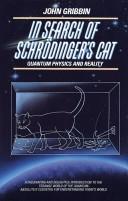
Begin with a master teacher. Six Easy Pieces by Richard Feynman is drawn from his legendary lectures and conveys the physicist's way of thinking without heavy math. Pair it with In Search of Schrödinger's Cat by John Gribbin, a clear historical tour of how the theory was built, and Quantum Theory Cannot Hurt You by Marcus Chown for a gentle, friendly overview. Together they give you the phenomena — superposition, uncertainty, entanglement — before the philosophy.
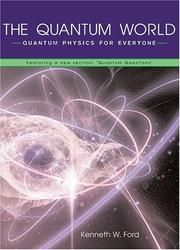
Then go one level deeper on the physics itself with The Quantum World by Kenneth W. Ford, which is more substantial than a pop-science read but still accessible, and bridges you toward the real content.
Now face the hard question honestly: what does it mean? What Is Real? by Adam Becker is a superb, even-handed history of the interpretation debates and why they were suppressed for decades. Something Deeply Hidden by Sean Carroll makes the passionate case for the many-worlds interpretation while being clear that it is one view among several. For a careful, more technical treatment of the measurement problem, Sneaking a Look at God's Cards by Giancarlo Ghirardi and The Meaning of the Wave Function by Shan Gao show how physicists reason about competing interpretations. Read these as weighing arguments, not collecting answers — the field genuinely has not settled this.
Finally, if you want the real thing, Quantum Mechanics by Leonard Susskind (the "theoretical minimum") teaches the actual machinery with the minimum math needed, and Introduction to Quantum Mechanics by David J. Griffiths is the standard undergraduate textbook you would meet in a physics degree.
How to actually learn this
Decide how deep you want to go. To be a fluent, skeptical reader of quantum claims, the popular and interpretation books are enough. To actually do quantum mechanics, you need the math — linear algebra and calculus — and you must work the problems in Griffiths, because the understanding lives in the exercises, not the prose. Either way, treat interpretation as an open debate to weigh honestly, and be wary of any book selling certainty about the metaphysics.
Separate the tested from the debated. Follow the full reading path, visit the quantum physics subject hub, or explore more science paths.
FAQ
- Can I understand quantum physics without advanced math?
- You can understand the concepts and the interpretation debates from books like Six Easy Pieces and What Is Real? To actually solve problems you need calculus and linear algebra and a textbook like Griffiths.
- Is quantum physics connected to consciousness?
- The math does not require it, and most physicists are skeptical of consciousness claims. Read the interpretation books to see the honest debate and to spot where popular writing overreaches.
Get the books
- 1Six Easy PiecesAmazon ↗Richard Phillips Feynman
- 2In Search of Schrödinger's CatAmazon ↗John R. Gribbin
- 3The Quantum WorldAmazon ↗Kenneth W. Ford
- 4The Meaning of the Wave FunctionAmazon ↗Shan Gao
- 5Sneaking a Look at God's CardsAmazon ↗Giancarlo Ghirardi
- 6What is real?Amazon ↗Adam Becker
As an Amazon Associate we earn from qualifying purchases. Some book links are affiliate links; you pay the same price and we may earn a small commission.
Follow the full reading path

Quantum physics, actually explained
Beginner10books81 hrs4 stages
Ready to learn something deeply?
Build a reading path — free