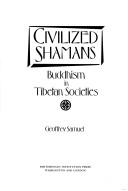
CIVILIZED SHAMANS
Geoffrey Samuel · 1993 · 725 pages
As an Amazon Associate we earn from qualifying purchases. Some book links are affiliate links; you pay the same price and we may earn a small commission.
About this book
Civilized Shamans examines the nature and evolution of religion in Tibetan societies from the ninth century up to the Chinese occupation in 1950. Geoffrey Samuel argues that religion in these societies developed as a dynamic amalgam of strands of Indian Buddhism and the indigenous spirit-cults of Tibet. Samuel stresses the diversity of Tibetan societies, demonstrating that central Tibet, the Dalai Lama's government at Lhasa, and the great monastic institutions around Lhasa formed only a part of the context within which Tibetan Buddhism matured. Employing anthropological research, historical inquiry, rich interview material, and a deep understanding of religious texts, the author explores the relationship between Tibet's social and political institutions and the emergence of new modes of consciousness that characterize Tibetan Buddhist spirituality. Samuel identifies the two main orientations of this religion as clerical (primarily monastic) and shamanic (associated with Tantric yoga). The specific form that Buddhism has taken in Tibet is rooted in the pursuit of enlightenment by a minority of the people - lamas, monks, and yogins - and the desire for shamanic services (in quest of health, long life, and prosperity) by the majority. Shamanic traditions of achieving altered states of consciousness have been incorporated into Tantric Buddhism, which aims to communicate with Tantric deities through yoga. The author contends that this incorporation forms the basis for much of the
Appears in these reading paths


Best Books on Tibetan Buddhism, in Reading Order
Related reading guides
Reader reviews
Ratings and notes from readers — tagged with how deep into the subject they were.
Loading reviews…